>Spinach and Turkey Meatballs Braised in Red Wine and Tomato

>

This is something I made for my son and I for dinner last night, and like all–or at least most–of the recipes on this blog, it is both simple and delicious. It’s a basic recipe for meatballs and tomato sauce with a twist. In place of the usual beef or pork I used turkey, and I also added a mixture of pureed spinach and egg. And besides tomato sauce (which I had in the freezer from last year’s tomatoes), I also added a fair amount of red wine. These meatballs are so delicious (and did I mention simple to make?) they could be eaten on their own or over rice; we ate ours over buttered whole wheat macaroni. To see yet another variation on this dish where I made it using codfish, click here. Anyhow, here’s how to make them:

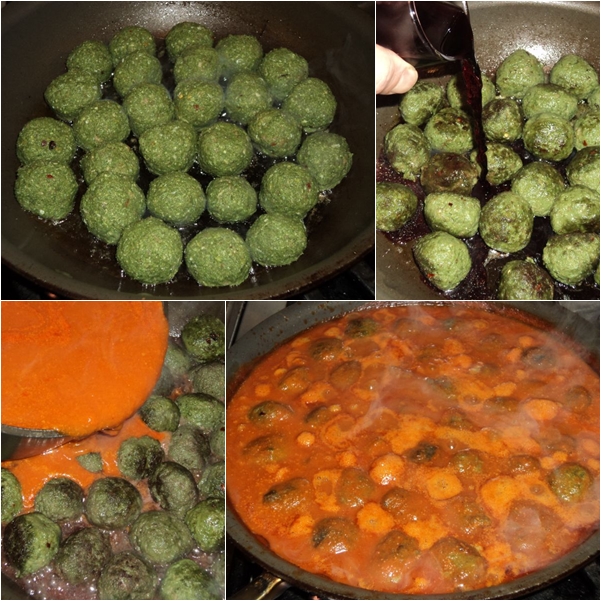
Puree fresh spinach with a couple eggs, and also a small onion and a couple cloves of garlic. Combine it in a bowl along with ground turkey, Parmesan cheese, hot pepper flakes, basil, kosher salt, and breadcrumbs. Mix it together and shape it into balls.

Heat some olive oil in a skillet and add the meatballs. Cook them until they begin to brown and a red wine. Allow the wine to cook for a minute or so and then add tomato sauce. Cook the meatballs for about 30 minutes, until thoroughly cooks and  the flavors are well married.

Just before serving you can add a pat of butter or splash of cream to the pan, but I didn’t as the sauce from fresh tomatoes was rich enough for my taste. I’ll sum up the flavor with in one word (sound actually)…mmmm….

A Weighty Matter

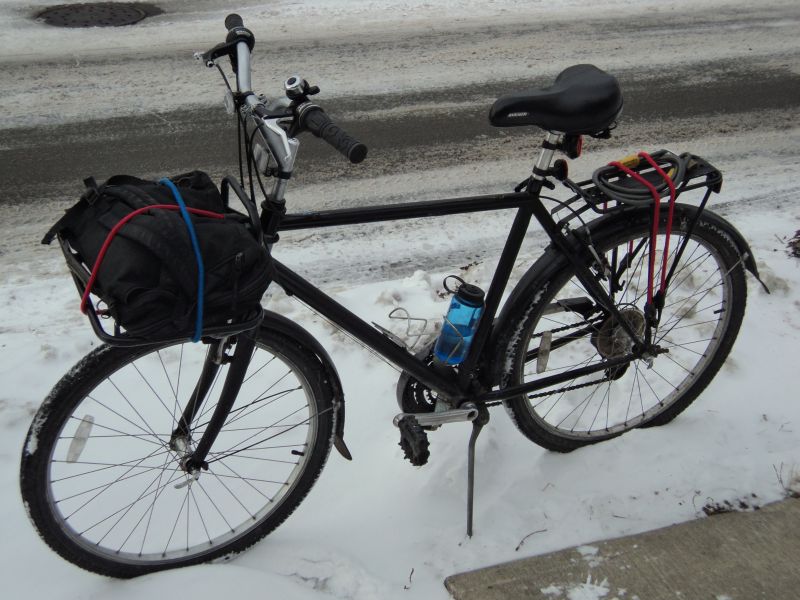
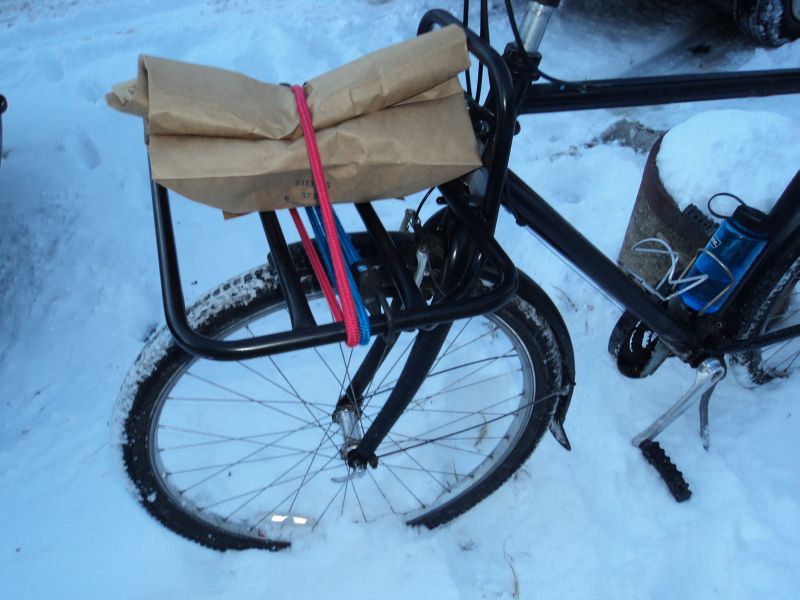
My bikes are heavy…all of them. All have fenders and front-and-rear racks to carry stuff. I don’t race, nor do I tour; I ride bikes for transportation and I find heavier bikes to be the most practical. The above is one of my three “everyday bikes,” but mostly it’s my winter bike. It’s an old Trek that I purchased for $40 at a flea market about 4 years ago…since then I’ve overhauled it and put probably $200 into it. It weighs, at best guess, about 35lbs (16kgs). My other regular bike, which many who read this blog already know as my favorite, is my v3 Mundo; that bike weighs in at about 55lbs (25kgs). The third bike I ride, but not as frequently and rarely in the winter, is my Dahon folder; it’s the lightest of the three but it still weighs in at about 25lbs (11kgs). I have always liked heavy bikes because they feel solid and because I like to have accessories, such as fenders and other aforementioned ones, but also lights, water bottles, bells,and even a cup holder. I like my bikes to be rolling self-contained units, capable of carrying what I would in a vehicle and offering a few of it’s amenities (but many that an auto could not). Stripped down, bare-bones bikes (especially fixies) are of little interest to me. They may be good for touring, racing, or short sprints, but for my bicycling usage a heavy bike makes more sense. So what, you may ask, prompted this brief but heavy-weight manifesto…an article I recently read on the BBC website. In it an avid cyclist conducted a study as to whether it made a time-difference if he rode his light carbon-framed bicycle to commute to work or his heavier steel-frame bike. His commute was 27 miles and over time he came to the conclusion that the time saved was about one minute. The following is cut-and-paste from the original article in the British Medical Journal:

A 30% reduction in bicycle weight did not reduce commuting time over a distance of 27 miles (43.5 km). A new lightweight bicycle may have many attractions, but if the bicycle is used to commute, a reduction in the weight of the cyclist rather than that of the bicycle may deliver greater benefit and at reduced cost.

This didn’t surprise me because even when I have the Mundo fully loaded (once in motion) it’s as easy to pedal as if I’m not carrying anything; the same goes for my winter bike (but I did smirk at the comment, a reduction in the weight of the cyclist rather than that of the bicycle may deliver greater benefit) . Distance may be another matter, the same goes for steep grades, but these are not a regular my daily travels.

I’d be interested to hear what others had to say about their bike’s weight and how it affects their ride. To read the story at the BBC website, click here; to read the original story in it’s full format, click here.

>A Weighty Matter

>

My bikes are heavy…all of them. All have fenders and front-and-rear racks to carry stuff. I don’t race, nor do I tour; I ride bikes for transportation and I find heavier bikes to be the most practical. The above is one of my three “everyday bikes,” but mostly it’s my winter bike. It’s an old Trek that I purchased for $40 at a flea market about 4 years ago…since then I’ve overhauled it and put probably $200 into it. It weighs, at best guess, about 35lbs (16kgs). My other regular bike, which many who read this blog already know as my favorite, is my v3 Mundo; that bike weighs in at about 55lbs (25kgs). The third bike I ride, but not as frequently and rarely in the winter, is my Dahon folder; it’s the lightest of the three but it still weighs in at about 25lbs (11kgs). I have always liked heavy bikes because they feel solid and because I like to have accessories, such as fenders and other aforementioned ones, but also lights, water bottles, bells,and even a cup holder. I like my bikes to be rolling self-contained units, capable of carrying what I would in a vehicle and offering a few of it’s amenities (but many that an auto could not). Stripped down, bare-bones bikes (especially fixies) are of little interest to me. They may be good for touring, racing, or short sprints, but for my bicycling usage a heavy bike makes more sense. So what, you may ask, prompted this brief but heavy-weight manifesto…an article I recently read on the BBC website. In it an avid cyclist conducted a study as to whether it made a time-difference if he rode his light carbon-framed bicycle to commute to work or his heavier steel-frame bike. His commute was 27 miles and over time he came to the conclusion that the time saved was about one minute. The following is cut-and-paste from the original article in the British Medical Journal:

A 30% reduction in bicycle weight did not reduce commuting time over a distance of 27 miles (43.5 km). A new lightweight bicycle may have many attractions, but if the bicycle is used to commute, a reduction in the weight of the cyclist rather than that of the bicycle may deliver greater benefit and at reduced cost.

This didn’t surprise me because even when I have the Mundo fully loaded (once in motion) it’s as easy to pedal as if I’m not carrying anything; the same goes for my winter bike (but I did smirk at the comment, a reduction in the weight of the cyclist rather than that of the bicycle may deliver greater benefit) . Distance may be another matter, the same goes for steep grades, but these are not a regular my daily travels.

I’d be interested to hear what others had to say about their bike’s weight and how it affects their ride. To read the story at the BBC website, click here; to read the original story in it’s full format, click here.

Five Anne Frank Quotes

“Human greatness does not lie in wealth or power, but in character and goodness. People are just people, and all people have faults and shortcomings, but all of us are born with a basic goodness.”
“It’s really a wonder that I haven’t dropped all my ideals, because they seem so absurd and impossible to carry out. Yet I keep them, because in spite of everything I still believe that people are really good at heart.”

“Earning happiness means doing good and working, not speculating and being lazy. Laziness may look inviting, but only work gives you true satisfaction.”

“People can tell you to keep your mouth shut, but that doesn’t stop you from having your own opinion.”

“How noble and good everyone could be if, every evening before falling asleep, they were to recall to their minds the events of the whole day and consider exactly what has been good and bad. Then without realizing it, you try to improve yourself at the start of each new day.”

>Five Anne Frank Quotes

>

“Human greatness does not lie in wealth or power, but in character and goodness. People are just people, and all people have faults and shortcomings, but all of us are born with a basic goodness.”
“It’s really a wonder that I haven’t dropped all my ideals, because they seem so absurd and impossible to carry out. Yet I keep them, because in spite of everything I still believe that people are really good at heart.”

“Earning happiness means doing good and working, not speculating and being lazy. Laziness may look inviting, but only work gives you true satisfaction.”

“People can tell you to keep your mouth shut, but that doesn’t stop you from having your own opinion.”

“How noble and good everyone could be if, every evening before falling asleep, they were to recall to their minds the events of the whole day and consider exactly what has been good and bad. Then without realizing it, you try to improve yourself at the start of each new day.”

Things That Can Be Carried On A Bike (#253)

A cardboard box containing two plastic containers; on contains a pint of Rice Pilaf with Orzo, the other a pint of Chicken a la King. A canvas bag containing a Kindle (containing 42 virtual books), two actual books, a day planner, and various writing implements.

Whole Wheat Potato Bread with Beer and Cheddar (recipe & photos)

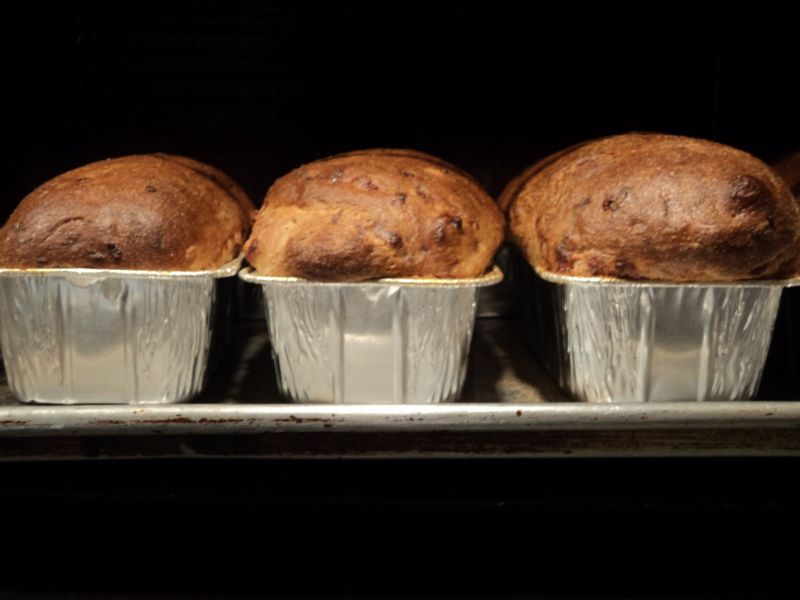
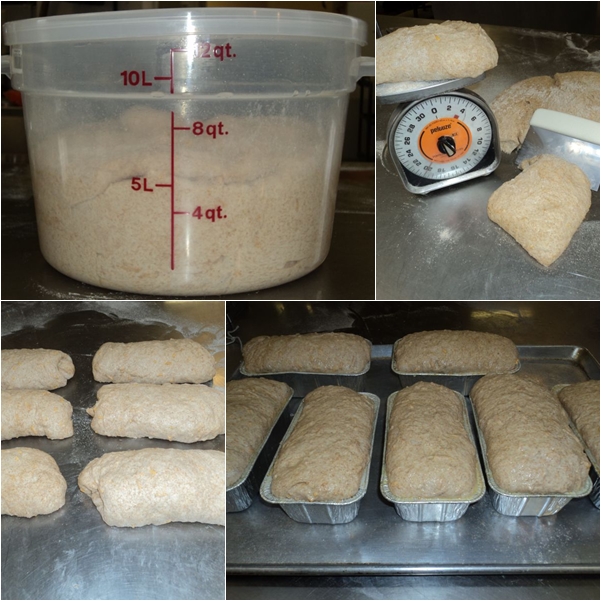
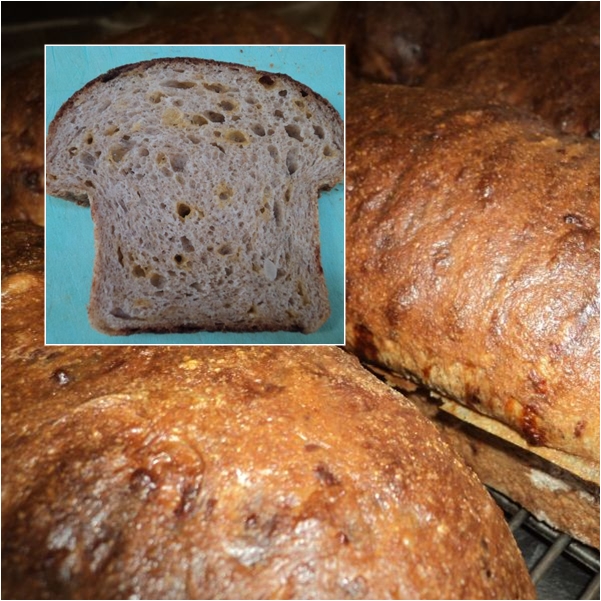
Here’s another bread experiment I tried today; the outcome, thankfully, was awesome. It’s a variation on the basic whole wheat bread recipe using only 100% whole wheat flour (to read an article with recipe that I wrote for Artvoice magazine explaining the process in detail, click here). The variation with this recipe is that I added cooked and mashed potato for flavor and texture, and the water was replaced with beer (and a little milk). I also added eggs for richness, and cheddar simply because I like cheese. I had planned on adding caraway seeds but forgot…there’s always next time. If you think bread made with whole wheat flour is always heavy and dense think again…and try this method. Anyhow, here’s the recipe in pictures, an actual printable recipe follows.

Whole Wheat Potato Bread with Beer and Cheddar
Makes two loaves
2 cups cooked and mashed potatoes, room temperature
1 cup whole wheat flour
1/2 cup beer, room temperature
2 teaspoons instant yeast
_______________________
4 cups whole wheat flour
1 cup beer, room temperature
3/4 cup milk, room temperature
_______________________
2 eggs
1/4 cup honey
1/4 cup olive oil
3 teaspoons instant yeast
2 teaspoons kosher salt
_______________________
2 cups shredded cheddar cheese (about 6 ounces)
Place two bowls side-by-side. In one bowl combine the mashed potato, 1 cup of flour, ½ cup of beer, and two teaspoons of yeast; mix just until combined and cover with plastic wrap. In the second bowl combine the 4 cups of whole wheat flour, 1 cup of beer, 3/4 cup milk; mix just until combined and cover with plastic wrap. Allow the bowls to rest for 20-30 minutes.
Combine the contents of bowls in the bowl of an upright mixer that is fitted with a dough hook. Also add the eggs, honey, olive oil, 3 teaspoons of yeast, and two teaspoons of kosher salt (try not to let the yeast and salt come into direct contact). Run the mixer first on low speed, until it gathers the ingredients together, then on medium speed; knead the dough for about 6 minutes. Add the cheese and knead the dough for another 1 or 2 minutes. Transfer the dough to a lightly oiled bowl or rising bucket, cover it and allow the dough to ferment for 60 – 90 minutes. Then gently press the dough down and allow it to ferment another 30 minutes.
Divide the dough into two pieces, shape it into loaves, and place it in lightly oiled loaf pans. Preheat an oven to 425F and allow the dough to ferment and rise for about 45 – 60 minutes. Bake the dough for about 30 minutes. When it is initially placed in the oven spritz the oven with a little water, lacking a sprayer toss a few ice cubes on the oven floor to create steam. Rotate the loaves after 15 minutes and spray the oven again. The bread is done when it is golden brown and sounds hollow when tapped with a finger. Remove it from the oven and their pans and transfer it to a wire cooling rack or clean towel which has been folded to double thickness. Allow the bread to cool 15 minutes before slicing.

>Whole Wheat Potato Bread with Beer and Cheddar (recipe & photos)

>

Here’s another bread experiment I tried today; the outcome, thankfully, was awesome. It’s a variation on the basic whole wheat bread recipe using only 100% whole wheat flour (to read an article with recipe that I wrote for Artvoice magazine explaining the process in detail, click here). The variation with this recipe is that I added cooked and mashed potato for flavor and texture, and the water was replaced with beer (and a little milk). I also added eggs for richness, and cheddar simply because I like cheese. I had planned on adding caraway seeds but forgot…there’s always next time. If you think bread made with whole wheat flour is always heavy and dense think again…and try this method. Anyhow, here’s the recipe in pictures, an actual printable recipe follows.

Whole Wheat Potato Bread with Beer and Cheddar
Makes two loaves
2 cups cooked and mashed potatoes, room temperature
1 cup whole wheat flour
1/2 cup beer, room temperature
2 teaspoons instant yeast
_______________________
4 cups whole wheat flour
1 cup beer, room temperature
3/4 cup milk, room temperature
_______________________
2 eggs
1/4 cup honey
1/4 cup olive oil
3 teaspoons instant yeast
2 teaspoons kosher salt
_______________________
2 cups shredded cheddar cheese (about 6 ounces)
Place two bowls side-by-side. In one bowl combine the mashed potato, 1 cup of flour, ½ cup of beer, and two teaspoons of yeast; mix just until combined and cover with plastic wrap. In the second bowl combine the 4 cups of whole wheat flour, 1 cup of beer, 3/4 cup milk; mix just until combined and cover with plastic wrap. Allow the bowls to rest for 20-30 minutes.
Combine the contents of bowls in the bowl of an upright mixer that is fitted with a dough hook. Also add the eggs, honey, olive oil, 3 teaspoons of yeast, and two teaspoons of kosher salt (try not to let the yeast and salt come into direct contact). Run the mixer first on low speed, until it gathers the ingredients together, then on medium speed; knead the dough for about 6 minutes. Add the cheese and knead the dough for another 1 or 2 minutes. Transfer the dough to a lightly oiled bowl or rising bucket, cover it and allow the dough to ferment for 60 – 90 minutes. Then gently press the dough down and allow it to ferment another 30 minutes.
Divide the dough into two pieces, shape it into loaves, and place it in lightly oiled loaf pans. Preheat an oven to 425F and allow the dough to ferment and rise for about 45 – 60 minutes. Bake the dough for about 30 minutes. When it is initially placed in the oven spritz the oven with a little water, lacking a sprayer toss a few ice cubes on the oven floor to create steam. Rotate the loaves after 15 minutes and spray the oven again. The bread is done when it is golden brown and sounds hollow when tapped with a finger. Remove it from the oven and their pans and transfer it to a wire cooling rack or clean towel which has been folded to double thickness. Allow the bread to cool 15 minutes before slicing.
Does This Change Things?

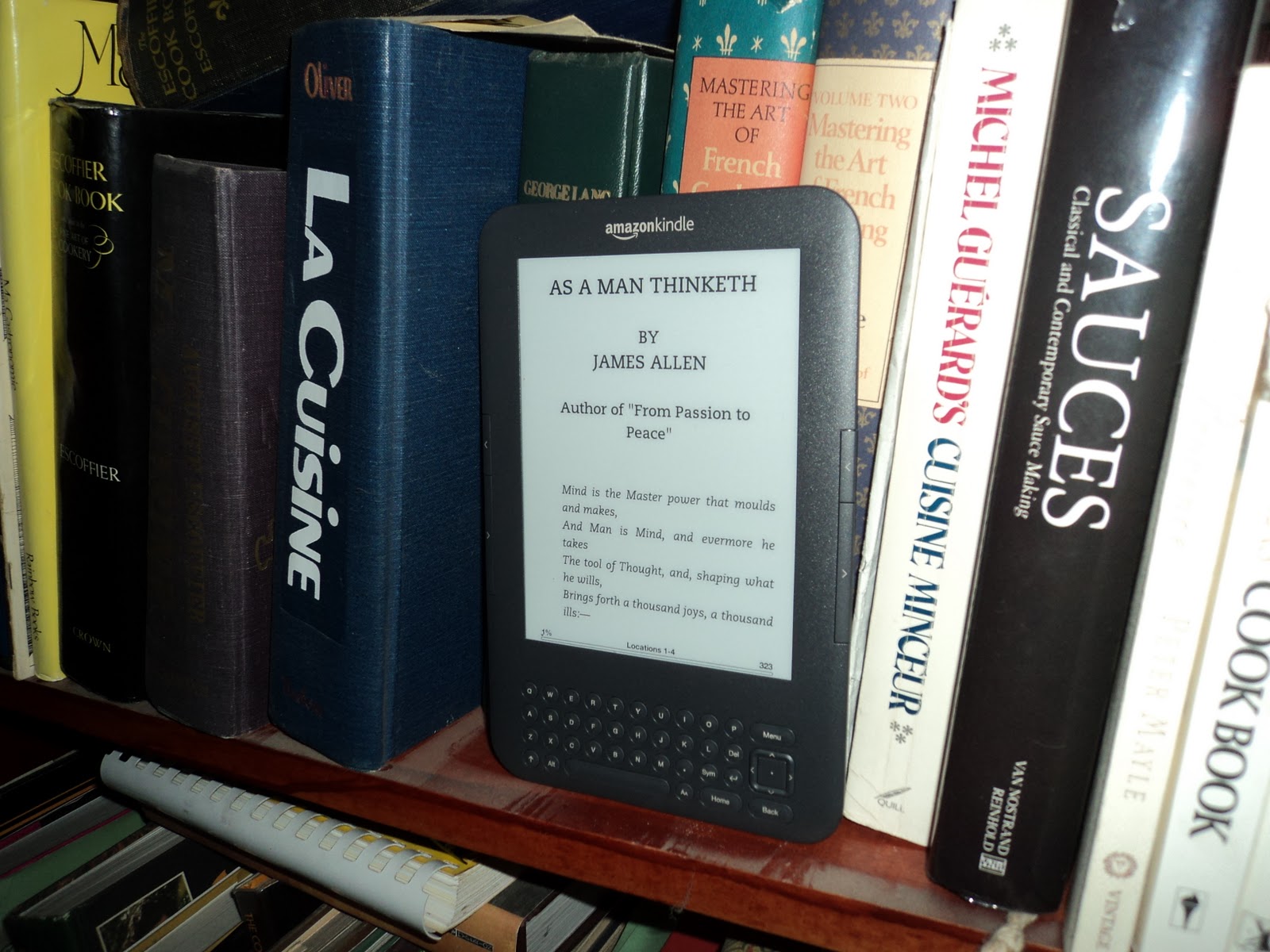
I’ve resisted it for a while but have finally succumbed…I purchased an electronic reading device (Kindle), but I’m getting ahead of myself. Let me start over by saying that I am a bibliophile. I love books, and I own more than I’ll probably ever read. But as previously stated I bought a Kindle and it arrived today. I resisted them for a while but was swayed for a few reasons. One is the price of the (electronic) books. Even as a new release the books are cheaper than a print copy…but there are thousand (I’m guessing) of free books available. Just this evening I downloaded more than 40 free books…not a penny spent. James Joyce, Ralph Waldo Emerson, Walt Whitman, Jack London, F. Scott Fitzgerald, Paramahansa Yogananda, even an English Standard Version of the Bible. All free. Not to mention numerous New Thought authors, including the book pictured in the device above (As a Man Thinketh, by James Allen). These alone are worth more than what I paid for the device (I specifically call it a device because it is most definitely not a book…but more on that in a minute). But I digress again.

One of my favorite past-times is browsing bookstores, in real life brick-and-mortar stores but virtually too, such as Amazon. When I travel–which isn’t that often these days–I actually plan in advance which bookstores I’ll visit in the same way people visit tourist attractions. I own something like 700-800 books on food (best guess), a hundred or so spiritual books, and many novels and books on fiction scattered around the house. To me books are not only for reading; I like how they look and feel. They are in fact part of the decor of my house. For these reasons this device cannot replace books in my life.

But what about convenience. I am chagrined in that I don’t read as  much as I once did and I can’t help but wonder if it doesn’t have something to do with time…though I write a blog about simplicity m y life feels more sped up than ever these days (whose isn’t). I’m hoping carrying around a virtual library with me will encourage me to read more (again) or at least as much as I once did.

Another thing I found interesting was this post at Treehugger regarding the Kindle as actually being greener than print books (go figure).

At any rate, does this change things? Yes, but hopefully for the better. Will it replace books in my life? Not a chance. While the screen of the Kindle does look remarkably like a page out of a book it is still not a book…it’s an electronic reading device that you press a button rather than flip a page. None-the-less, I am glad with the purchase and look forward to reading it.

I’d be interested in hearing others view’s on electronic reading devices (Kindle, Nook, Sony?).

>Does This Change Things?

>

I’ve resisted it for a while but have finally succumbed…I purchased an electronic reading device (Kindle), but I’m getting ahead of myself. Let me start over by saying that I am a bibliophile. I love books, and I own more than I’ll probably ever read. But as previously stated I bought a Kindle and it arrived today. I resisted them for a while but was swayed for a few reasons. One is the price of the (electronic) books. Even as a new release the books are cheaper than a print copy…but there are thousand (I’m guessing) of free books available. Just this evening I downloaded more than 40 free books…not a penny spent. James Joyce, Ralph Waldo Emerson, Walt Whitman, Jack London, F. Scott Fitzgerald, Paramahansa Yogananda, even an English Standard Version of the Bible. All free. Not to mention numerous New Thought authors, including the book pictured in the device above (As a Man Thinketh, by James Allen). These alone are worth more than what I paid for the device (I specifically call it a device because it is most definitely not a book…but more on that in a minute). But I digress again.

One of my favorite past-times is browsing bookstores, in real life brick-and-mortar stores but virtually too, such as Amazon. When I travel–which isn’t that often these days–I actually plan in advance which bookstores I’ll visit in the same way people visit tourist attractions. I own something like 700-800 books on food (best guess), a hundred or so spiritual books, and many novels and books on fiction scattered around the house. To me books are not only for reading; I like how they look and feel. They are in fact part of the decor of my house. For these reasons this device cannot replace books in my life.

But what about convenience. I am chagrined in that I don’t read as  much as I once did and I can’t help but wonder if it doesn’t have something to do with time…though I write a blog about simplicity m y life feels more sped up than ever these days (whose isn’t). I’m hoping carrying around a virtual library with me will encourage me to read more (again) or at least as much as I once did.

Another thing I found interesting was this post at Treehugger regarding the Kindle as actually being greener than print books (go figure).

At any rate, does this change things? Yes, but hopefully for the better. Will it replace books in my life? Not a chance. While the screen of the Kindle does look remarkably like a page out of a book it is still not a book…it’s an electronic reading device that you press a button rather than flip a page. None-the-less, I am glad with the purchase and look forward to reading it.

I’d be interested in hearing others view’s on electronic reading devices (Kindle, Nook, Sony?).

Things That Can Be Carried On A Bike (#252)

A paper bag containing two plastic containers, each container holding a pint of rice pilaf with toasted orzo (cooked in chicken broth). I ate one pint and my dogs ate the other mixed with dried dog food (mine was mixed with sauteed vegetables).

Caramelized Cauliflower Frittata…with other good stuff

I like  eggs, simple as that. They are versatile, can be adapted to almost any flavor–from breakfast to dessert–and they are easy to prepare. When my son is not home, as was the case this evening, I tend to cook very simple things. Tonight was no exception. After looking in my fridge I came up with a fresh cauliflower, onions, and eggs. So I made one of my favorite egg preparations: frittata (with a Near East flare). After caramelizing the cauliflower and onions with a good pinch of crushed dried chilies and cumin seed, I added minced garlic and the eggs. Just before I took the pan away from the flame I laid a few slices of sharp cheddar on the eggs, lowered the heat, and put a lid on the it while I sliced an apple and a couple pieces of bread, and poured a glass of wine. By the time the toast was ready the frittata had finished cooking. Simple and delicious…worthy to be sold in a restaurant.
To see other photos and recipes for variations on this one, click here, here, here, here, or here.

To read an article I wrote about eggs some years ago (recipes, history, uses), click here.

>Caramelized Cauliflower Frittata…with other good stuff

>

I like  eggs, simple as that. They are versatile, can be adapted to almost any flavor–from breakfast to dessert–and they are easy to prepare. When my son is not home, as was the case this evening, I tend to cook very simple things. Tonight was no exception. After looking in my fridge I came up with a fresh cauliflower, onions, and eggs. So I made one of my favorite egg preparations: frittata (with a Near East flare). After caramelizing the cauliflower and onions with a good pinch of crushed dried chilies and cumin seed, I added minced garlic and the eggs. Just before I took the pan away from the flame I laid a few slices of sharp cheddar on the eggs, lowered the heat, and put a lid on the it while I sliced an apple and a couple pieces of bread, and poured a glass of wine. By the time the toast was ready the frittata had finished cooking. Simple and delicious…worthy to be sold in a restaurant.

To see other photos and recipes for variations on this one, click here, here, here, here, or here.

To read an article I wrote about eggs some years ago (recipes, history, uses), click here.

Cold and Snowy

Like much of the country we have had an early and particularly cold winter this year…but it’s been an odd one, too. Last week it was very cold and extremely snowy, then it warmed up and the snow melted, and now it’s back at it. The weather was so bad this morning rather than risk my physical health riding a bike to work I walked. I’m not worried about me falling off the bike because of the snow and ice; it worries me about getting hit by a person driving a car in this stuff…I may be crazy but I’m not stupid. Anyhow, I thought I’d share a few pictures of my snowy day. The three above are of my walk to work; the two on the left are of the corner of Allen and Elmwood (upper) and Allen and Delaware (lower). The one on the right is self portrait taken from my reflection in a shop window…this was my morning commute.

The picture below is a window in my kitchen at work…pretty scene isn’t it. I feel fortunate in that the kitchen I currently work has windows all around…some kitchens truly are afterthoughts when and establishment is built, and many are windowless. Windows can really lift my spirits. The picture below is of the garden/courtyard that the window overlooks. You can see how hard it was snowing at that time (click it for a larger view). It really is beautiful this time of year while the snow is so new and fresh. 

>Cold and Snowy

>

Like much of the country we have had an early and particularly cold winter this year…but it’s been an odd one, too. Last week it was very cold and extremely snowy, then it warmed up and the snow melted, and now it’s back at it. The weather was so bad this morning rather than risk my physical health riding a bike to work I walked. I’m not worried about me falling off the bike because of the snow and ice; it worries me about getting hit by a person driving a car in this stuff…I may be crazy but I’m not stupid. Anyhow, I thought I’d share a few pictures of my snowy day. The three above are of my walk to work; the two on the left are of the corner of Allen and Elmwood (upper) and Allen and Delaware (lower). The one on the right is self portrait taken from my reflection in a shop window…this was my morning commute.

The picture below is a window in my kitchen at work…pretty scene isn’t it. I feel fortunate in that the kitchen I currently work has windows all around…some kitchens truly are afterthoughts when and establishment is built, and many are windowless. Windows can really lift my spirits. The picture below is of the garden/courtyard that the window overlooks. You can see how hard it was snowing at that time (click it for a larger view). It really is beautiful this time of year while the snow is so new and fresh. 

15 Gallons of Vegetable Soup

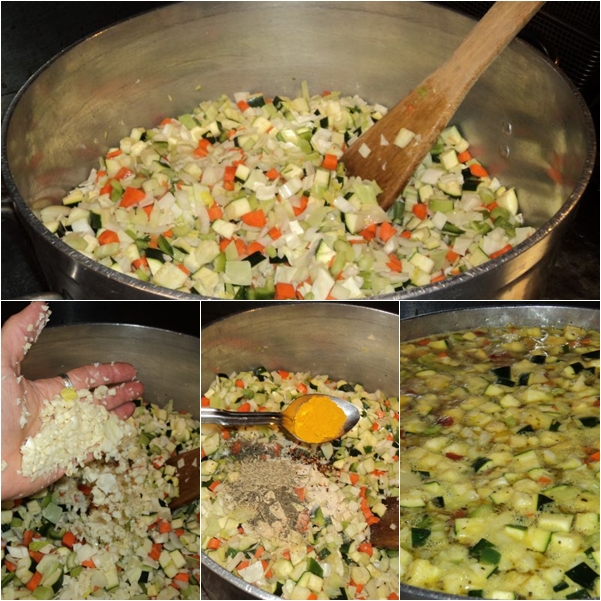
I made this today at work for a luncheon I’ll be serving tomorrow. I always try to make soups a day ahead and let their flavors mingle overnight; they taste better the second day. None-the-less, I had some myself for lunch today…at nearly 57 liters a cup or two won’t be missed. It was delicious and easy to make. I seasoned it with lots of garlic (of course), fennel, basil, and turmeric; I also used chicken broth for added flavor (instead of water or vegetable broth).

>15 Gallons of Vegetable Soup

>

I made this today at work for a luncheon I’ll be serving tomorrow. I always try to make soups a day ahead and let their flavors mingle overnight; they taste better the second day. None-the-less, I had some myself for lunch today…at nearly 57 liters a cup or two won’t be missed. It was delicious and easy to make. I seasoned it with lots of garlic (of course), fennel, basil, and turmeric; I also used chicken broth for added flavor (instead of water or vegetable broth).

Let There Be Light…but it’ll cost you

This image was found here.
I love that old sign (above). “Do not attempt to light with a match.” “The use of electric lights is in no way harmful to health.” 
While the invention of electric lights goes back farther, their use as a common form of lighting is only a little over 100 years old…but look how far we’ve come. Imagine how odd (and a bit scary) it must have been for our great grandparents to walk into a room and flip a light switch for the first time. How odd it must have felt…it probably felt limitless; a candle or oil lamp would eventually run out of fuel or burn down, but the light bulb kept burning. 
It’s a little known fact that the city in which I was raised and continue to reside, Buffalo, was once called the City of Light. This was popularized during the Pan-American Exposition of 1901. While many link this particular event with the murder of the then US President, William McKinley, it was during this exposition that electricity was first showcased on a grand scale. With our proximity to Niagara Falls (and it’s hydro generators) Buffalo at the time was thought of as the most lighted city in the world.
Like many people, I try to turn off lights as I leave a room and don’t turn them on if I don’t have to. And sometimes, but not always, I light candles or oil lamps to supplement electric lights in certain rooms (I get used candles for free, left over from parties and weddings I cater). While it’s not especially conducive lighting to read by, I actually prefer the light from a flame to a bulb…more of a gentle hue than a bright light. Sometimes I try to imagine what my house was like when it was built (circa 1860, the best I can figure); surely there was no electricity in it then. And being a simply designed house the original inhabitants were most likely working folk, like I am now…they may not have had electricity well into the 20th century, maybe the 1920’s or even 1930’s. I can’t even imagine what they would think of the Internet.
Anyhow, I started thinking about this after reading a short article on Treehugger about the cost of operating a light bulb for a year. While monetarily to the consumer it is nominal, to the environment it is huge (I think). 
Copied from Treehugger:

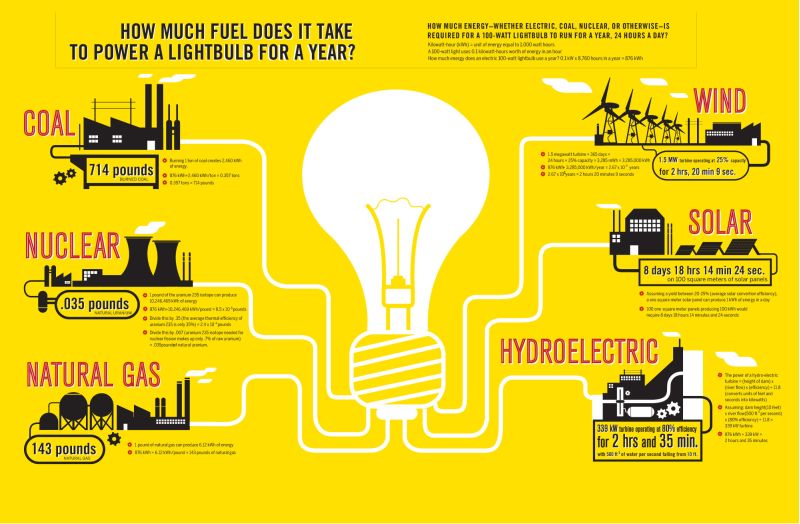
For starters, it takes 714 pounds of coal to power a single light bulb for a year. Or, 143 pounds of natural gas. Or nearly 9 days’ worth of sunlight hitting a 100 square meter solar array. Or 0.035 pounds of uranium. Or over two and a half hours of a hydroelectric plant operating at 80% capacity.

Yow! I would never have thought it would take so much fuel to power so little light.  The below image was copied from Treehugger as well, and they originally copied it from GOOD which is where they also received their info. The image was reduced in size for easy uploading, to see it in it’s original size (where it will be easier to read) click here.  To read a short but interesting history of lighting, click here. I think I’ll go light a few candles.