>

I love this depiction of the Last Supper (click it for a larger view). It’s a painting by the late Russian artist, Simon Ushakov. To learn more about the history, tradition, and etymology of Maundy Thursday, click here.
Random Thoughts On Cooking, Bike Riding, and The Sacred Journey of Everyday Life
>
I love this depiction of the Last Supper (click it for a larger view). It’s a painting by the late Russian artist, Simon Ushakov. To learn more about the history, tradition, and etymology of Maundy Thursday, click here.

>

A canvas bag containing, among other things, 2 DVDs, 3 books, a day planner, and a NIV pocket Bible.
A 1-pound loaf of spinach-Parmesan bread.
Seven cardboard boxes.

>
A canvas bag containing, among other things, 2 DVDs, 3 books, a day planner, and a NIV pocket Bible.
A 1-pound loaf of spinach-Parmesan bread.
Seven cardboard boxes.
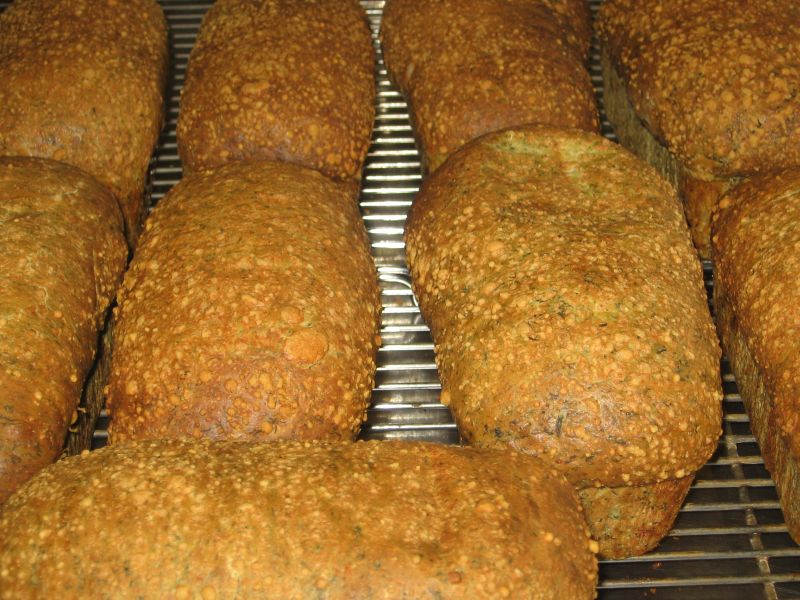
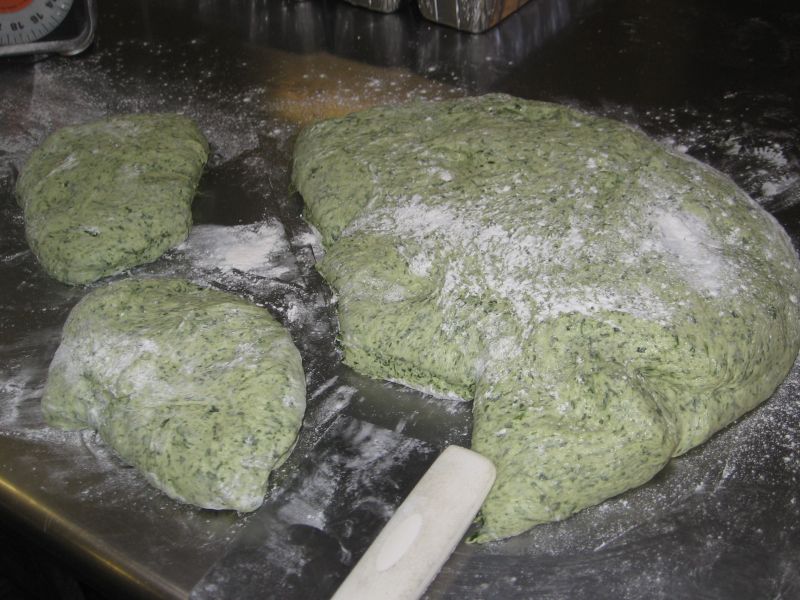
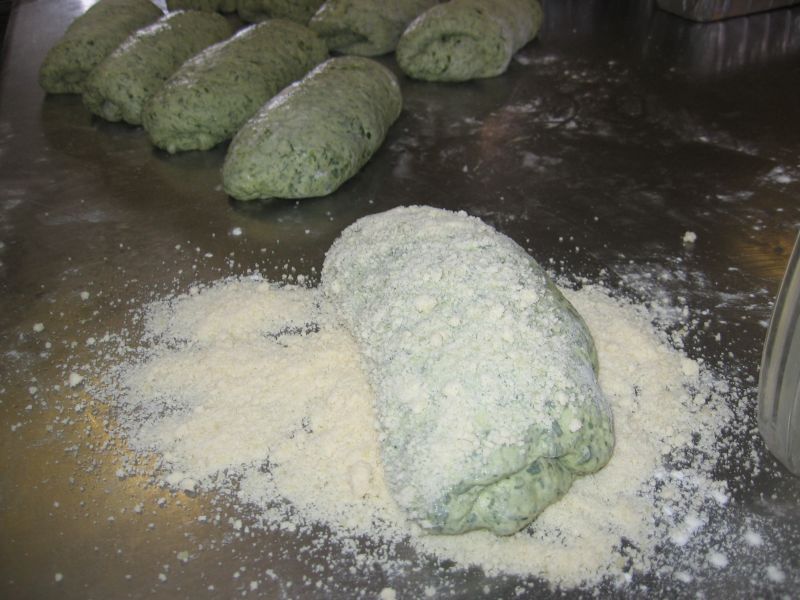
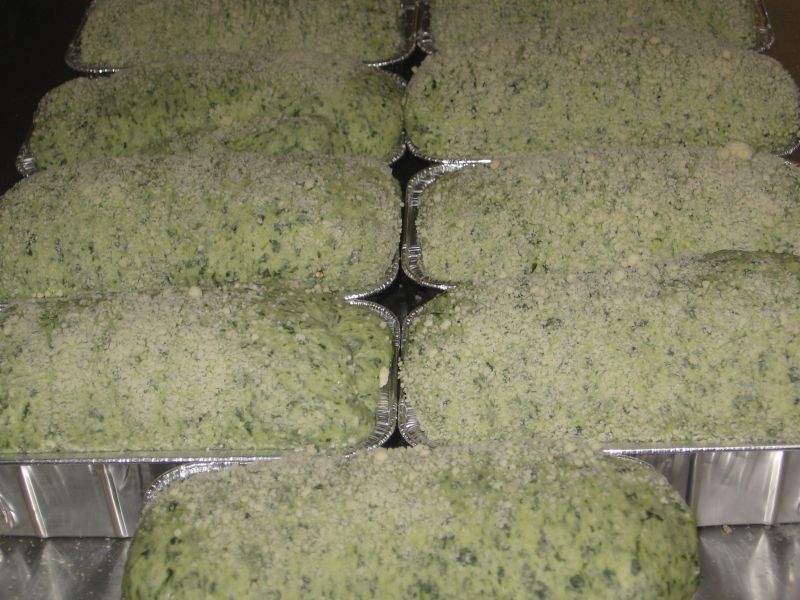
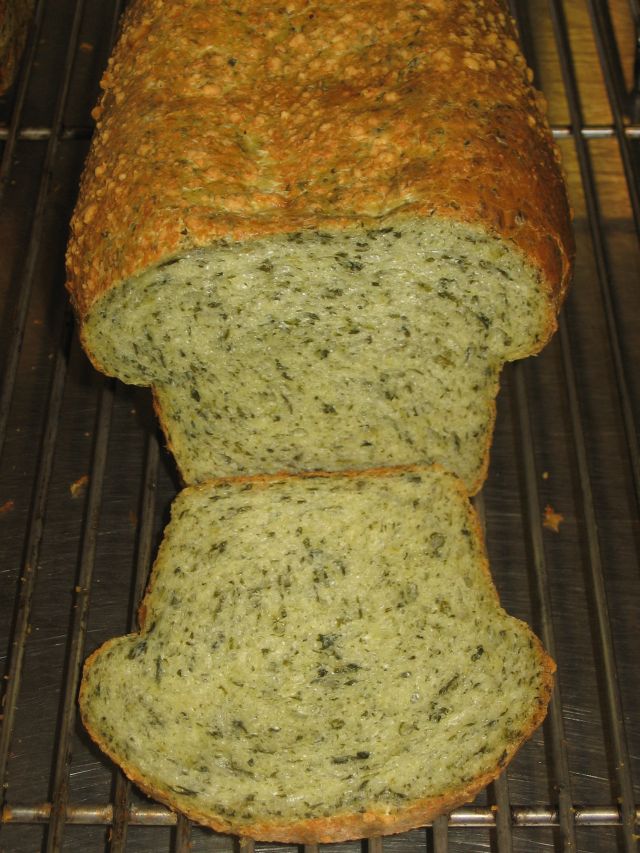
This recipe is an example of how you can take the basic recipe for bread and add other ingredients to make it completely different. I used all unbleached white bread flour in this recipe (no whole wheat) because I wanted it light and airy. The recipe is a large batch recipe that makes 9 loaves, 1-pound each. It sounds like a lot but 1-pound loaves are actually pretty small. You could also make 4 loaves, 2-pounds each if you like (or just cut the recipe in half or quarters). The amount of spinach called for in the recipe may seem like a lot as well (a 3-pound box), but it’s not. By the time you squeeze all the water from the spinach you really only end up with a few handfuls. If you’d like to omit the eggs from the recipe that is possible but they do add to the lightness and richness of the finished bread. And finally, like any recipe that I post (or any that exist, I suppose) this is merely a guide, the options are limitless. The vegetable and cheese may be substituted or exchanged for whatever suits your fancy. A traditional written recipe follows the pictures.

>
This recipe is an example of how you can take the basic recipe for bread and add other ingredients to make it completely different. I used all unbleached white bread flour in this recipe (no whole wheat) because I wanted it light and airy. The recipe is a large batch recipe that makes 9 loaves, 1-pound each. It sounds like a lot but 1-pound loaves are actually pretty small. You could also make 4 loaves, 2-pounds each if you like (or just cut the recipe in half or quarters). The amount of spinach called for in the recipe may seem like a lot as well (a 3-pound box), but it’s not. By the time you squeeze all the water from the spinach you really only end up with a few handfuls. If you’d like to omit the eggs from the recipe that is possible but they do add to the lightness and richness of the finished bread. And finally, like any recipe that I post (or any that exist, I suppose) this is merely a guide, the options are limitless. The vegetable and cheese may be substituted or exchanged for whatever suits your fancy. A traditional written recipe follows the pictures.

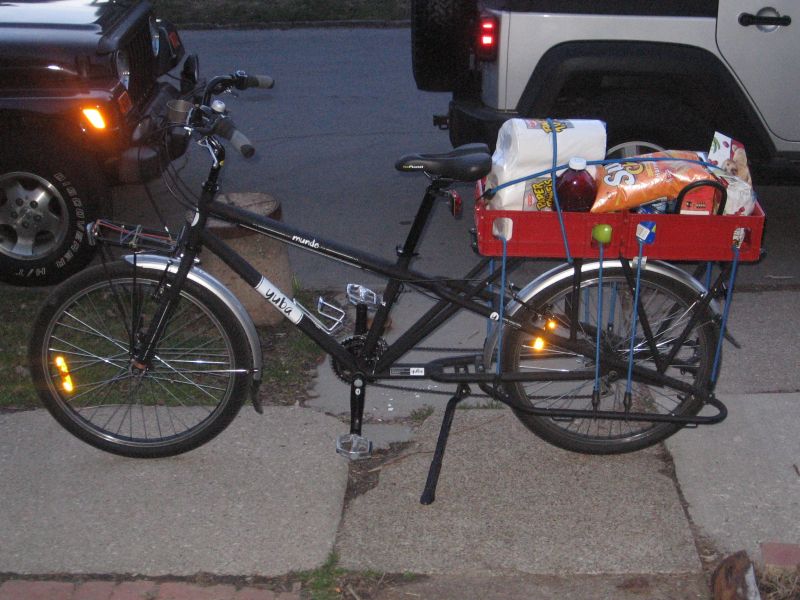
I know this may seem silly, but the other day as I was happily pedaling around town on my Mundo the words of the title to this post came to me: Ride a bike that you like. It may seem obvious, but I don’t think it’s overtly so. Now this too may be a rash and general statement, but I can’t help but wonder if people sometimes purchase a bike because they think (or are told by a salesperson) that it is the type of bike they should be riding. From a personal perspective my bikes have, over the years, sort of gravitated towards bikes that are functional, but also fun to ride. And the later portion of that statement is the most important, I believe. Because if a bike is fun to ride you will want to ride it all the time.
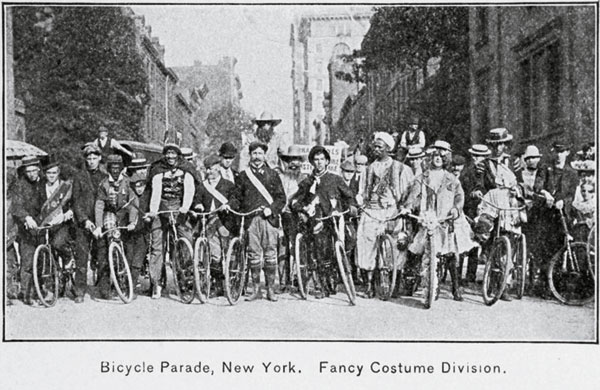
I first started realizing this about ten years ago when I purchased a late 60’s Raleigh Sprite from a local bike shop. It was the first bike that I sat totally upright as I pedaled…it was a revelation. Then I purchased a Dahon Vitesse D7 and my eyes were opened even wider…that bike is just so much fun it makes me smile as I ride it. The first long-bike that I owned was the tandem in the photo below. That too is fun, and the memories of riding around town with my son are some I’ll cherish forever (he’s now a teen and too cool to be seen on a “weird bike” with his dad). I first got into cargo biking when I purchased an old Trek that I purchased at a flea market for $40 and outfitted it with front and rear racks and a trailer hitch. This is when I first realized how fun it was to haul stuff around with my own energy. And then I purchased a Yuba Mundo…well all I can say is this bike rocked my world. This is the first bike that I rode that could carry almost anything my car could and at the same time feel like I wasn’t carrying anything…it’s big cushy ride is akin to driving a pedal-powered boat on land; or that of a Cadillac. Having multiple bikes may seem, to some, a bit extravagant, but I don’t believe this is the case…they all serve separate purposes. Not withstanding, the cost of any one of the bikes is only equivalent to just a few car payments.
I have been an avid bike rider my entire life, and interestingly I can remember as a teenager a friend and I daydreaming about building cargo bikes (they did exist in other countries but the internet did not, thus I was unaware of them). We also designed, but never built, a long bicycle trailer.
My point is, to reiterate…if you ride a bike that you truly like–one that is fun for you to ride–then you will want to ride it; it won’t be a chore. I happen to like riding sitting upright; I also really like carrying stuff…I think it’s fun. But I realize this is not for everyone. If you like speed, then clothe yourself in spandex and get a racing bike. If you like fashion and all the accessories that goes with it, then get a fixed gear (I can’t believe I’m actually suggesting this).
Anyhow, this short video says these sentiments better than I can. I’ve posted this clip a couple times prior, but it has such a strong message I felt compelled to post it again. I suggest you ride not just to get from point A to point B, or even to save the planet…ride for the fun of it.

>
I know this may seem silly, but the other day as I was happily pedaling around town on my Mundo the words of the title to this post came to me: Ride a bike that you like. It may seem obvious, but I don’t think it’s overtly so. Now this too may be a rash and general statement, but I can’t help but wonder if people sometimes purchase a bike because they think (or are told by a salesperson) that it is the type of bike they should be riding. From a personal perspective my bikes have, over the years, sort of gravitated towards bikes that are functional, but also fun to ride. And the later portion of that statement is the most important, I believe. Because if a bike is fun to ride you will want to ride it all the time.
I first started realizing this about ten years ago when I purchased a late 60’s Raleigh Sprite from a local bike shop. It was the first bike that I sat totally upright as I pedaled…it was a revelation. Then I purchased a Dahon Vitesse D7 and my eyes were opened even wider…that bike is just so much fun it makes me smile as I ride it. The first long-bike that I owned was the tandem in the photo below. That too is fun, and the memories of riding around town with my son are some I’ll cherish forever (he’s now a teen and too cool to be seen on a “weird bike” with his dad). I first got into cargo biking when I purchased an old Trek that I purchased at a flea market for $40 and outfitted it with front and rear racks and a trailer hitch. This is when I first realized how fun it was to haul stuff around with my own energy. And then I purchased a Yuba Mundo…well all I can say is this bike rocked my world. This is the first bike that I rode that could carry almost anything my car could and at the same time feel like I wasn’t carrying anything…it’s big cushy ride is akin to driving a pedal-powered boat on land; or that of a Cadillac. Having multiple bikes may seem, to some, a bit extravagant, but I don’t believe this is the case…they all serve separate purposes. Not withstanding, the cost of any one of the bikes is only equivalent to just a few car payments.
I have been an avid bike rider my entire life, and interestingly I can remember as a teenager a friend and I daydreaming about building cargo bikes (they did exist in other countries but the internet did not, thus I was unaware of them). We also designed, but never built, a long bicycle trailer.
My point is, to reiterate…if you ride a bike that you truly like–one that is fun for you to ride–then you will want to ride it; it won’t be a chore. I happen to like riding sitting upright; I also really like carrying stuff…I think it’s fun. But I realize this is not for everyone. If you like speed, then clothe yourself in spandex and get a racing bike. If you like fashion and all the accessories that goes with it, then get a fixed gear (I can’t believe I’m actually suggesting this).
Anyhow, this short video says these sentiments better than I can. I’ve posted this clip a couple times prior, but it has such a strong message I felt compelled to post it again. I suggest you ride not just to get from point A to point B, or even to save the planet…ride for the fun of it.

>


>

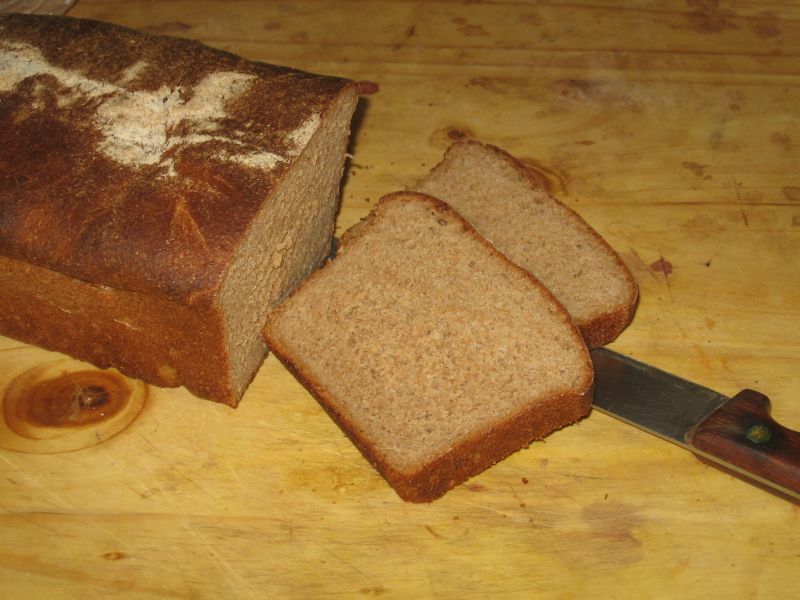
As is often the case I’ve been experimenting with different recipes for healthy bread…in this case 100% whole wheat. I’m convinced (or at least hoping) I’ll eventually get the recipe I want. But before I get into the latest experiment I should answer a couple questions asked by readers recently albeit on earlier posts.
John in NH (commented here) wanted to know if bread could be kneaded using the beater attachment with a hand mixer. Seems he’s a college student and can’t afford a stand mixer with a dough hook. John, I feel your pain. For years I kneaded bread by hand, and this is truly a great way to go if you do not have a stand mixer with a dough hook. You’ll get a workout, but it ca be done. This is how our ancestors did it up until a generation or so ago. Beaters will not mix dough; they are meant for beating ingredients, which is entirely different that kneading. You’d most likely break your hand mixer.
Booklover (commented here) wanted to know if I have a large batch recipe for Ezekiel bread. The answer is yes and no. Yes I have one, but no it’s not written down; it’s in my head. Hopefully I’ll eventually compile the complete bread booklet that is floating around in my head before my internal hard drive crashes. If I do, the booklet will be available through this blog. In the meantime the recipe that is posted can be multiplied. The variables are how you measure the flour. Because the recipe is in volume (cups) rather than weight (ounces) each person’s measurements vary. For this reason you may have to adjust the dough’s hydration (consistency). I hope this helps.
The following recipe is really a variation on a theme. It’s a 100% whole wheat bread, but this time instead of using water in the recipe I used 2% milk. I used the same method as usual in that I soaked flour to soften the grain but this time I allowed it to ferment overnight and into much of the next day. Anyhow, here’s the recipe in pictures with a few comments.
I started by soaking the flour in two separate containers; 1/3 of it with yeast, 2/3 without yeast. Both of these, I suppose could constitute being called a biga, or an Italian version of a firm pre-ferment.
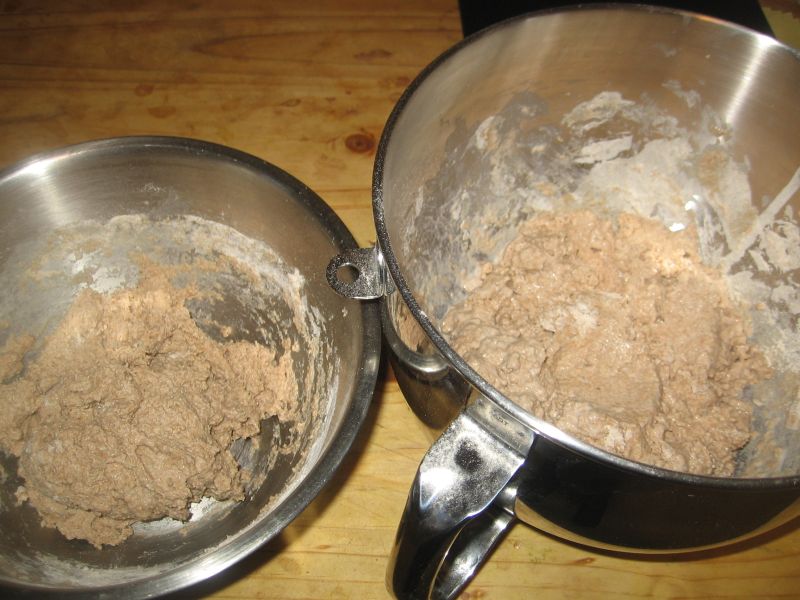
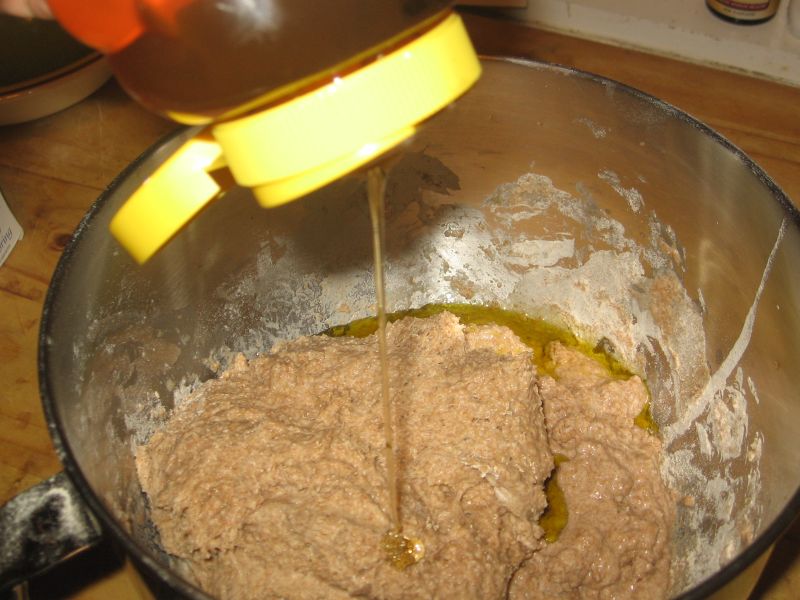
After the dough soaked/fermented for a couple hours at room temperature I combined them and added honey, olive oil, and kosher salt. Then I mixed the dough.
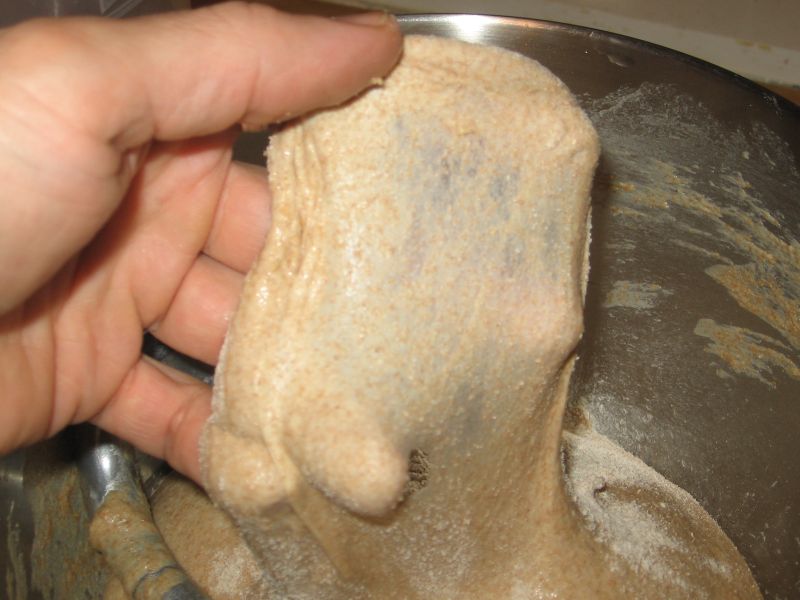
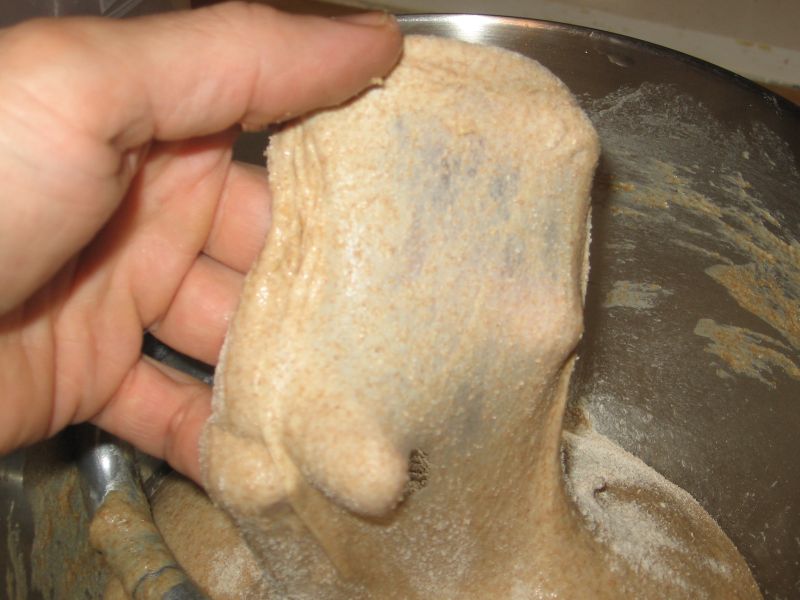
The crucial thing with any bread dough is kneading. When you knead dough you are essentially stretching and aligning the proteins (gluten) in the flour. These cling to one another and form long strands and give the dough it’s muscle, if you will. For this reason a dough that is high in fat, like many pastries, is called a “short dough,” or a dough with short protein (gluten) strands. Anyhow, a simple way to check to see if you have kneaded the dough long enough is the “windowpane test.” This is a very simple test and so called because the dough should stretch as thin as a windowpane (or thinner) without tearing.
Next I placed the dough in a lightly oiled rising bucket in my teeny refrigerator until morning.

By morning the dough had doubled in size, but was of course refrigerator-cold. I cut it into tow pieces, shaped it and placed it in two loaf pans. After covering it with plastic wrap I went about my daily business and checked on it sporadically. At room temperature it took about 3 hours to rise.
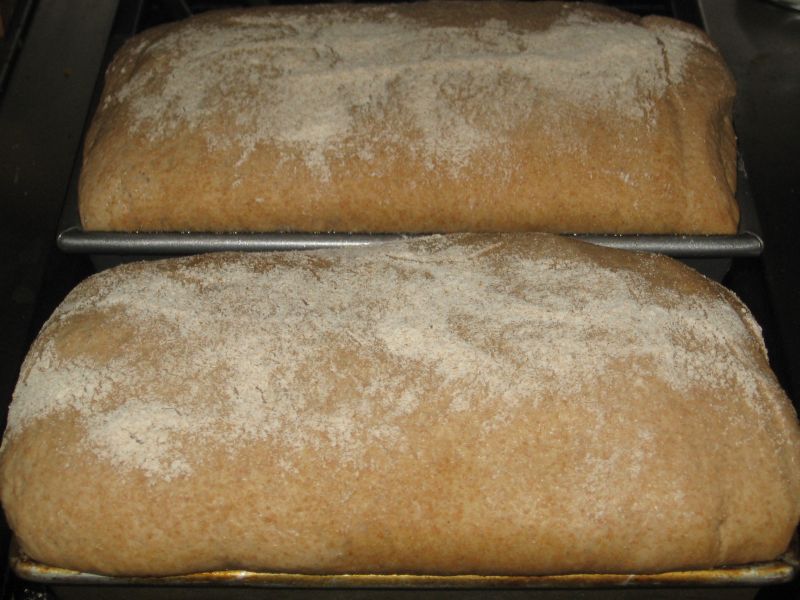

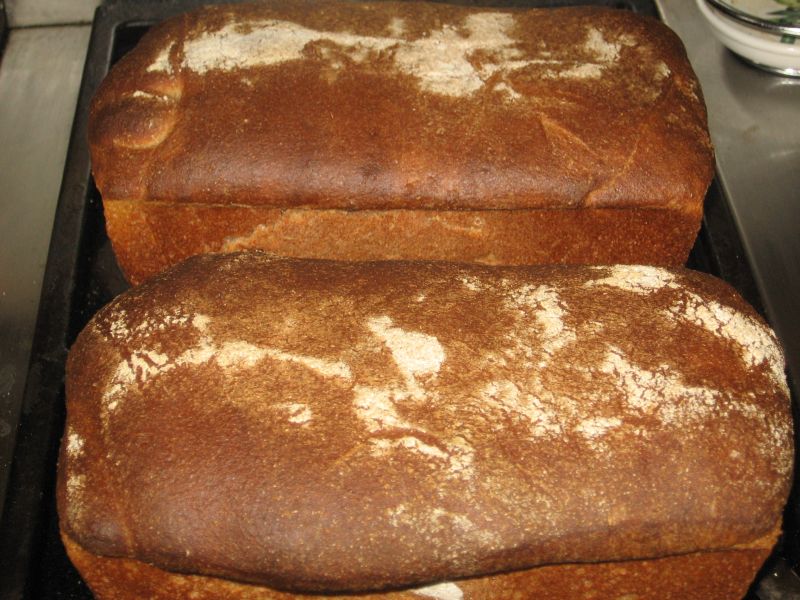
After preheating an oven to 400F I baked it for about 1/2 hour. The hous was filled with the distinctive aroma that only whole wheat bread can prove…it was warm, sweet, nutty, but most of all delicious.

>
As is often the case I’ve been experimenting with different recipes for healthy bread…in this case 100% whole wheat. I’m convinced (or at least hoping) I’ll eventually get the recipe I want. But before I get into the latest experiment I should answer a couple questions asked by readers recently albeit on earlier posts.
John in NH (commented here) wanted to know if bread could be kneaded using the beater attachment with a hand mixer. Seems he’s a college student and can’t afford a stand mixer with a dough hook. John, I feel your pain. For years I kneaded bread by hand, and this is truly a great way to go if you do not have a stand mixer with a dough hook. You’ll get a workout, but it ca be done. This is how our ancestors did it up until a generation or so ago. Beaters will not mix dough; they are meant for beating ingredients, which is entirely different that kneading. You’d most likely break your hand mixer.
Booklover (commented here) wanted to know if I have a large batch recipe for Ezekiel bread. The answer is yes and no. Yes I have one, but no it’s not written down; it’s in my head. Hopefully I’ll eventually compile the complete bread booklet that is floating around in my head before my internal hard drive crashes. If I do, the booklet will be available through this blog. In the meantime the recipe that is posted can be multiplied. The variables are how you measure the flour. Because the recipe is in volume (cups) rather than weight (ounces) each person’s measurements vary. For this reason you may have to adjust the dough’s hydration (consistency). I hope this helps.
The following recipe is really a variation on a theme. It’s a 100% whole wheat bread, but this time instead of using water in the recipe I used 2% milk. I used the same method as usual in that I soaked flour to soften the grain but this time I allowed it to ferment overnight and into much of the next day. Anyhow, here’s the recipe in pictures with a few comments.
I started by soaking the flour in two separate containers; 1/3 of it with yeast, 2/3 without yeast. Both of these, I suppose could constitute being called a biga, or an Italian version of a firm pre-ferment.
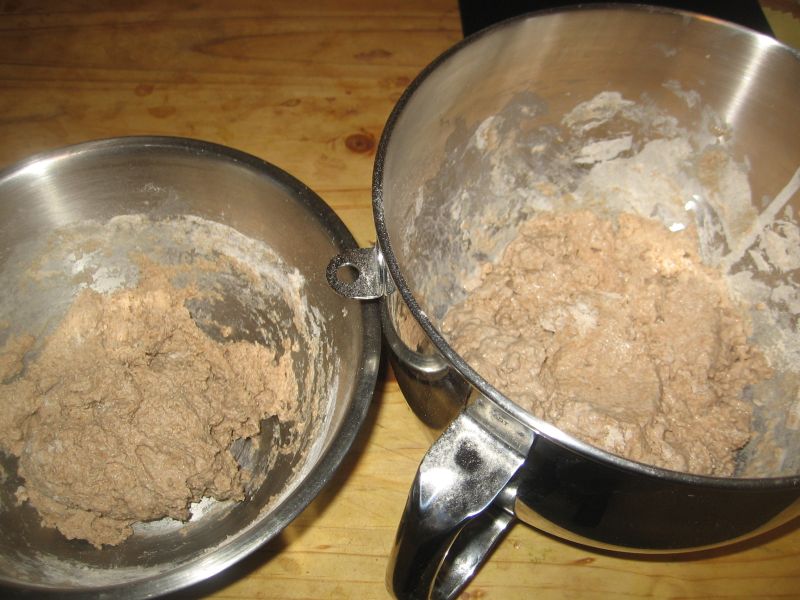
After the dough soaked/fermented for a couple hours at room temperature I combined them and added honey, olive oil, and kosher salt. Then I mixed the dough.
The crucial thing with any bread dough is kneading. When you knead dough you are essentially stretching and aligning the proteins (gluten) in the flour. These cling to one another and form long strands and give the dough it’s muscle, if you will. For this reason a dough that is high in fat, like many pastries, is called a “short dough,” or a dough with short protein (gluten) strands. Anyhow, a simple way to check to see if you have kneaded the dough long enough is the “windowpane test.” This is a very simple test and so called because the dough should stretch as thin as a windowpane (or thinner) without tearing.
Next I placed the dough in a lightly oiled rising bucket in my teeny refrigerator until morning.
By morning the dough had doubled in size, but was of course refrigerator-cold. I cut it into tow pieces, shaped it and placed it in two loaf pans. After covering it with plastic wrap I went about my daily business and checked on it sporadically. At room temperature it took about 3 hours to rise.
After preheating an oven to 400F I baked it for about 1/2 hour. The hous was filled with the distinctive aroma that only whole wheat bread can prove…it was warm, sweet, nutty, but most of all delicious.

I first came across this short clip at Copenhagen Cycle Chic. It’s a commercial for the Italian bicycle company, Cigno. They have many beautiful bikes but this is specifically marketing their Seventy, an elegant folding bike. It has long been a personal gripe of mine that there are so many car commercials but I’ve yet to see an advertisement for a bicycle on television (here in America). When you watch prime-time television you are literally bombarded by advertisements for various automobiles. They are romanticized and the ad is basically telling you how you need this vehicle…even though many of the monthly payments are about the same as the mortgage payment on my house (to read more about the ridiculous amount of commercials–car and other–that we see everyday, click here). Simply said, bicycle advertisments like this are needed on American television. But even more specifically, we need advertisments targeting adults using bicycles as everyday forms of transport. While the Cigno ad is stylish and romantic it is basically targeting young couples. What we really need, I think, are advertisments showing people using cargo bikes or utility bikes as everyday vehicles (to offset the macho pickup truck commercials). I know…now I’m really asking for a lot. But I just wonder if it would make a difference and change the American mindset that the car is the only way to get around. OK…I’ll get off my little soapbox now, because if you are reading this blog I’m most likely preaching to the choir. At any rate, this is really a beautiful commercial to watch.

>
I first came across this short clip at Copenhagen Cycle Chic. It’s a commercial for the Italian bicycle company, Cigno. They have many beautiful bikes but this is specifically marketing their Seventy, an elegant folding bike. It has long been a personal gripe of mine that there are so many car commercials but I’ve yet to see an advertisement for a bicycle on television (here in America). When you watch prime-time television you are literally bombarded by advertisements for various automobiles. They are romanticized and the ad is basically telling you how you need this vehicle…even though many of the monthly payments are about the same as the mortgage payment on my house (to read more about the ridiculous amount of commercials–car and other–that we see everyday, click here). Simply said, bicycle advertisments like this are needed on American television. But even more specifically, we need advertisments targeting adults using bicycles as everyday forms of transport. While the Cigno ad is stylish and romantic it is basically targeting young couples. What we really need, I think, are advertisments showing people using cargo bikes or utility bikes as everyday vehicles (to offset the macho pickup truck commercials). I know…now I’m really asking for a lot. But I just wonder if it would make a difference and change the American mindset that the car is the only way to get around. OK…I’ll get off my little soapbox now, because if you are reading this blog I’m most likely preaching to the choir. At any rate, this is really a beautiful commercial to watch.

A canvas bag containing, among other things, 3 books and a day planner.
A loaf of honey-oatmeal bread.
A u-lock.




 Urban Simplicty