>Shrimp and Scallop Newberg

>

This (the pictures) is a variation on the classic lobster dish by the same name (click here or here to read about it). While this may seem extravagant (and it certainly is) and rich (which it is also), it is exceedingly simple to prepare. It’s a recipe you may want to serve for special occasions. I made about 15 gallons of it for a Mother’s Day brunch I’ll be serving this weekend…the recipe below is in much more manageable proportions. Use the recipe as a guide; substitute whichever shellfish you’d like.

Lobster Newberg
Yield: 4 servings
8 tablespoons unsalted butter, divided
4 tablespoons all-purpose flour
1 cup whole milk
1 cup heavy cream
6 lobster tails, raw, 6-ounces each
1 shallot, peeled and minced
2 teaspoons good-quality Hungarian paprika
½ cup sherry
1 teaspoon salt
½ teaspoon white pepper
Melt 4 tablespoons of the butter in a small saucepan; when it begins to bubble add the flour. Cook the flour and butter over medium heat, while stirring, for 5 minutes. Stir in the milk and cream. Brink the sauce to a boil, then lower the heat to a low simmer. Stir the sauce thoroughly to remove any lumps. Simmer the sauce for 10 minutes, remove it from the heat, and set it aside.
Split the lobster tails lengthwise, and remove the meat from the shells (do not discard the shells). Dice the meat into large pieces and set it aside, reserving any juices that may accumulate. Heat the remaining 4 tablespoons of butter in a large heavy-bottomed skillet. When the butter begins to bubble add the pieces of diced lobster, the lobster shells, and the minced shallot. Sauté these items for 3-4 minutes, taking care not to burn the shallot. Stir in the paprika; sauté another minute longer. Remove the skillet from the heat, and very carefully stir in the sherry. Return the pan to the heat (be careful, the sherry may ignite). Add any juices that may have accumulated on the plate were the diced lobster was resting. Reduce the sherry by half. Stir in the previously made cream sauce. Bring the sauce to a boil, then lower it to a simmer. Simmer the lobster for a minute or two, just until the sauce is thickened and the lobster is cooked throughout. Serve the Newberg over toast points, rice pilaf, or puff pastry. 

Frittata di Verdure Primavera

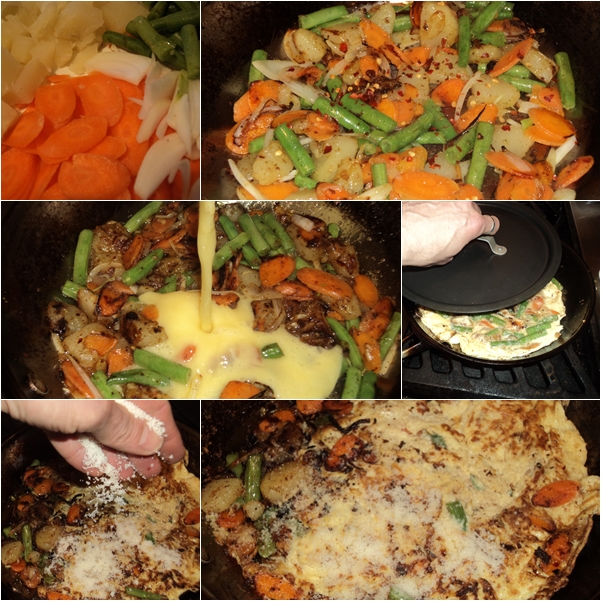
This is a variation (one of many) of something I love to fix myself when I’m home alone…an egg dish loaded with vegetables. It’s really nothing more than  a stove-top open-faced omelet, but with the caramelized vegetables it–I think–is more closely related to an Italian Frittata or Spanish Torta. I refer to this as primavera (springtime) because all of the vegetables–except the green beans–are in season now (click here to read an article with recipes on the pasta dish with the same name). In this recipe, besides the eggs, there is onion, potato, carrot, garlic, crushed hot pepper, and Parmesan cheese. The recipe is basic and varies a little depending one what ingredients you use, but it goes something like this: Heat olive oil in a skillet and add the vegetables in logical succession. When they begin to caramelize add garlic and hot pepper (if you like). Then add the eggs, lower the heat and cover the pan. After a few minutes flip the frittata  (in the air or with the aid of a spatula…it’s difficult for me to show this in pictures). Sprinkle it with cheese and cover the pan again and shut off the heat. Leave the eggs to rest for just a couple minutes, while you slice some bread, pour a glass of wine, or ponder the origin of your ingredients. Gently slide it onto a plate and eat it hot or at room temperature. It is as simple and delicious as it looks….and you can use whatever vegetables or cheese your have in your fridge.

>Frittata di Verdure Primavera

>

This is a variation (one of many) of something I love to fix myself when I’m home alone…an egg dish loaded with vegetables. It’s really nothing more than  a stove-top open-faced omelet, but with the caramelized vegetables it–I think–is more closely related to an Italian Frittata or Spanish Torta. I refer to this as primavera (springtime) because all of the vegetables–except the green beans–are in season now (click here to read an article with recipes on the pasta dish with the same name). In this recipe, besides the eggs, there is onion, potato, carrot, garlic, crushed hot pepper, and Parmesan cheese. The recipe is basic and varies a little depending one what ingredients you use, but it goes something like this: Heat olive oil in a skillet and add the vegetables in logical succession. When they begin to caramelize add garlic and hot pepper (if you like). Then add the eggs, lower the heat and cover the pan. After a few minutes flip the frittata  (in the air or with the aid of a spatula…it’s difficult for me to show this in pictures). Sprinkle it with cheese and cover the pan again and shut off the heat. Leave the eggs to rest for just a couple minutes, while you slice some bread, pour a glass of wine, or ponder the origin of your ingredients. Gently slide it onto a plate and eat it hot or at room temperature. It is as simple and delicious as it looks….and you can use whatever vegetables or cheese your have in your fridge.

Bread Bikes

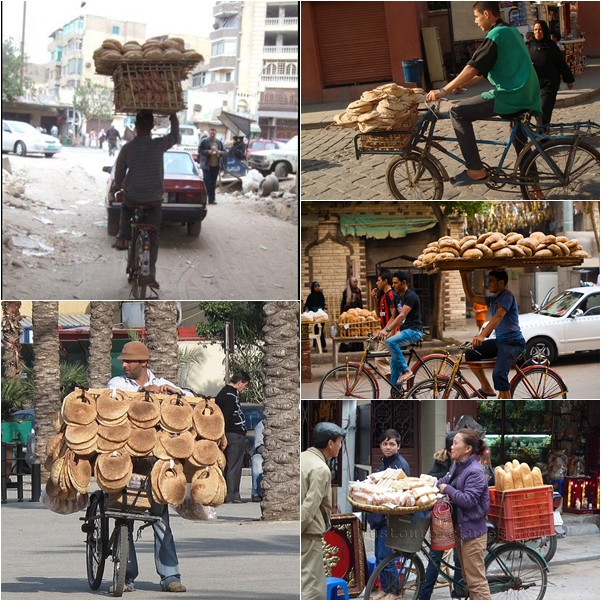
Before I started this blog I had another blog waayyy back in 2006 or 2007…that’s like light-years ago in Internet time. Anyhow, it was when I was toying with starting a blog, and it was, for a very short time, called The Biking Baker…seeing how I like to bike and bake. I even had thoughts of starting a bread delivery service by bike (but figured I’d have to deliver A LOT of bread to support myself so I scrapped that idea). In the past it was not uncommon for bread, and most everything for that matter, to be delivered by bike (hopefully it’s making a  resurgence). Anyhow, on a whim today I googled the phrase “bread bike” and thought I’d share some of the photos. The above photo is my v1 Mundo a few years ago carrying 32 loaves of bread, which I baked for a benefit. Below are pics I found on the internet.

The photos were found here, here, here, here, and  here.

>Bread Bikes

>

Before I started this blog I had another blog waayyy back in 2006 or 2007…that’s like light-years ago in Internet time. Anyhow, it was when I was toying with starting a blog, and it was, for a very short time, called The Biking Baker…seeing how I like to bike and bake. I even had thoughts of starting a bread delivery service by bike (but figured I’d have to deliver A LOT of bread to support myself so I scrapped that idea). In the past it was not uncommon for bread, and most everything for that matter, to be delivered by bike (hopefully it’s making a  resurgence). Anyhow, on a whim today I googled the phrase “bread bike” and thought I’d share some of the photos. The above photo is my v1 Mundo a few years ago carrying 32 loaves of bread, which I baked for a benefit. Below are pics I found on the internet.

The photos were found here, here, here, here, and  here.

Spicy Turkey and Pork Meatloaf

It would be a safe bet to assume that nearly every culture around the globe has some sort of ground meat recipe (click here to see a few), but in America it is simply called what it is: meatloaf…ground meat in loaf form. It’s relatively inexpensive to make (it used to be cheaper, but didn’t everything?), it’s simple to make, it’s versatile, and geeze o’ man is it delicious. Here’s a simple recipe and one of my favorites. I used turkey and pork but the meats are interchangeable with others, as are the seasonings. It can be a bit spicy (not for me…I have a high tolerance for spice) adjust the seasonings to your liking. It’s delicious straight from the oven or cold as leftovers a day or two later (makes great sandwiches). I also added a good amount of cheddar to this recipe, which is visible oozing out of the loaves…mmm.

Spicy Turkey and Pork Meatloaf
Yield: 6 servings
3 tablespoons vegetable oil
1 small onion, diced
1 rib celery, diced
1/2 green bell pepper, diced
1 clove garlic, minced
3 jalapeño peppers, seeded and minced
1-1/2 pound ground turkey
1-1/2 pound ground pork
1 bunch parsley, washed and minced
2 tablespoons chili powder
2 teaspoons cayenne pepper
1-1/2 teaspoons kosher salt
1 teaspoon black pepper
1 tablespoon oregano
1 tablespoon basil
2 large eggs
1/2 cup ketchup
1 tablespoon hot sauce
1/2 cup breadcrumbs

Heat the oil in a heavy skillet then add the onion, celery and bell pepper. Sauté until translucent but not browned. Add the garlic and jalapeño and sauté a minute longer. Remove the vegetables, spread them on a clean plate and place them in a refrigerator for 15 minutes. Transfer the cooked and cooled vegetables to a bowl along with the turkey, pork, chili powder, parsley, cayenne pepper, salt, black pepper, oregano, basil, eggs, ketchup and hot pepper sauce. Mix thoroughly then add the breadcrumbs and mix again until. Pack the meatloaf into a lightly oiled loaf pan, cover it with aluminum foil, and bake it at 350F for about 1/2 hour. Remove the foil and continue to bake it until it reaches an internal temperature of 160F. Allow it to cool 10 minutes before slicing.

>Spicy Turkey and Pork Meatloaf

>

It would be a safe bet to assume that nearly every culture around the globe has some sort of ground meat recipe (click here to see a few), but in America it is simply called what it is: meatloaf…ground meat in loaf form. It’s relatively inexpensive to make (it used to be cheaper, but didn’t everything?), it’s simple to make, it’s versatile, and geeze o’ man is it delicious. Here’s a simple recipe and one of my favorites. I used turkey and pork but the meats are interchangeable with others, as are the seasonings. It can be a bit spicy (not for me…I have a high tolerance for spice) adjust the seasonings to your liking. It’s delicious straight from the oven or cold as leftovers a day or two later (makes great sandwiches). I also added a good amount of cheddar to this recipe, which is visible oozing out of the loaves…mmm.

Spicy Turkey and Pork Meatloaf
Yield: 6 servings
3 tablespoons vegetable oil
1 small onion, diced
1 rib celery, diced
1/2 green bell pepper, diced
1 clove garlic, minced
3 jalapeño peppers, seeded and minced
1-1/2 pound ground turkey
1-1/2 pound ground pork
1 bunch parsley, washed and minced
2 tablespoons chili powder
2 teaspoons cayenne pepper
1-1/2 teaspoons kosher salt
1 teaspoon black pepper
1 tablespoon oregano
1 tablespoon basil
2 large eggs
1/2 cup ketchup
1 tablespoon hot sauce
1/2 cup breadcrumbs

Heat the oil in a heavy skillet then add the onion, celery and bell pepper. Sauté until translucent but not browned. Add the garlic and jalapeño and sauté a minute longer. Remove the vegetables, spread them on a clean plate and place them in a refrigerator for 15 minutes. Transfer the cooked and cooled vegetables to a bowl along with the turkey, pork, chili powder, parsley, cayenne pepper, salt, black pepper, oregano, basil, eggs, ketchup and hot pepper sauce. Mix thoroughly then add the breadcrumbs and mix again until. Pack the meatloaf into a lightly oiled loaf pan, cover it with aluminum foil, and bake it at 350F for about 1/2 hour. Remove the foil and continue to bake it until it reaches an internal temperature of 160F. Allow it to cool 10 minutes before slicing.

Things That Can Be Carried On A Bike (#305)

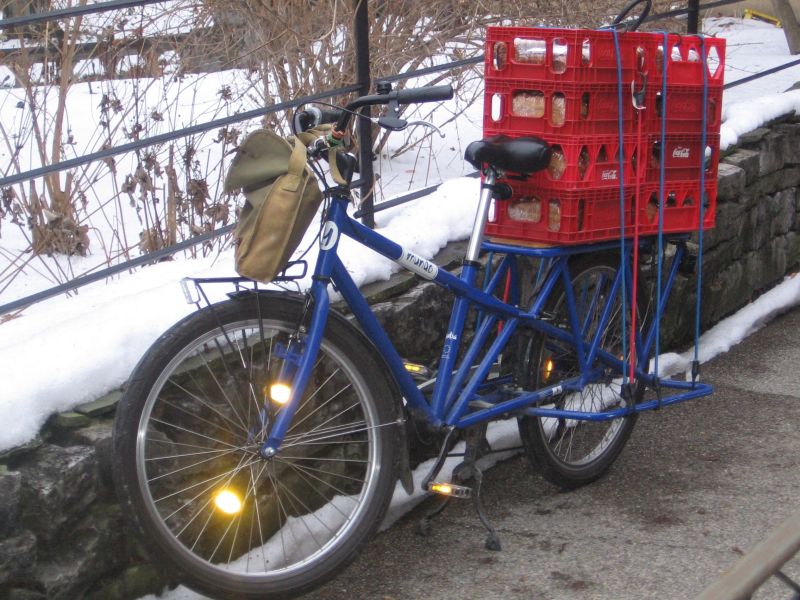
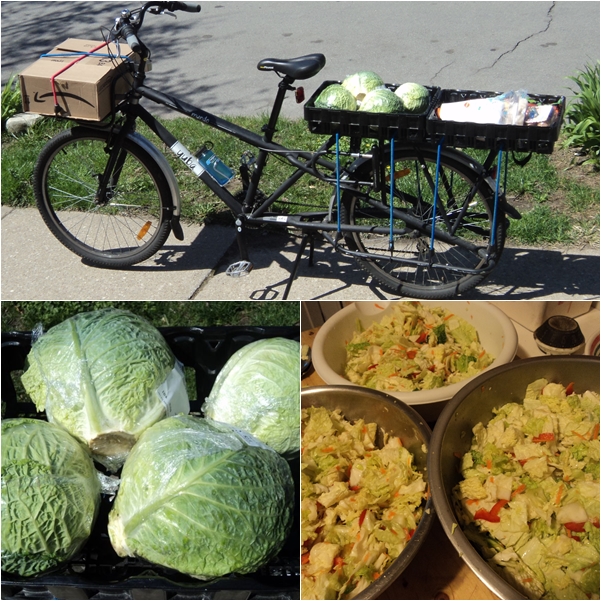
Two plastic soda crates and a cardboard box containing $52.64 in groceries, which include ingredients for a fresh batch of kim chi (click here to learn more about kim chi and  naturally fermented foods).
Kim Chi
(Korean-Style fermented cabbage)
1 head Napa cabbage, cut into two-inch pieces
1 small daikon, grated
2 tablespoons kosher salt
2 cloves garlic, minced
1 small piece ginger, minced
1 small onion, minced
2 tablespoons chili paste
1 tablespoon sugar
Mix all of the ingredients together in a large bowl. Transfer to a container that is wide enough to fit a few small plates inside it. Press the cabbage down and weight it with plates. Cover the container and leave at room temperature. After a day it should release enough liquid that it is submerged, if not, add a little salted water. After about 2 days small bubbles will appear, after about a week or so it will smell and taste distinctively sour. Taste it as often as you like and when the flavor is to your liking transfer the container to the refrigerator to slow its fermentation.

>Things That Can Be Carried On A Bike (#305)

>

Two plastic soda crates and a cardboard box containing $52.64 in groceries, which include ingredients for a fresh batch of kim chi (click here to learn more about kim chi and  naturally fermented foods).
Kim Chi
(Korean-Style fermented cabbage)
1 head Napa cabbage, cut into two-inch pieces
1 small daikon, grated
2 tablespoons kosher salt
2 cloves garlic, minced
1 small piece ginger, minced
1 small onion, minced
2 tablespoons chili paste
1 tablespoon sugar
Mix all of the ingredients together in a large bowl. Transfer to a container that is wide enough to fit a few small plates inside it. Press the cabbage down and weight it with plates. Cover the container and leave at room temperature. After a day it should release enough liquid that it is submerged, if not, add a little salted water. After about 2 days small bubbles will appear, after about a week or so it will smell and taste distinctively sour. Taste it as often as you like and when the flavor is to your liking transfer the container to the refrigerator to slow its fermentation.

The War Prayer, by Mark Twain (and a few other quotes)

To read a bit about the background of Mark Twain’s War Prayer, click here

You have heard that it was said, ‘Love your neighbor and hate your enemy.’ But I tell you, love your enemies and pray for those who persecute you.
Jesus the Christ (Matthew 5:43-44


Whoever counters the malicious with malice can never be pure, but he who feels no maliciousness pacifies those who hate.  Hate brings misery to humanity so the wise man knows no hatred.
The Buddha

An eye for an eye makes the whole world blind.
Mahatma Gandhi

The War Prayer

By Mark Twain

It was a time of great exulting and excitement. The country was up in arms, the war was on, in every breast burned the holy fire of patriotism; the drums were beating, the bands playing, the toy pistols popping, the bunched firecrackers hissing and sputtering; on every hand and far down the receding and fading spread of roofs and balconies a fluttering wilderness of flags flashed in the sun; daily the young volunteers marched down the wide avenue gay and fine in their new uniforms, the proud fathers and mothers and sisters and sweethearts cheering them with voices choked with happy emotion as they swung by; nightly the packed mass meetings listened, panting, to patriot oratory which stirred the deepest depths of their hearts, and which they interrupted at briefest intervals with cyclones of applause, the tears running down their cheeks the while; in the churches the pastors preached devotion to flag and country, and invoked the God of Battles, beseeching His aid in our good cause in outpourings of fervid eloquence which moved every listener. It was indeed a glad and gracious time, and the half dozen rash spirits that ventured to disapprove of the war and cast doubt upon its righteousness straight way got such a stern and angry warning that for their personal safety’s sake they quickly shrank out of sight and offended no more in that way.

Sunday morning came – next day the battalions would leave for the front; the church was filled; the volunteers were there, their young faces alight with martial dreams – visions of the stern advance, the gathering momentum, the rushing charge, the flashing sabers, the flight of the foe, the tumult, the enveloping smoke, the fierce pursuit, the surrender! – then home from the war, bronzed heroes, welcomed, adored, submerged in golden seas of glory! With the volunteers sat their dear ones, proud, happy, and envied by the neighbors and friends who had no sons and brothers to send forth to the field of honor, there to win for the flag, or failing, die the noblest of noble deaths. The service proceeded; a war chapter from the Old Testament was read; the first prayer was said; it was followed by an organ burst that shook the building, and with one impulse the house rose, with glowing eyes and beating hearts, and poured out that tremendous invocation:

“God the all-terrible! Thou who ordainest, Thunder thy clarion and lightning thy sword!”

Then came the “long” prayer. None could remember the like of it for passionate pleading and moving and beautiful language. The burden of its supplication was, that an ever-merciful and benignant Father of us all would watch over our noble young soldiers, and aid, comfort, and encourage them in their patriotic work; bless them, shield them in the day of battle and the hour of peril, bear them in His mighty hand, make them strong and confident, invincible in the bloody onset; help them to crush the foe, grant to them and to their flag and country imperishable honor and glory – An aged stranger entered and moved with slow and noiseless step up the main aisle, his eyes fixed upon the minister, his long body clothed in a robe that reached to his feet, his head bare, his white hair descending in a frothy cataract to his shoulders, his seamy face unnaturally pale, pale even to ghastliness. With all eyes following and wondering, he made his silent way; without pausing, he ascended to the preacher’s side and stood there, waiting. With shut lids the preacher, unconscious of his presence, continued his moving prayer, and at last finished it with the words, uttered in fervent appeal, “Bless our arms, grant us victory, O Lord our God, Father and Protector of our land and flag!”

The stranger touched his arm, motioned him to step aside – which the startled minister did – and took his place. During some moments he surveyed the spellbound audience with solemn eyes, in which burned an uncanny light; then in a deep voice he said:

“I come from the Throne – bearing a message from Almighty God!” The words smote the house with a shock; if the stranger perceived it he gave no attention. “He has heard the prayer of His servant your shepherd, and will grant it if such be your desire after I, His messenger, shall have explained to you its import – that is to say, its full import. For it is like unto many of the prayers of men, in that it asks for more than he who utters it is aware of – except he pause and think.

“God’s servant and yours has prayed his prayer. Has he paused and taken thought? Is it one prayer? No, it is two – one uttered, the other not. Both have reached the ear of Him Who heareth all supplications, the spoken and the unspoken. Ponder this – keep it in mind. If you would beseech a blessing upon yourself, beware! lest without intent you invoke a curse upon a neighbor at the same time. If you pray for the blessing of rain upon your crop which needs it, by that act you are possibly praying for a curse upon some neighbor’s crop which may not need rain and can be injured by it.

“You have heard your servant’s prayer – the uttered part of it. I am commissioned of God to put into words the other part of it – that part which the pastor – and also you in your hearts – fervently prayed silently. And ignorantly and unthinkingly? God grant that it was so! You heard these words: ‘Grant us victory, O Lord our God!’ That is sufficient. The whole of the uttered prayer is compact into those pregnant words. Elaborations were not necessary. When you have prayed for victory you have prayed for many unmentioned results which follow victory – must follow it, cannot help but follow it. Upon the listening spirit of God the Father fell also the unspoken part of the prayer. He commandeth me to put it into words. Listen!

“O Lord our Father, our young patriots, idols of our hearts, go forth to battle – be Thou near them! With them – in spirit – we also go forth from the sweet peace of our beloved firesides to smite the foe. O Lord our God, help us to tear their soldiers to bloody shreds with our shells; help us to cover their smiling fields with the pale forms of their patriot dead; help us to drown the thunder of the guns with shrieks of their wounded, writhing in pain; help us to lay waste their humble homes with hurricanes of fire; help us to wring the hearts of their unoffending widows with unavailing grief; help us to turn them out roofless with their little children to wander unfriended the wastes of their desolated land in rags and hunger and thirst, sports of the sun flames of summer and the icy winds of winter, broken in spirit, worn with travail, imploring Thee for the refuge of the grave and denied it – for our sakes who adore Thee, Lord, blast their hopes, blight their lives, protract their bitter pilgrimage, make heavy their steps, water their way with tears, stain the white snow with the blood of their wounded feet! We ask it, in the spirit of love, of Him Who is the Source of Love, and Who is the ever-faithful refuge and friend of all that are sore beset and seek His aid with humble and contrite hearts. Amen.”

[After a pause.] “Ye have prayed it; if ye still desire it, speak! The messenger of the Most High waits.”

It was believed afterward that the man was a lunatic, because there was no sense in what he said.
.

>The War Prayer, by Mark Twain (and a few other quotes)

>

To read a bit about the background of Mark Twain’s War Prayer, click here

You have heard that it was said, ‘Love your neighbor and hate your enemy.’ But I tell you, love your enemies and pray for those who persecute you.
Jesus the Christ (Matthew 5:43-44


Whoever counters the malicious with malice can never be pure, but he who feels no maliciousness pacifies those who hate.  Hate brings misery to humanity so the wise man knows no hatred.
The Buddha

An eye for an eye makes the whole world blind.
Mahatma Gandhi

The War Prayer

By Mark Twain

It was a time of great exulting and excitement. The country was up in arms, the war was on, in every breast burned the holy fire of patriotism; the drums were beating, the bands playing, the toy pistols popping, the bunched firecrackers hissing and sputtering; on every hand and far down the receding and fading spread of roofs and balconies a fluttering wilderness of flags flashed in the sun; daily the young volunteers marched down the wide avenue gay and fine in their new uniforms, the proud fathers and mothers and sisters and sweethearts cheering them with voices choked with happy emotion as they swung by; nightly the packed mass meetings listened, panting, to patriot oratory which stirred the deepest depths of their hearts, and which they interrupted at briefest intervals with cyclones of applause, the tears running down their cheeks the while; in the churches the pastors preached devotion to flag and country, and invoked the God of Battles, beseeching His aid in our good cause in outpourings of fervid eloquence which moved every listener. It was indeed a glad and gracious time, and the half dozen rash spirits that ventured to disapprove of the war and cast doubt upon its righteousness straight way got such a stern and angry warning that for their personal safety’s sake they quickly shrank out of sight and offended no more in that way.

Sunday morning came – next day the battalions would leave for the front; the church was filled; the volunteers were there, their young faces alight with martial dreams – visions of the stern advance, the gathering momentum, the rushing charge, the flashing sabers, the flight of the foe, the tumult, the enveloping smoke, the fierce pursuit, the surrender! – then home from the war, bronzed heroes, welcomed, adored, submerged in golden seas of glory! With the volunteers sat their dear ones, proud, happy, and envied by the neighbors and friends who had no sons and brothers to send forth to the field of honor, there to win for the flag, or failing, die the noblest of noble deaths. The service proceeded; a war chapter from the Old Testament was read; the first prayer was said; it was followed by an organ burst that shook the building, and with one impulse the house rose, with glowing eyes and beating hearts, and poured out that tremendous invocation:

“God the all-terrible! Thou who ordainest, Thunder thy clarion and lightning thy sword!”

Then came the “long” prayer. None could remember the like of it for passionate pleading and moving and beautiful language. The burden of its supplication was, that an ever-merciful and benignant Father of us all would watch over our noble young soldiers, and aid, comfort, and encourage them in their patriotic work; bless them, shield them in the day of battle and the hour of peril, bear them in His mighty hand, make them strong and confident, invincible in the bloody onset; help them to crush the foe, grant to them and to their flag and country imperishable honor and glory – An aged stranger entered and moved with slow and noiseless step up the main aisle, his eyes fixed upon the minister, his long body clothed in a robe that reached to his feet, his head bare, his white hair descending in a frothy cataract to his shoulders, his seamy face unnaturally pale, pale even to ghastliness. With all eyes following and wondering, he made his silent way; without pausing, he ascended to the preacher’s side and stood there, waiting. With shut lids the preacher, unconscious of his presence, continued his moving prayer, and at last finished it with the words, uttered in fervent appeal, “Bless our arms, grant us victory, O Lord our God, Father and Protector of our land and flag!”

The stranger touched his arm, motioned him to step aside – which the startled minister did – and took his place. During some moments he surveyed the spellbound audience with solemn eyes, in which burned an uncanny light; then in a deep voice he said:

“I come from the Throne – bearing a message from Almighty God!” The words smote the house with a shock; if the stranger perceived it he gave no attention. “He has heard the prayer of His servant your shepherd, and will grant it if such be your desire after I, His messenger, shall have explained to you its import – that is to say, its full import. For it is like unto many of the prayers of men, in that it asks for more than he who utters it is aware of – except he pause and think.

“God’s servant and yours has prayed his prayer. Has he paused and taken thought? Is it one prayer? No, it is two – one uttered, the other not. Both have reached the ear of Him Who heareth all supplications, the spoken and the unspoken. Ponder this – keep it in mind. If you would beseech a blessing upon yourself, beware! lest without intent you invoke a curse upon a neighbor at the same time. If you pray for the blessing of rain upon your crop which needs it, by that act you are possibly praying for a curse upon some neighbor’s crop which may not need rain and can be injured by it.

“You have heard your servant’s prayer – the uttered part of it. I am commissioned of God to put into words the other part of it – that part which the pastor – and also you in your hearts – fervently prayed silently. And ignorantly and unthinkingly? God grant that it was so! You heard these words: ‘Grant us victory, O Lord our God!’ That is sufficient. The whole of the uttered prayer is compact into those pregnant words. Elaborations were not necessary. When you have prayed for victory you have prayed for many unmentioned results which follow victory – must follow it, cannot help but follow it. Upon the listening spirit of God the Father fell also the unspoken part of the prayer. He commandeth me to put it into words. Listen!

“O Lord our Father, our young patriots, idols of our hearts, go forth to battle – be Thou near them! With them – in spirit – we also go forth from the sweet peace of our beloved firesides to smite the foe. O Lord our God, help us to tear their soldiers to bloody shreds with our shells; help us to cover their smiling fields with the pale forms of their patriot dead; help us to drown the thunder of the guns with shrieks of their wounded, writhing in pain; help us to lay waste their humble homes with hurricanes of fire; help us to wring the hearts of their unoffending widows with unavailing grief; help us to turn them out roofless with their little children to wander unfriended the wastes of their desolated land in rags and hunger and thirst, sports of the sun flames of summer and the icy winds of winter, broken in spirit, worn with travail, imploring Thee for the refuge of the grave and denied it – for our sakes who adore Thee, Lord, blast their hopes, blight their lives, protract their bitter pilgrimage, make heavy their steps, water their way with tears, stain the white snow with the blood of their wounded feet! We ask it, in the spirit of love, of Him Who is the Source of Love, and Who is the ever-faithful refuge and friend of all that are sore beset and seek His aid with humble and contrite hearts. Amen.”

[After a pause.] “Ye have prayed it; if ye still desire it, speak! The messenger of the Most High waits.”

It was believed afterward that the man was a lunatic, because there was no sense in what he said.
.

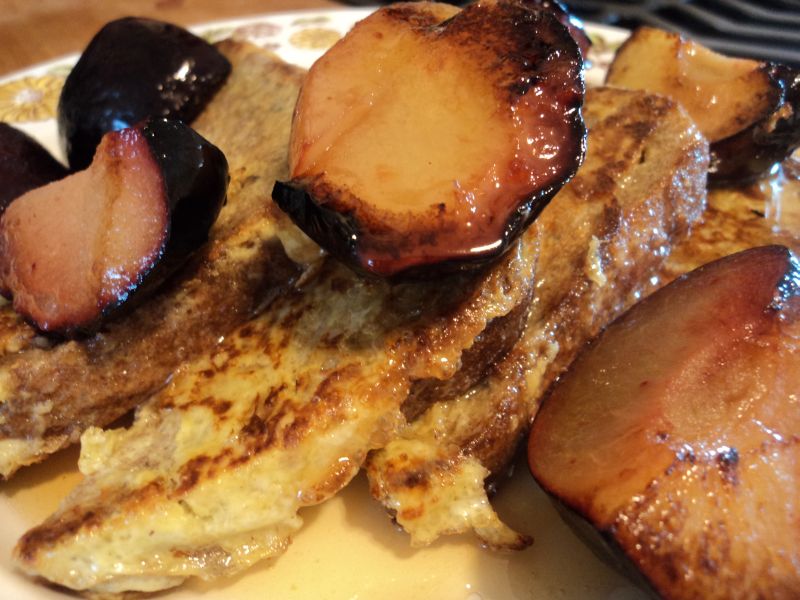
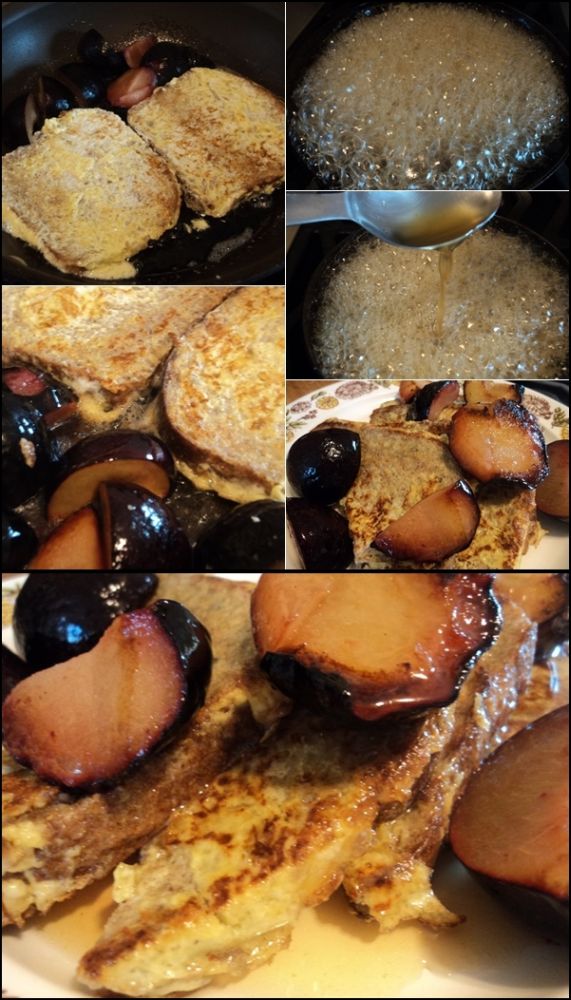
Ezekiel French Toast with Caramelized Black Plum and Pineapple Syrup

If you’re a regular visitor to this blog you know that French Toast is my son’s favorite breakfast. I’ve posted versions of this on numerous occasions in the past (click here, here, or here for other interesting variations with pictures and recipes), and this is just another variation on a theme. And while this may seem like a complicated recipe to make at home it is about as simple as it gets. The key is, of course, using good quality ingredients. It goes something like this:

Soak good quality bread in a mixture of eggs and milk (I used homemade Ezekiel Bread, but store-bought would be fine as well). Meanwhile simmer fruit juice in a pan with a splash of honey, maple syrup, or sugar (use whatever is your favorite juice). While the juice simmers to a syrup constancy heat a skillet with canola oil or butter, or a combination of both. Add the soaked bread to the pan along with whatever fruit you have on hand or would like to eat. By the time the bread and fruit are caramelized and cooked throughout the syrup should be ready. Why pay $7.00 a plate for this when you can make it at home for a fraction of the cost in about 10 minutes.  And it is as good as it looks.

>Ezekiel French Toast with Caramelized Black Plum and Pineapple Syrup

>

If you’re a regular visitor to this blog you know that French Toast is my son’s favorite breakfast. I’ve posted versions of this on numerous occasions in the past (click here, here, or here for other interesting variations with pictures and recipes), and this is just another variation on a theme. And while this may seem like a complicated recipe to make at home it is about as simple as it gets. The key is, of course, using good quality ingredients. It goes something like this:

Soak good quality bread in a mixture of eggs and milk (I used homemade Ezekiel Bread, but store-bought would be fine as well). Meanwhile simmer fruit juice in a pan with a splash of honey, maple syrup, or sugar (use whatever is your favorite juice). While the juice simmers to a syrup constancy heat a skillet with canola oil or butter, or a combination of both. Add the soaked bread to the pan along with whatever fruit you have on hand or would like to eat. By the time the bread and fruit are caramelized and cooked throughout the syrup should be ready. Why pay $7.00 a plate for this when you can make it at home for a fraction of the cost in about 10 minutes.  And it is as good as it looks.

Bicycle Power Calculator

This is pretty cool (and I originally found it at treehugger). I’m not sure I’ve entirely figured it out, but if you’re at all interested in bicycling as transportation you may find this interesting…it tells you how much energy you have to generate to propel yourself on a bike. Click here to go directly wit the page with the calculator.

Things That Can Be Carried On A Bike (#303 & #304)

#303 (upper photo, on my way to work in the morning)…A canvas book bag containing books and writing implements, a plastic bucket containing 4 lbs. of raw whole wheat bread dough, a joke book with more than 1000 jokes, the New Yorker Magazine’s 2010 food issue.

#304 (lower photo, on my way home in the early evening)…A canvas bag containing books and writing implements, a plastic bag containing a few tools, an empty plastic bucket, a cardboard box containing 3 freshly baked loaves of whole wheat bread