>I Can See Clearly Now

>Ok, this may seem silly, but for as long as I have been riding through bone-chilling Buffalo winters I have not worn any sort of eye protection…I can’t tell you how many snow showers I’ve squinted through. I’ve seen other people biking with ski goggles and thought about that, but then the other day I was handed these simple clear safety glasses…all I can say is it was an eye-opening (yes I am aware of the pun) revelation. Riding home the day I received them I’m sure I was singing the old Johnny Nash song, I Can See Clearly Now. These simple glasses have changed the way I view winter cycling, literally and figuratively. Today when I left work (wearing the glasses) it was snowing out and I found myself instinctively squinting, trying to keep the snow out of my eyes…then I remembered and opened them wide. I truly can see clearly now; I recommend glasses/goggles to anyone who rides year-round.

Though the song has nothing to do with Urban Simplicity I thought it was appropriate to include it in this post for your listening/viewing pleasure. Here’s Johnny Nash on the Midnight Special back in 1973…sometimes you forget who good those old songs are (what a voice!).

Oh, the Irony

Well I never thought I’d be posting a short clip of a car commercial on this blog…but here I am doing just that. During another evening of being bombarded with auto commercials I found this one truly intriguing (but I ask again, where are the bike commercials).

A couple things about this commercial. Firstly, did you know that Kia company began by making bicycles, not cars? I surly didn’t. But then again this doesn’t surprise me because many of the roads, including their routes, markings, and traffic laws, were initially brought about for the bicycle, not the car. Also, is it just me or is the bicycle in this advertisement more enticing than the car?

Anyhow, not only am I posting a car commercial at this blog, but I’m actually encouraging you to watch it…oh, the irony! But when I watch this minute-long clip I see the bike, not the car.

>Oh, the Irony

>Well I never thought I’d be posting a short clip of a car commercial on this blog…but here I am doing just that. During another evening of being bombarded with auto commercials I found this one truly intriguing (but I ask again, where are the bike commercials).

A couple things about this commercial. Firstly, did you know that Kia company began by making bicycles, not cars? I surly didn’t. But then again this doesn’t surprise me because many of the roads, including their routes, markings, and traffic laws, were initially brought about for the bicycle, not the car. Also, is it just me or is the bicycle in this advertisement more enticing than the car?

Anyhow, not only am I posting a car commercial at this blog, but I’m actually encouraging you to watch it…oh, the irony! But when I watch this minute-long clip I see the bike, not the car.

Ezekiel Bread

“Take wheat and barley, beans and lentils, millet and spelt; put them in a storage jar and use them to make bread for yourself.”
Ezekiel 4:9 (NIV)

 (If you are coming upon this post via a search engine you can find an updated version of this recipe here.)

This is by far one of my most favorite breads. No, not just because it is mentioned in the Bible (there are many references to bread in the Bible). I will admit that the Bible reference is intriguing, but I like this bread, mostly, because it is just so good. It is one of those foods that when you eat it you can feel how nutritious it is…each slice is like a meal unto itself. The flavors are incredible, and it’s a fun bread to make, also.

I’ve posted on this bread in the past (click here), but like anything, my recipes (like life, I suppose) have a certain fluidity to them…they keep flowing and evolving. There are plenty of recipes floating out there in cyber-space for Ezekiel bread…and many of them, I think, are not very good. Some of them, also, are recipes with sprouted grains, which is entirely different than the one I’ve included here. But many that are variants of yeasted breads, such as the one included here, state that there is no flour in the recipe…yet they call for grinding wheat and spelt. Um…I’m no food scientist but I do know that ground wheat and spelt (a type of wheat) is flour.

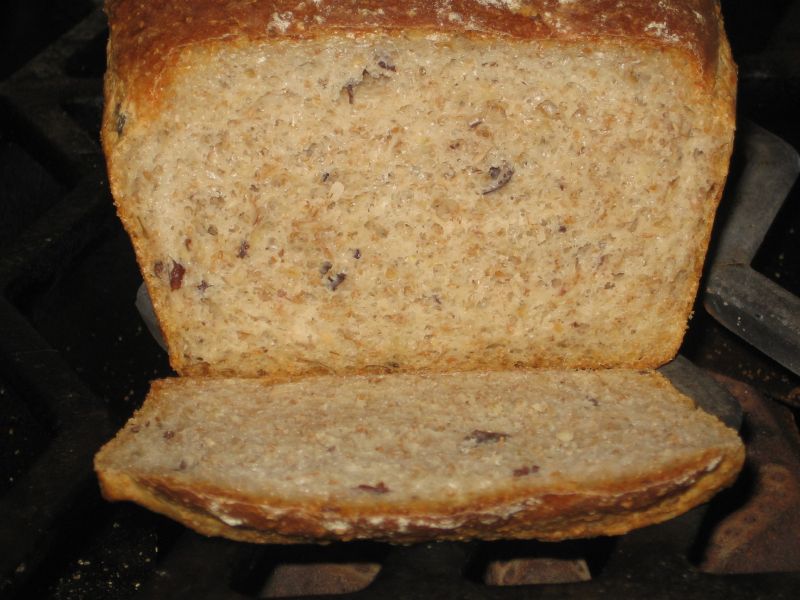
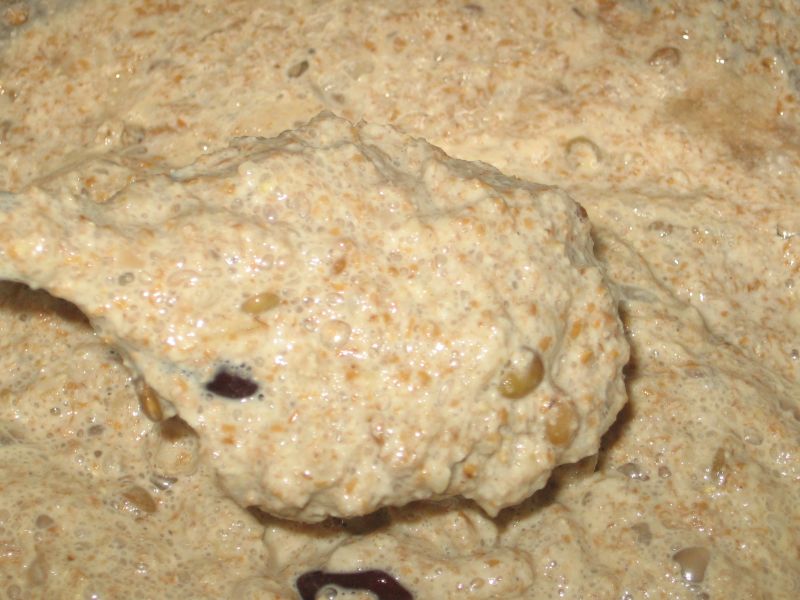
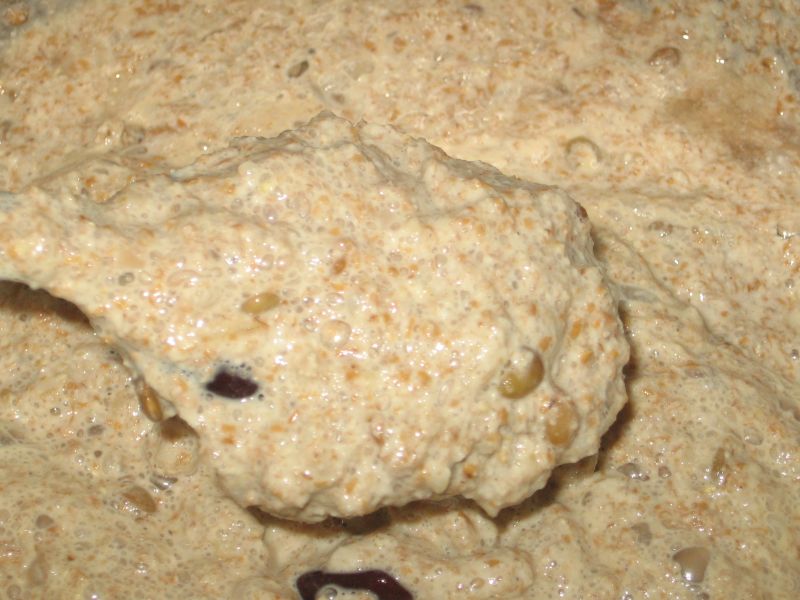
What I think is unique to this recipe, and what makes it truly delicious, is that I leave many of the grains whole (other than the flour) and include them in the pre-ferment; when the dough is mixed most are mashed into it, but some, especially the beans, are still visible. Anyhow, here’s how I made it (mostly pictures first; a traditional recipe follows).

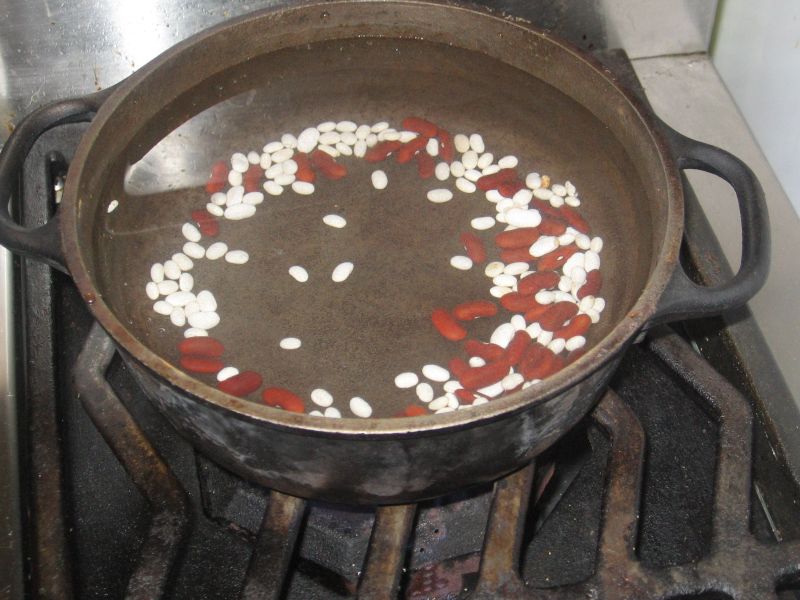
Boil the legumes and grains, beginning with the beans because they take the longest. After the beans are cooked, add the barley and lentils, and then the millet and bulgar. Allow the grains to cool in the cooking liquid.

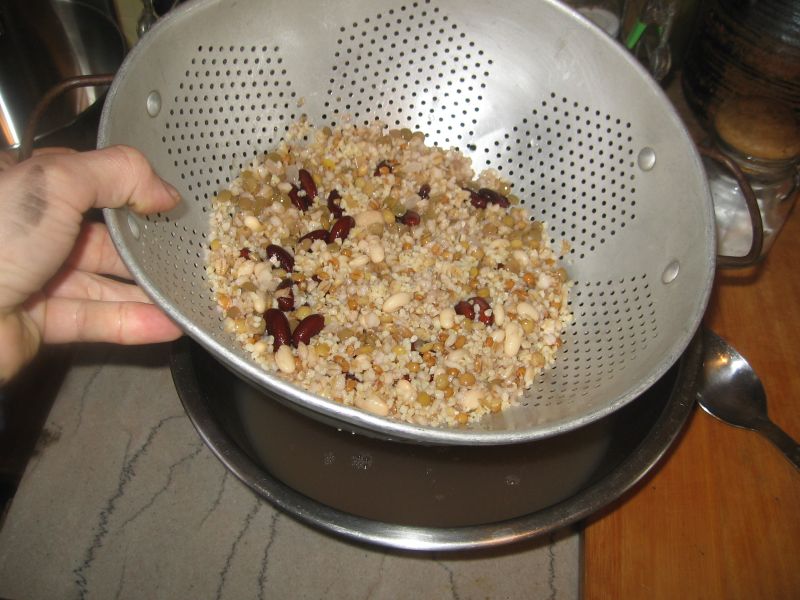
Drain the grains, squeezing them of as much liquid as possible; reserve the cooking liquid.

Make a sponge (a sort of mash, really) out of the grains, cooking liquid, some of the flour and yeast.
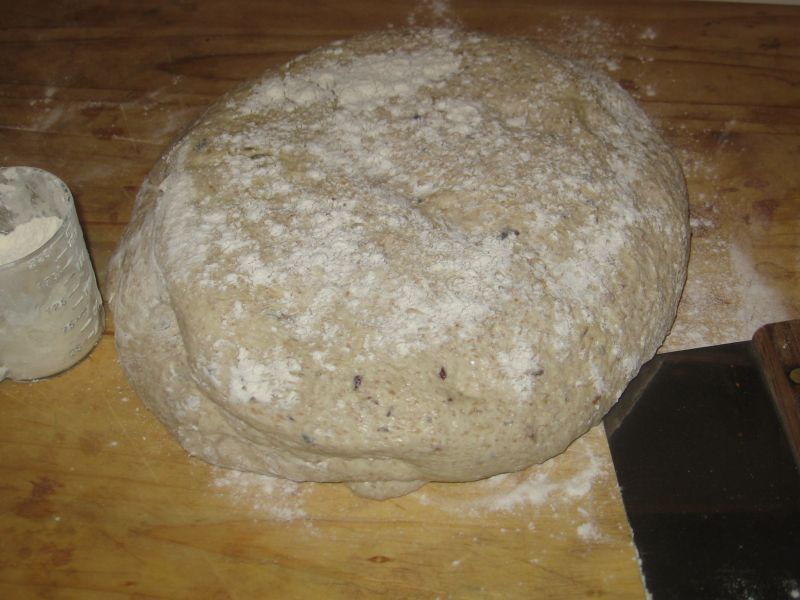
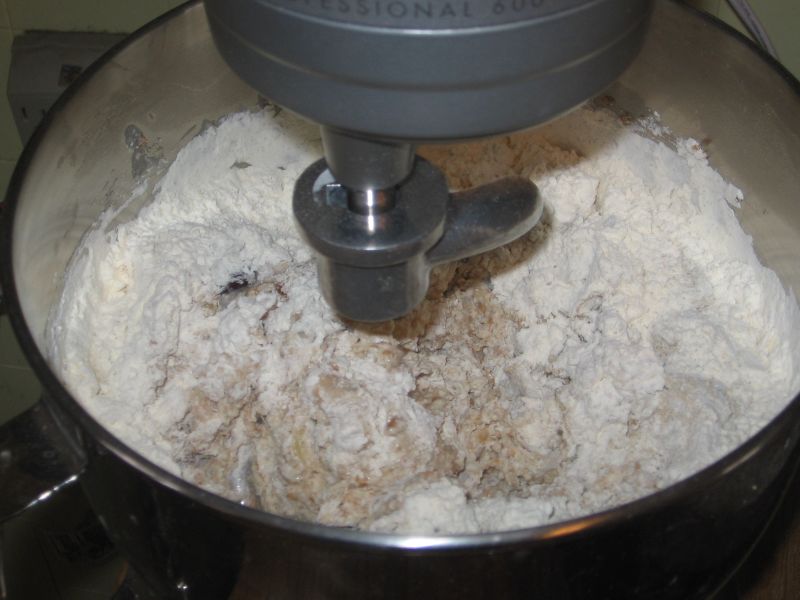
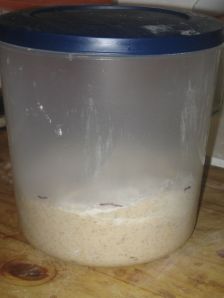
Make the dough, utilizing the pre-ferment and the remaining ingredients. Allow the dough to ferment and double, then push it down and allow it to rise again. (I’ve been using buckets to raise dough in lately, opposed to a bowl. I got the idea from buckets I saw at King Arthur, but I can’t see spending $17.00 on a plastic bucket so I’m using what I have at hand; I just poked a hole in the lid with the tip of a knife to keep it from blowing off as the dough produces gases. The buckets really work well…after marking the side I can see when the dough doubles in size.)


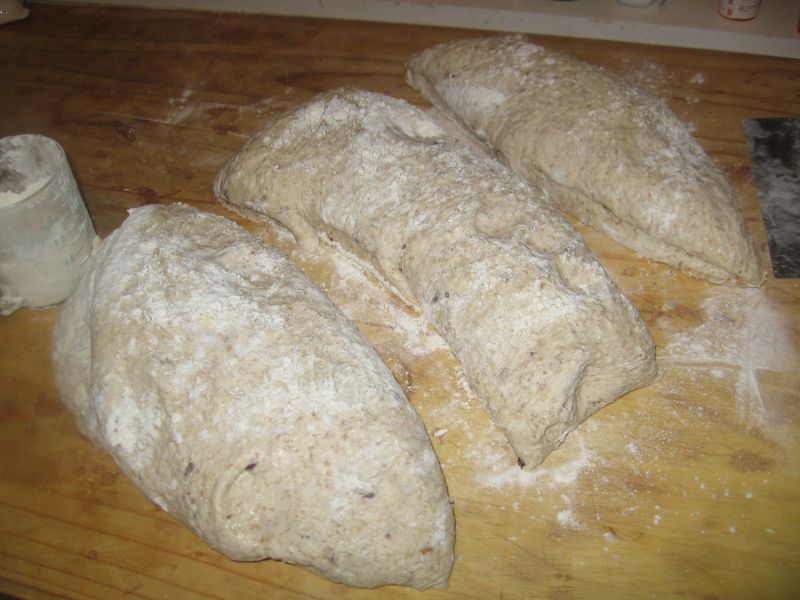
Turn the dough out onto a work surface. Cut it into 3 pieces. Shape it into loaves. Put it into pans. Allow it to rise, then bake it. (A recipe follows the pictures.)



Ezekiel Bread

Makes 3 loaves

6 cups water
2 tablespoons white beans
2 tablespoons red beans
2 tablespoons lentils
2 tablespoons barley
2 tablespoons millet
2 tablespoons bulgar wheat
___________________

2 1/4 cups cooking water
2 cups coarse ground whole wheat flour
2 teaspoons instant yeast
___________________

1 cup spelt flour
3 cups bread flour
1/4 cup honey
1/4 cup olive oil
3 teaspoons sea salt
3 teaspoons instant yeast

Boil the grains in the water in logical succession according to cooking times: first the white and red beans (about 45 minutes), when they are almost soft add the lentils and barley (about 30 minutes); lastly, add the millet and bulgar (about 10 minutes). The key is that after each addition the previous grain must be soft enough so that when all of the grains are in the pot they will all be equally soft; undercooked grains (especially the beans) can really ruin this bread. And as the grains cook add more water to the pot as necessary because the cooking liquid, which is full of nutrients, will become part of the recipe (keeping a lid on the pot will slow it’s evaporation). After the grains are cooked allow them to cool in the liquid to room temperature, refrigerating if necessary.

Drain the grains, squeezing them with your hands or the back of a spoon, reserving the cooking liquid. Make a sponge buy measuring 2 1/4 cups of cooking liquid and combining it in a bowl with the cooked grains, the two cups of whole wheat flour, and two teaspoons of yeast. Stir this just to combine, cover the bowl with plastic and allow to ferment from anywhere from 1 to 12 hours.

Pour the sponge into the bowl of an upright mixer that is fitted with a dough hook. Add the spelt flour, bread flour, honey, oil, salt, and yeast. Knead the dough on medium speed for 8-10 minutes, or until it passes the “windowpane test.” Place the dough in a lightly oiled container, cover it loosly, and allow to ferment for 1-2 hours, or until doubled in bulk. Deflate the dough and allow it to ferment an additional 30 minutes.

Turn the dough out onto a floured work surface and cut it into 3 pieces. Shap into loaves and place into lightly oiled pans. Loosely cover the loaves with plastic wrap and allow to ferment for 30-60 minutes, or until double in size and when gently touched with a fingertip an intentation remains.

Bake the breads for about 30-40 minutes, adding steam to the oven a few times (either with ice cubes or a spray bottle) and rotaing the breads every ten minutes. The breads are done when they are dark brown and sound hollow when tapped upon. Remove the breads from their pans and allow them to cook on a wire rack for at least 10 minutes before slicing.

>Ezekiel Bread

>“Take wheat and barley, beans and lentils, millet and spelt; put them in a storage jar and use them to make bread for yourself.”
Ezekiel 4:9 (NIV)

This is by far one of my most favorite breads. No, not just because it is mentioned in the Bible (there are many references to bread in the Bible). I will admit that the Bible reference is intriguing, but I like this bread, mostly, because it is just so good. It is one of those foods that when you eat it you can feel how nutritious it is…each slice is like a meal unto itself. The flavors are incredible, and it’s a fun bread to make, also.

I’ve posted on this bread in the past (click here), but like anything, my recipes (like life, I suppose) have a certain fluidity to them…they keep flowing and evolving. There are plenty of recipes floating out there in cyber-space for Ezekiel bread…and many of them, I think, are not very good. Some of them, also, are recipes with sprouted grains, which is entirely different than the one I’ve included here. But many that are variants of yeasted breads, such as the one included here, state that there is no flour in the recipe…yet they call for grinding wheat and spelt. Um…I’m no food scientist but I do know that ground wheat and spelt (a type of wheat) is flour.

What I think is unique to this recipe, and what makes it truly delicious, is that I leave many of the grains whole (other than the flour) and include them in the pre-ferment; when the dough is mixed most are mashed into it, but some, especially the beans, are still visible. Anyhow, here’s how I made it (mostly pictures first; a traditional recipe follows).

Boil the legumes and grains, beginning with the beans because they take the longest. After the beans are cooked, add the barley and lentils, and then the millet and bulgar. Allow the grains to cool in the cooking liquid.

Drain the grains, squeezing them of as much liquid as possible; reserve the cooking liquid.

Make a sponge (a sort of mash, really) out of the grains, cooking liquid, some of the flour and yeast.
Make the dough, utilizing the pre-ferment and the remaining ingredients. Allow the dough to ferment and double, then push it down and allow it to rise again. (I’ve been using buckets to raise dough in lately, opposed to a bowl. I got the idea from buckets I saw at King Arthur, but I can’t see spending $17.00 on a plastic bucket so I’m using what I have at hand; I just poked a hole in the lid with the tip of a knife to keep it from blowing off as the dough produces gases. The buckets really work well…after marking the side I can see when the dough doubles in size.)


Turn the dough out onto a work surface. Cut it into 3 pieces. Shape it into loaves. Put it into pans. Allow it to rise, then bake it. (A recipe follows the pictures.)


Ezekiel Bread

Makes 3 loaves

6 cups water
2 tablespoons white beans
2 tablespoons red beans
2 tablespoons lentils
2 tablespoons barley
2 tablespoons millet
2 tablespoons bulgar wheat
___________________

2 1/4 cups cooking water
2 cups coarse ground whole wheat flour
2 teaspoons instant yeast
___________________

1 cup spelt flour
3 cups bread flour
1/4 cup honey
1/4 cup olive oil
3 teaspoons sea salt
3 teaspoons instant yeast

Boil the grains in the water in logical succession according to cooking times: first the white and red beans (about 45 minutes), when they are almost soft add the lentils and barley (about 30 minutes); lastly, add the millet and bulgar (about 10 minutes). The key is that after each addition the previous grain must be soft enough so that when all of the grains are in the pot they will all be equally soft; undercooked grains (especially the beans) can really ruin this bread. And as the grains cook add more water to the pot as necessary because the cooking liquid, which is full of nutrients, will become part of the recipe (keeping a lid on the pot will slow it’s evaporation). After the grains are cooked allow them to cool in the liquid to room temperature, refrigerating if necessary.

Drain the grains, squeezing them with your hands or the back of a spoon, reserving the cooking liquid. Make a sponge buy measuring 2 1/4 cups of cooking liquid and combining it in a bowl with the cooked grains, the two cups of whole wheat flour, and two teaspoons of yeast. Stir this just to combine, cover the bowl with plastic and allow to ferment from anywhere from 1 to 12 hours.

Pour the sponge into the bowl of an upright mixer that is fitted with a dough hook. Add the spelt flour, bread flour, honey, oil, salt, and yeast. Knead the dough on medium speed for 8-10 minutes, or until it passes the “windowpane test.” Place the dough in a lightly oiled container, cover it loosly, and allow to ferment for 1-2 hours, or until doubled in bulk. Deflate the dough and allow it to ferment an additional 30 minutes.

Turn the dough out onto a floured work surface and cut it into 3 pieces. Shap into loaves and place into lightly oiled pans. Loosely cover the loaves with plastic wrap and allow to ferment for 30-60 minutes, or until double in size and when gently touched with a fingertip an intentation remains.

Bake the breads for about 30-40 minutes, adding steam to the oven a few times (either with ice cubes or a spray bottle) and rotaing the breads every ten minutes. The breads are done when they are dark brown and sound hollow when tapped upon. Remove the breads from their pans and allow them to cook on a wire rack for at least 10 minutes before slicing.

Penne Fra Diavolo with Halibut


Pasta Fra Diavolo is one of my favorite pasta dishes…I love any type of pasta with tomato and seafood. Traditionally this is made with either shrimp or lobster, but I made it with halibut because that’s what I had at hand.

The name, fra diavolo, translates from Italian as “brother devil,” and there are numerous theories on it’s origin. While many believe this to be Italian in origin others claim that it was invented in New York City (to learn more about this you can read an archived New York Times article by clicking here).

One of the more common theories on the dish’s origin is that it was named after an Italian monk who “went astray” (living a life of crime or found sleeping with a prostitute, depending on the story).

Two ingredients that are essential for this dish, and which set it apart just slightly from other seafood/tomato/pasta dishes are red wine and hot peppers. The wine, some say, is in the dish to represent the downfall of the monk in question, and the pepper, of course, is said to be there to represent the devil.

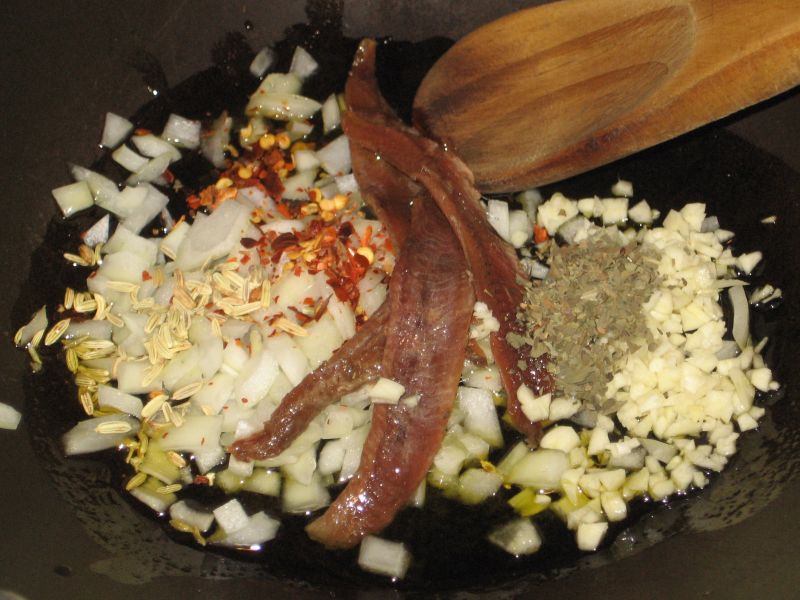
What also makes this dish a little different is how the recipe begins, by slowly cooking and mashing anchovies in olive oil with garlic, onions, and other seasonings. This is what some may refer to as a soffritto, it’s a simple method that adds a big flavor boost to the recipe.

Because I used halibut, opposed to a traditional and heartier crustacean, I added it to the sauce and gently poached it for a few minutes just before tossing it with the pasta.

Penne Fra Diavolo with Halibut

Yield: 4 portions

3 tablespoons olive oil

1/2 small onion, diced

2 cloves garlic, minced

4 anchovy fillets

1 teaspoon crushed red pepper

2 teaspoons minced parsley

1/2 teaspoon basil

1/2 teaspoon sea salt

2/3 cup red wine

2 cups tomato purée

1 pound diced halibut

1/2 pound linguine

Combine the olive oil, onion, garlic, anchovies, red pepper, basil, parsley, and salt in a skillet over medium heat. Stir and mash the ingredients with the back of a wooden spoon until the onion and garlic is translucent but not browned. Stir in the wine and simmer it for a minute or two, then add the tomato puree. Bring sauce to a simmer and cook it for 5 or 10 minutes. If the sauce becomes too thick thin it with a little water. While the sauce is simmering boil the pasta until al dente. Stir the fish into the sauce, bring it back to a simmer and poach it for about 5 minutes. When the fish is cooked gently fold in the pasta. Remove the pot from the heat and let it rest for about 5 minutes, allowing the flavors of the sauce and fish permeate the pasta.

>Penne Fra Diavolo with Halibut

>
Pasta Fra Diavolo is one of my favorite pasta dishes…I love any type of pasta with tomato and seafood. Traditionally this is made with either shrimp or lobster, but I made it with halibut because that’s what I had at hand.

The name, fra diavolo, translates from Italian as “brother devil,” and there are numerous theories on it’s origin. While many believe this to be Italian in origin others claim that it was invented in New York City (to learn more about this you can read an archived New York Times article by clicking here).

One of the more common theories on the dish’s origin is that it was named after an Italian monk who “went astray” (living a life of crime or found sleeping with a prostitute, depending on the story).

Two ingredients that are essential for this dish, and which set it apart just slightly from other seafood/tomato/pasta dishes are red wine and hot peppers. The wine, some say, is in the dish to represent the downfall of the monk in question, and the pepper, of course, is said to be there to represent the devil.

What also makes this dish a little different is how the recipe begins, by slowly cooking and mashing anchovies in olive oil with garlic, onions, and other seasonings. This is what some may refer to as a soffritto, it’s a simple method that adds a big flavor boost to the recipe.

Because I used halibut, opposed to a traditional and heartier crustacean, I added it to the sauce and gently poached it for a few minutes just before tossing it with the pasta.

Penne Fra Diavolo with Halibut

Yield: 4 portions

3 tablespoons olive oil

1/2 small onion, diced

2 cloves garlic, minced

4 anchovy fillets

1 teaspoon crushed red pepper

2 teaspoons minced parsley

1/2 teaspoon basil

1/2 teaspoon sea salt

2/3 cup red wine

2 cups tomato purée

1 pound diced halibut

1/2 pound linguine

Combine the olive oil, onion, garlic, anchovies, red pepper, basil, parsley, and salt in a skillet over medium heat. Stir and mash the ingredients with the back of a wooden spoon until the onion and garlic is translucent but not browned. Stir in the wine and simmer it for a minute or two, then add the tomato puree. Bring sauce to a simmer and cook it for 5 or 10 minutes. If the sauce becomes too thick thin it with a little water. While the sauce is simmering boil the pasta until al dente. Stir the fish into the sauce, bring it back to a simmer and poach it for about 5 minutes. When the fish is cooked gently fold in the pasta. Remove the pot from the heat and let it rest for about 5 minutes, allowing the flavors of the sauce and fish permeate the pasta.

Bicycles Are Useful In Many Ways

Sure bikes can move a person (or persons) from one place to another using their own power, and yes they can carry things, but they can also do other stuff…like power a knife grinder. The above photo and short video below are of an African fellow who not only powers a bike-powered knife grinder (of his own design) he actually earns his living doing it.

I spent a brief working sojourn in New Orleans back in the mid-1980’s (yes, I know I’m showing my age) and there was a guy who used to pedal around the French Quarter on a trike and stopped at all the restaurants sharpening the cooks knives…I doubt that he still does. These are probably things of the past.

When I was leaving the health club tonight it was already dark (no big surprise) and as I was unlocking my bike a woman walked out and said to herself as she pulled her collar tight, “burr is it cold out.” Then she saw me getting on my bike and commented that I was “really hardcore” to ride in this cold. To me, riding home was pure luxury. I was inside facing a hot stove all day so being out in the crisp air felt good…and it also meant that I had to do less laps in the pool. Bicycles can move things and people; they can also power things; they also, as a bi-product, burn calories. Bicycles are man’s (and women’s…sorry for the gender specific reference) most efficient machine. But then again, if you are a regular reader of this blog you already know this.

The picture and short clip were found at AfriGadget.

>Bicycles Are Useful In Many Ways

>Sure bikes can move a person (or persons) from one place to another using their own power, and yes they can carry things, but they can also do other stuff…like power a knife grinder. The above photo and short video below are of an African fellow who not only powers a bike-powered knife grinder (of his own design) he actually earns his living doing it.

I spent a brief working sojourn in New Orleans back in the mid-1980’s (yes, I know I’m showing my age) and there was a guy who used to pedal around the French Quarter on a trike and stopped at all the restaurants sharpening the cooks knives…I doubt that he still does. These are probably things of the past.

When I was leaving the health club tonight it was already dark (no big surprise) and as I was unlocking my bike a woman walked out and said to herself as she pulled her collar tight, “burr is it cold out.” Then she saw me getting on my bike and commented that I was “really hardcore” to ride in this cold. To me, riding home was pure luxury. I was inside facing a hot stove all day so being out in the crisp air felt good…and it also meant that I had to do less laps in the pool. Bicycles can move things and people; they can also power things; they also, as a bi-product, burn calories. Bicycles are man’s (and women’s…sorry for the gender specific reference) most efficient machine. But then again, if you are a regular reader of this blog you already know this.

The picture and short clip were found at AfriGadget.

This Is More Appropriate Than Ever

This is an advertisement for bicycles in 1950’s Britain (I’m guessing)…but where are these advertisements today…especially in the good ole’ US of A (where they are so desperately needed)? Bicycling as a mode of transport is more appropriate than ever before but all I ever see are car commercials. It’s only 22 seconds long and pretty goofy…but it carries a strong message.

>This Is More Appropriate Than Ever

>This is an advertisement for bicycles in 1950’s Britain (I’m guessing)…but where are these advertisements today…especially in the good ole’ US of A (where they are so desperately needed)? Bicycling as a mode of transport is more appropriate than ever before but all I ever see are car commercials. It’s only 22 seconds long and pretty goofy…but it carries a strong message.

It’s Been Snowing…For Days


And days and days. It hasn’t been really heavy snowfalls, just constant and light…if it were rain it would be mist. And with the frigid temperatures it has not melted on the streets, not even the main thoroughfares. It’s been slow-going, that’s for sure. Other than driving my truck today (had to deliver a used television set to a friend…would’ve been tough doing that on the Mundo in this snow) I’ve been riding through it…slowly. I’ve been employing my snow-biking method of putting a lot of my weight on the handlebars…this helps with steering, particularly on an unplowed side street. When I was leaving for work yesterday morning a neighbor was out shoveling his walkway. I said good morning to him as I was putting on my helmet. He stopped and looked over at me and says, “Ya know Joe, I’m really beginning to think that you have a mutant gene or something,” and then he smiled. “Well Mike,” I replied, “you are not the first person to imply this.” Tonight, after returning home from my TV delivery, there was not a parking spot to be had for blocks around…I ended up parkin very near–too near–a bus stop two blocks away (there will probably be a ticket on my windshield). And as I trudged the two blocks home I couldn’t help but think to myself how much more simple (not to mention fun) it would have been if I were on a bike.

>It’s Been Snowing…For Days

>
And days and days. It hasn’t been really heavy snowfalls, just constant and light…if it were rain it would be mist. And with the frigid temperatures it has not melted on the streets, not even the main thoroughfares. It’s been slow-going, that’s for sure. Other than driving my truck today (had to deliver a used television set to a friend…would’ve been tough doing that on the Mundo in this snow) I’ve been riding through it…slowly. I’ve been employing my snow-biking method of putting a lot of my weight on the handlebars…this helps with steering, particularly on an unplowed side street. When I was leaving for work yesterday morning a neighbor was out shoveling his walkway. I said good morning to him as I was putting on my helmet. He stopped and looked over at me and says, “Ya know Joe, I’m really beginning to think that you have a mutant gene or something,” and then he smiled. “Well Mike,” I replied, “you are not the first person to imply this.” Tonight, after returning home from my TV delivery, there was not a parking spot to be had for blocks around…I ended up parkin very near–too near–a bus stop two blocks away (there will probably be a ticket on my windshield). And as I trudged the two blocks home I couldn’t help but think to myself how much more simple (not to mention fun) it would have been if I were on a bike.

Winter’s Beauty

I was on my way walking to the health club tonight (geeze was it cold) when I looked up and saw this tree; it was dusk and I was under a streetlight. It stopped me in my tracks. Its barrenness almost seemed to glow against the backdrop of the nearly-dark sky, with its branches reaching for the stars. The thought that this tree, now in hibernation mode, will know just when the conditions are correct to bloom again just blows me away. I had my camera with me, snapped a picture (without using the flash) and thought I’d share it. Click it for a larger view.