>Things That Can Be Carried On A Bike (#308)

>

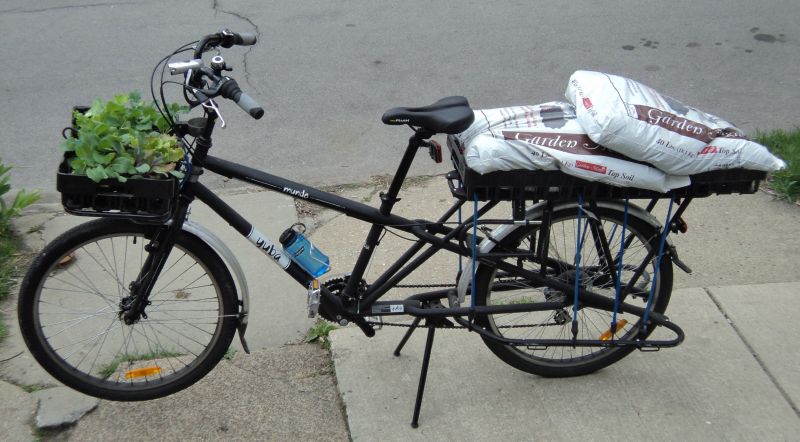
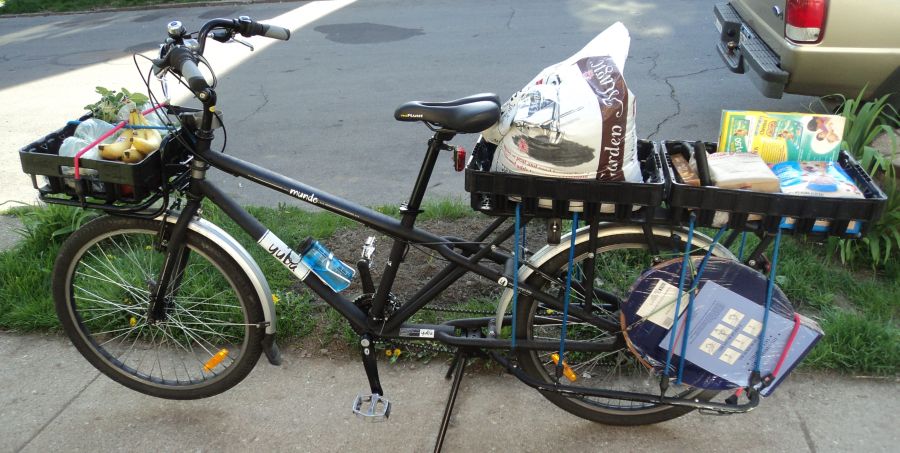
A variety of seventy-two small vegetable plants, a new shirt, a belt, 3 printer ink cartridges, 2 mechanical pencils (as seen through the window of Elmwood Taco and Sub where I stopped for lunch).

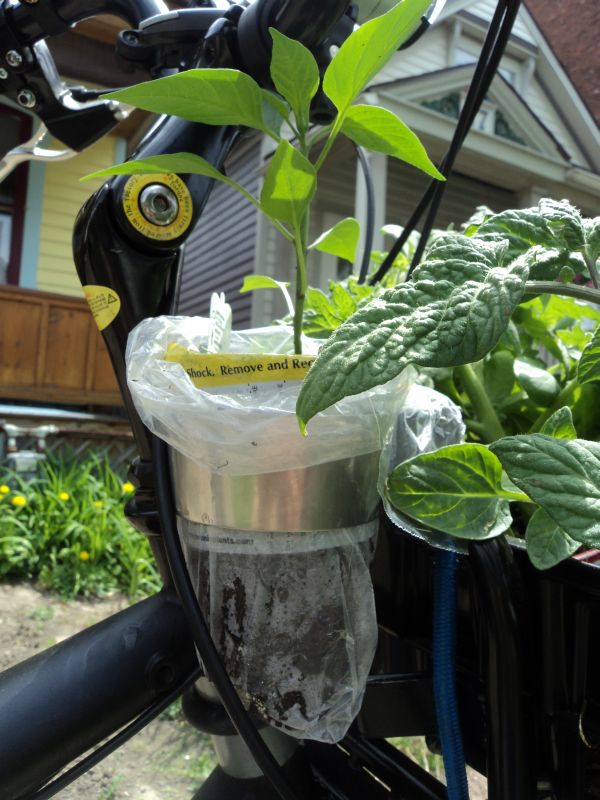
I only purchased one jalapeno plant (pictured below). It was in a narrow container and was concered about it toppling over from being jostled…it fit perfectly in my cup holder. Problem solved.

Graceful

I saw these seagulls flying around the other day…swooping down and grabbing small pieces of bread that someone had thrown on the street. They seemed so graceful and at peace; it was a sort of aerial dance. It reminded me of this following passage (which I have often found inspiring): 

“Therefore I tell you, do not worry about your life, what you will eat or drink; or about your body, what you will wear. Is not life more than food, and the body more than clothes?  Look at the birds of the air; they do not sow or reap or store away in barns, and yet your heavenly Father feeds them. Are you not much more valuable than they?  Can any one of you by worrying add a single hour to your life?”
Matthew 6:25-27 (NIV)

>Graceful

>

I saw these seagulls flying around the other day…swooping down and grabbing small pieces of bread that someone had thrown on the street. They seemed so graceful and at peace; it was a sort of aerial dance. It reminded me of this following passage (which I have often found inspiring): 

“Therefore I tell you, do not worry about your life, what you will eat or drink; or about your body, what you will wear. Is not life more than food, and the body more than clothes?  Look at the birds of the air; they do not sow or reap or store away in barns, and yet your heavenly Father feeds them. Are you not much more valuable than they?  Can any one of you by worrying add a single hour to your life?”
Matthew 6:25-27 (NIV)

Five Quotes From Bob Marley

Bob Marley, 6 February 1945 – 11 May 1981
Picture found here.
Redemption Song is one of my favorite songs by Bob Marley and the Wailers, and the below version is a very moving one (I think). For five more quotes from Bob Marley, click here. To read Five Quotes from other people, click here.

“The greatness of a man is not in how much wealth he acquires, but in his integrity and his ability to affect those around him positively”


“Don’t Gain The World & Lose Your Soul, Wisdom Is Better Than Silver Or Gold.”


“Love the life you live. Live the life you love.”


“The people who were trying to make this world worse are not taking the day off. Why should I?” 


“Tell the children the truth.”

>Five Quotes From Bob Marley

>

Bob Marley, 6 February 1945 – 11 May 1981
Picture found here.
Redemption Song is one of my favorite songs by Bob Marley and the Wailers, and the below version is a very moving one (I think). For five more quotes from Bob Marley, click here. To read Five Quotes from other people, click here.

“The greatness of a man is not in how much wealth he acquires, but in his integrity and his ability to affect those around him positively”


“Don’t Gain The World & Lose Your Soul, Wisdom Is Better Than Silver Or Gold.”


“Love the life you live. Live the life you love.”


“The people who were trying to make this world worse are not taking the day off. Why should I?” 


“Tell the children the truth.”

Long Bikes

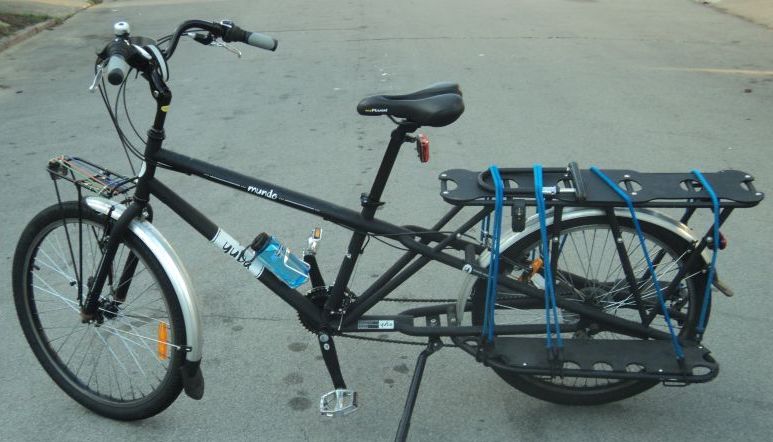
Here’s a question to other Mundo/Xtracycle/Long-Bike/Cargo-Bike riders. How often do people ask you what the deal is with your bike? With me it seems almost on a daily basis (at least during the warmer weather when more people are outside). Cargo bikes are not very popular in my neck of the woods, so I suppose it would look a little odd to the uninitiated. What are some of the questions people ask you? The most common with me is: Did you build that? Another is: Is that difficult to ride? Today’s was: Why is your bike so long? My first response almost was  that I had the Napoleon Complex (even though I’m not that short). Instead I just told them that it was built to carry stuff. They then asked me what I needed to carry, to which I answered, anything I need or want

>Long Bikes

>

Here’s a question to other Mundo/Xtracycle/Long-Bike/Cargo-Bike riders. How often do people ask you what the deal is with your bike? With me it seems almost on a daily basis (at least during the warmer weather when more people are outside). Cargo bikes are not very popular in my neck of the woods, so I suppose it would look a little odd to the uninitiated. What are some of the questions people ask you? The most common with me is: Did you build that? Another is: Is that difficult to ride? Today’s was: Why is your bike so long? My first response almost was  that I had the Napoleon Complex (even though I’m not that short). Instead I just told them that it was built to carry stuff. They then asked me what I needed to carry, to which I answered, anything I need or want

Of Weights and Measure (and the dough that almost took over my kitchen)

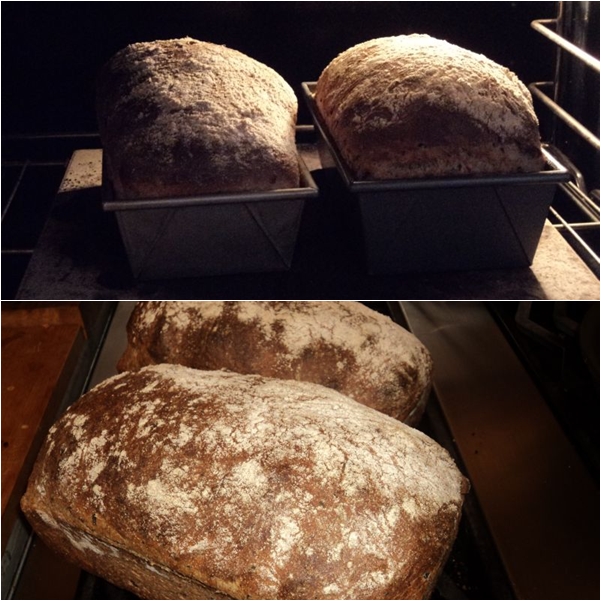
This post is in response to a recent question by a reader; this wasn’t the first time this question was asked, just the most recent…and even after baking countless loaves of bread the same thing happens to me every so often, but it is completely fixable. What I am talking abut is the consistency of a bread dough. The reader asked why her Ezekiel dough was so wet, almost like a cake batter (even though she followed the directions and measurements exactly). The answer to this is twofold. Firstly, when making bread with any type of ingredient that is boiled first–grains, rice, beans, potatoes, etc–there are a lot of variables in the consistency because of the liquid concentration in the said ingredient…one person squeezes it dry while another leaves a bit more liquid. Or in the case that happened to me this past weekend when I was making a wild rice dough (pictured in this post). I received a phone call as I was preparing the recipe and drained the grain but did not squeeze it at all. I then proceeded to add it to the recipe as if I did squeeze out most of its moisture. This of course added a lot more liquid to the dough which was, to say the least, a soggy mess at first. Fixing this is as simple as adding more flour (before the dough is kneaded); if you have to add a great deal more flour, such as I did in this recipe, you may have to add more salt, yeast, etc.  Ultimately, though, you end up with more dough. You can do  as I did and make a pizza and two really large loaves, or make extra loves and give them away. The dough itself can also be frozen and used at a later date.

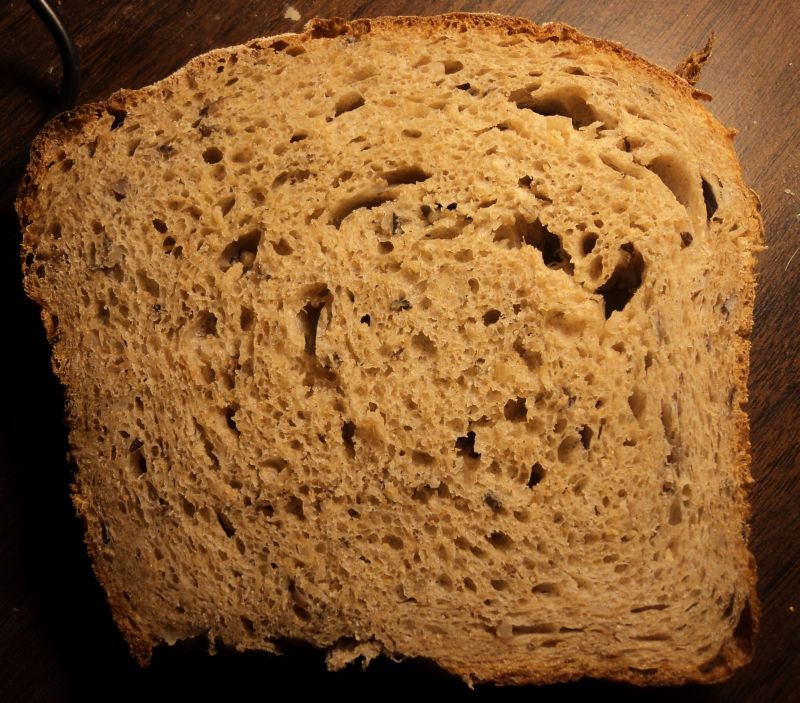
Keep in mind that it is better to have a dough that is a bit wet than one that is too dry. If a dough is on the soft and wet side it will produce a soft and light bread with a holey and airy interior (as pictured above), but if it is too dry the finished product can be heavy with a dense interior and low rise.

The other thing that affects measurements is how the flour is actually measured. And this is a common problem with whatever type of bread you may be making. The problem is that we Americans measure our flour by volume (by the cup) rather than by weight (on a scale) the way much of the rest of the world does. Let me illustrate this problem with a short scenario. If 3 people measure out 5oz (142g) of flour on a scale all three would undoubtedly end up with the same amount; 5oz (142g). But, on the other hand, if these same 3 people were to measure out a cup of flour and then weigh the contents of their cups I can almost guarantee that all three would weigh different. Why? Well this is simple if you think about it. One person may pack the flour in the cup while the other fills it loosely. One cup may have air pockets in the flour while another does not. And one person may level the top of the cup with a scraper while the other may use a rounded (or over-filled) cup of flour. On average a cup of bread flour weighs about 4.5oz (128g) but measurements, by volume, can vary by as much as an ounce (28g). Now multiply this by 3, 6, or 12 cups, and you can see the effect it may have on the total measurement. Add a wet grain, that may or may not be squeezed well, and  this throws in an entirely new curve-ball.

The bottom line is that recipes of all kinds should be used as guides not blueprints. An exception to this is if you are working in a professional environment–opposed to your home kitchen–and you want a certain recipe to be exactly the same each time (so when I customer comes back for something they liked on a previous visit it will be the same product each and every time). In that case I would most definitely use a scale for accurate measure and consistent outcome. But in the meantime, bake bread and have fun with it. The more you bake the easier it will be. After a while you will be able to tell what the loaf will be like by what the raw dough looks and feels like.

Bread-making, in my opinion, should be a joy, not a chore. It is easily incorporated into the rhythm of your life; your day should not come to a halt and be dictated by the rising dough. I hope you bake and bake often. I know from personal experience that it is good for a person on  many levels, and that  it has the ability to feed more than just your stomach.

>Of Weights and Measure (and the dough that almost took over my kitchen)

>

This post is in response to a recent question by a reader; this wasn’t the first time this question was asked, just the most recent…and even after baking countless loaves of bread the same thing happens to me every so often, but it is completely fixable. What I am talking abut is the consistency of a bread dough. The reader asked why her Ezekiel dough was so wet, almost like a cake batter (even though she followed the directions and measurements exactly). The answer to this is twofold. Firstly, when making bread with any type of ingredient that is boiled first–grains, rice, beans, potatoes, etc–there are a lot of variables in the consistency because of the liquid concentration in the said ingredient…one person squeezes it dry while another leaves a bit more liquid. Or in the case that happened to me this past weekend when I was making a wild rice dough (pictured in this post). I received a phone call as I was preparing the recipe and drained the grain but did not squeeze it at all. I then proceeded to add it to the recipe as if I did squeeze out most of its moisture. This of course added a lot more liquid to the dough which was, to say the least, a soggy mess at first. Fixing this is as simple as adding more flour (before the dough is kneaded); if you have to add a great deal more flour, such as I did in this recipe, you may have to add more salt, yeast, etc.  Ultimately, though, you end up with more dough. You can do  as I did and make a pizza and two really large loaves, or make extra loves and give them away. The dough itself can also be frozen and used at a later date.

Keep in mind that it is better to have a dough that is a bit wet than one that is too dry. If a dough is on the soft and wet side it will produce a soft and light bread with a holey and airy interior (as pictured above), but if it is too dry the finished product can be heavy with a dense interior and low rise.

The other thing that affects measurements is how the flour is actually measured. And this is a common problem with whatever type of bread you may be making. The problem is that we Americans measure our flour by volume (by the cup) rather than by weight (on a scale) the way much of the rest of the world does. Let me illustrate this problem with a short scenario. If 3 people measure out 5oz (142g) of flour on a scale all three would undoubtedly end up with the same amount; 5oz (142g). But, on the other hand, if these same 3 people were to measure out a cup of flour and then weigh the contents of their cups I can almost guarantee that all three would weigh different. Why? Well this is simple if you think about it. One person may pack the flour in the cup while the other fills it loosely. One cup may have air pockets in the flour while another does not. And one person may level the top of the cup with a scraper while the other may use a rounded (or over-filled) cup of flour. On average a cup of bread flour weighs about 4.5oz (128g) but measurements, by volume, can vary by as much as an ounce (28g). Now multiply this by 3, 6, or 12 cups, and you can see the effect it may have on the total measurement. Add a wet grain, that may or may not be squeezed well, and  this throws in an entirely new curve-ball.

The bottom line is that recipes of all kinds should be used as guides not blueprints. An exception to this is if you are working in a professional environment–opposed to your home kitchen–and you want a certain recipe to be exactly the same each time (so when I customer comes back for something they liked on a previous visit it will be the same product each and every time). In that case I would most definitely use a scale for accurate measure and consistent outcome. But in the meantime, bake bread and have fun with it. The more you bake the easier it will be. After a while you will be able to tell what the loaf will be like by what the raw dough looks and feels like.

Bread-making, in my opinion, should be a joy, not a chore. It is easily incorporated into the rhythm of your life; your day should not come to a halt and be dictated by the rising dough. I hope you bake and bake often. I know from personal experience that it is good for a person on  many levels, and that  it has the ability to feed more than just your stomach.

La Couleur de Printemps

After a long cold winter and an even longer cold wet spring (at least it seemed that way to me) the colors and “first green” that appear are both amazing and beautiful to me. Breathtaking at times. I love capturing them with a camera, and it’s amazing the great shots a person can take with an inexpensive camera and a lot of help from Mother Nature. Anyhow, I took a few photos today and thought I’d share the beauty. Click them for a larger view…

>La Couleur de Printemps

>

After a long cold winter and an even longer cold wet spring (at least it seemed that way to me) the colors and “first green” that appear are both amazing and beautiful to me. Breathtaking at times. I love capturing them with a camera, and it’s amazing the great shots a person can take with an inexpensive camera and a lot of help from Mother Nature. Anyhow, I took a few photos today and thought I’d share the beauty. Click them for a larger view…

A Car-Lite Diet (and why all my bikes are black)

This post is in response to a couple things….one is something that (nearly) happened to me, and the other is a website I came across. But first a bit about my bikes.

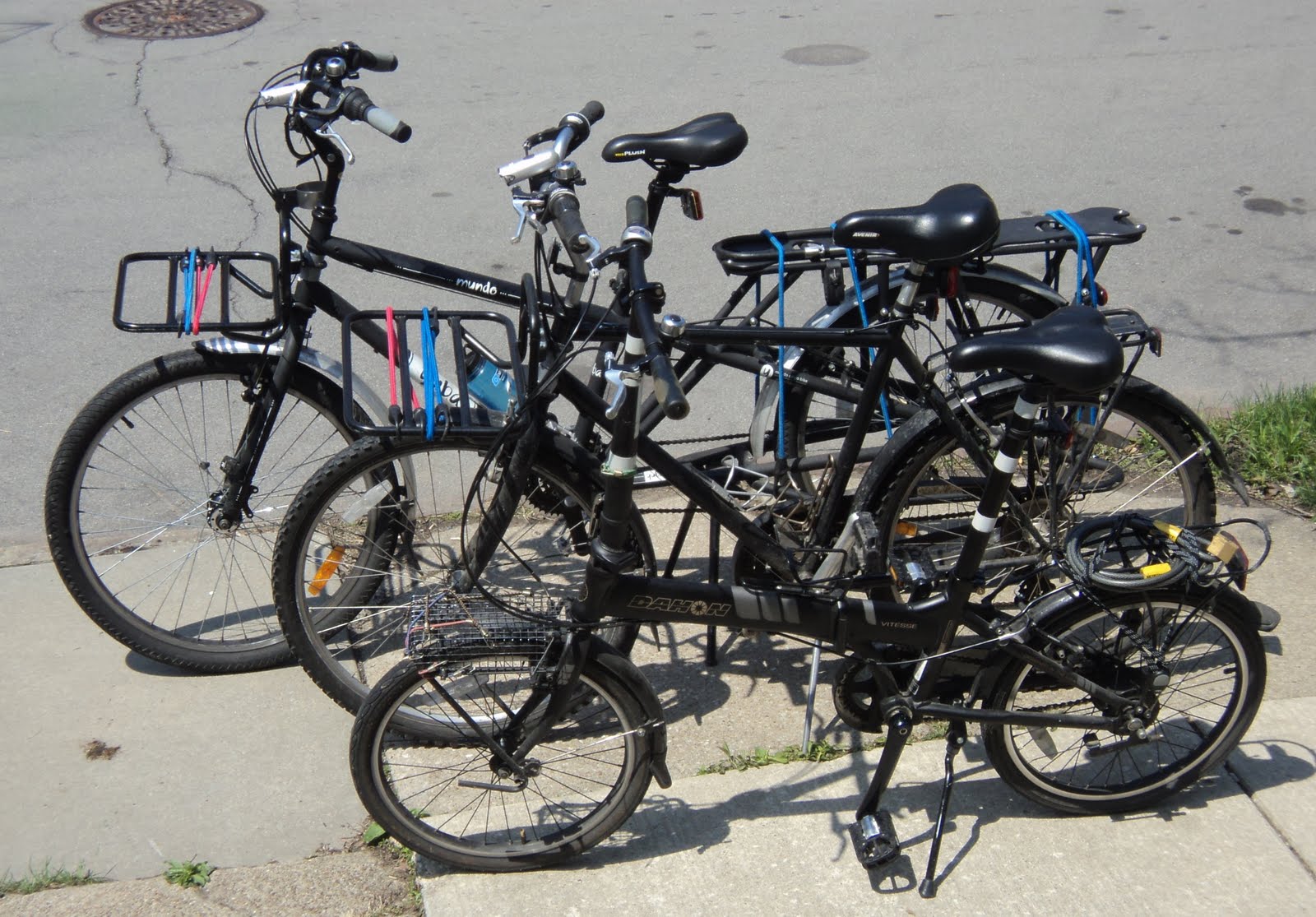
While I have six bikes I generally only ride three (the three pictured), but all are painted black. I’m thinking about paring my fleet down to just three…selling four to purchase a new winter commuter, but keeping two, the folder and the cargo bike. To be honest I’m not sure why all my bikes are painted black (thought it would be a good hook in the title), but I will say I like how they look. If they didn’t come painted black I usually paint them after a while. The only bike I did not paint black was my v1 Mundo because I new I would eventually sell it to purchase the v3 (which I ordered in matte black). I like the retro look of a black bike, but I sometimes tell people it is in response to this famous quote by Henry Ford:

Any customer can have a car painted any colour that he wants so long as it is black.

Anyhow, this brings me to the thing that nearly happened to me as I rode my usual short commute to work yesterday morning. This single sentence which I wrote on Facebook sums it up:

Joe nearly got sideswiped (riding his bike) by a very wide man in a very wide vehicle on a really narrow road.

I had just crossed the intersection of Allen and Delaware and was looking at the price of gas at the petrol station (ironic, right?). I was surprised that it was still only $4.09/gal because other areas of the  city it is higher. And as I’m doing this I see a man pulling out of the driveway of the station…he had that “I’m stressed out and already late-for-work” look on his face. I had the right-of-way; he was pulling out of the driveway and I was on the street going straight ahead. I did as I often do in this instance…make eye contact to make sure that the driver sees me. And yes, he was a rather “wide” man, sort of poured into his big cushy seat; he was driving a big wide SUV. On a little side-note, Allen Street, which is one of my favorite streets in the city in which I live, is also a very narrow street. It is, in fact, not uncommon for two oncoming cars to come to a standstill until one allows the other to pass…because of its narrowness it is easy to keep pace with the cars while riding a bike. But back to the story. So after making eye contact with Mr. Wide I figure it is safe to keep pedaling…umm, think again. I’m only about 10 feet before him and he looks in both directions (for cars no doubt, not cyclists) then hits the gas pedal and goes for it. I, in turn, had no choice but to swerve and hit the brakes. The only other person who witnessed it (I believe) was another motorist getting into a nearby vehicle. He gave me a look of sympathy and simply shook his head.

As the regular readers of this blog are well-aware, I am not car-free but car-lite…I make no bones about it. And while I often write pro-bicycling posts, I try not to be too negative on people who drive because not only do I believe that is their personal business but it would also be hypocritical because I still own a gas-powered vehicle. In addition, I generally try not to be cynical or sarcastic on this blog because I feel like we are bombarded by negativity on a daily basis. All these things said, I cannot help myself but post this next statement about the man that nearly plowed me down…I can’t help but wonder if he didn’t walk or ride a bike every so often, instead of sit in the big cushy seat of his really wide vehicle, he himself may not be as wide as he was. My apologies if any find this last comment offensive, I don’t mean it to be; the situation was just very frustrating.

The next thing that got me thinking about writing this post was a website I stumbled across, Austin on Two Wheels. At their site they have a triangle that  mimics the USDA Food Pyramid, only theirs relates to transportation and they call it The Low Car Diet. This made perfect sense to me even though it didn’t relate to me exactly. On theirs, for instance, they have listed car pooling and car sharing; two things that I do not do. Thus my low car diet would look more like the triangle below. I mostly bicycle to get around, seconded by walking, but still use my car once a week or so (in the snowiest or coldest days of winter these categories may blur a little).

Not everyone can be car free, but everyone (or at least most) can use other means of transportation sometimes. Another thing that I can’t help but wonder about Mr. Wide is that if he were walking or on a bike he may not have looked so stressed. My job, like many, is stressful. And the ride or walk to work in the morning is often the best part–it helps clear my head and get me centered for the day–the only thing better is the ride or walk home.

In the same way that a person who is fervently religious wants to convert you because they want you to have what they have…to share their joy. This is how I feel about getting around on bikes and foot…I want to share the joy I get from it. Our society is so dependent on cars that for most the thought of hopping on a bike doesn’t even enter their minds, not even for a short distance. It’s easy, anyone can do it. My hope is that more will.

If you’d like to read more about going car-lite–and how people are doing it–the following are two excellent posts. Here and Here.

>A Car-Lite Diet (and why all my bikes are black)

>

This post is in response to a couple things….one is something that (nearly) happened to me, and the other is a website I came across. But first a bit about my bikes.

While I have six bikes I generally only ride three (the three pictured), but all are painted black. I’m thinking about paring my fleet down to just three…selling four to purchase a new winter commuter, but keeping two, the folder and the cargo bike. To be honest I’m not sure why all my bikes are painted black (thought it would be a good hook in the title), but I will say I like how they look. If they didn’t come painted black I usually paint them after a while. The only bike I did not paint black was my v1 Mundo because I new I would eventually sell it to purchase the v3 (which I ordered in matte black). I like the retro look of a black bike, but I sometimes tell people it is in response to this famous quote by Henry Ford:

Any customer can have a car painted any colour that he wants so long as it is black.

Anyhow, this brings me to the thing that nearly happened to me as I rode my usual short commute to work yesterday morning. This single sentence which I wrote on Facebook sums it up:

Joe nearly got sideswiped (riding his bike) by a very wide man in a very wide vehicle on a really narrow road.

I had just crossed the intersection of Allen and Delaware and was looking at the price of gas at the petrol station (ironic, right?). I was surprised that it was still only $4.09/gal because other areas of the  city it is higher. And as I’m doing this I see a man pulling out of the driveway of the station…he had that “I’m stressed out and already late-for-work” look on his face. I had the right-of-way; he was pulling out of the driveway and I was on the street going straight ahead. I did as I often do in this instance…make eye contact to make sure that the driver sees me. And yes, he was a rather “wide” man, sort of poured into his big cushy seat; he was driving a big wide SUV. On a little side-note, Allen Street, which is one of my favorite streets in the city in which I live, is also a very narrow street. It is, in fact, not uncommon for two oncoming cars to come to a standstill until one allows the other to pass…because of its narrowness it is easy to keep pace with the cars while riding a bike. But back to the story. So after making eye contact with Mr. Wide I figure it is safe to keep pedaling…umm, think again. I’m only about 10 feet before him and he looks in both directions (for cars no doubt, not cyclists) then hits the gas pedal and goes for it. I, in turn, had no choice but to swerve and hit the brakes. The only other person who witnessed it (I believe) was another motorist getting into a nearby vehicle. He gave me a look of sympathy and simply shook his head.

As the regular readers of this blog are well-aware, I am not car-free but car-lite…I make no bones about it. And while I often write pro-bicycling posts, I try not to be too negative on people who drive because not only do I believe that is their personal business but it would also be hypocritical because I still own a gas-powered vehicle. In addition, I generally try not to be cynical or sarcastic on this blog because I feel like we are bombarded by negativity on a daily basis. All these things said, I cannot help myself but post this next statement about the man that nearly plowed me down…I can’t help but wonder if he didn’t walk or ride a bike every so often, instead of sit in the big cushy seat of his really wide vehicle, he himself may not be as wide as he was. My apologies if any find this last comment offensive, I don’t mean it to be; the situation was just very frustrating.

The next thing that got me thinking about writing this post was a website I stumbled across, Austin on Two Wheels. At their site they have a triangle that  mimics the USDA Food Pyramid, only theirs relates to transportation and they call it The Low Car Diet. This made perfect sense to me even though it didn’t relate to me exactly. On theirs, for instance, they have listed car pooling and car sharing; two things that I do not do. Thus my low car diet would look more like the triangle below. I mostly bicycle to get around, seconded by walking, but still use my car once a week or so (in the snowiest or coldest days of winter these categories may blur a little).

Not everyone can be car free, but everyone (or at least most) can use other means of transportation sometimes. Another thing that I can’t help but wonder about Mr. Wide is that if he were walking or on a bike he may not have looked so stressed. My job, like many, is stressful. And the ride or walk to work in the morning is often the best part–it helps clear my head and get me centered for the day–the only thing better is the ride or walk home.

In the same way that a person who is fervently religious wants to convert you because they want you to have what they have…to share their joy. This is how I feel about getting around on bikes and foot…I want to share the joy I get from it. Our society is so dependent on cars that for most the thought of hopping on a bike doesn’t even enter their minds, not even for a short distance. It’s easy, anyone can do it. My hope is that more will.

If you’d like to read more about going car-lite–and how people are doing it–the following are two excellent posts. Here and Here.
Shrimp and Scallop Newberg

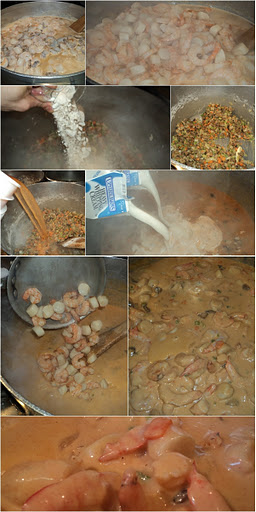
This (the pictures) is a variation on the classic lobster dish by the same name (click here or here to read about it). While this may seem extravagant (and it certainly is) and rich (which it is also), it is exceedingly simple to prepare. It’s a recipe you may want to serve for special occasions. I made about 15 gallons of it for a Mother’s Day brunch I’ll be serving this weekend…the recipe below is in much more manageable proportions. Use the recipe as a guide; substitute whichever shellfish you’d like.

Lobster Newberg
Yield: 4 servings
8 tablespoons unsalted butter, divided
4 tablespoons all-purpose flour
1 cup whole milk
1 cup heavy cream
6 lobster tails, raw, 6-ounces each
1 shallot, peeled and minced
2 teaspoons good-quality Hungarian paprika
½ cup sherry
1 teaspoon salt
½ teaspoon white pepper
Melt 4 tablespoons of the butter in a small saucepan; when it begins to bubble add the flour. Cook the flour and butter over medium heat, while stirring, for 5 minutes. Stir in the milk and cream. Brink the sauce to a boil, then lower the heat to a low simmer. Stir the sauce thoroughly to remove any lumps. Simmer the sauce for 10 minutes, remove it from the heat, and set it aside.
Split the lobster tails lengthwise, and remove the meat from the shells (do not discard the shells). Dice the meat into large pieces and set it aside, reserving any juices that may accumulate. Heat the remaining 4 tablespoons of butter in a large heavy-bottomed skillet. When the butter begins to bubble add the pieces of diced lobster, the lobster shells, and the minced shallot. Sauté these items for 3-4 minutes, taking care not to burn the shallot. Stir in the paprika; sauté another minute longer. Remove the skillet from the heat, and very carefully stir in the sherry. Return the pan to the heat (be careful, the sherry may ignite). Add any juices that may have accumulated on the plate were the diced lobster was resting. Reduce the sherry by half. Stir in the previously made cream sauce. Bring the sauce to a boil, then lower it to a simmer. Simmer the lobster for a minute or two, just until the sauce is thickened and the lobster is cooked throughout. Serve the Newberg over toast points, rice pilaf, or puff pastry.