The Day Before Lent

 
 The cartoon was found here…click it to read it.
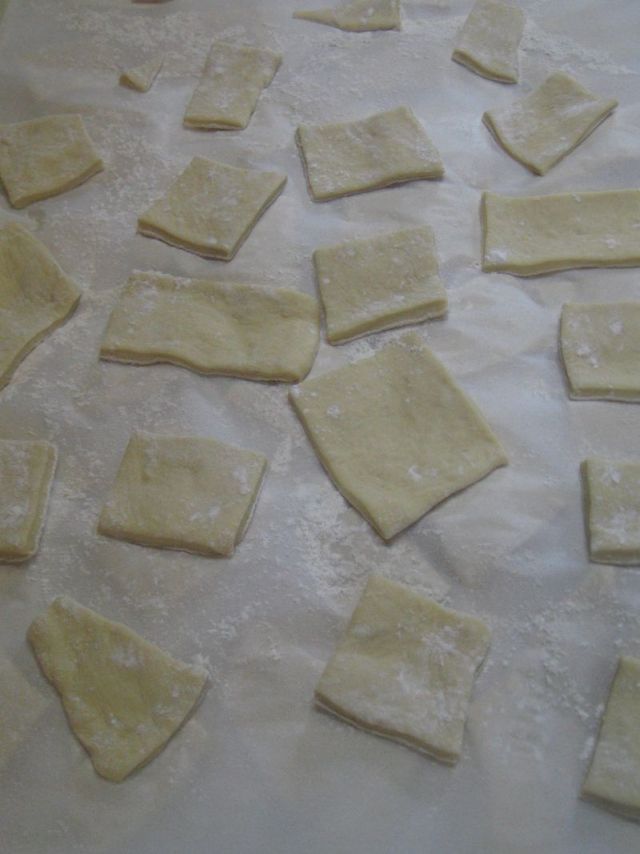
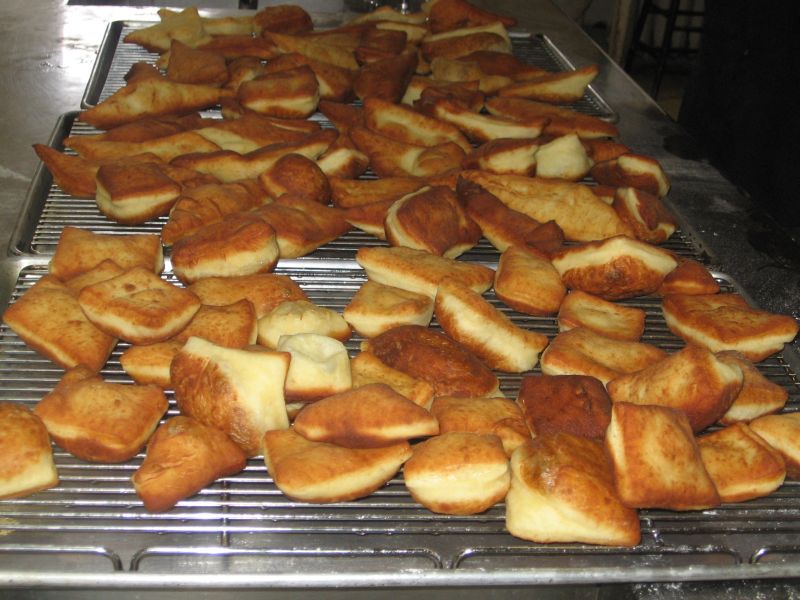
As most know, this Tuesday is the day before Lent. In some parts of the country and other parts of the world this day is known as Mardi Gras, or Fat Tuesday…the the day Christians are expected to use up any sweets, meats, and other rich foods (hence the word fat) and to welcome the next forty days as a “lean time,” or more specifically one of introspection. Another, less popular name (I believe) for this day is Shrove Tuesday. This is the name I had grown up knowing it as. And one of the popular foods that we ate (and I continue to eat) on this day are fastnacht kuecheles, or fast-night doughnuts. I assume that this is the original German name for the evening before Ash Wednesday; fast-night or fastnacht. They use up many traditional fats in the pantry…sugar, butter, eggs, and to top it off they are deep-fried, and yes they are delicious. Interestingly, they are basically the same doughnut that in New Orleans you would call a beignet. To read a previous post on this subject, or an article that was published in ArtVoice last year at this time, click here and here. The following recipe was given to me by my sister, who recieved it from our mother, who learned to make them at the hands of her mother. They’re simple to make (fun, too)…but the best part is how good they taste.
Fastnacht Kuecheles
Makes about 3 dozen

1 cup water (room temperature)
1 cup milk (room temperature)
1/2 cup granulated sugar
4 tablespoons yeast
6-7 cups all-purpose flour, divided
3 large eggs
1/2 cup unsalted butter, melted
1 teaspoon salt
powdered sugar

Combine the water, milk, sugar, yeast, and two cups of flour in a large bowl. Allow to rest for 1 hour, or until the yeast is fully active. Transfer to an upright mixing bowl with a dough hook. Add the eggs, melted butter, salt, and 4 cups of flour. Run the mixer on low for 1 minute (if the dough seems too sticky add the remaining cup flour) then turn to medium and knead for 5 minutes. Transfer to a lightly oiled bowl, cover and let rest at room temperature for about an hour, or until double in size. Transfer the dough to a floured work surface and cut into three pieces. Shape into balls, cover, and let rest 20 minutes. Roll into large circles about 1/4 inch thick, then cut the dough into diamonds 2-4 inches wide. Cover the diamonds with a cloth and let rest 10 minutes. Preheat a couple inches of vegetable oil to 350F in a heavy skillet. Carefully fry the fastnachts in batches, cooking them for a couple minutes on each side until they are puffed and golden-brown; drain on absorbent paper. Allow them to cool for a few minutes, then toss a few at a time in a paper bag with confectionery sugar.

>The Day Before Lent

>

 
 The cartoon was found here…click it to read it.
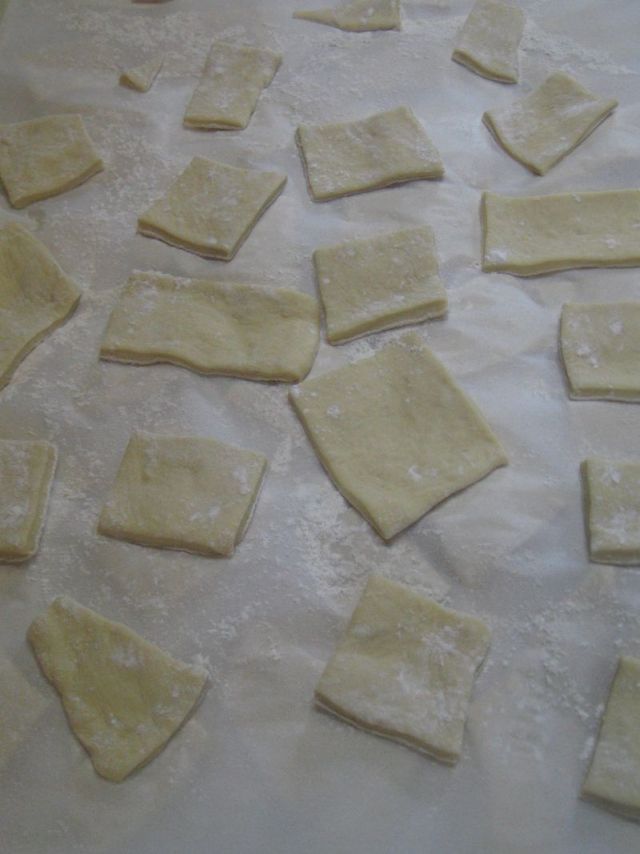
As most know, this Tuesday is the day before Lent. In some parts of the country and other parts of the world this day is known as Mardi Gras, or Fat Tuesday…the the day Christians are expected to use up any sweets, meats, and other rich foods (hence the word fat) and to welcome the next forty days as a “lean time,” or more specifically one of introspection. Another, less popular name (I believe) for this day is Shrove Tuesday. This is the name I had grown up knowing it as. And one of the popular foods that we ate (and I continue to eat) on this day are fastnacht kuecheles, or fast-night doughnuts. I assume that this is the original German name for the evening before Ash Wednesday; fast-night or fastnacht. They use up many traditional fats in the pantry…sugar, butter, eggs, and to top it off they are deep-fried, and yes they are delicious. Interestingly, they are basically the same doughnut that in New Orleans you would call a beignet. To read a previous post on this subject, or an article that was published in ArtVoice last year at this time, click here and here. The following recipe was given to me by my sister, who recieved it from our mother, who learned to make them at the hands of her mother. They’re simple to make (fun, too)…but the best part is how good they taste.
Fastnacht Kuecheles
Makes about 3 dozen

1 cup water (room temperature)
1 cup milk (room temperature)
1/2 cup granulated sugar
4 tablespoons yeast
6-7 cups all-purpose flour, divided
3 large eggs
1/2 cup unsalted butter, melted
1 teaspoon salt
powdered sugar

Combine the water, milk, sugar, yeast, and two cups of flour in a large bowl. Allow to rest for 1 hour, or until the yeast is fully active. Transfer to an upright mixing bowl with a dough hook. Add the eggs, melted butter, salt, and 4 cups of flour. Run the mixer on low for 1 minute (if the dough seems too sticky add the remaining cup flour) then turn to medium and knead for 5 minutes. Transfer to a lightly oiled bowl, cover and let rest at room temperature for about an hour, or until double in size. Transfer the dough to a floured work surface and cut into three pieces. Shape into balls, cover, and let rest 20 minutes. Roll into large circles about 1/4 inch thick, then cut the dough into diamonds 2-4 inches wide. Cover the diamonds with a cloth and let rest 10 minutes. Preheat a couple inches of vegetable oil to 350F in a heavy skillet. Carefully fry the fastnachts in batches, cooking them for a couple minutes on each side until they are puffed and golden-brown; drain on absorbent paper. Allow them to cool for a few minutes, then toss a few at a time in a paper bag with confectionery sugar.


Seven-Grain Whole Wheat Bread

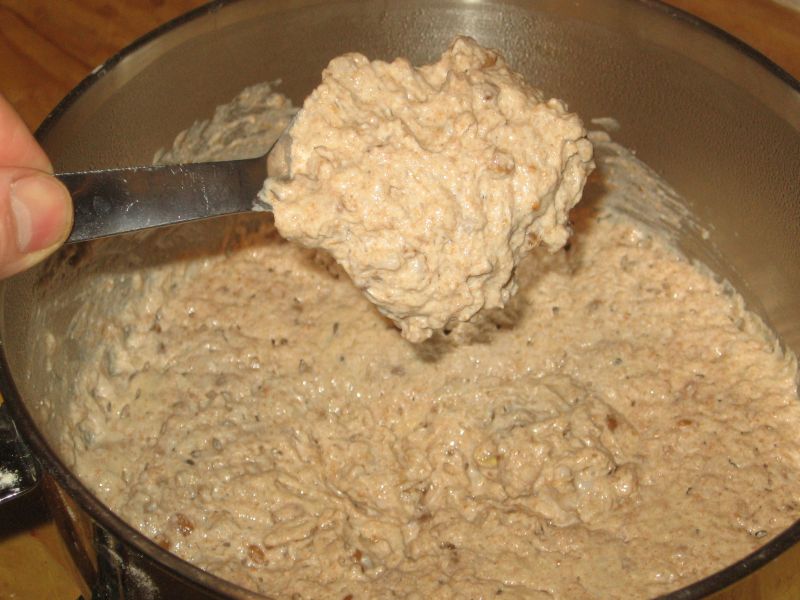
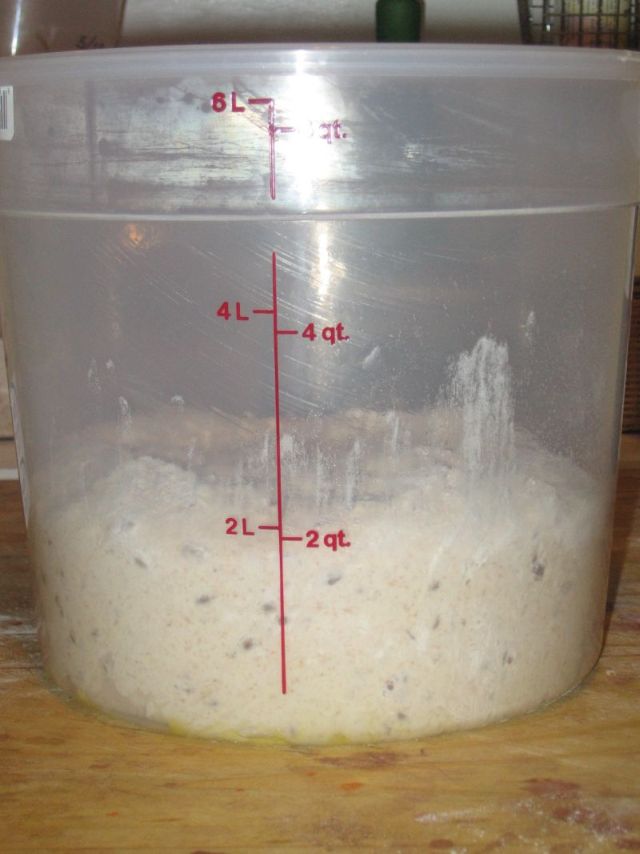
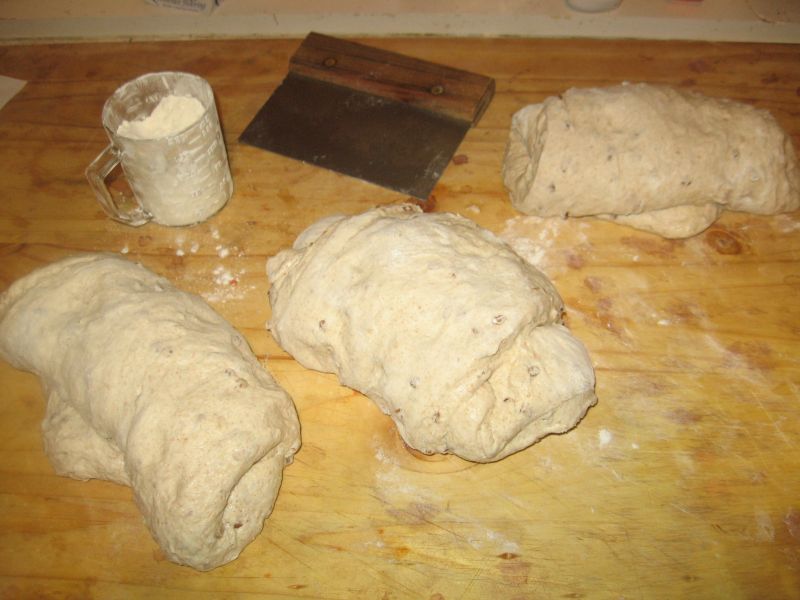
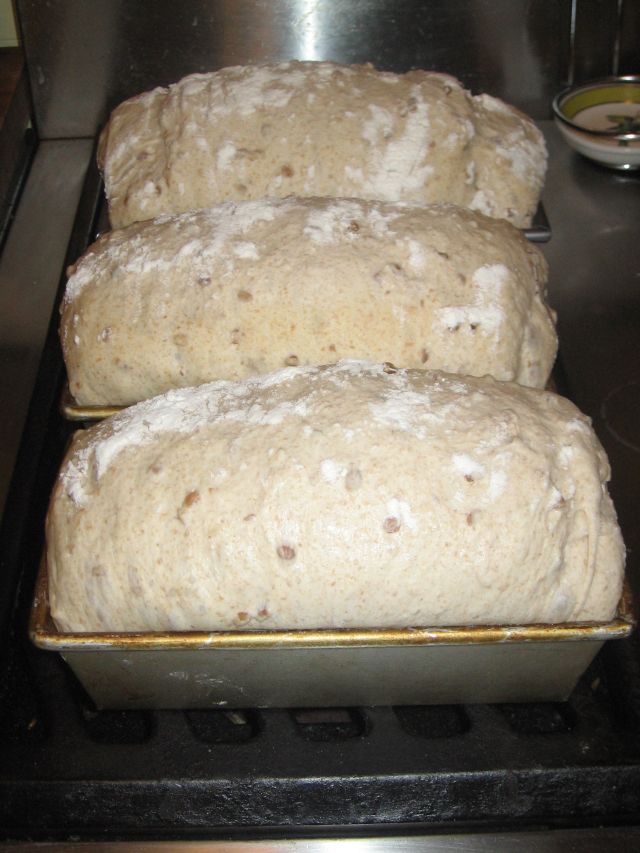
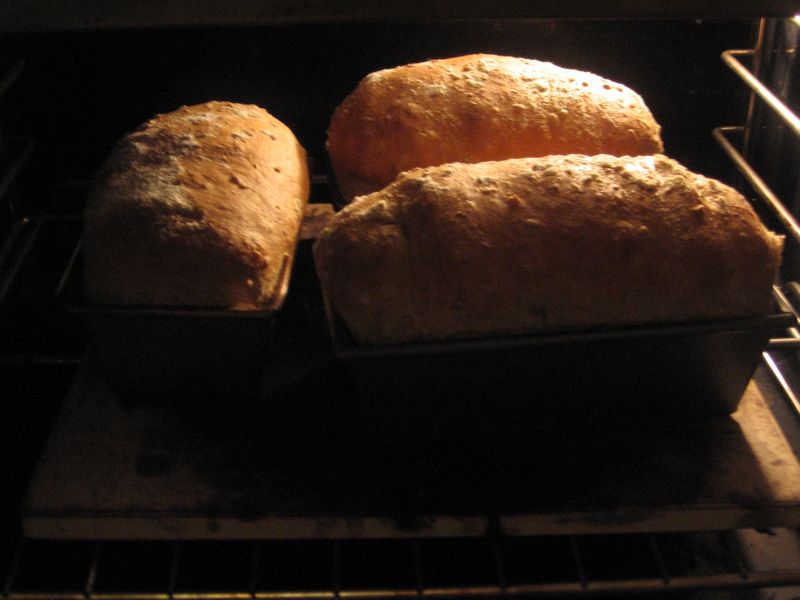
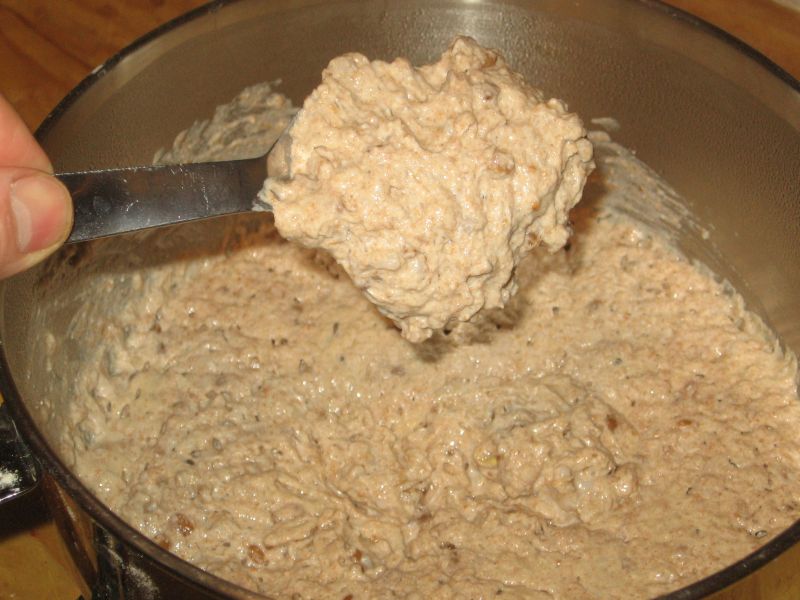
If you’ve visited this blog before then you know that I enjoy baking bread. After years of doing so it is rare that the loaves do not turn out really good, but some are better than others. Then there are the instances where everything is aligned just right–the temperature of the dough, grains cooked just right, my timing, proper dough hydration, etc.–and the bread turns out truly excellent. This is one of those instances. After cooking the grains I included them and their cooking liquid in a refrigerated pre-ferment for about 12 hours. Then yesterday I made three beautiful loaves..I froze one and gave one to a neighbor. Anyhow, here’s the process in pictures (click any photo for a larger view).


>Seven-Grain Whole Wheat Bread

>If you’ve visited this blog before then you know that I enjoy baking bread. After years of doing so it is rare that the loaves do not turn out really good, but some are better than others. Then there are the instances where everything is aligned just right–the temperature of the dough, grains cooked just right, my timing, proper dough hydration, etc.–and the bread turns out truly excellent. This is one of those instances. After cooking the grains I included them and their cooking liquid in a refrigerated pre-ferment for about 12 hours. Then yesterday I made three beautiful loaves..I froze one and gave one to a neighbor. Anyhow, here’s the process in pictures (click any photo for a larger view).


Excellent Television Commercial

OK, I realize that I claim this to be an ad-free blog…and it is. But every so often I come across something I feel worthy of posting that happens to be a commercial. This is an example. I love this commercial and think it is excellent for so many reasons (and yes, one of the reasons is that he’s carrying beer…too bad it’s Miller…it would be better, in my opinion, if it were a bottle of wine). But really, it is a good bike promo (and it’s rather humorous, too) …just a regular guy riding a bike (in the snow), carrying stuff, and looking happy.

>Excellent Television Commercial

>OK, I realize that I claim this to be an ad-free blog…and it is. But every so often I come across something I feel worthy of posting that happens to be a commercial. This is an example. I love this commercial and think it is excellent for so many reasons (and yes, one of the reasons is that he’s carrying beer…too bad it’s Miller…it would be better, in my opinion, if it were a bottle of wine). But really, it is a good bike promo (and it’s rather humorous, too) …just a regular guy riding a bike (in the snow), carrying stuff, and looking happy.

Ten Snowy Miles on the Mundo (and a little Buffalo history)

I had the day off today and had it in my head that I was going to go for a ride despite the cold and snowy weather. As it turns out I was actually over-dressed and had to remove a layer.

When I’m on a bike and riding through areas I normally wouldn’t, I feel as if I’m a tourist in my own city…this is something that could never happen from a moving car. One of my stops, for example, was a bridge overlooking the Buffalo River, which (I believe) connects to the Erie Canal. Anyhow, it’s the site of many old and abandoned grain elevators, (and, interestingly, I learned today that grain elevators were in fact invented in Buffalo). Standing over the frozen river I found this scene particularly beautiful and tranquil.

 
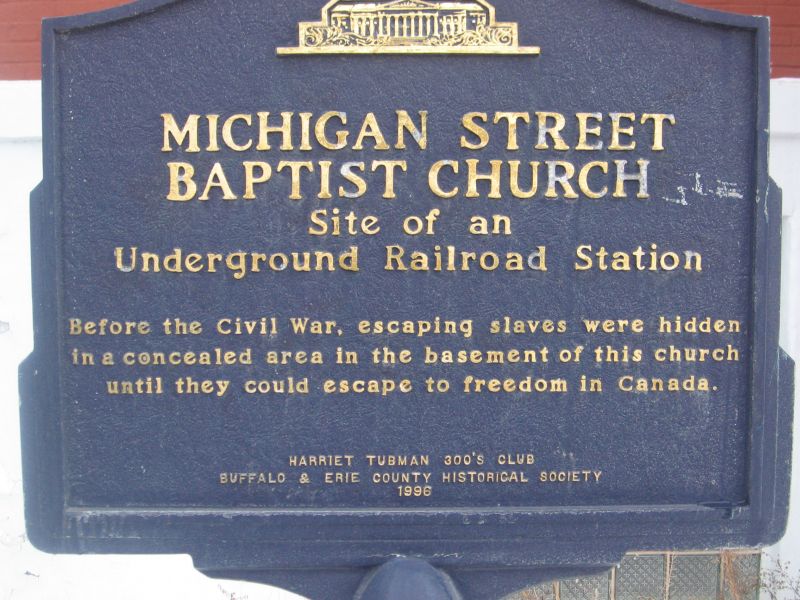
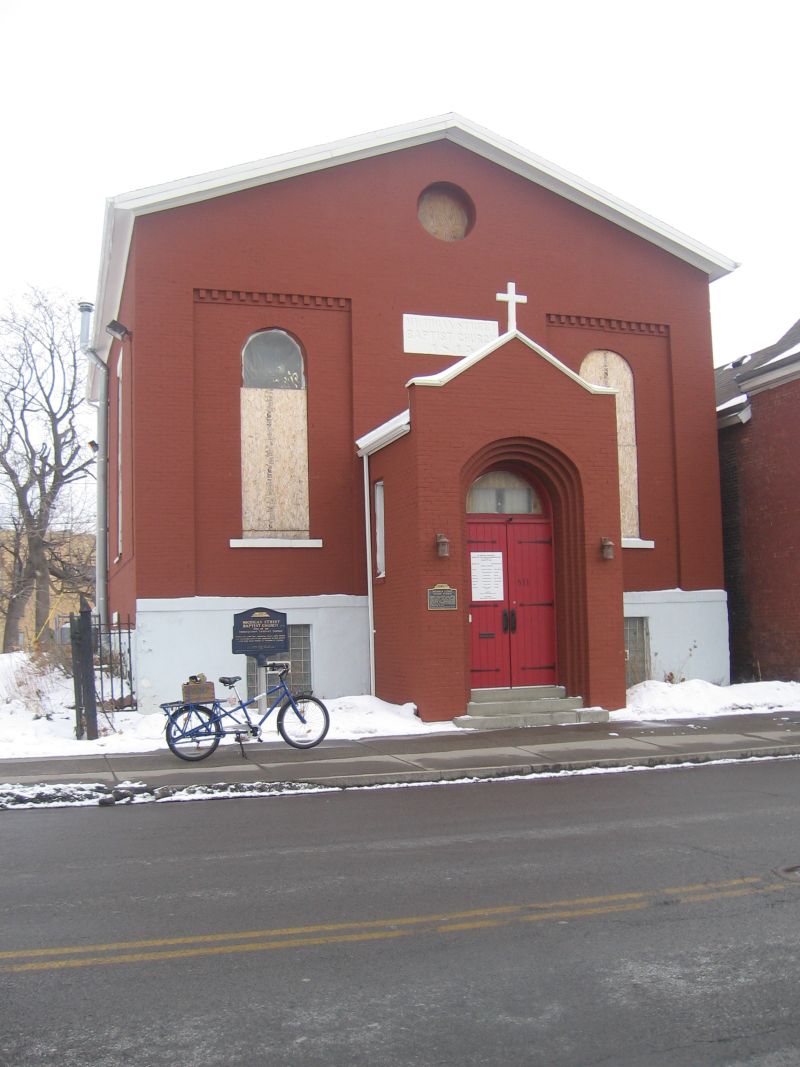
Later, after traveling down Michigan Avenue I came upon the Michigan Avenue Baptist Church, which was an important stop in the Underground Railroad. For many slaves this was their last stop before freedom into Canada. The church is still in use today, and is on the National Register of Historic Places; click here to visit their inspiring website. To read more about the church click here and here; to visit a site dedicated to the Rev. J. Edward Nash (the church’s original pastor), click here.
 

>Ten Snowy Miles on the Mundo (and a little Buffalo history)

>I had the day off today and had it in my head that I was going to go for a ride despite the cold and snowy weather. As it turns out I was actually over-dressed and had to remove a layer.

When I’m on a bike and riding through areas I normally wouldn’t, I feel as if I’m a tourist in my own city…this is something that could never happen from a moving car. One of my stops, for example, was a bridge overlooking the Buffalo River, which (I believe) connects to the Erie Canal. Anyhow, it’s the site of many old and abandoned grain elevators, (and, interestingly, I learned today that grain elevators were in fact invented in Buffalo). Standing over the frozen river I found this scene particularly beautiful and tranquil.

 
Later, after traveling down Michigan Avenue I came upon the Michigan Avenue Baptist Church, which was an important stop in the Underground Railroad. For many slaves this was their last stop before freedom into Canada. The church is still in use today, and is on the National Register of Historic Places; click here to visit their inspiring website. To read more about the church click here and here; to visit a site dedicated to the Rev. J. Edward Nash (the church’s original pastor), click here.