>
A wooden bench.
An antique three-burner stove (which I hope to convert to propane and use as an outdoor kitchen).
Ragoût de Morues et de Pois Chiche
As is often the case, when I opened my refrigerator the other day I was surprised by the somewhat odd combination of ingredients…some days I feel as if cooking in my teeny home kitchen is like an exit exam at a culinary school: being handed a basket full of ingredients and having to make something really good out of them…and in a short amount of time (I really do need to grocery shopping more often). At any rate, being a professional cook gives me the experience to make something out of whatever is at hand. But the food I cook in  my home kitchen is way different than the food I cook at work. On the job the food I cook is often rich and laden with meat, cream, and butter. At home, more often than not, it is broth-based and has a small amount of poultry or fish in it…I cook a lot of one-pot meals. The recipe I made the other night (and had leftovers tonight) was inspire by a dish I had in the South of France some years ago. I was on the border of Italy, so the flavors of that region are easily apparent. Anyhow, this is one of my favorite ways to cook…food that is light but at the same time bursting with flavor. It’s an easy recipe and can be adapted to suit your own personal preferences (and it’s as good as it looks).
Codfish and Chickpea Stew
Serves 4
1/4 cup olive oil
1/2 medium onion, diced
1/2 green bell pepper, diced
2 cloves garlic, minced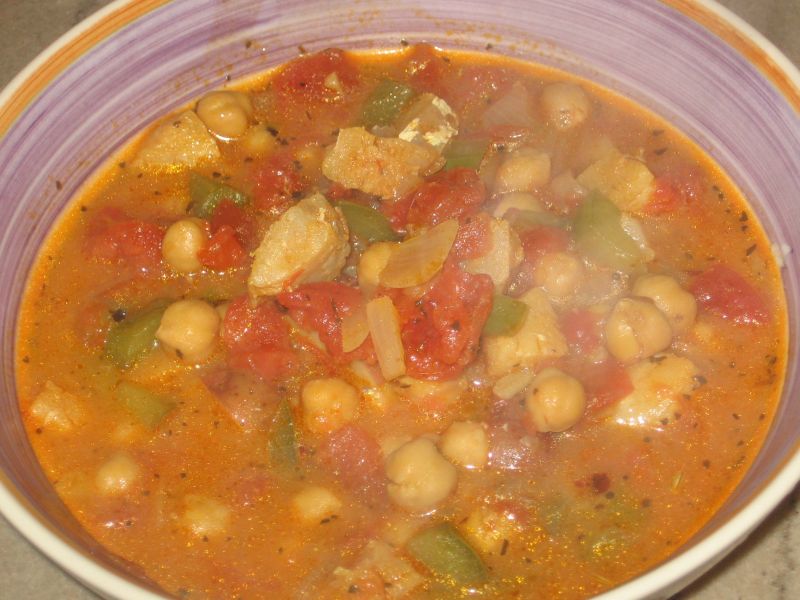
1 teaspoon fennel seed
1 teaspoon basil
1 teaspoon seas salt
1/2 teaspoon crushed hot pepper
1/4 teaspoon crushed saffron threads
4 anchovy fillets
4 small potatoes, quartered
1 1/2 cups diced tomatoes (14 oz. can)
1 1/2 cup chickpeas (15 oz. can), rinsed
1 cup clam juice
1/2 cup water
1/2 cup white wine
1 1/2 pounds codfish, diced
1 bunch chives, minced
Heat the olive oil over medium-high heat in a deep skillet. Add the onion and pepper; sauté a minute or two. Add the garlic, fennel, basil, salt, hot pepper, and saffron; sauté another minute. Add the anchovy and potato; stir to mash the anchovy and coat the potato with the flavors. Stir in the tomatoes, chick peas, clam juice, water, and white wine. Bring to a boil, then lower to a slow simmer; cook for about 10 minutes. Add the fish, gently pushing it below the surface of the ragout. Simmer an additional 5 or 10 minutes. Remove the skillet from the heat and stir in the chives; let rest for 5 minutes before serving.

>Ragoût de Morues et de Pois Chiche
>As is often the case, when I opened my refrigerator the other day I was surprised by the somewhat odd combination of ingredients…some days I feel as if cooking in my teeny home kitchen is like an exit exam at a culinary school: being handed a basket full of ingredients and having to make something really good out of them…and in a short amount of time (I really do need to grocery shopping more often). At any rate, being a professional cook gives me the experience to make something out of whatever is at hand. But the food I cook in my home kitchen is way different than the food I cook at work. On the job the food I cook is often rich and laden with meat, cream, and butter. At home, more often than not, it is broth-based and has a small amount of poultry or fish in it…I cook a lot of one-pot meals. The recipe I made the other night (and had leftovers tonight) was inspire by a dish I had in the South of France some years ago. I was on the border of Italy, so the flavors of that region are easily apparent. Anyhow, this is one of my favorite ways to cook…food that is light but at the same time bursting with flavor. It’s an easy recipe and can be adapted to suit your own personal preferences (and it’s as good as it looks).
Codfish and Chickpea Stew
Serves 4
1/4 cup olive oil
1/2 medium onion, diced
1/2 green bell pepper, diced
2 cloves garlic, minced
1 teaspoon fennel seed
1 teaspoon basil
1 teaspoon seas salt
1/2 teaspoon crushed hot pepper
1/4 teaspoon crushed saffron threads
4 anchovy fillets
4 small potatoes, quartered
1 1/2 cups diced tomatoes (14 oz. can)
1 1/2 cup chickpeas (15 oz. can), rinsed
1 cup clam juice
1/2 cup water
1/2 cup white wine
1 1/2 pounds codfish, diced
1 bunch chives, minced
Heat the olive oil over medium-high heat in a deep skillet. Add the onion and pepper; sauté a minute or two. Add the garlic, fennel, basil, salt, hot pepper, and saffron; sauté another minute. Add the anchovy and potato; stir to mash the anchovy and coat the potato with the flavors. Stir in the tomatoes, chick peas, clam juice, water, and white wine. Bring to a boil, then lower to a slow simmer; cook for about 10 minutes. Add the fish, gently pushing it below the surface of the ragout. Simmer an additional 5 or 10 minutes. Remove the skillet from the heat and stir in the chives; let rest for 5 minutes before serving.
Things That Can Be Carried On A Bike (#18)
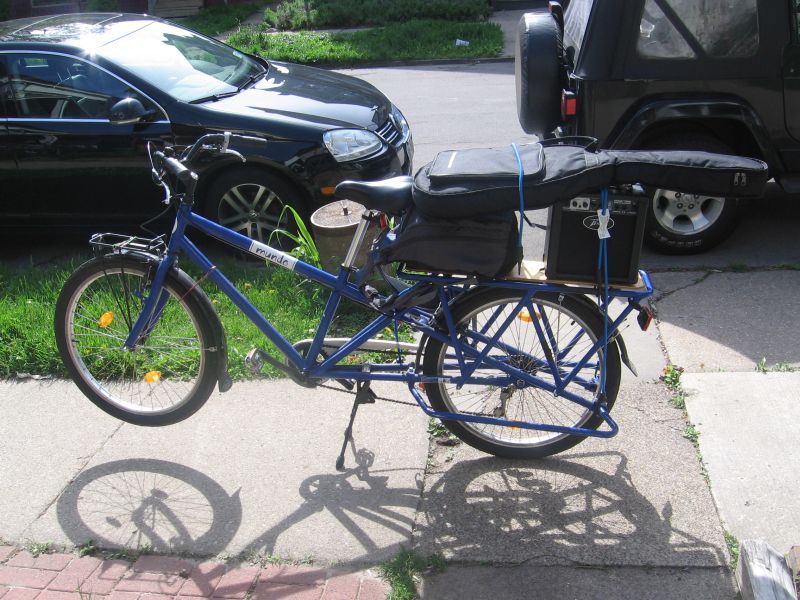 A backpack containing about 40 pounds of books.
An electric guitar.
A small practice amp.

>Things That Can Be Carried On A Bike (#18)
>A backpack containing about 40 pounds of books.
An electric guitar.
A small practice amp.
Things That Can Be Carried On A Bike (#17)
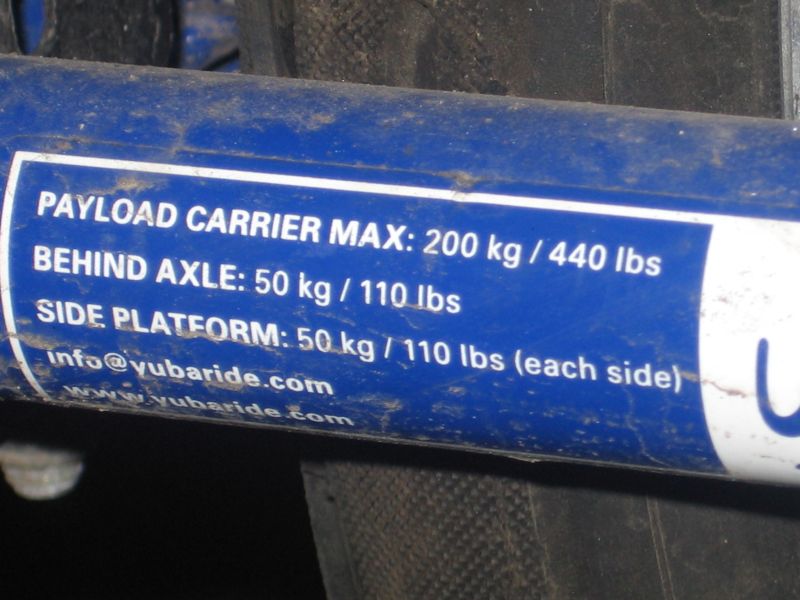
 Pizza!…Good thing I had my bike that has payload capabilities of 440 lbs. (200 kg)…sort of like a bicycle version of going grocery shopping in a humvee, I suppose.


>Things That Can Be Carried On A Bike (#17)
>Pizza!…Good thing I had my bike that has payload capabilities of 440 lbs. (200 kg)…sort of like a bicycle version of going grocery shopping in a humvee, I suppose.
The Future Of The Automobile?
 When I first saw this photo I was (and still am…a little) somewhat speechless (how much does that weigh, I wonder)…talk about reversed roles. By the looks of it, this photo was taken somewhere in Latin America. I love the fact that he is pedaling down the street with other cars. It would be interesting to pedal this car-carcass through the parking lot of a suburban mall and park it next to a hummer. This shows what a human powered vehicle is truly capable of.
To see some of the things I’ve carried on my bike (trust me, none of them come close to carrying a car body), click here.

>The Future Of The Automobile?
>When I first saw this photo I was (and still am…a little) somewhat speechless (how much does that weigh, I wonder)…talk about reversed roles. By the looks of it, this photo was taken somewhere in Latin America. I love the fact that he is pedaling down the street with other cars. It would be interesting to pedal this car-carcass through the parking lot of a suburban mall and park it next to a hummer. This shows what a human powered vehicle is truly capable of.
To see some of the things I’ve carried on my bike (trust me, none of them come close to carrying a car body), click here.
Enough Said
 This poster says it all…in both image and few words.
I first came across this poster at the site of ReadyMade.com. At the time it was available for free PDF download, but at last checking it was unavailable. It’s a poster by the artist, Nick Dewar. To visit his site, click here. Here’s a quote by the artist to accompany the poster (I culled the quote from this blog):
“I hope that America is entering a post-‘greed is good’ period. I can’t think of a single step that would change the nature of our society more than everyone abandoning their automobiles and cycling instead. There would be less dependence on oil, obesity levels would drop dramatically, and reflective bike clips would replace fancy ladies’ purses as the current must-have fashion accessory.”
Amen.

>Enough Said
>This poster says it all…in both image and few words.
I first came across this poster at the site of ReadyMade.com. At the time it was available for free PDF download, but at last checking it was unavailable. It’s a poster by the artist, Nick Dewar. To visit his site, click here. Here’s a quote by the artist to accompany the poster (I culled the quote from this blog):
“I hope that America is entering a post-‘greed is good’ period. I can’t think of a single step that would change the nature of our society more than everyone abandoning their automobiles and cycling instead. There would be less dependence on oil, obesity levels would drop dramatically, and reflective bike clips would replace fancy ladies’ purses as the current must-have fashion accessory.”
Amen.
Old Faithful
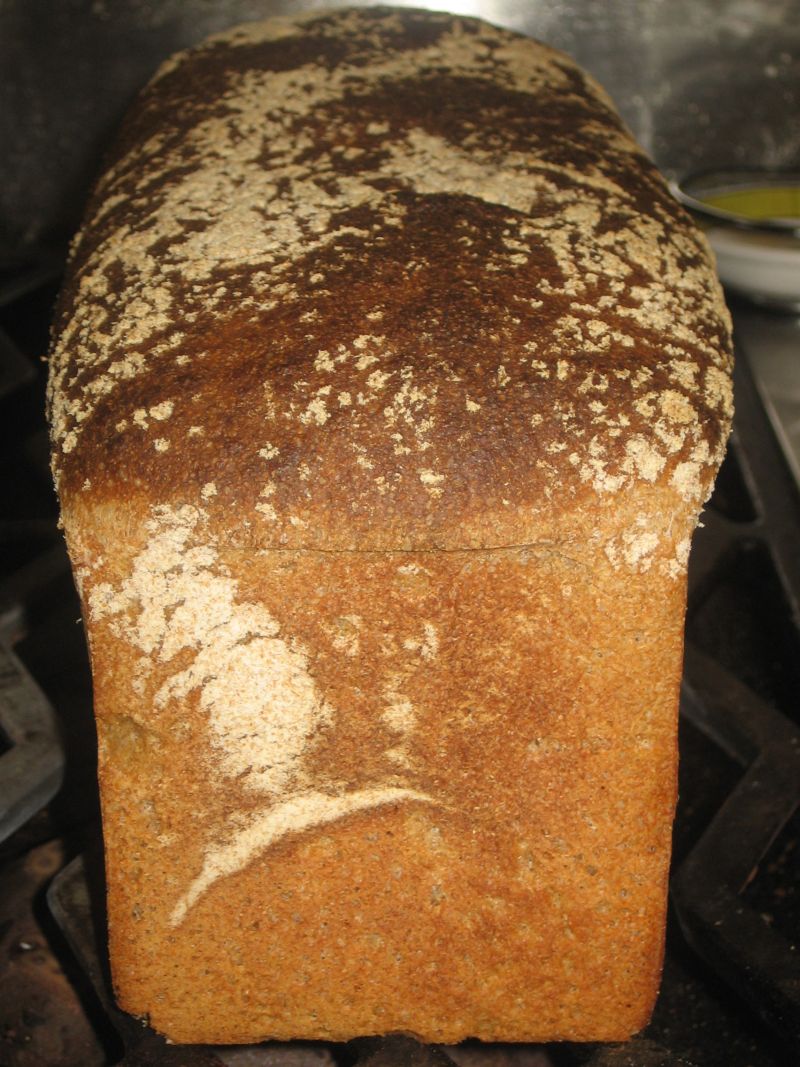
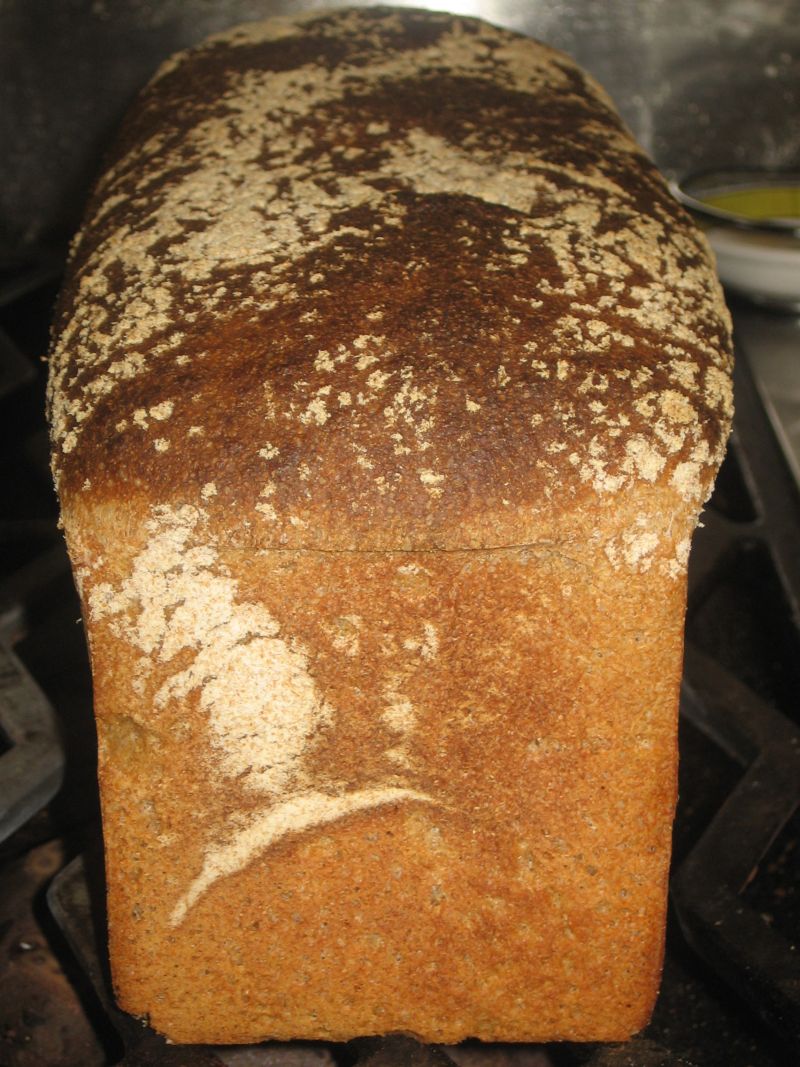
 This past week I resurrected my sourdough starter…I’ve had it in hibernation (i.e. refrigeration) for the past few months during the cold months. The starter on the right (7/99) is the oldest of them…7/99 stands for July 1999. After a few feedings it came back to life strong as ever. I made a traditional Pullman loaf…the house was a little cool and it still rose fully in about 4 hours.
Sourdough Starter
Unbleached all-purpose flour (the least processed brand available)
Whole wheat flour (same as above)
Spring water
In a glass bowl, combine 1 cup of unbleached all-purpose flour and 1/2 cup whole wheat flour with 1-1/4 cups spring water. Mix thoroughly and cover the bowl with cheesecloth, secure the cheesecloth with string or a rubber band. Allow this mixture to sit at room temperature for 48 hours, then stir in an additional 1/2 cup all-purpose flour, 1/2 cup whole wheat flour and 3/4 cup spring water. Replace the cheesecloth and allow the starter to sit for and additional 48-72 hours. If after 4-5 days there is no sign of yeast activity, grayish-black liquid appears on the surface, or the starter develops an unsavory aroma, discard it and begin again (remember that it will smell somewhat sour when active, this should not be confused with spoilage). Once the starter is active it will need to be fed every twelve hours (or much less if refrigerated). Simply use a portion (give a portion away, or at the very least empty some down the drain) and replenish it with fresh water and flour. After an additional 3 or 4 days of feeding, the starter should be active enough to use in any recipe calling for such.
Sourdough Bread
Yield: 1 loaf
2 cups sourdough starter (room temperature and visibly active)
1 tablespoon honey
1 tablespoon olive oil
1 teaspoon kosher salt
1/2 cup whole wheat flour
1-1/2 cups bread flour (approximately)
In a medium bowl, combine the starter, honey, oil and salt; mix thoroughly. Stir in the whole wheat flour and 1-1/4 cups of the all purpose flour; mix the dough until it is thick enough to handle, then turn it out onto a work surface. Begin to knead the dough, and if it seems too moist work in the remaining 1/4 cup flour. Knead the dough for 10 minutes. Place the kneaded dough in a lightly oiled loaf pan, or shape into a ball and set on a baking sheet that has been lightly dusted with cornmeal. Cover the dough with plastic wrap or a lightly floured cloth and let rest until almost doubled in bulk (depending on the strength of your starter this may take anywhere from 3 to 6 hours). Preheat an oven to 375 degrees Fahrenheit. Bake the bread in the preheated oven for 30-40 minutes, or until the crust is dark brown and the loaf sounds hollow when the bottom is lightly tapped. Cool the bread on a wire rack for at least 15 minutes before slicing.

>Old Faithful
>This past week I resurrected my sourdough starter…I’ve had it in hibernation (i.e. refrigeration) for the past few months during the cold months. The starter on the right (7/99) is the oldest of them…7/99 stands for July 1999. After a few feedings it came back to life strong as ever. I made a traditional Pullman loaf…the house was a little cool and it still rose fully in about 4 hours.
Sourdough Starter
Unbleached all-purpose flour (the least processed brand available)
Whole wheat flour (same as above)
Spring water
In a glass bowl, combine 1 cup of unbleached all-purpose flour and 1/2 cup whole wheat flour with 1-1/4 cups spring water. Mix thoroughly and cover the bowl with cheesecloth, secure the cheesecloth with string or a rubber band. Allow this mixture to sit at room temperature for 48 hours, then stir in an additional 1/2 cup all-purpose flour, 1/2 cup whole wheat flour and 3/4 cup spring water. Replace the cheesecloth and allow the starter to sit for and additional 48-72 hours. If after 4-5 days there is no sign of yeast activity, grayish-black liquid appears on the surface, or the starter develops an unsavory aroma, discard it and begin again (remember that it will smell somewhat sour when active, this should not be confused with spoilage). Once the starter is active it will need to be fed every twelve hours (or much less if refrigerated). Simply use a portion (give a portion away, or at the very least empty some down the drain) and replenish it with fresh water and flour. After an additional 3 or 4 days of feeding, the starter should be active enough to use in any recipe calling for such.
Sourdough Bread
Yield: 1 loaf
2 cups sourdough starter (room temperature and visibly active)
1 tablespoon honey
1 tablespoon olive oil
1 teaspoon kosher salt
1/2 cup whole wheat flour
1-1/2 cups bread flour (approximately)
In a medium bowl, combine the starter, honey, oil and salt; mix thoroughly. Stir in the whole wheat flour and 1-1/4 cups of the all purpose flour; mix the dough until it is thick enough to handle, then turn it out onto a work surface. Begin to knead the dough, and if it seems too moist work in the remaining 1/4 cup flour. Knead the dough for 10 minutes. Place the kneaded dough in a lightly oiled loaf pan, or shape into a ball and set on a baking sheet that has been lightly dusted with cornmeal. Cover the dough with plastic wrap or a lightly floured cloth and let rest until almost doubled in bulk (depending on the strength of your starter this may take anywhere from 3 to 6 hours). Preheat an oven to 375 degrees Fahrenheit. Bake the bread in the preheated oven for 30-40 minutes, or until the crust is dark brown and the loaf sounds hollow when the bottom is lightly tapped. Cool the bread on a wire rack for at least 15 minutes before slicing.
Things That Can Be Carried On A Bike (#16)
 $192.17 worth of groceries.

>Things That Can Be Carried On A Bike (#16)
>$192.17 worth of groceries.
Complicated Life
I love this video. It’s a great leisurely bicycle video…more importantly, the music is excellent. It was filmed on Decatur Street before hurricane Katrina. If you’ve ever been to N.O. you’ll probably agree that it captures that city’s essence. The video is a little over five minutes long; I encourage you to watch it, it will put you in a good mood. It reminds me that I often complicate my life more than necessary (and sometimes take things way too seriously).

>Complicated Life
>I love this video. It’s a great leisurely bicycle video…more importantly, the music is excellent. It was filmed on Decatur Street before hurricane Katrina. If you’ve ever been to N.O. you’ll probably agree that it captures that city’s essence. The video is a little over five minutes long; I encourage you to watch it, it will put you in a good mood. It reminds me that I often complicate my life more than necessary (and sometimes take things way too seriously).
Things That Can Be Carried On A Bike (#15)
 A 4-pound bag of dog food
Two bottles of red wine (1.5L each)
A half gallon of milk
Two Apples
A Pear
An Orange
Two Bananas
Two Bunches of broccoli
Two cans of soup
A DVD

>Things That Can Be Carried On A Bike (#15)
>A 4-pound bag of dog food
Two bottles of red wine (1.5L each)
A half gallon of milk
Two Apples
A Pear
An Orange
Two Bananas
Two Bunches of broccoli
Two cans of soup
A DVD
Things That Can Be Carried On A Bike (#14)
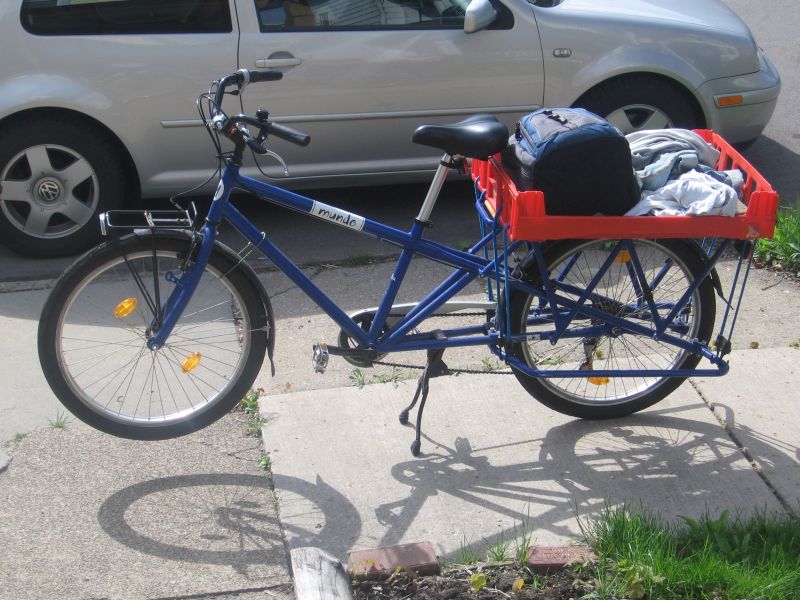 A large bread rack (to be used as my future “flatbed experiment”).
My son’s book bag with 40 lbs. of books.
His book report (laid flat as not to crease it).
A small shoulder bag with a few books.
A jean jacket.
A sweat shirt.
A U-lock and a cable lock.

 Urban Simplicty