>A Blast from the Past

>

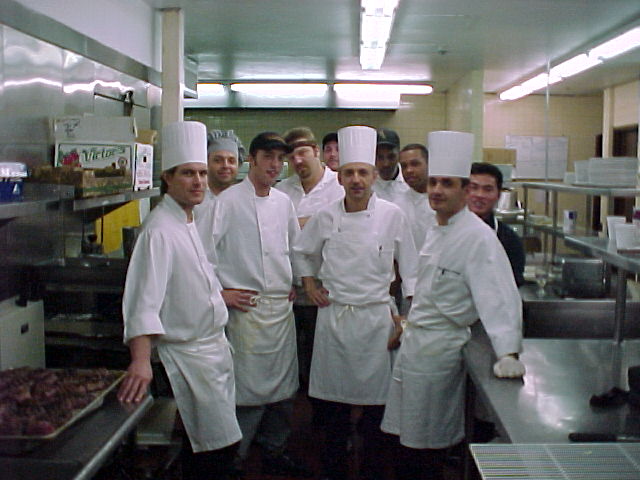
The Internet, to me, is both fascinating and somewhat terrifying at the same time…I mean really. What is it? Where does all this stuff come from (surely not the tiny cable hanging on the outside of my house). And more importantly, does the information ever cease to exist once it’s in cyber-space….doubtful. This is a perfect example. I learned recently of a site called the Wayback Machine…an Internet archive site. At the site you can type any address of a now defunct site (but you have to remember the address exactly as it was…every forward slash and hyphen) and  it will recall the site. Yow! That’s a bit scary. On a personal note I recalled my original, albeit rudimentary, website (never heard of the word blog at the time) and it came up straight away. It was a culinary site, but mostly a foray for me to experiment with html (old school…typed everything in by hand) and have a little fun while doing it. It was on this site that I learned how to add and re-size pictures by hand, make things move, add borders, etc…many a late nights drinking wine and adding one extra little forward slash or zero to a code to make something function properly. Wayback machine says this “snapshot” is from  2006 but it’s  more accurately 1998 or so. Anyhow, if you are bored enough to see it (it does have a lot of recipes and cooking info) click here. The below picture was culled from the site (hint: I’m the guy in the middle–younger than I am now–with my hand on my hip).

First Signs of Spring

Maybe it’s just me, but it seems like this has been a long winter; not terribly snowy but very cold. Anyhow, as I was taking out the trash yesterday I spotted this…the tiny dot of green which you see in the above image. Last autumn, just before the real cold came, I pulled out any remaining vegetables from my teeny front yard vegetable garden. But the Brussels sprout’s roots were so tough I just cut them at ground level (the cut root is visible)…and to my surprise they are growing back (can they do that?). I just take it as first signs of spring…onion, chive, and garlic shoots are already pushing through the cold soil as well. Amazing (I think), that they know just when to do this. Hibernating under sometimes feet of snow and ice and buried in frozen solid soil and they still know just when the earth has rotated to just the correct position that they should push up and reach for the sun. Think of it what you will, but I considerate one of many everyday miracles.

>First Signs of Spring

>

Maybe it’s just me, but it seems like this has been a long winter; not terribly snowy but very cold. Anyhow, as I was taking out the trash yesterday I spotted this…the tiny dot of green which you see in the above image. Last autumn, just before the real cold came, I pulled out any remaining vegetables from my teeny front yard vegetable garden. But the Brussels sprout’s roots were so tough I just cut them at ground level (the cut root is visible)…and to my surprise they are growing back (can they do that?). I just take it as first signs of spring…onion, chive, and garlic shoots are already pushing through the cold soil as well. Amazing (I think), that they know just when to do this. Hibernating under sometimes feet of snow and ice and buried in frozen solid soil and they still know just when the earth has rotated to just the correct position that they should push up and reach for the sun. Think of it what you will, but I considerate one of many everyday miracles.

Things That Can Be Carried On A Bike (#288)…plus some text and a couple recipes

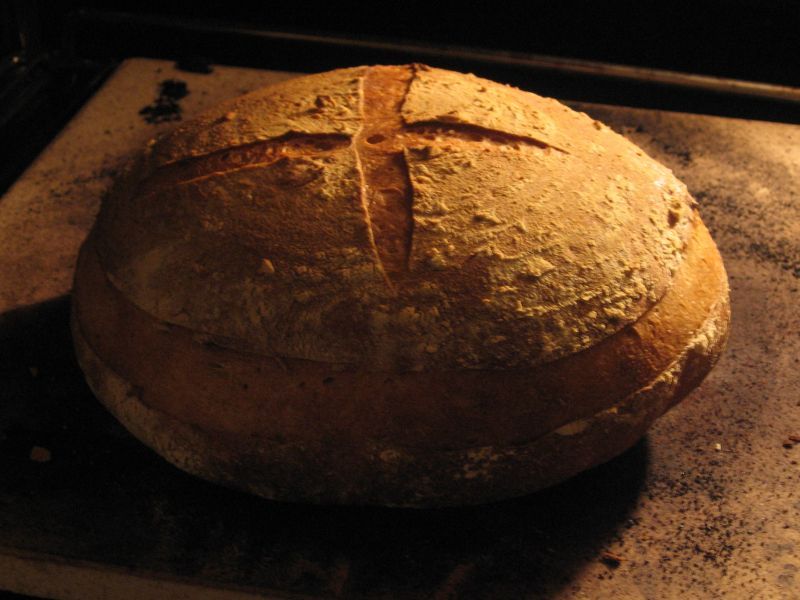
A couple cups of twelve-year-old sourdough starter, which is named  for the date of its spontaneous incarnation…7/99, as in July 1999 (the year that my starter came to life and my marriage fell apart…I’m sure there’s a metaphor here but I’m still too far in denial to recognize it).

I resurrected the starter a few weeks ago (after it being in hibernation in my fridge for almost a year) and transported some as gifts to a few people at my place of employment. Below is an article I wrote some years ago–skip straight to the recipes if you like, or the entire thing if you find it boring. But if you have never had true naturally leavened bread (meaning without commercial yeast) and are interested in bread baking, I recommend you try it. It is like comparing something that is one-dimensional to three-dimensional…the texture and flavor is multi-layered and unparalleled (the pancakes are pretty good, too).

Hunting For Wild Yeast
(The Original Virtual Pet)
The scientific and historical aspects of foods are, without a doubt, amazing. For example, it’s still possible in the age of faxes, e-mails, beepers and way more television channels necessary, to capture and tame wild yeast. This is a rudimental baking method that has been used since the beginning of civilization (something like Y negative 3k, to put it into today’s terms) “Taming” the yeast can actually be a little misleading, it’s more like controlling it. Yeast is a living organism, and while there may be numerous varieties, it can be divided into two categories: wild and domesticated, or more specifically, naturally occurring yeast that is present in the very air we breath, and store-bought prepackaged yeast.
To make a fine loaf of bread using commercially-made yeast can take as little as 3 hours from start to finish; to make an extraordinary loaf leavened with naturally occurring yeast (a sourdough starter) can take up to twelve hours, or even a week if you include preparing the starter. Why then, some may ask, would someone go through the trouble of utilizing wild yeast? The answer is simple: the flavor and texture of a slowly risen, naturally leavened loaf of bread is incomparable to that of the former. It has character and substance; it is something to behold.
Working with domesticated yeast is almost foolproof and your breads are sure to rise, so long as the yeast is used within the given date listed on the package and not exposed to adverse conditions. Working with the natural leavening of sourdough, on the other hand, may be a little tricky at first, like entering uncharted territory. There are no dates on the package, sourdough is alive and it’s up to you to keep it such. Often the first time one attempts a sourdough it works fine, but sometimes it doesn’t. In the past decade or so that I have experimented with various sourdoughs I have baked everything from light crusty loaves that were so beautiful and aromatic that I was in awe and didn’t even want to cut them, to sodden heavy loaves that, with a little mortar, could have built a house. Such is life, right?
There are as many recipes for sourdough as there are the people who make them, and when attempting your own you may receive more advice than is actually useful (start it in a wooden bowl, add grape skins, use potato water, store it on a radiator, import water from San Francisco or Alaska, blah, blah, etc.). In truth, while many of these suggestions may be helpful, they often overcomplicate things. In this author’s opinion, the most difficult aspect of sourdough making is the waiting—many things in life can be rushed, but sourdough is not one of them. To create a starter one merely has to mix together flour and water and allow it to rest for a few days and begin to ferment and attract the illusive wild yeast. This method (flour and water), after all, is most likely how sourdough was accidentally discovered in Ancient Egypt more than 5000 years ago—it was the first leavened bread. Since then this method of breadmaking has been used, virtually, in almost every culture and civilization around the globe. Commercially made yeast has only been available since the middle of the last century. Prior, if you desired your bread to be leavened it was done naturally, with a fermented starter.
Though sourdough in America is most often associated with San Francisco and Alaska, it is prevalent throughout our nation. Interestingly, it is said that there were bubbling crocks of starter with Columbus and his crew aboard their ships when they happened upon this continent (possibly America’s first sourdough). But it wasn’t until the California gold rush of 1849 that sourdough first became a culinary legend in America. At that time yeast was being produced commercially but provisions were scarce in the Wild West, so the chuckwagon cooks had to revert to the ancient method of sourdough baking. Sourdough was used to leaven every­thing from bread and muffins to waffles, pancakes and even cakes. Before long sourdough, along with gold seekers, made its way to the Alaskan Yukon. There, the prospectors became so associated with the dough that they themselves were commonly referred to as “Sourdoughs”. These prospectors were even known to take their starters to bed with them, to keep the yeast warm so it was active for breakfast preparations.
To care for your starter, as with any pet, you have to supply food and an appropriate environment. To feed your starter simply use a portion of the starter and replace it with an equal amount of fresh flour and water, this will give the yeast more sugar and gluten to consume. If you are inclined to bake every day, or every other day, store it at room temperature so it will always be active; room temperature starters need to be fed a minimum of every twelve hours, lest the yeast consumes all of the available food and perishes. If you don’t bake on a daily basis refrigerate your starter and feed it once or twice a week (you may have to actually dump some of your starter down the drain, unless you want it to keep expanding to mammoth proportions). By refrigerating your starter the souring process will be retard­ed and the yeast will become somewhat dormant. A starter must be brought to room temperature in order for it to become active again.
When attempting a new starter use the least processed flours you can purchase, such as organic unbleached or whole wheat, there are plenty varieties readily available. Also use wholesome water, such as bottled spring water; the chlorine in tap water will definitely be the demise to any newly “planted” yeast. And above all be patient, if it doesn’t work the first time try it again. Remember, you may be able to control the yeast once it has planted itself, but in the first stages you are at the will of nature.
Sourdough Starter
Unbleached all-purpose flour (the least processed brand available)
Whole wheat flour (same as above)
Spring water
In a glass bowl, combine 1 cup of unbleached all-purpose flour and 1/2 cup whole wheat flour with 1-1/4 cups spring water. Mix thoroughly and cover the bowl with cheesecloth, secure the cheesecloth with string or a rubber band. Allow this mixture to sit at room temperature for 48 hours, then stir in an additional 1/2 cup all-purpose flour, 1/2 cup whole wheat flour and 3/4 cup spring water. Replace the cheesecloth and allow the starter to sit for and additional 48-72 hours. If after 4-5 days there is no sign of yeast activity, grayish-black liquid appears on the surface, or the starter develops an unsavory aroma, discard it and begin again (remember that it will smell somewhat sour when active, this should not be confused with spoilage). Once the starter is active it will need to be fed every twelve hours (or much less if refrigerated). Simply use a portion (give a portion away, or at the very least empty some down the drain) and replenish it with fresh water and flour. After an additional 3 or 4 days of feeding, the starter should be active enough to use in any recipe calling for such.
Sourdough Bread
Yield: 1 loaf
2 cups sourdough starter (room temperature and visibly active)
2 tablespoons honey
1 tablespoon olive oil
1 teaspoon sea salt
1/2 cup whole wheat flour
1-1/2 cups all-purpose flour (approximately)
In a medium bowl, combine the starter, honey, oil and salt; mix thoroughly. Stir in the whole wheat flour and 1-1/4 cups of the all purpose flour; mix the dough until it is thick enough to handle, then turn it out onto a work surface. Begin to knead the dough, and if it seems too moist work in the remaining 1/4 cup flour. Knead the dough for 10 minutes. Place the kneaded dough in a lightly oiled loaf pan, or shape into a ball and set on a baking sheet that has been lightly dusted with cornmeal. Cover the dough with plastic wrap or a lightly floured cloth and let rest until almost doubled in bulk (depending on the strength of your starter this may take anywhere from 3 to 6 hours). Preheat an oven to 375 degrees Fahrenheit. Bake the bread in the preheated oven for 30-40 minutes, or until the crust is dark brown and the loaf sounds hollow when the bottom is lightly tapped. Cool the bread on a wire rack for at least 15 minutes before slicing.
Sourdough Pancakes
Yield: 30 (3-inch) pancakes
2 cups sourdough starter (room temperature and visibly active)
2 tablespoons sugar
2 tablespoons vegetable oil
1 large egg
1/2 teaspoon baking soda
1/4 teaspoon salt
1/4 cup all-purpose flour (approximately)
Combine all of the ingredients in a medium bowl and mix until thoroughly combined. Cook the pancakes in a lightly buttered skillet until fluffy and lightly browned on both sides. Serve with fresh fruit and maple syrup.

>Things That Can Be Carried On A Bike (#288)…plus some text and a couple recipes

>

A couple cups of twelve-year-old sourdough starter, which is named  for the date of its spontaneous incarnation…7/99, as in July 1999 (the year that my starter came to life and my marriage fell apart…I’m sure there’s a metaphor here but I’m still too far in denial to recognize it).

I resurrected the starter a few weeks ago (after it being in hibernation in my fridge for almost a year) and transported some as gifts to a few people at my place of employment. Below is an article I wrote some years ago–skip straight to the recipes if you like, or the entire thing if you find it boring. But if you have never had true naturally leavened bread (meaning without commercial yeast) and are interested in bread baking, I recommend you try it. It is like comparing something that is one-dimensional to three-dimensional…the texture and flavor is multi-layered and unparalleled (the pancakes are pretty good, too).

Hunting For Wild Yeast
(The Original Virtual Pet)
The scientific and historical aspects of foods are, without a doubt, amazing. For example, it’s still possible in the age of faxes, e-mails, beepers and way more television channels necessary, to capture and tame wild yeast. This is a rudimental baking method that has been used since the beginning of civilization (something like Y negative 3k, to put it into today’s terms) “Taming” the yeast can actually be a little misleading, it’s more like controlling it. Yeast is a living organism, and while there may be numerous varieties, it can be divided into two categories: wild and domesticated, or more specifically, naturally occurring yeast that is present in the very air we breath, and store-bought prepackaged yeast.
To make a fine loaf of bread using commercially-made yeast can take as little as 3 hours from start to finish; to make an extraordinary loaf leavened with naturally occurring yeast (a sourdough starter) can take up to twelve hours, or even a week if you include preparing the starter. Why then, some may ask, would someone go through the trouble of utilizing wild yeast? The answer is simple: the flavor and texture of a slowly risen, naturally leavened loaf of bread is incomparable to that of the former. It has character and substance; it is something to behold.
Working with domesticated yeast is almost foolproof and your breads are sure to rise, so long as the yeast is used within the given date listed on the package and not exposed to adverse conditions. Working with the natural leavening of sourdough, on the other hand, may be a little tricky at first, like entering uncharted territory. There are no dates on the package, sourdough is alive and it’s up to you to keep it such. Often the first time one attempts a sourdough it works fine, but sometimes it doesn’t. In the past decade or so that I have experimented with various sourdoughs I have baked everything from light crusty loaves that were so beautiful and aromatic that I was in awe and didn’t even want to cut them, to sodden heavy loaves that, with a little mortar, could have built a house. Such is life, right?
There are as many recipes for sourdough as there are the people who make them, and when attempting your own you may receive more advice than is actually useful (start it in a wooden bowl, add grape skins, use potato water, store it on a radiator, import water from San Francisco or Alaska, blah, blah, etc.). In truth, while many of these suggestions may be helpful, they often overcomplicate things. In this author’s opinion, the most difficult aspect of sourdough making is the waiting—many things in life can be rushed, but sourdough is not one of them. To create a starter one merely has to mix together flour and water and allow it to rest for a few days and begin to ferment and attract the illusive wild yeast. This method (flour and water), after all, is most likely how sourdough was accidentally discovered in Ancient Egypt more than 5000 years ago—it was the first leavened bread. Since then this method of breadmaking has been used, virtually, in almost every culture and civilization around the globe. Commercially made yeast has only been available since the middle of the last century. Prior, if you desired your bread to be leavened it was done naturally, with a fermented starter.
Though sourdough in America is most often associated with San Francisco and Alaska, it is prevalent throughout our nation. Interestingly, it is said that there were bubbling crocks of starter with Columbus and his crew aboard their ships when they happened upon this continent (possibly America’s first sourdough). But it wasn’t until the California gold rush of 1849 that sourdough first became a culinary legend in America. At that time yeast was being produced commercially but provisions were scarce in the Wild West, so the chuckwagon cooks had to revert to the ancient method of sourdough baking. Sourdough was used to leaven every­thing from bread and muffins to waffles, pancakes and even cakes. Before long sourdough, along with gold seekers, made its way to the Alaskan Yukon. There, the prospectors became so associated with the dough that they themselves were commonly referred to as “Sourdoughs”. These prospectors were even known to take their starters to bed with them, to keep the yeast warm so it was active for breakfast preparations.
To care for your starter, as with any pet, you have to supply food and an appropriate environment. To feed your starter simply use a portion of the starter and replace it with an equal amount of fresh flour and water, this will give the yeast more sugar and gluten to consume. If you are inclined to bake every day, or every other day, store it at room temperature so it will always be active; room temperature starters need to be fed a minimum of every twelve hours, lest the yeast consumes all of the available food and perishes. If you don’t bake on a daily basis refrigerate your starter and feed it once or twice a week (you may have to actually dump some of your starter down the drain, unless you want it to keep expanding to mammoth proportions). By refrigerating your starter the souring process will be retard­ed and the yeast will become somewhat dormant. A starter must be brought to room temperature in order for it to become active again.
When attempting a new starter use the least processed flours you can purchase, such as organic unbleached or whole wheat, there are plenty varieties readily available. Also use wholesome water, such as bottled spring water; the chlorine in tap water will definitely be the demise to any newly “planted” yeast. And above all be patient, if it doesn’t work the first time try it again. Remember, you may be able to control the yeast once it has planted itself, but in the first stages you are at the will of nature.
Sourdough Starter
Unbleached all-purpose flour (the least processed brand available)
Whole wheat flour (same as above)
Spring water
In a glass bowl, combine 1 cup of unbleached all-purpose flour and 1/2 cup whole wheat flour with 1-1/4 cups spring water. Mix thoroughly and cover the bowl with cheesecloth, secure the cheesecloth with string or a rubber band. Allow this mixture to sit at room temperature for 48 hours, then stir in an additional 1/2 cup all-purpose flour, 1/2 cup whole wheat flour and 3/4 cup spring water. Replace the cheesecloth and allow the starter to sit for and additional 48-72 hours. If after 4-5 days there is no sign of yeast activity, grayish-black liquid appears on the surface, or the starter develops an unsavory aroma, discard it and begin again (remember that it will smell somewhat sour when active, this should not be confused with spoilage). Once the starter is active it will need to be fed every twelve hours (or much less if refrigerated). Simply use a portion (give a portion away, or at the very least empty some down the drain) and replenish it with fresh water and flour. After an additional 3 or 4 days of feeding, the starter should be active enough to use in any recipe calling for such.
Sourdough Bread
Yield: 1 loaf
2 cups sourdough starter (room temperature and visibly active)
2 tablespoons honey
1 tablespoon olive oil
1 teaspoon sea salt
1/2 cup whole wheat flour
1-1/2 cups all-purpose flour (approximately)
In a medium bowl, combine the starter, honey, oil and salt; mix thoroughly. Stir in the whole wheat flour and 1-1/4 cups of the all purpose flour; mix the dough until it is thick enough to handle, then turn it out onto a work surface. Begin to knead the dough, and if it seems too moist work in the remaining 1/4 cup flour. Knead the dough for 10 minutes. Place the kneaded dough in a lightly oiled loaf pan, or shape into a ball and set on a baking sheet that has been lightly dusted with cornmeal. Cover the dough with plastic wrap or a lightly floured cloth and let rest until almost doubled in bulk (depending on the strength of your starter this may take anywhere from 3 to 6 hours). Preheat an oven to 375 degrees Fahrenheit. Bake the bread in the preheated oven for 30-40 minutes, or until the crust is dark brown and the loaf sounds hollow when the bottom is lightly tapped. Cool the bread on a wire rack for at least 15 minutes before slicing.
Sourdough Pancakes
Yield: 30 (3-inch) pancakes
2 cups sourdough starter (room temperature and visibly active)
2 tablespoons sugar
2 tablespoons vegetable oil
1 large egg
1/2 teaspoon baking soda
1/4 teaspoon salt
1/4 cup all-purpose flour (approximately)
Combine all of the ingredients in a medium bowl and mix until thoroughly combined. Cook the pancakes in a lightly buttered skillet until fluffy and lightly browned on both sides. Serve with fresh fruit and maple syrup.

It’s Not Always About the Destination or How Much I can Carry…

 …sometimes it’s just about the ride.

With the weather starting to break I’ve been riding my winter bike less and the Mundo more…and for a while (during the deepest, darkest, and coldest days of winter) I nearly forgot how lovely and beautiful this bike is to ride. I had a meeting at church tonight and thought it was going to rain but it didn’t, and I’m glad that  I rode. On my way home the evening was idyllic and (nearly) spring-like…and not a breeze in the air. The only thing I carried on my 7′ and 60lb bike was me. I’ve said it before but I have to say it again (and only a Mundo owner truly knows this…and there’s a few that read this blog)…for as big and heavy as this bike is it is the most graceful and comfortable bike I’ve ridden. Pedaling and coasting silently and nearly effortlessly on the way home was almost a form of meditation to me this evening. On rides like this I obviously do not need  a bike like this but I rode it (opposed to one of my other bikes) because of its grace and comfort. If I had to say one negative thing about it is that it can be cumbersome at times…getting it in-and-out of my house and where I work. I’m thinking about (dreaming  at this point because I don’t have the $$ right now) purchasing a commuter bike and paring my fleet of 3 (or six, if you count those in my basement) down to two…the Mundo and a yet-to-be-determined new bike. I’d sell or donate the bikes that are accumulating and which I rarely use. The main stipulation is I am looking for a bike that is as comfortable and as graceful as a Mundo (I would also add the bread platform off my winter bike so I could carry things). A quick note to my fellow European riders that are reading this: you are fortunate to have such a large array of choices in bicyles available…fully loaded city bikes are few in the U.S….but it is getting better. One bike I am considering is a Breezer (click here and here). Has anyone ridden one of these or do you own one? I also thought about Batavus, which are available just north of the border (click here). Any other suggestions? Anyhow, at this point it is still in the dreaming stage (seriously dreaming) because I do not have the cash and really do not care to put things on a charge card…but hey, everyone can dream right? In the meantime I’ll just keep coasting and pedaling and pedaling and coasting (and of course carrying all sorts of items) on my beautiful Mundo.

>It’s Not Always About the Destination or How Much I can Carry…

>

 …sometimes it’s just about the ride.

With the weather starting to break I’ve been riding my winter bike less and the Mundo more…and for a while (during the deepest, darkest, and coldest days of winter) I nearly forgot how lovely and beautiful this bike is to ride. I had a meeting at church tonight and thought it was going to rain but it didn’t, and I’m glad that  I rode. On my way home the evening was idyllic and (nearly) spring-like…and not a breeze in the air. The only thing I carried on my 7′ and 60lb bike was me. I’ve said it before but I have to say it again (and only a Mundo owner truly knows this…and there’s a few that read this blog)…for as big and heavy as this bike is it is the most graceful and comfortable bike I’ve ridden. Pedaling and coasting silently and nearly effortlessly on the way home was almost a form of meditation to me this evening. On rides like this I obviously do not need  a bike like this but I rode it (opposed to one of my other bikes) because of its grace and comfort. If I had to say one negative thing about it is that it can be cumbersome at times…getting it in-and-out of my house and where I work. I’m thinking about (dreaming  at this point because I don’t have the $$ right now) purchasing a commuter bike and paring my fleet of 3 (or six, if you count those in my basement) down to two…the Mundo and a yet-to-be-determined new bike. I’d sell or donate the bikes that are accumulating and which I rarely use. The main stipulation is I am looking for a bike that is as comfortable and as graceful as a Mundo (I would also add the bread platform off my winter bike so I could carry things). A quick note to my fellow European riders that are reading this: you are fortunate to have such a large array of choices in bicyles available…fully loaded city bikes are few in the U.S….but it is getting better. One bike I am considering is a Breezer (click here and here). Has anyone ridden one of these or do you own one? I also thought about Batavus, which are available just north of the border (click here). Any other suggestions? Anyhow, at this point it is still in the dreaming stage (seriously dreaming) because I do not have the cash and really do not care to put things on a charge card…but hey, everyone can dream right? In the meantime I’ll just keep coasting and pedaling and pedaling and coasting (and of course carrying all sorts of items) on my beautiful Mundo.

Things That Can Be Carried On A Bike (#286 & #287)…and a brief comment

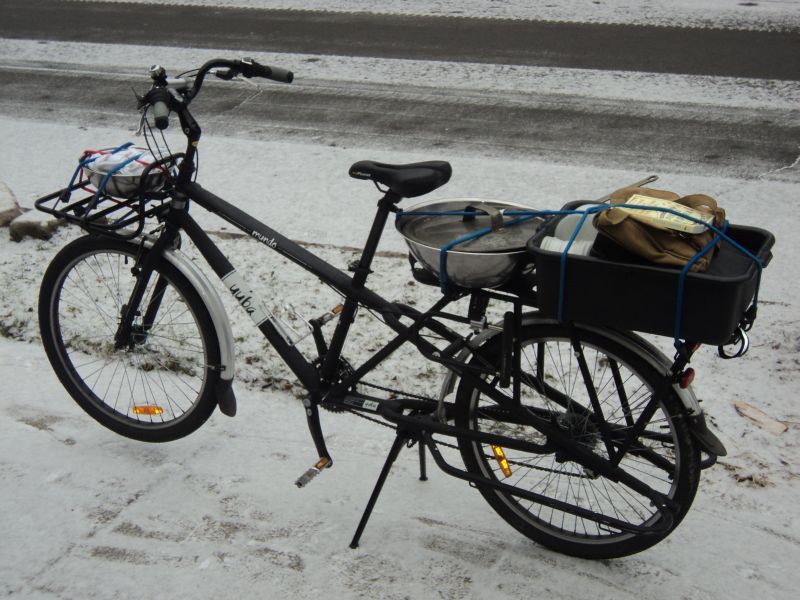
#286 (upper photo)…3 metal mixing bowls of various sizes, an 18″ skillet with lid, a bus pan, a portable propane stove with two extra canisters of propane, 27 small plastic containers with lids, tongs, spatulas, mixing spoons, a rolling pin, 8 cotton towels, a canvas book bag containing books and writing implements, a book on top of the bag, two pie tins, and a pound of whole wheat flour.
#287 (below photo)…a cardboard box containing a laptop computer, an iPod, a cellphone, and 15 CDs. A 6′ cable (on top of the box) and a book (on the front rack).
These photos were both taken today–morning and early evening–it is possible to be nearly car-free (or even entirely car-free for some) and still get where you need to go and easily carry what you need to bring with you. But then again, if you’ve been to this blog before (or others like it) you already know this.

>Things That Can Be Carried On A Bike (#286 & #287)…and a brief comment

>

#286 (upper photo)…3 metal mixing bowls of various sizes, an 18″ skillet with lid, a bus pan, a portable propane stove with two extra canisters of propane, 27 small plastic containers with lids, tongs, spatulas, mixing spoons, a rolling pin, 8 cotton towels, a canvas book bag containing books and writing implements, a book on top of the bag, two pie tins, and a pound of whole wheat flour.
#287 (below photo)…a cardboard box containing a laptop computer, an iPod, a cellphone, and 15 CDs. A 6′ cable (on top of the box) and a book (on the front rack).
These photos were both taken today–morning and early evening–it is possible to be nearly car-free (or even entirely car-free for some) and still get where you need to go and easily carry what you need to bring with you. But then again, if you’ve been to this blog before (or others like it) you already know this.

Yellow Chicken and Brown Rice

This is yet another variation of chicken-and-rice that I made for my son and I for dinner tonight. All cultures seem to have their own version of chicken-and-rice and many are made using the same method but with different seasonings (and a few other ingredients, of course). In this version I used chicken wings instead of breast or thigh (doesn’t every Buffalonian have chicken wings in their freezer?); I also used brown rice instead of white. After sauteing the wings in a skillet I added curry and tandoori spice to them (hence the yellow), then I made a traditional  brown rice pilaf to which I added the browned and seasoned wings (to finish their cooking as the rice cooked). Here’s the recipe (in pictures); if you’d like to see other variations of this (with pictures and printable recipes), including my favorite, click here, here, or here.

>Yellow Chicken and Brown Rice

>

This is yet another variation of chicken-and-rice that I made for my son and I for dinner tonight. All cultures seem to have their own version of chicken-and-rice and many are made using the same method but with different seasonings (and a few other ingredients, of course). In this version I used chicken wings instead of breast or thigh (doesn’t every Buffalonian have chicken wings in their freezer?); I also used brown rice instead of white. After sauteing the wings in a skillet I added curry and tandoori spice to them (hence the yellow), then I made a traditional  brown rice pilaf to which I added the browned and seasoned wings (to finish their cooking as the rice cooked). Here’s the recipe (in pictures); if you’d like to see other variations of this (with pictures and printable recipes), including my favorite, click here, here, or here.

Things That Can Be Carried On A Bike (#285)…and a quick comment

Three liters of wine, a gym bag full of wet clothes, and $27.61 in groceries, sundries, and other toiletries.

As I was loading my purchases onto the Mundo I saw a friend in the parking lot of the store. He told me I looked a little crazy carrying all that stuff on a bike, and that he would feel self-conscious doing so. I reminded him of two things: (1) that I stopped caring what people thought about me quite some time ago, and (2) what I had on the bike was not all that  much…that it is capable of carrying so much more. What I didn’t say (but I thought as I rode away), was we’ll see who looks crazy as the petrol problem gets worse…and worse and worse. Another thing I failed to mention to my friend was that I  think I am a little bit crazy…crazy for life. Because while I still own a car (truck actually), I find riding my bikes way more fun.

>Things That Can Be Carried On A Bike (#285)…and a quick comment

>

Three liters of wine, a gym bag full of wet clothes, and $27.61 in groceries, sundries, and other toiletries.

As I was loading my purchases onto the Mundo I saw a friend in the parking lot of the store. He told me I looked a little crazy carrying all that stuff on a bike, and that he would feel self-conscious doing so. I reminded him of two things: (1) that I stopped caring what people thought about me quite some time ago, and (2) what I had on the bike was not all that  much…that it is capable of carrying so much more. What I didn’t say (but I thought as I rode away), was we’ll see who looks crazy as the petrol problem gets worse…and worse and worse. Another thing I failed to mention to my friend was that I  think I am a little bit crazy…crazy for life. Because while I still own a car (truck actually), I find riding my bikes way more fun.

Winter on the Wane

Winter, I think, is finally on the wane. I took these photos while on a walk today…during a half drizzle/half snow shower at Christ the King Seminary in East Aurora, NY. I found it somewhat bleak but still beautiful at the same time. I sometimes find it truly difficult to see the forest through the trees…but walks like this offer a little clarity.

Things That Can Be Carried On A Bike (#283 & # 284)

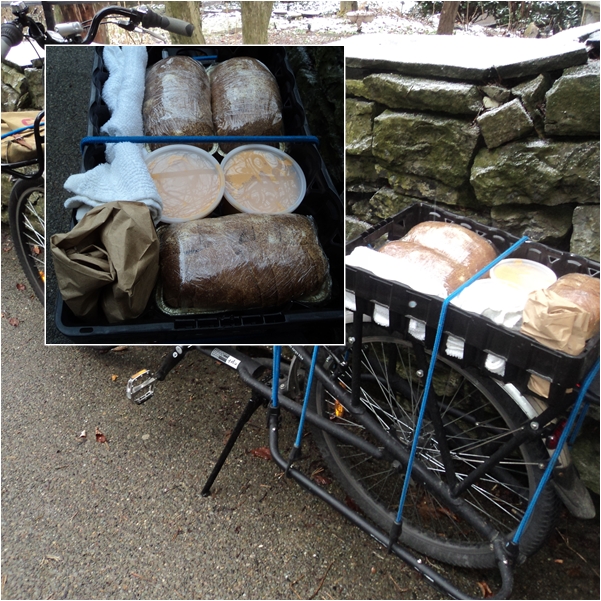
#283 (above)…A plastic bag containing 2lbs. of raw whole wheat bread dough, two tins of chick peas, a tin of tahini, lemon juice, and a small head of garlic.

#284 (below)…Three loaves of freshly baked bread, two pints of freshly-made spiced humus, two small towels, and a half head of garlic.

Hummus bil Tahina
(Chickpeas with Sesame Paste)
Makes about 3-1/2 cups
3 cups chickpeas, cooked or canned and rinsed
1 tablespoon minced garlic
1 cup tahini
1/2 cup fresh lemon juice
1/4 cup cold water
1 teaspoon salt
1/2 teaspoon cayenne pepper
Place all of the ingredients in a food processor and process until smooth.
White Bean and Fresh Herb Hummus
(ful bi tahina)
Makes about 4 cups
3 cups white beans, canned or cooked and rinsed
1 tablespoon fresh minced garlic
1 cup tahini
1/2 cup fresh lemon juice
1/2 cup cold water
1 teaspoon salt
2 tablespoons fresh minced basil
1 tablespoon fresh minced oregano
2 teaspoons fresh minced rosemary
2 teaspoons cracked black pepper
Combine the white beans and garlic in a food processor and purée until smooth. Add the tahini, lemon, water and salt; purée until smooth. Add the basil, oregano, rosemary and black pepper, pulse the machine just until all of the ingredients are thoroughly incorporated.

>Things That Can Be Carried On A Bike (#283 & # 284)

>

#283 (above)…A plastic bag containing 2lbs. of raw whole wheat bread dough, two tins of chick peas, a tin of tahini, lemon juice, and a small head of garlic.

#284 (below)…Three loaves of freshly baked bread, two pints of freshly-made spiced humus, two small towels, and a half head of garlic.

Hummus bil Tahina
(Chickpeas with Sesame Paste)
Makes about 3-1/2 cups
3 cups chickpeas, cooked or canned and rinsed
1 tablespoon minced garlic
1 cup tahini
1/2 cup fresh lemon juice
1/4 cup cold water
1 teaspoon salt
1/2 teaspoon cayenne pepper
Place all of the ingredients in a food processor and process until smooth.
White Bean and Fresh Herb Hummus
(ful bi tahina)
Makes about 4 cups
3 cups white beans, canned or cooked and rinsed
1 tablespoon fresh minced garlic
1 cup tahini
1/2 cup fresh lemon juice
1/2 cup cold water
1 teaspoon salt
2 tablespoons fresh minced basil
1 tablespoon fresh minced oregano
2 teaspoons fresh minced rosemary
2 teaspoons cracked black pepper
Combine the white beans and garlic in a food processor and purée until smooth. Add the tahini, lemon, water and salt; purée until smooth. Add the basil, oregano, rosemary and black pepper, pulse the machine just until all of the ingredients are thoroughly incorporated.

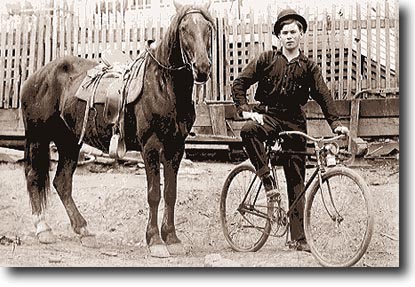
Horse and Bicycle

I love this photo but unfortunately do not know who it portrays, who took it, or when or where it took place. It’s from the site The Bicycle & The West. If you are interested in bicycles, or old pictures and the history of bicycles, I suggest you pay them a visit. Anyhow, seems to me like it would have been taken not too long before the advent of the car…I wonder what pictures of personal transport will be taken 100 years from now.

>Horse and Bicycle

>

I love this photo but unfortunately do not know who it portrays, who took it, or when or where it took place. It’s from the site The Bicycle & The West. If you are interested in bicycles, or old pictures and the history of bicycles, I suggest you pay them a visit. Anyhow, seems to me like it would have been taken not too long before the advent of the car…I wonder what pictures of personal transport will be taken 100 years from now.

Crazy Ride

I came across this and a few other short videos on Treehugger. It’s a 4-minute clip of a Chilean bicyclist doing a downhill race in the city through all sorts of perilous circumstances…and he has a camera mounted on his helmet. As Treehugger suggests, watch it in full screen mode…it is pretty incredible. Watching it (to me) was like a cross between riding on a roller coaster and watching a video game. There were points when I actually said out loud…whoooaa! It is really entertaining.

VCA 2010 RACE RUN from changoman on Vimeo.