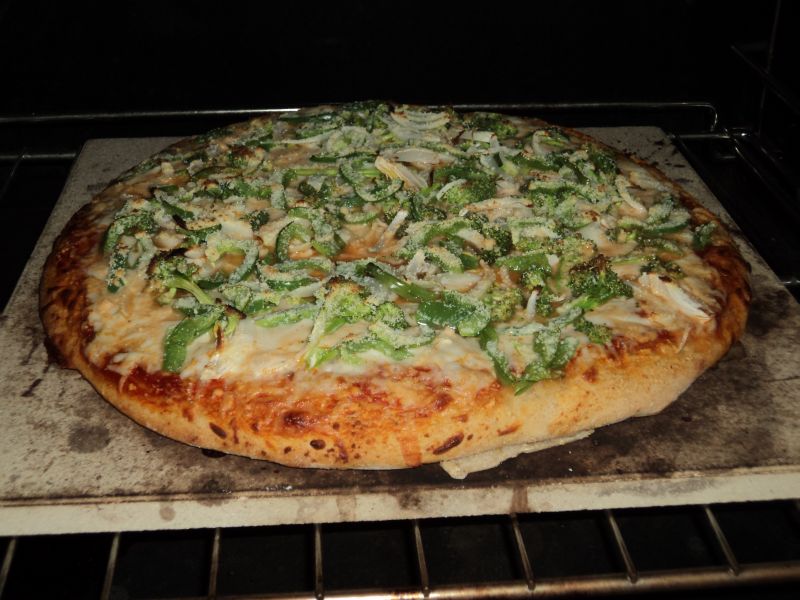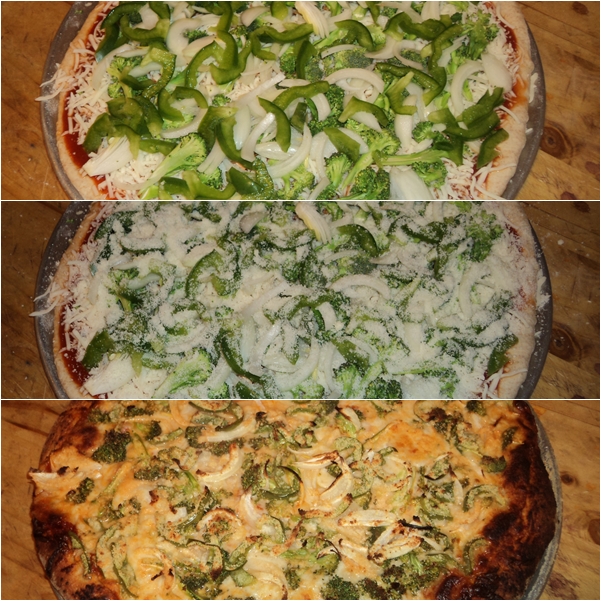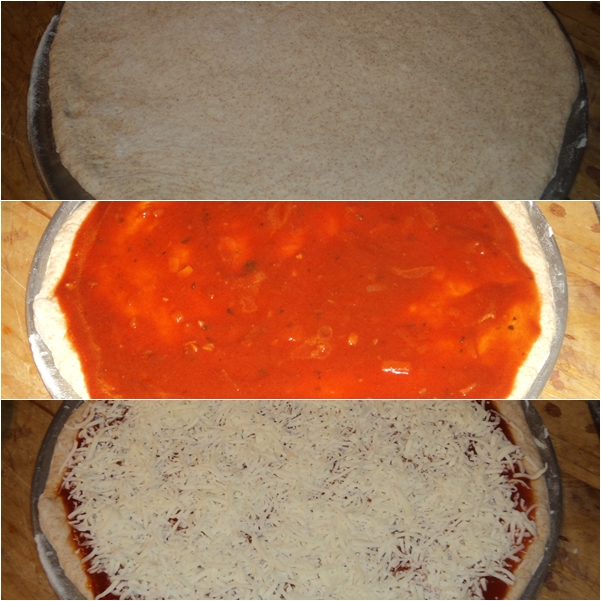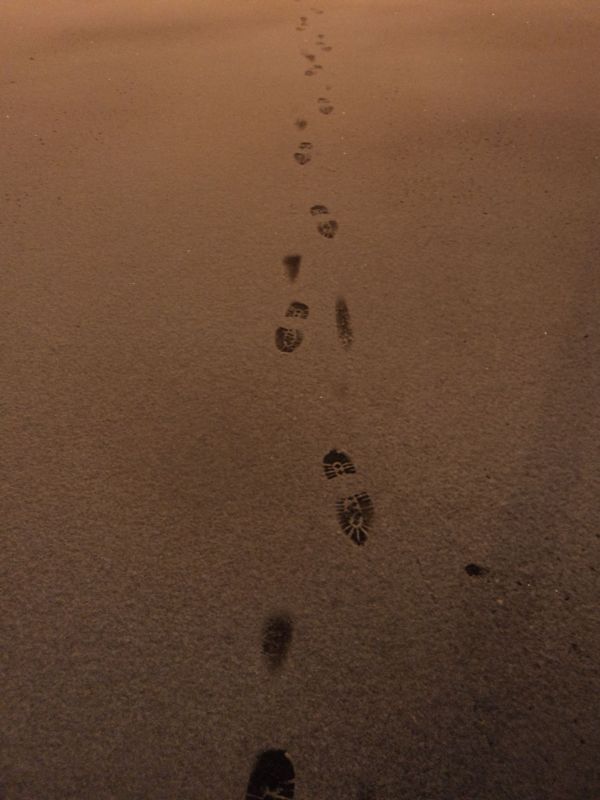
Anatomy of a Pizza

(The following text and recipes originally appeared in Buffalo Spree; for additional recipes and pictures click here or here.)
One of the aspects of food that I have always found interesting—besides cooking and eating it—is its history, and to study food history is in a certain way studying civilization itself. Even common everyday foods have a history…someone had to be the first to make it. Case in point: Pizza.

While pizza is so common in America it may as well be an American product, but of course it is not. Nor—some may be dismayed to learn—are its origins Italian, at least not exclusively. Pizza, or simple versions of it, most likely began east of Italy; Greece maybe, or possibly Egypt or the Levant. Some speculate that the ancient Phoenicians first developed a seasoned flatbread that was pizza’s precursor and brought it on their nautical travels. The etymological origins of pizza are said to come from the Greek word pita (or pitta), which means pie or a sort of flat cake. The Eastern Mediterranean is the area where bread, and specifically flatbread, first came into existence. In many Middle Eastern countries today, where bread is still baked flat, it is not only a foodstuff, it is also a utensil. It was surely only a matter of time before food was baked onto the bread.

What I find truly interesting is that while more toppings were added as pizza evolved, there were originally no tomatoes to be had; they didn’t arrive in Italy (from the “New World”) until the 16th century and weren’t considered edible until the early 1700’s. One of the first recorded pizzas to resemble those that we know today is the still-famous Pizza Martguerita. It was first baked (or at least first served) on June 11, 1889 by a cook named Raffaele Esposito. He was catering an event for Queen Margherita di Savoia and paid homage to the colors of Italy’s flag: red (tomato), white (mozzarella) and green (basil). I can’t help but wonder what the cook’s outcome would have been should the Queen not have liked the new fangled food.

Pizza as a recipe is exceedingly easy to prepare. Most people are afraid of homemade dough but it is very simple and will get easier the more you make it. There are plenty of pre-made and often frozen doughs available, but with the aid of an electric mixer you can make good quality dough in the time it takes to thaw one out. A couple key things to remember are to preheat your oven and don’t overload the pizza with too many or soggy ingredients otherwise the pizza itself will be soggy. And remember, also, that the next time you bite into a slice of steaming hot pizza, whether you made it or purchased it, what you have in your hand is not only food…it’s a veritable (and edible) slice of history.
Basic Pizza Dough
Yield: 4 (12 inch) pizza crusts
2 1/3 cups water
2 packages yeast
6 cups bread flour, divided
3 tablespoon olive oil
2 teaspoon salt

Combine the water, yeast, and 2 cups of flour in the bowl of an upright mixer; stir, cover, and allow to ferment 30 minutes. Add the remaining 4 cups flour along with the olive oil and yeast. Fit the mixer with a dough hook and begin mixing on low speed. Once it forms a ball turn the speed to medium and knead about 8 minutes. Transfer the dough to a lightly oiled bowl and cover with plastic wrap; allow the dough to ferment and rise for 1 hour, or until it doubles in size. At this point it may be rolled out for pizza, used to make bread, or refrigerated for a few days; it can also frozen for up to 6 months.

Pizza Margherita
Yield: 2 (12 inch) pizzas
1/2 recipe pizza dough
2 tablespoon cornmeal
2 teaspoon minced garlic
2 large ripe tomatoes, diced (about 2 cups)
8 large leaves fresh basil, very coarsely chopped
8 ounces grated mozzarella cheese
1/4 teaspoon salt
2 teaspoon olive oil

Preheat an oven to 475 F. Lightly oil 2 (12 inch) pizza pans (or square baking pans). Divide the dough and roll out and transfer it to the pans. Distribute the ingredients across the dough with the cheese being last. Bake the pizzas for 15 – 20 minutes, or until the bottoms are crisp and the cheese is golden. Allow to cool for 5 minutes before slicing.

Traditional Pizza
Yield: 2 (12 inch) pizzas
1 ounce olive oil
1/2 recipe pizza dough
1/2 recipe pizza sauce
6 ounces shredded mozzarella cheese
2 ounces grated Romano cheese

Preheat an oven to 475 F. Lightly oil (2) 12 inch pizza pans (or square baking pans). Divide the dough and roll out and transfer it to the pans. Distribute the ingredients across the dough with the cheese being last. Bake the pizzas for 15 – 20 minutes, or until the bottoms are crisp and the cheese is golden. Allow to cool for 5 minutes before slicing.

Pizza Sauce
Yield: 1-1/2 cups
3 tablespoons olive oil
1 small diced onion (approximately 4 ounces)
1 tablespoon minced garlic
2 teaspoons oregano
1 teaspoon basil
1/2 teaspoon salt
1/2 teaspoon ground black pepper
1-1/2 cup tomato puree

Heat the olive oil in a small sauce pot then add the diced onion. Sauté the onion for about 5 minutes over medium-high heat, until it begins to caramelize. Add the garlic and sauté a minute longer. Add the oregano, basil, salt, pepper and tomato puree. Bring the sauce to a boil, then lower the heat to a very lower simmer and cook the sauce for 20 minutes, stirring often to avoid scorching.

Pizza Quattro Formaggi
(Pizza with Four Cheeses)
Yield: 2 (12 inch) pizzas
1/2 recipe pizza dough
2 tablespoons olive oil
2 teaspoons minced garlic
2 large ripe tomatoes, diced (about 2 cups)
8 large leaves fresh basil, very coarsely chopped
3 ounces Mozzarella cheese, grated
3 ounces Gorgonzola cheese, crumbled
3 ounces Asiago cheese, grated
3 ounces Provolone cheese, grated

Preheat an oven to 475 F. Lightly oil (2) 12 inch pizza pans (or square baking pans). Divide the dough and roll out and transfer it to the pans. Distribute the ingredients across the dough with the cheese being last. Bake the pizzas for 15 – 20 minutes, or until the bottoms are crisp and the cheese is golden. Allow to cool for 5 minutes before slicing.

Pizza Crudo
(Grilled Pizza Topped with Raw Salad)
Yield: 2 (12 inch) pizzas
1/2 recipe pizza dough
6 tablespoons extra virgin olive oil, divided
2 tablespoons white balsamic vinegar
1 teaspoon cracked black pepper
1/4 teaspoon kosher salt
2 bunches arugula, washed
1/2 red onion, sliced thin
2 plum tomatoes, diced small
2 slices prosciutto, julienned
2 ounces Asiago cheese, shredded
Preheat a grill, having one side prepared with indirect heat. Rub a tablespoon of olive oil on each side of the dough. Place the dough on the grill (not over the direct flame) and close the lid. Cook for a couple of minutes, then turn it over and close the lid. Transfer to a plate and set aside. Combine the remaining 4 tablespoons oil with the vinegar, salt, and pepper in a medium bowl and whisk together. Add the arugula, onion, tomatoes, prosciutto, and Asiago. Toss the salad in the dressing and transfer it to the cooked dough.

Grilled Focaccia
Yield: 2 (12 inch) Focacci
1/2 recipe pizza dough, rolled thin
2 tablespoons olive oil
1 clove garlic, minced
1/4 teaspoon kosher salt
2 teaspoon minced rosemary
2 tablespoons grated parmesan cheese

Preheat a grill, having one side prepared with indirect heat. Rub a tablespoon of olive oil on each side of the dough with the garlic. Place the dough on the grill (not over the direct flame) and close the lid. Cook it for a couple minutes then turn it over. Quickly sprinkle it with the salt, rosemary, and cheese. Close the lid and cook it for a couple of minutes longer.

Spinach-Feta Pizza with Honey-Brown Rice Crust
Makes 2 Pizzas
1/4 cup olive oil
1 small onion, sliced
2 cloves garlic, minced
4 cups fresh spinach, washed
2 teaspoons kosher salt
1/2 brown rice dough recipe
4 ounces feta, crumbled
4 ounces mozzarella, shredded

Preheat an oven to 450F. Heat the olive oil in a large skillet and add the onion and sauté for a minute or two. Then add the garlic and sauté another minute. Add the spinach and salt to the pan, turning and stirring it to coat it in oil. Cook the spinach just a minute or two, or until it wilts; transfer it to a plate to cool slightly while you roll out the dough. Lightly oil (2) 12 inch pizza pans (or square baking pans). Divide the dough and roll out and transfer it to the pans. Distribute the ingredients across the dough with the cheese being last. Bake the pizzas for 15 – 20 minutes, or until the bottoms are crisp and the cheese is golden. Allow to cool for 5 minutes before slicing.

Honey-Brown Rice Dough
Makes 5 (1 lb.) loaves
1 cup brown rice
3 quarts water
____________

cooked rice
2 cups cooking liquid
2 cups whole wheat flour
1 tablespoon instant yeast
____________

1/4 cup honey
1/4 cup olive oil
1 tablespoon instant yeast
4-5 cups bread flour
1 tablespoon kosher salt

Combine the rice and water in a medium pot and bring to a boil; lower the heat to simmer and cook the rice for about 45 minutes or until very soft. Remove the pot from the heat and allow the rice to cool in the cooking liquid. Strain the rice, squeezing out excess moisture and reserving 2 cups of the cooking liquid. Make a pre-ferment by combining the cooked rice and 2 cups of cooking liquid with 2 cups whole wheat flour and a tablespoon yeast. Allow the pre-ferment to ferment for 1-12 hours. Transfer the pre-ferment to an upright mixer that is fitted with a dough hook. Stir in the honey, olive oil, additional tablespoon of yeast, 4 cups of the bread flour, and kosher salt. Mix on low speed until it begins to form a dough. If it seems too sticky add the remaining cup of flour. Mix on medium speed for 8-10 minutes, or until the dough is smooth and elastic. Transfer to dough to a lightly oiled bowl or bucket and allow to rise for about 90 minutes, or until doubled in size. At this point it may be rolled out for pizza, used to make bread, or refrigerated for a few days; it can also frozen for up to 6 months.

>Anatomy of a Pizza

>

(The following text and recipes originally appeared in Buffalo Spree; for additional recipes and pictures click here or here.)
One of the aspects of food that I have always found interesting—besides cooking and eating it—is its history, and to study food history is in a certain way studying civilization itself. Even common everyday foods have a history…someone had to be the first to make it. Case in point: Pizza.

While pizza is so common in America it may as well be an American product, but of course it is not. Nor—some may be dismayed to learn—are its origins Italian, at least not exclusively. Pizza, or simple versions of it, most likely began east of Italy; Greece maybe, or possibly Egypt or the Levant. Some speculate that the ancient Phoenicians first developed a seasoned flatbread that was pizza’s precursor and brought it on their nautical travels. The etymological origins of pizza are said to come from the Greek word pita (or pitta), which means pie or a sort of flat cake. The Eastern Mediterranean is the area where bread, and specifically flatbread, first came into existence. In many Middle Eastern countries today, where bread is still baked flat, it is not only a foodstuff, it is also a utensil. It was surely only a matter of time before food was baked onto the bread.

What I find truly interesting is that while more toppings were added as pizza evolved, there were originally no tomatoes to be had; they didn’t arrive in Italy (from the “New World”) until the 16th century and weren’t considered edible until the early 1700’s. One of the first recorded pizzas to resemble those that we know today is the still-famous Pizza Martguerita. It was first baked (or at least first served) on June 11, 1889 by a cook named Raffaele Esposito. He was catering an event for Queen Margherita di Savoia and paid homage to the colors of Italy’s flag: red (tomato), white (mozzarella) and green (basil). I can’t help but wonder what the cook’s outcome would have been should the Queen not have liked the new fangled food.

Pizza as a recipe is exceedingly easy to prepare. Most people are afraid of homemade dough but it is very simple and will get easier the more you make it. There are plenty of pre-made and often frozen doughs available, but with the aid of an electric mixer you can make good quality dough in the time it takes to thaw one out. A couple key things to remember are to preheat your oven and don’t overload the pizza with too many or soggy ingredients otherwise the pizza itself will be soggy. And remember, also, that the next time you bite into a slice of steaming hot pizza, whether you made it or purchased it, what you have in your hand is not only food…it’s a veritable (and edible) slice of history.
Basic Pizza Dough
Yield: 4 (12 inch) pizza crusts
2 1/3 cups water
2 packages yeast
6 cups bread flour, divided
3 tablespoon olive oil
2 teaspoon salt

Combine the water, yeast, and 2 cups of flour in the bowl of an upright mixer; stir, cover, and allow to ferment 30 minutes. Add the remaining 4 cups flour along with the olive oil and yeast. Fit the mixer with a dough hook and begin mixing on low speed. Once it forms a ball turn the speed to medium and knead about 8 minutes. Transfer the dough to a lightly oiled bowl and cover with plastic wrap; allow the dough to ferment and rise for 1 hour, or until it doubles in size. At this point it may be rolled out for pizza, used to make bread, or refrigerated for a few days; it can also frozen for up to 6 months.

Pizza Margherita
Yield: 2 (12 inch) pizzas
1/2 recipe pizza dough
2 tablespoon cornmeal
2 teaspoon minced garlic
2 large ripe tomatoes, diced (about 2 cups)
8 large leaves fresh basil, very coarsely chopped
8 ounces grated mozzarella cheese
1/4 teaspoon salt
2 teaspoon olive oil

Preheat an oven to 475 F. Lightly oil 2 (12 inch) pizza pans (or square baking pans). Divide the dough and roll out and transfer it to the pans. Distribute the ingredients across the dough with the cheese being last. Bake the pizzas for 15 – 20 minutes, or until the bottoms are crisp and the cheese is golden. Allow to cool for 5 minutes before slicing.

Traditional Pizza
Yield: 2 (12 inch) pizzas
1 ounce olive oil
1/2 recipe pizza dough
1/2 recipe pizza sauce
6 ounces shredded mozzarella cheese
2 ounces grated Romano cheese

Preheat an oven to 475 F. Lightly oil (2) 12 inch pizza pans (or square baking pans). Divide the dough and roll out and transfer it to the pans. Distribute the ingredients across the dough with the cheese being last. Bake the pizzas for 15 – 20 minutes, or until the bottoms are crisp and the cheese is golden. Allow to cool for 5 minutes before slicing.

Pizza Sauce
Yield: 1-1/2 cups
3 tablespoons olive oil
1 small diced onion (approximately 4 ounces)
1 tablespoon minced garlic
2 teaspoons oregano
1 teaspoon basil
1/2 teaspoon salt
1/2 teaspoon ground black pepper
1-1/2 cup tomato puree

Heat the olive oil in a small sauce pot then add the diced onion. Sauté the onion for about 5 minutes over medium-high heat, until it begins to caramelize. Add the garlic and sauté a minute longer. Add the oregano, basil, salt, pepper and tomato puree. Bring the sauce to a boil, then lower the heat to a very lower simmer and cook the sauce for 20 minutes, stirring often to avoid scorching.

Pizza Quattro Formaggi
(Pizza with Four Cheeses)
Yield: 2 (12 inch) pizzas
1/2 recipe pizza dough
2 tablespoons olive oil
2 teaspoons minced garlic
2 large ripe tomatoes, diced (about 2 cups)
8 large leaves fresh basil, very coarsely chopped
3 ounces Mozzarella cheese, grated
3 ounces Gorgonzola cheese, crumbled
3 ounces Asiago cheese, grated
3 ounces Provolone cheese, grated

Preheat an oven to 475 F. Lightly oil (2) 12 inch pizza pans (or square baking pans). Divide the dough and roll out and transfer it to the pans. Distribute the ingredients across the dough with the cheese being last. Bake the pizzas for 15 – 20 minutes, or until the bottoms are crisp and the cheese is golden. Allow to cool for 5 minutes before slicing.

Pizza Crudo
(Grilled Pizza Topped with Raw Salad)
Yield: 2 (12 inch) pizzas
1/2 recipe pizza dough
6 tablespoons extra virgin olive oil, divided
2 tablespoons white balsamic vinegar
1 teaspoon cracked black pepper
1/4 teaspoon kosher salt
2 bunches arugula, washed
1/2 red onion, sliced thin
2 plum tomatoes, diced small
2 slices prosciutto, julienned
2 ounces Asiago cheese, shredded
Preheat a grill, having one side prepared with indirect heat. Rub a tablespoon of olive oil on each side of the dough. Place the dough on the grill (not over the direct flame) and close the lid. Cook for a couple of minutes, then turn it over and close the lid. Transfer to a plate and set aside. Combine the remaining 4 tablespoons oil with the vinegar, salt, and pepper in a medium bowl and whisk together. Add the arugula, onion, tomatoes, prosciutto, and Asiago. Toss the salad in the dressing and transfer it to the cooked dough.

Grilled Focaccia
Yield: 2 (12 inch) Focacci
1/2 recipe pizza dough, rolled thin
2 tablespoons olive oil
1 clove garlic, minced
1/4 teaspoon kosher salt
2 teaspoon minced rosemary
2 tablespoons grated parmesan cheese

Preheat a grill, having one side prepared with indirect heat. Rub a tablespoon of olive oil on each side of the dough with the garlic. Place the dough on the grill (not over the direct flame) and close the lid. Cook it for a couple minutes then turn it over. Quickly sprinkle it with the salt, rosemary, and cheese. Close the lid and cook it for a couple of minutes longer.

Spinach-Feta Pizza with Honey-Brown Rice Crust
Makes 2 Pizzas
1/4 cup olive oil
1 small onion, sliced
2 cloves garlic, minced
4 cups fresh spinach, washed
2 teaspoons kosher salt
1/2 brown rice dough recipe
4 ounces feta, crumbled
4 ounces mozzarella, shredded

Preheat an oven to 450F. Heat the olive oil in a large skillet and add the onion and sauté for a minute or two. Then add the garlic and sauté another minute. Add the spinach and salt to the pan, turning and stirring it to coat it in oil. Cook the spinach just a minute or two, or until it wilts; transfer it to a plate to cool slightly while you roll out the dough. Lightly oil (2) 12 inch pizza pans (or square baking pans). Divide the dough and roll out and transfer it to the pans. Distribute the ingredients across the dough with the cheese being last. Bake the pizzas for 15 – 20 minutes, or until the bottoms are crisp and the cheese is golden. Allow to cool for 5 minutes before slicing.

Honey-Brown Rice Dough
Makes 5 (1 lb.) loaves
1 cup brown rice
3 quarts water
____________

cooked rice
2 cups cooking liquid
2 cups whole wheat flour
1 tablespoon instant yeast
____________

1/4 cup honey
1/4 cup olive oil
1 tablespoon instant yeast
4-5 cups bread flour
1 tablespoon kosher salt

Combine the rice and water in a medium pot and bring to a boil; lower the heat to simmer and cook the rice for about 45 minutes or until very soft. Remove the pot from the heat and allow the rice to cool in the cooking liquid. Strain the rice, squeezing out excess moisture and reserving 2 cups of the cooking liquid. Make a pre-ferment by combining the cooked rice and 2 cups of cooking liquid with 2 cups whole wheat flour and a tablespoon yeast. Allow the pre-ferment to ferment for 1-12 hours. Transfer the pre-ferment to an upright mixer that is fitted with a dough hook. Stir in the honey, olive oil, additional tablespoon of yeast, 4 cups of the bread flour, and kosher salt. Mix on low speed until it begins to form a dough. If it seems too sticky add the remaining cup of flour. Mix on medium speed for 8-10 minutes, or until the dough is smooth and elastic. Transfer to dough to a lightly oiled bowl or bucket and allow to rise for about 90 minutes, or until doubled in size. At this point it may be rolled out for pizza, used to make bread, or refrigerated for a few days; it can also frozen for up to 6 months.

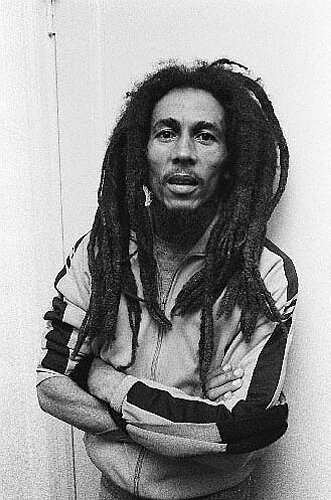
Five Bob Marley Quotes and a Live Clip

Bob Marley, 6 February 1945 – 11 May 1981

“Though the road’s been rocky it sure feels good to me.”

“I don’t stand for black man’s side, I don’t stand for white man’s side, I stand for God’s side.”

“Who are you to judge the life I live? I know I’m not perfect and I don’t live to be. But, before you start pointing fingers, make sure your hands are clean.”

“Better to die fighting for freedom then be a prisoner all the days of your life.”

“Judge not unless you judge yourself”

>Five Bob Marley Quotes and a Live Clip

>

Bob Marley, 6 February 1945 – 11 May 1981

“Though the road’s been rocky it sure feels good to me.”

“I don’t stand for black man’s side, I don’t stand for white man’s side, I stand for God’s side.”

“Who are you to judge the life I live? I know I’m not perfect and I don’t live to be. But, before you start pointing fingers, make sure your hands are clean.”

“Better to die fighting for freedom then be a prisoner all the days of your life.”

“Judge not unless you judge yourself”

Indirect Bicycle Advert

Firstly I would like to say–and you probably already know this–that I am not in the habit of posting commercial advertisements on this blog…but I thought this was interesting. It’s an advert for Regions Bank, but that’s not the reason I posted it…it’s the other message in the clip, that it’s ok for adults and families to ride bikes. And I may be reading this wrong but it seems like they are getting a bike loan instead of a car loan. In these current times where we see advertisements wherever our eyes fall, and many, many of them feature cars as the image of success and happiness, it is refreshing to see bicycles as a backdrop for this company’s advertisement.

>Indirect Bicycle Advert

>Firstly I would like to say–and you probably already know this–that I am not in the habit of posting commercial advertisements on this blog…but I thought this was interesting. It’s an advert for Regions Bank, but that’s not the reason I posted it…it’s the other message in the clip, that it’s ok for adults and families to ride bikes. And I may be reading this wrong but it seems like they are getting a bike loan instead of a car loan. In these current times where we see advertisements wherever our eyes fall, and many, many of them feature cars as the image of success and happiness, it is refreshing to see bicycles as a backdrop for this company’s advertisement.
Things That Can Be Carried On A Bike (#267)…and a few links

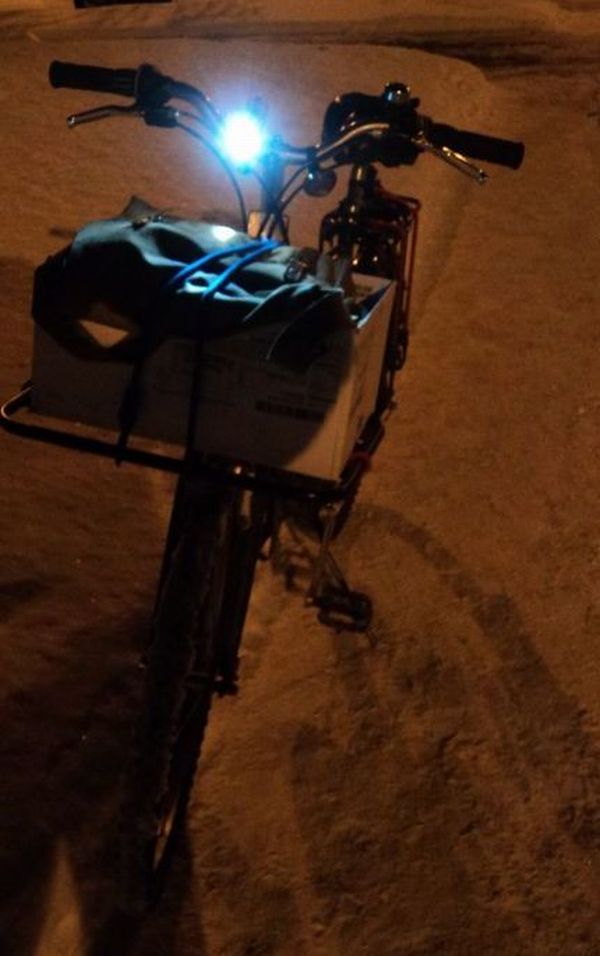
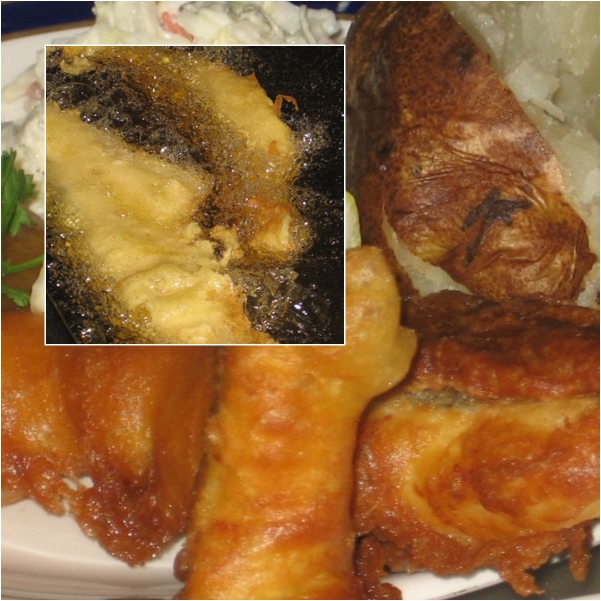
A canvas book bag containing a couple actual books and an e-reader containing 152 electronic books. A cardboard box containing a small loaf of bread, a couple baked potatoes, a pint of homemade creamy coleslaw, and a classic Friday night fish fry. To read more about fish fries–it’s origin, popularity, and recipes (written by yours truly)–click here. To see a “best of” compilation of some of the other things I’ve carried on a bike, click here.
>Things That Can Be Carried On A Bike (#267)…and a few links

>

A canvas book bag containing a couple actual books and an e-reader containing 152 electronic books. A cardboard box containing a small loaf of bread, a couple baked potatoes, a pint of homemade creamy coleslaw, and a classic Friday night fish fry. To read more about fish fries–it’s origin, popularity, and recipes (written by yours truly)–click here. To see a “best of” compilation of some of the other things I’ve carried on a bike, click here.

Whole Wheat Potato Bread with Cheddar and Caramelized Onion

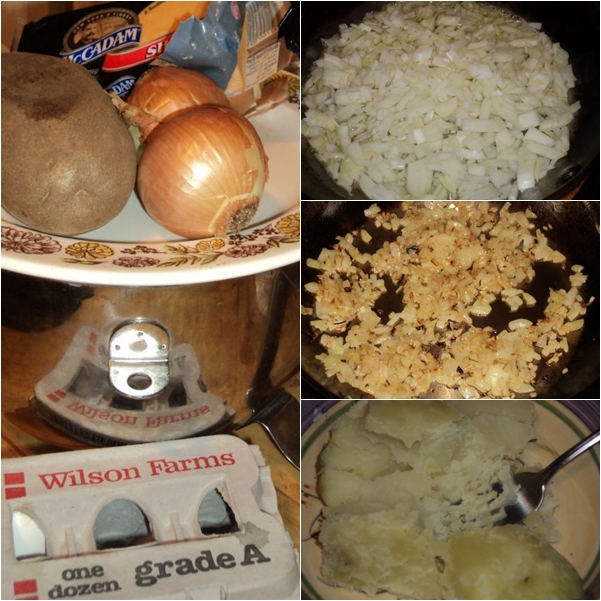
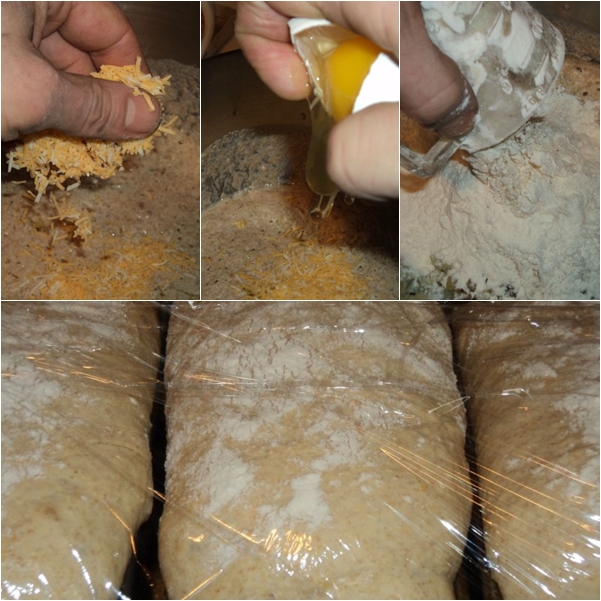
This is a pretty straight-forward recipe and a variation on some I’ve posted previously. Potato and cheddar are classic combination but when you add caramelized onion it gives the bread a truly savory flavor…almost a meal by itself. I made this last week as an accompaniment to black bean-jalapeno hummus (click here for a recipe and directions). The recipe included below is from a previous post and is nearly the same one I used for this bread. The main differences are that in this bread I used water in place of the beer (though the beer would be delicious as well), I included 66% unbleached bread flour (in place of 100% whole wheat flour) to give it a lighter consistency, and I also added caramelized onion (and when you do this make sure that the onion is cooled before adding it to the raw dough). It is far less complicated than it may seem…it is really easy to make and equally as delicious.

Whole Wheat Potato Bread with Beer and Cheddar
Makes two loaves
2 cups cooked and mashed potatoes, room temperature
1 cup whole wheat flour
1/2 cup beer, room temperature
2 teaspoons instant yeast
_______________________
4 cups whole wheat flour
1 cup beer, room temperature
3/4 cup milk, room temperature
_______________________
2 eggs
1/4 cup honey
1/4 cup olive oil
3 teaspoons instant yeast
2 teaspoons kosher salt
_______________________
2 cups shredded cheddar cheese (about 6 ounces)
Place two bowls side-by-side. In one bowl combine the mashed potato, 1 cup of flour, ½ cup of beer, and two teaspoons of yeast; mix just until combined and cover with plastic wrap. In the second bowl combine the 4 cups of whole wheat flour, 1 cup of beer, 3/4 cup milk; mix just until combined and cover with plastic wrap. Allow the bowls to rest for 20-30 minutes.
Combine the contents of bowls in the bowl of an upright mixer that is fitted with a dough hook. Also add the eggs, honey, olive oil, 3 teaspoons of yeast, and two teaspoons of kosher salt (try not to let the yeast and salt come into direct contact). Run the mixer first on low speed, until it gathers the ingredients together, then on medium speed; knead the dough for about 6 minutes. Add the cheese and knead the dough for another 1 or 2 minutes. Transfer the dough to a lightly oiled bowl or rising bucket, cover it and allow the dough to ferment for 60 – 90 minutes. Then gently press the dough down and allow it to ferment another 30 minutes.
Divide the dough into two pieces, shape it into loaves, and place it in lightly oiled loaf pans. Preheat an oven to 425F and allow the dough to ferment and rise for about 45 – 60 minutes. Bake the dough for about 30 minutes. When it is initially placed in the oven spritz the oven with a little water, lacking a sprayer toss a few ice cubes on the oven floor to create steam. Rotate the loaves after 15 minutes and spray the oven again. The bread is done when it is golden brown and sounds hollow when tapped with a finger. Remove it from the oven and their pans and transfer it to a wire cooling rack or clean towel which has been folded to double thickness. Allow the bread to cool 15 minutes before slicing.
 

>Whole Wheat Potato Bread with Cheddar and Caramelized Onion

>

This is a pretty straight-forward recipe and a variation on some I’ve posted previously. Potato and cheddar are classic combination but when you add caramelized onion it gives the bread a truly savory flavor…almost a meal by itself. I made this last week as an accompaniment to black bean-jalapeno hummus (click here for a recipe and directions). The recipe included below is from a previous post and is nearly the same one I used for this bread. The main differences are that in this bread I used water in place of the beer (though the beer would be delicious as well), I included 66% unbleached bread flour (in place of 100% whole wheat flour) to give it a lighter consistency, and I also added caramelized onion (and when you do this make sure that the onion is cooled before adding it to the raw dough). It is far less complicated than it may seem…it is really easy to make and equally as delicious.
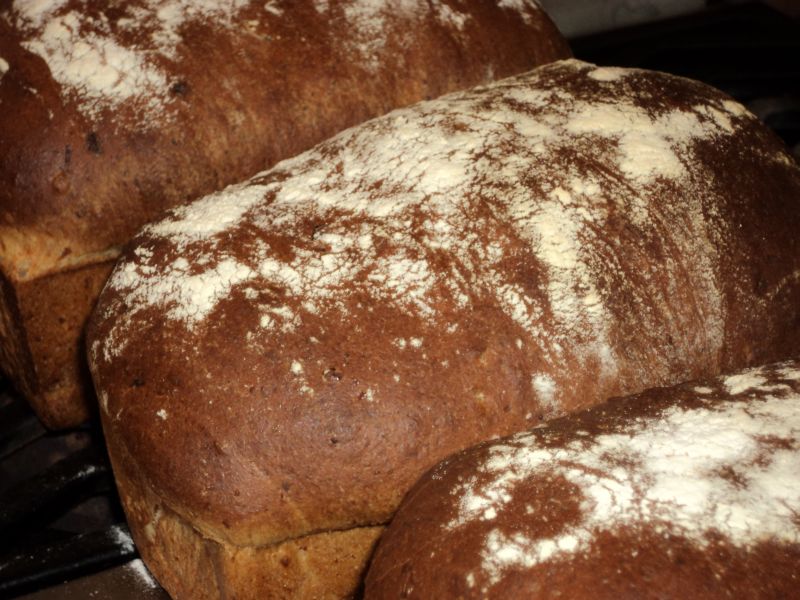
Whole Wheat Potato Bread with Beer and Cheddar
Makes two loaves
2 cups cooked and mashed potatoes, room temperature
1 cup whole wheat flour
1/2 cup beer, room temperature
2 teaspoons instant yeast
_______________________
4 cups whole wheat flour
1 cup beer, room temperature
3/4 cup milk, room temperature
_______________________
2 eggs
1/4 cup honey
1/4 cup olive oil
3 teaspoons instant yeast
2 teaspoons kosher salt
_______________________
2 cups shredded cheddar cheese (about 6 ounces)
Place two bowls side-by-side. In one bowl combine the mashed potato, 1 cup of flour, ½ cup of beer, and two teaspoons of yeast; mix just until combined and cover with plastic wrap. In the second bowl combine the 4 cups of whole wheat flour, 1 cup of beer, 3/4 cup milk; mix just until combined and cover with plastic wrap. Allow the bowls to rest for 20-30 minutes.
Combine the contents of bowls in the bowl of an upright mixer that is fitted with a dough hook. Also add the eggs, honey, olive oil, 3 teaspoons of yeast, and two teaspoons of kosher salt (try not to let the yeast and salt come into direct contact). Run the mixer first on low speed, until it gathers the ingredients together, then on medium speed; knead the dough for about 6 minutes. Add the cheese and knead the dough for another 1 or 2 minutes. Transfer the dough to a lightly oiled bowl or rising bucket, cover it and allow the dough to ferment for 60 – 90 minutes. Then gently press the dough down and allow it to ferment another 30 minutes.
Divide the dough into two pieces, shape it into loaves, and place it in lightly oiled loaf pans. Preheat an oven to 425F and allow the dough to ferment and rise for about 45 – 60 minutes. Bake the dough for about 30 minutes. When it is initially placed in the oven spritz the oven with a little water, lacking a sprayer toss a few ice cubes on the oven floor to create steam. Rotate the loaves after 15 minutes and spray the oven again. The bread is done when it is golden brown and sounds hollow when tapped with a finger. Remove it from the oven and their pans and transfer it to a wire cooling rack or clean towel which has been folded to double thickness. Allow the bread to cool 15 minutes before slicing.
 

A Few Random Thoughts, Photos, and Comments

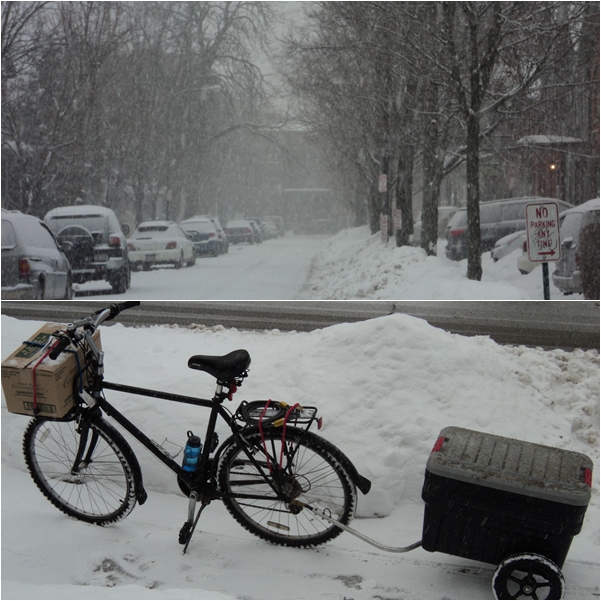
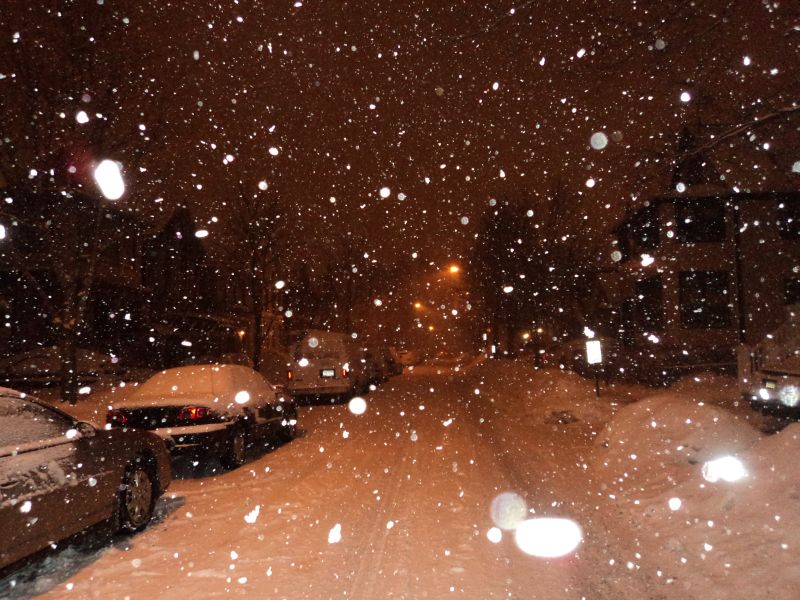
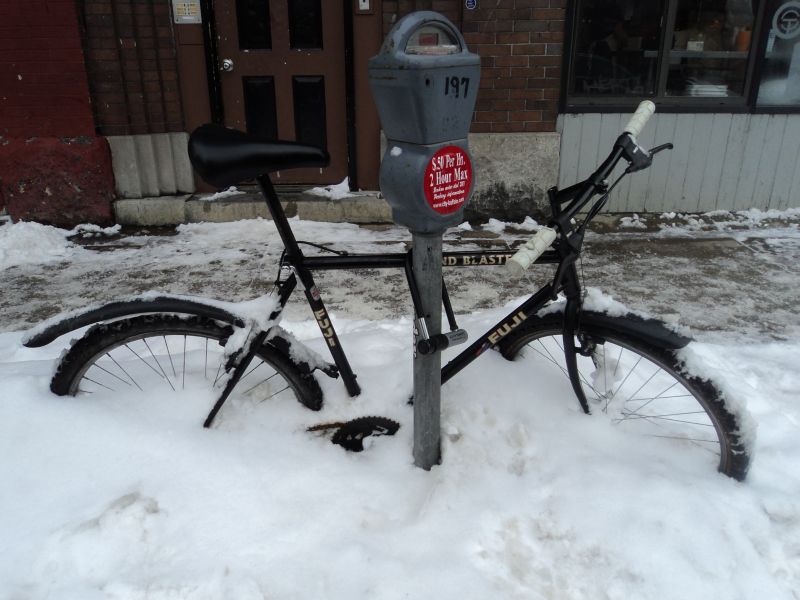
I pass the above apartment house on my way home from work and there are usually a few fixies locked to that or another parking meter. This one, which is also a fixed gear bike, at least has brakes and wide tires…it makes me cringe when I see people riding brakeless (sp?), skinny-tire bikes in the snow. And I’m still not sure why they lock their bikes outside 24/7…if it were me I’d bring it in my house…there’s always room; I keep mine parked in my living room.
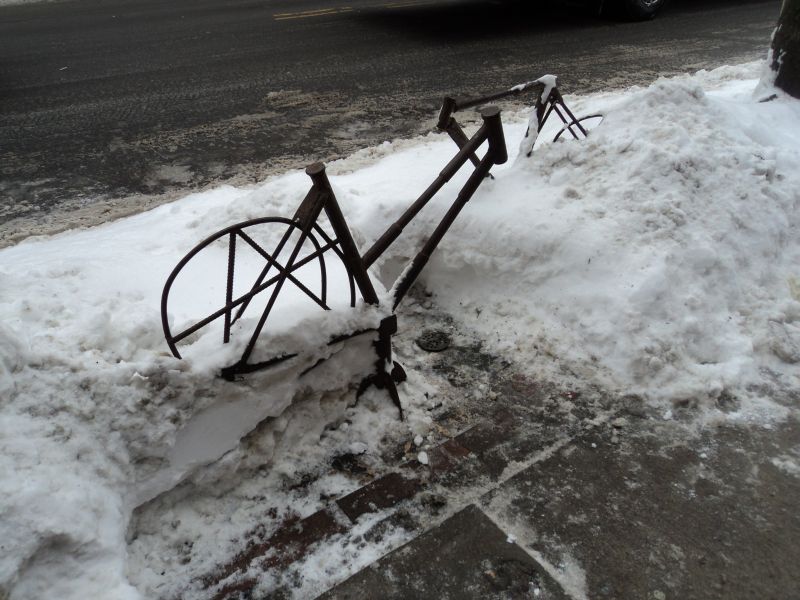
This is directly across the street in front of my favorite used book store…and to me this is the sign of a good neighbor. Not only do they have one-of-a-kind bicycle racks to lock your bike, they shovel them out of the snow.
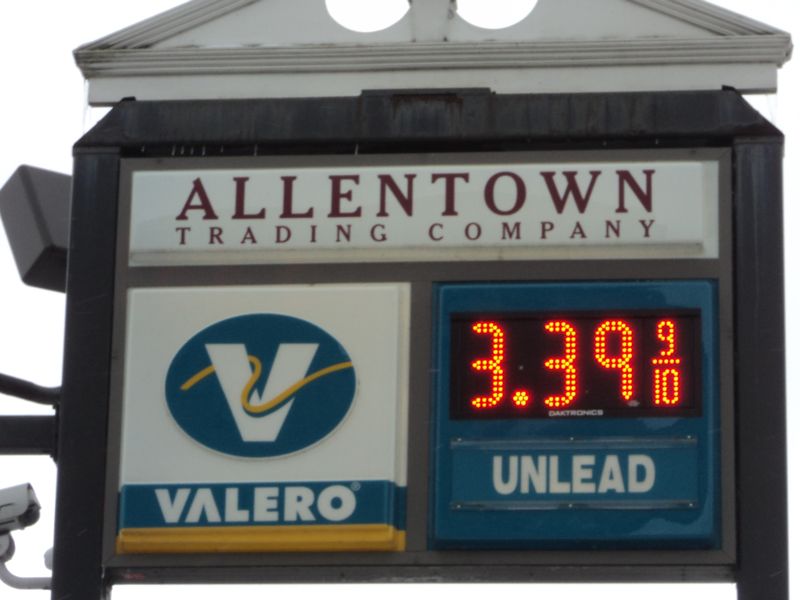

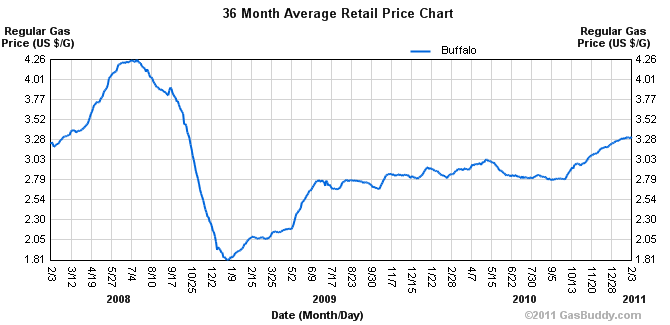
Lastly, am I the only one who has noticed how the price of gas has been creeping up again? It hasn’t been this expensive in three years…and it’s still climbing. And I know this next comment will infuriate some (but also make a few smile)…but I am actually glad the prices have gone up, and wouldn’t mind if they went higher. Maybe if it goes over $4/gl. again people, especially myself, will consider serious transportation changes…in my case, use my gas-powered vehicle even less.To read this through the lens of living in the Netherlands I suggest you read this blog post.
>A Few Random Thoughts, Photos, and Comments

>

I pass the above apartment house on my way home from work and there are usually a few fixies locked to that or another parking meter. This one, which is also a fixed gear bike, at least has brakes and wide tires…it makes me cringe when I see people riding brakeless (sp?), skinny-tire bikes in the snow. And I’m still not sure why they lock their bikes outside 24/7…if it were me I’d bring it in my house…there’s always room; I keep mine parked in my living room.

This is directly across the street in front of my favorite used book store…and to me this is the sign of a good neighbor. Not only do they have one-of-a-kind bicycle racks to lock your bike, they shovel them out of the snow.


Lastly, am I the only one who has noticed how the price of gas has been creeping up again? It hasn’t been this expensive in three years…and it’s still climbing. And I know this next comment will infuriate some (but also make a few smile)…but I am actually glad the prices have gone up, and wouldn’t mind if they went higher. Maybe if it goes over $4/gl. again people, especially myself, will consider serious transportation changes…in my case, use my gas-powered vehicle even less.To read this through the lens of living in the Netherlands I suggest you read this blog post.

Lebanese Chicken-and-Rice (yet another variation)

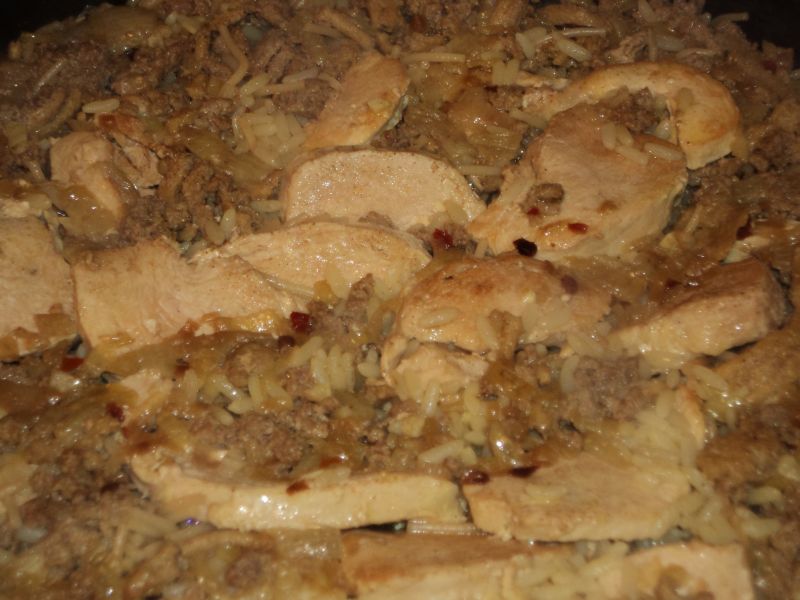
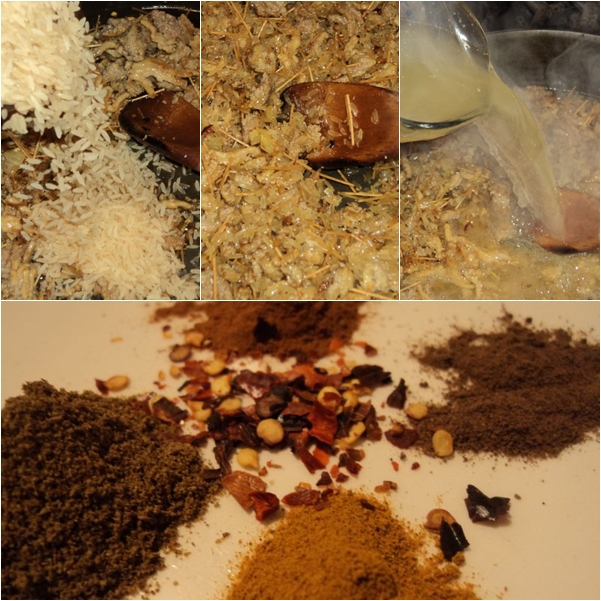
I’ve posted numerous times on Lebanese food in the past, mostly because I truly believe that it is one of the great cuisines of the world., but also it is a food that I grew up with; I am second-generation Lebanese-American…half actually, my father’s family was from “the old country.” Chicken-and-rice is my favorite recipe (from many cuisines) and I make variations of it often…and leftovers taste even better. Anyhow, this is another variation. The reason this is a variation is thrice-fold; firstly it is made with ground turkey (instead of lamb or beef), and I also used sliced boneless chicken breast (instead of bone-in chicken), plus I seasoned it with–in addition to the usual cinnamon, allspice, and cumin–turmeric and hot pepper. This recipe, then, is not the classic recipe, but it was really delicious none-the-less. If you’ve never had this dish I hope you try it because not only is it really, really delicious (did I mention how good it is?), but it will make your house smell delicious as it cooks…and it’s easy to make, too. Below is a basic recipe for it (using whole boneless chicken breasts), and if you’d like to read more about it (and my views on it’s correlation with the American processed food, Rice-a-Roni), see more pictures of it being made, or would like links to other Lebanese foods, click here.

Lebanese Chicken-and-Rice
Makes 4 servings
3 tablespoon olive oil
4 chicken breasts
4 ounces diced onion
2 ounces vermicelli, broken into pieces
12 ounces ground beef or lamb
1 tablespoon minced garlic
1 teaspoon cinnamon
1/2 teaspoon ground cumin
1/2 teaspoon ground allspice
3/4 teaspoon salt
1-1/2 cups long grain rice
3 cups hot chicken broth
2 tablespoons minced parsley

Heat the olive oil over high heat in a heavy-bottomed pan. Sauté the chicken on both sides until golden brown. Remove the chicken from the pan and set aside. Add the onion and vermicelli to the pan and cook until golden; remove and set aside. Add the meat to the pan (and a little water and/or oil if necessary) and cook until the meat begins to brown, then add the garlic and cook another minute or two. Add the cinnamon, cumin, allspice, and salt; sauté two minutes while stirring. Add the onions and pasta back to the pan along with the rice, stirring to fully coat it with with the oil and spices. Then add the chicken breasts to the pan, pushing them gently into the rice. Pour in the broth and cover the pot with a lid. Reduce the heat to a simmer and cook for about 18 minutes, then remove the pot from the stove and allow to rest for 5 minutes. Sprinkle with minced parsley.