(If you are coming upon this post via a search engine you can find an updated version of this recipe here.)
I eat a lot of bread; I always have. I eat bread virtually with every meal, and thus I feel that I am living proof that bread does not make a person fat. I find it odd that humans have been consuming bread in one form or another for something like 6 thousand years…and all of a sudden it is considered fattening. The problem, I think, is lifestyle and the quality of the bread you consume…I’ll admit that too much refined flour is probably not the best thing for you.
Over the years I have slowly migrated towards making and consuming bread with if not all whole wheat flour, at least some or most of it…and what I think is even better is the addition of whole grains. The best bread in this category, and probably one of the healthiest there is, is Ezekiel bread. It’s full of all sorts of whole grains and legume. It’s also mentioned in the Bible, hence its name. If you want to see the Bible passage (in many different versions) click here.
Like many recipes, there are as many crappy recipes for Ezekiel bread as there are good ones (yes, I intentionally chose the word crappy because, also according to the Bible, Ezekiel cooked his bread over dung). Take a look at some of the recipes by clicking here. Some of them look pretty good, some look ok, but some (if you have any experience in bread baking at all) look downright lousy. The problem is that the high proportion of grains and legumes to flour really makes the recipe tricky (many grains and legumes do not contain gluten which is what helps the bread stand up as it rises).
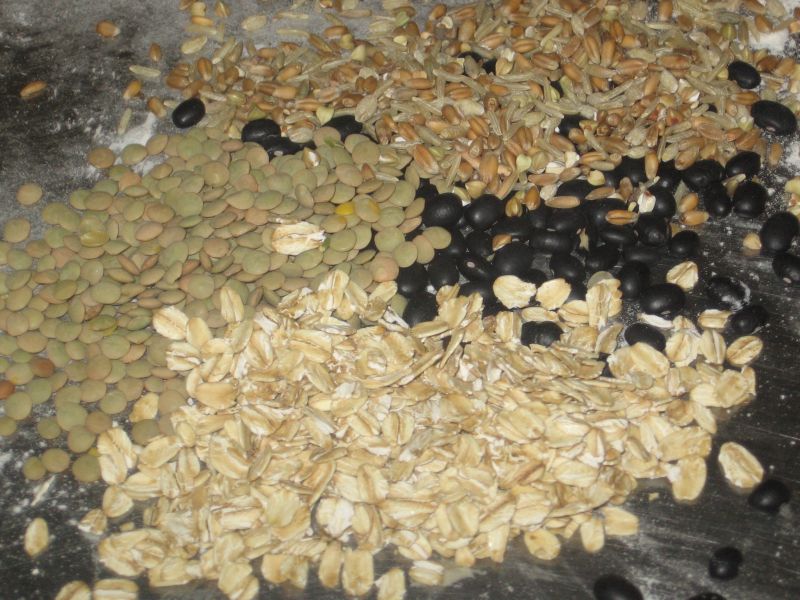
I follow the same basic ratio each time but the grains and legumes change. This is what I used in this recipe: whole wheat berries, rice, barley, lentils, oats, lentils, spelt berries, millet, oatmeal, and white beans (though the below picture shows black beans). The recipe also included whole wheat flour, unbleached white bread flour, olive oil, honey, yeast, salt, and a few eggs.
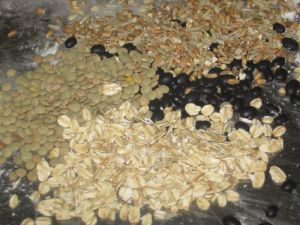 The recipe that I made was a large batch recipe I made at my job, but at the end of this post is a recipe for just two loaves. Anyhow, here’s how I made it (click on any picture for a larger view):
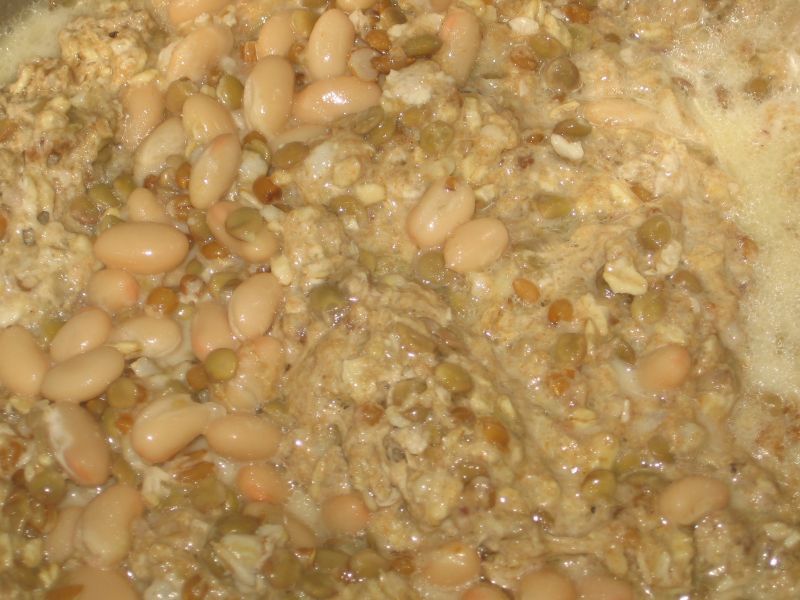
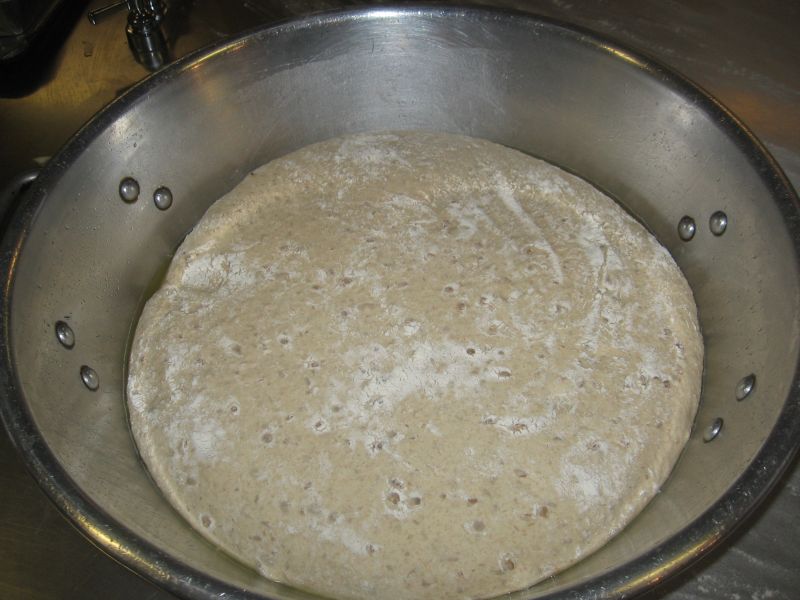
First, I cooked all the grains and legumes (except the oatmeal, which I added raw), then I drained them (without rinsing and reserving the cooking liquid…it contains nutrients) and allowed them and the liquid to come to room temperature. Then I made a sponge, or poolish, out of the grains, legumes, whole wheat flour, yeast, olive oil, and honey (to read more about what a poolish is click here). I covered it and allowed it to ferment for 18 hours. When I uncovered it the next morning it was a bubbling fragrant mash. Here it is after 18 hours. To some it may look a little gross, but to me (and probably other bakers) it is beautiful.
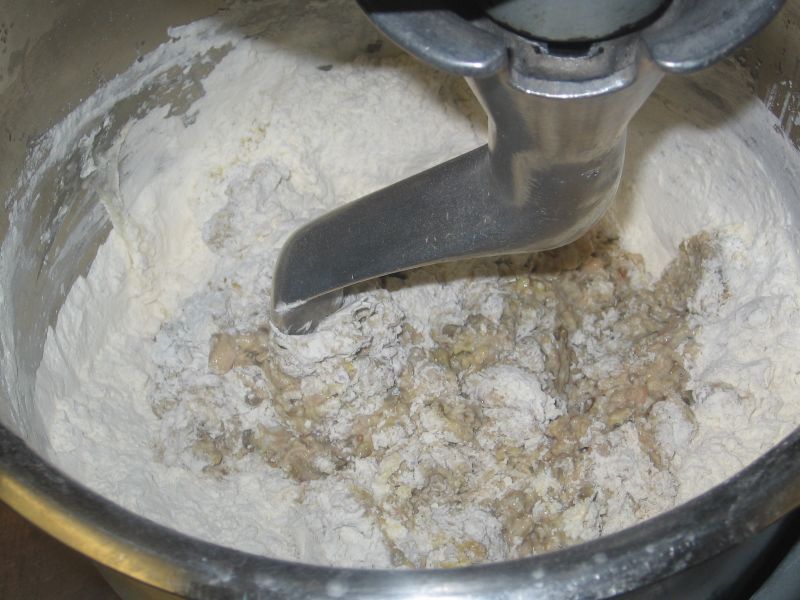
 Leaving the grains and legumes whole, I added some bread flour, 4 eggs, a little more yeast, and kosher salt, them mixed it with a dough hook.
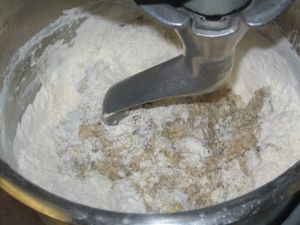 Here it is after 8 minutes. The legumes and many of the grains sort of mash up and become part of the dough. The two that remain whole are the wheat berries and barley, which give a nice crunchy texture to the finished bread. The dough is very supple, this I’m sure has to do with the high concentration of olive oil, honey, and other non-glutenous ingredients.
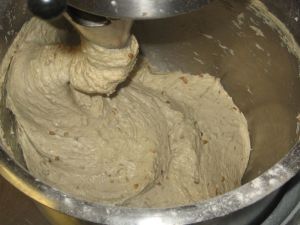 At this point I turned it out onto a floured table and kneaded it by hand for a few minutes (which is no easy task when dealing with 13 pounds of dough). Then I place it in a large bowl that was lightly coated with olive oil. I covered it with plastic wrap and let it rest, ferment, and rise for an hour-and-a-half.
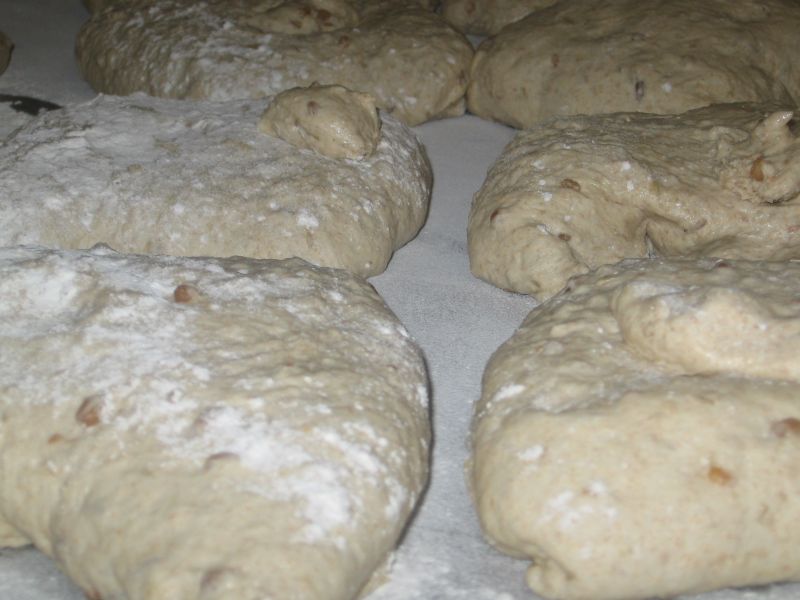
 Then I cut it into (approximately) 0ne-pound pieces.
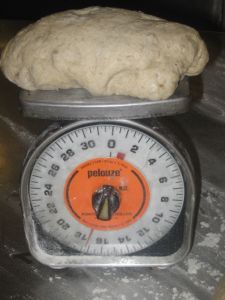 And then I let the pieces rest for about 15 minutes.
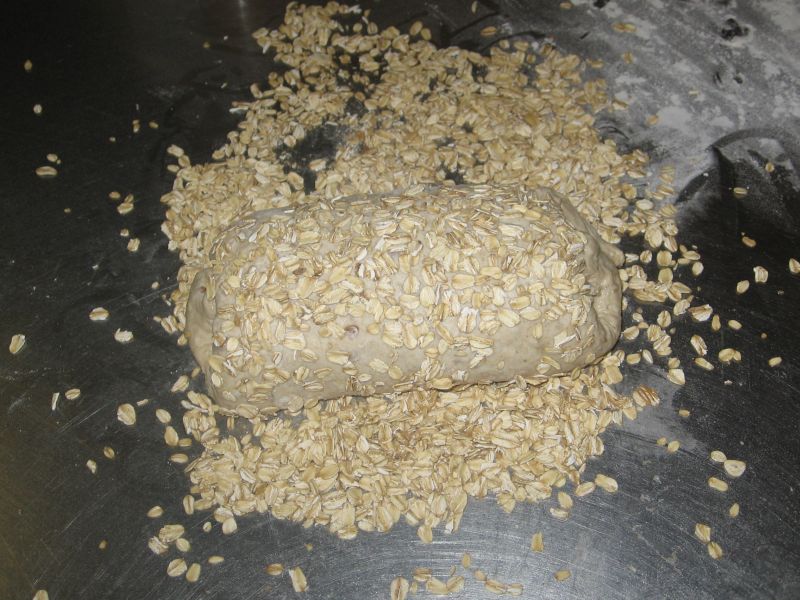
 Then I gently shaped them into loaves (you don’t want to deflate them) and rolled them in whole oats.
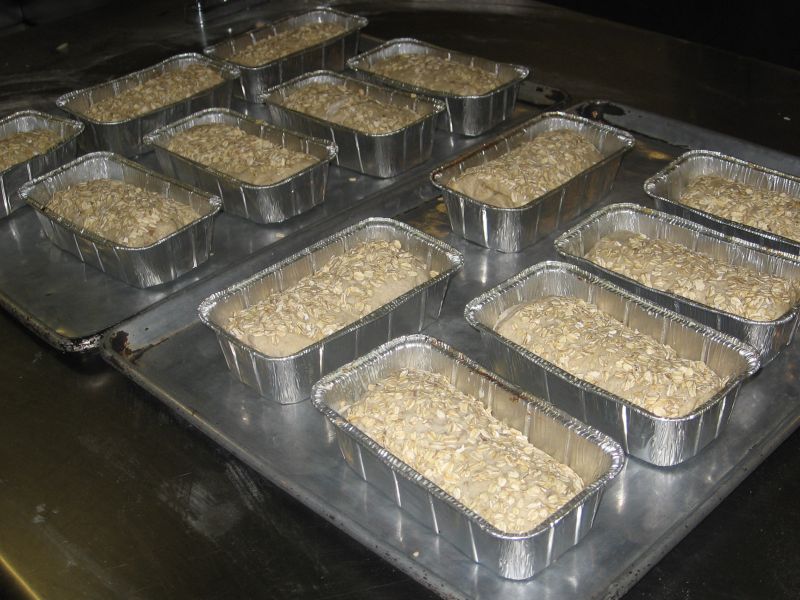
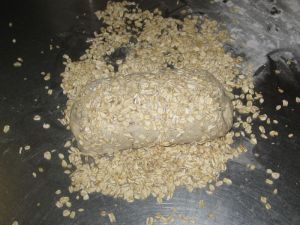 I placed them into small and lightly oiled bread pans and let them rest and rise for another hour-and-a-half.
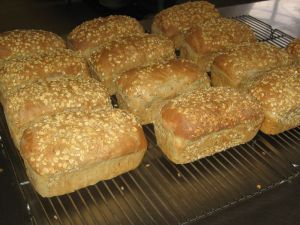
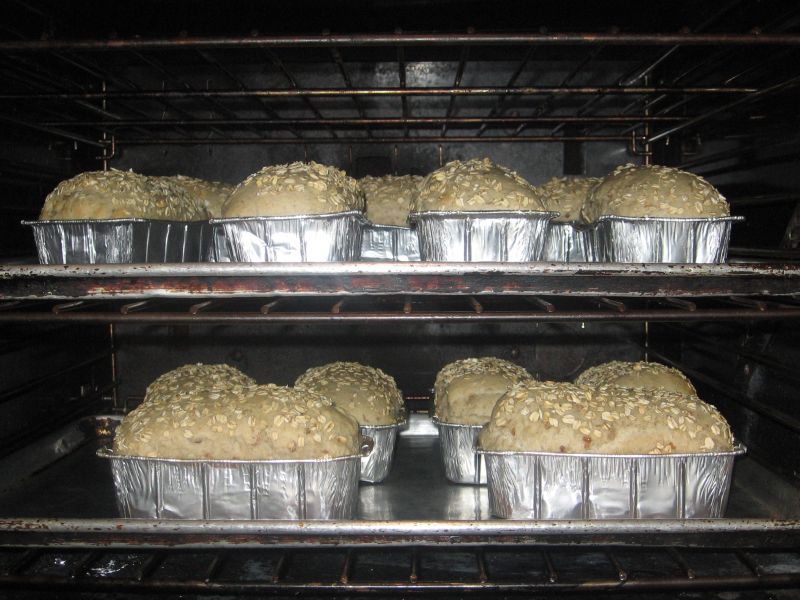
 Here they are when they just went into the oven…I threw a handful of ice cubes on the oven’s floor to create steam.
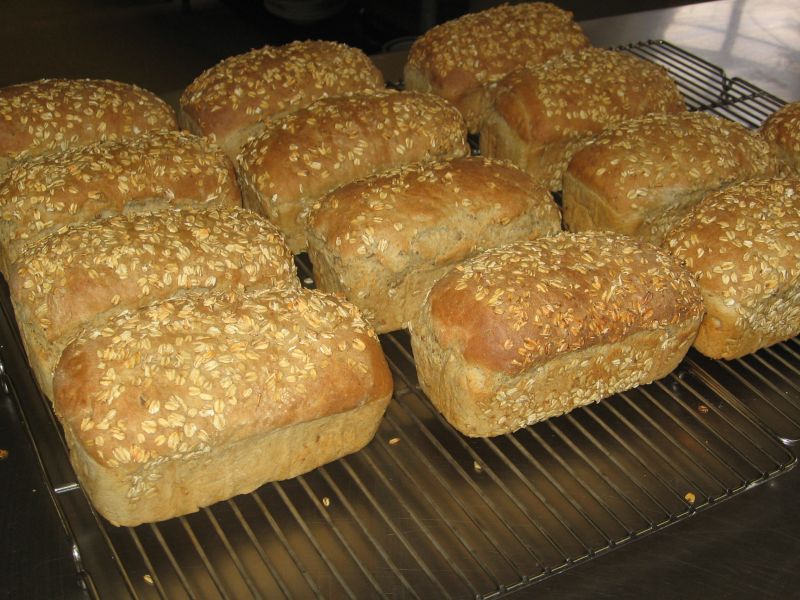
 I baked the bread for about 40 minutes (adding more ice cubes and rotating the pans after 15 minutes), then removed them from their pans and set them on cooling racks.
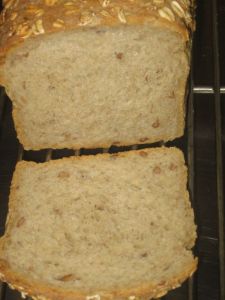
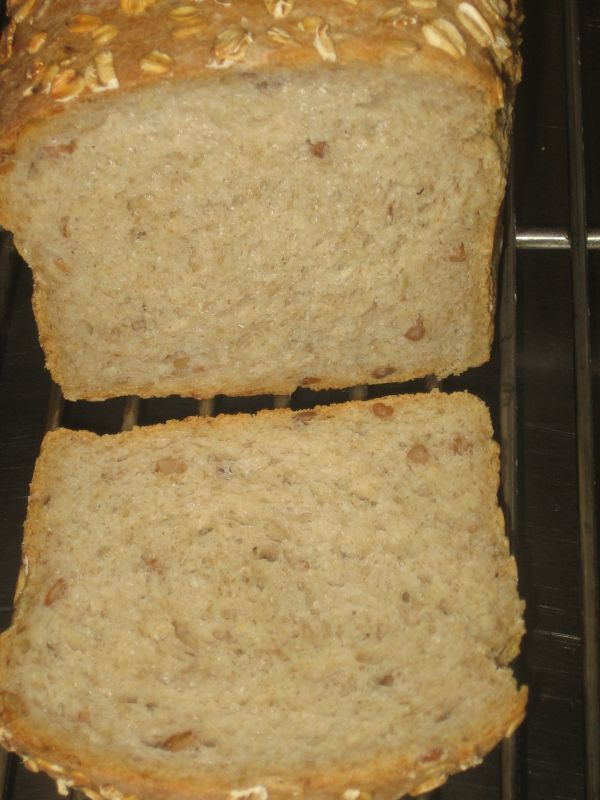
 Here’s one of the loaves sliced…notice some of the whole grains still present and the airiness of the dough. I had some for lunch, and yes, it is as good as it looks.
To some, this recipe may seem a little daunting, but it’s really not…and it’s well-worth the effort. At any rate, here’s a smaller recipe (It’s a recipe for free-standing loaves, but it can easily be baked in pans).
Ezekiel Bread
Yield: 2 loaves
3 cups bread flour, divided
2 cups water
6 teaspoons yeast, divided
1 tablespoon white beans
1 tablespoon red beans
1 tablespoon lentils
2 tablespoons barley
2 tablespoons millet
1 tablespoon bulgur wheat
2 cups whole wheat flour
1 cup spelt flour
1 tablespoon wheat gluten
1/4 cup honey
1/4 cup virgin olive oil
1 tablespoon kosher salt
2 tablespoons corn meal
Make a sponge by mixing together in a small bowl 2 cups of the bread flour, the water, and 3 teaspoons of yeast. Set aside.
In a small pot, combine the white and red beans and cover them with a few inches of water. Bring them to a boil and cook the beans for about 45 minute, or until they are almost cooked and still have a little texture to them. Add the lentils and barley to the pot, return the water to a boil and cook the legumes for another 15 minutes. Add the millet and bulgur wheat to the pot, return it to a boil (if needed, add more water) and cook for about 5 minutes, or until the grains and legumes are almost cooked. Strain this mixture through a mesh colander, squeezing out any excess moisture. Transfer to a food processor and pulse until the mixture is a coarse paste but not smooth. Allow to cool to room temperature.
Transfer the sponge and the legume/grain mixture to the bowl of an electric mixer that has been fitted with a dough hook. Add the remaining cup of bread flour and 3 teaspoons of yeast along with the whole wheat flour, and spelt flour. Also add the wheat gluten, honey, and olive oil. Run the mixer on low, just until the ingredients begin to form a ball, then add the salt. Run the mixer on medium speed for about 10 minutes, then transfer to a lightly floured work surface and knead by hand for another couple of minutes. Place the dough in a bowl at room temperature, cover it with plastic wrap, and allow it to ferment for 1 and 1 1/2 hours.
Dust a baking sheet with the cornmeal. Remove the dough from the bowl, divide it into two pieces, and gently shape them into balls. Place them on the baking pan and cover with a towel. Allow it to rise for 1 hour. Position an oven rack to the center of the oven and place a shallow pan of water directly on the oven floor. Preheat the oven to 350F. Using a sharp knife, slash the loaf and put it in the oven. Bake the bread for about 30 minutes. Remove it from the oven and place it on a wire rack or towel to cool before slicing.
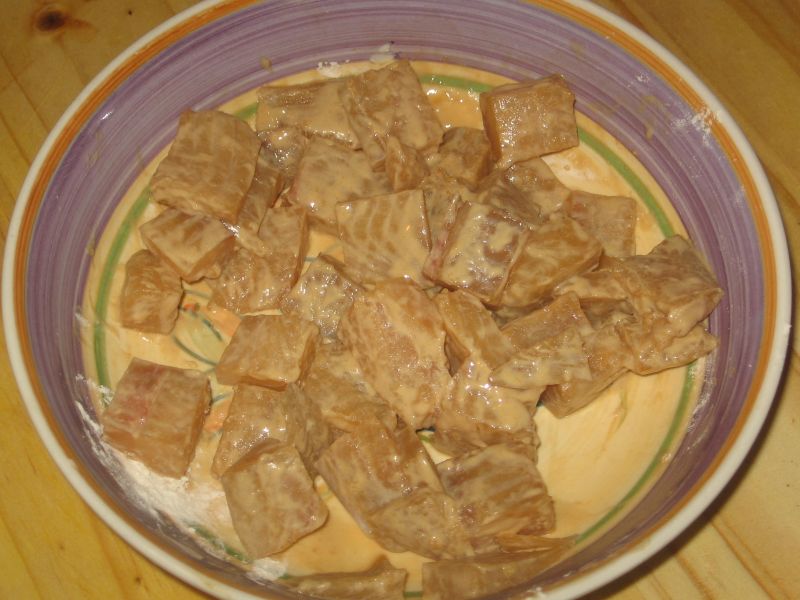 While the fish was marinating I cooked some basmati rice in a little chicken broth that was seasoned with curry powder. The curry gives the rice not only a beautiful yellow hue but also a subtle fullness in flavor to the finished dish. While the rice cooked and the fish marinated I had a glass of wine and read a few pages of the book I’m currently reading (The Shack, by William P. Young…I highly recommend it).
 When the rice was cooked I heated a little peanut oil in a skillet and sauteed the fish. The cornstarch gives the fish a nice delicate coating.
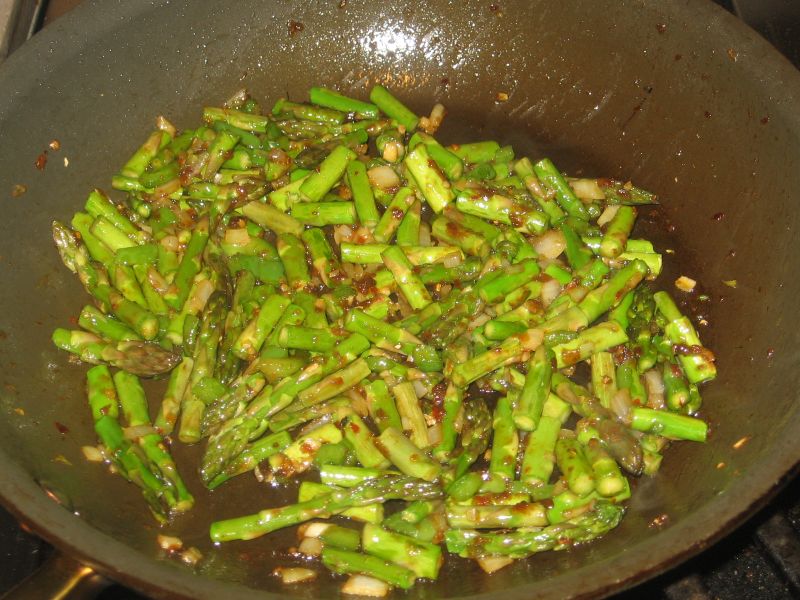
 I removed the fish to a plate and added the asparagus, along with 1/2 of a minced onion, a diced piece of green pepper that I had in the refrigerator, and a minced clove of garlic. After sauteing it for a few minutes I seasoned it with a tablespoon (or so) of Thai roasted chili paste.
 I came across this chili paste a few weeks ago at The Lexington Co-op. I’ve used this brand curry paste before, and they are good but very spicy (I love spicy food, but these curry pastes are a bit much sometimes). This chili paste, on the other hand is not spicy at all, and it contains, among other things, tamarind, fish sauce, and shrimp, which adds an interesting flavor to the finished dish.
 Anyhow, I then added the fish back to the skillet along with some of the rice (which was still warm) and stirred it gently (I added a small amount of water to “loosen” it a bit). And yes…it was as good as it looks (click on any picture for a closer view).











 Urban Simplicty