>Autumnal Food and My First Snowy Ride on the Mundo

>Bread For Thanksgiving Dinner

I am truly blessed in that I have three lovely sisters who give me the day off on Thanksgiving. The only things that I am required to do are bring freshly baked bread and carve the bird. I know that my younger sister likes roast red pepper bread, so I usually bring that. But this year I changed it a little by making two doughs and combining them: one was the red pepper, the other was Parmesan. The outcome is visually stunning; the flavors aren’t bad either. Here’s the recipe in pictures:

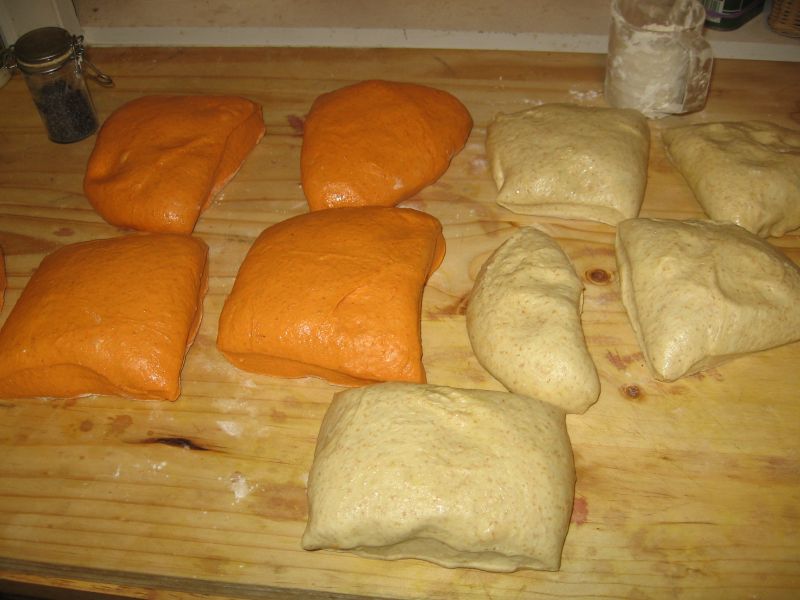
I started by making two separate straight doughs, utilizing the sponge method (basic bread dough recipe), the difference is that I added pureed roast red peppers to one (you’ll have to adjust the recipe because of the moisture content of the peppers) and Parmesan cheese to the other (click on any of the photos for a larger view).

After they had risen, I cut each dough into 5 pieces, ten pieces in all.

After gently flattening each piece, I placed a piece of Parmesan dough on top of each piece of red pepper dough and gently rolled it into a loaf.


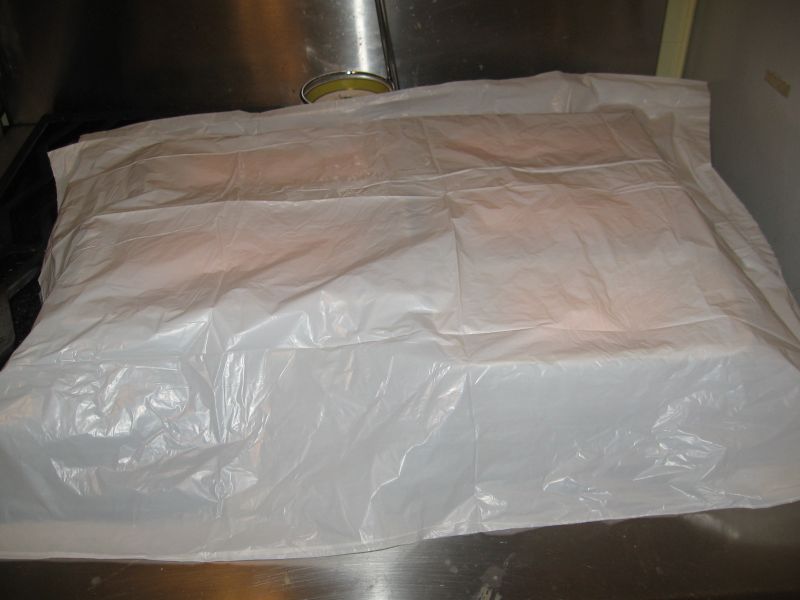
Then I put them in loaf pans, and placed a clean garbage bag across them to rise.

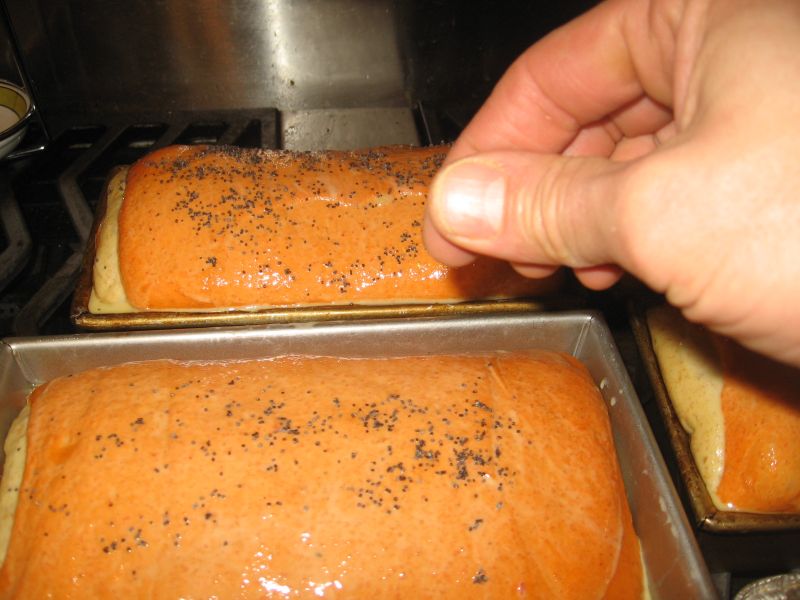
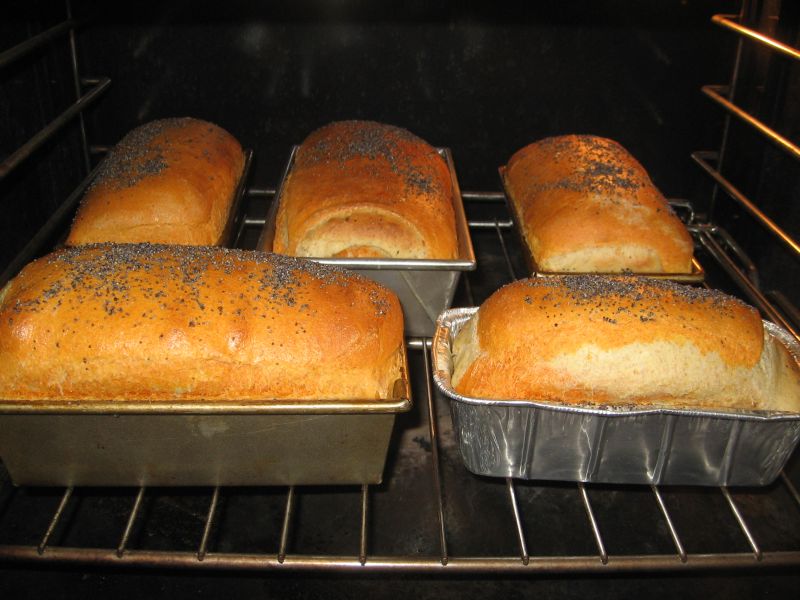
After they rose, I brushed them with an egg wash, sprinkled them with poppy seeds and baked them in a preheated 400F oven.

The finished bread:


Turkey Stock and Mashed Potato Bread

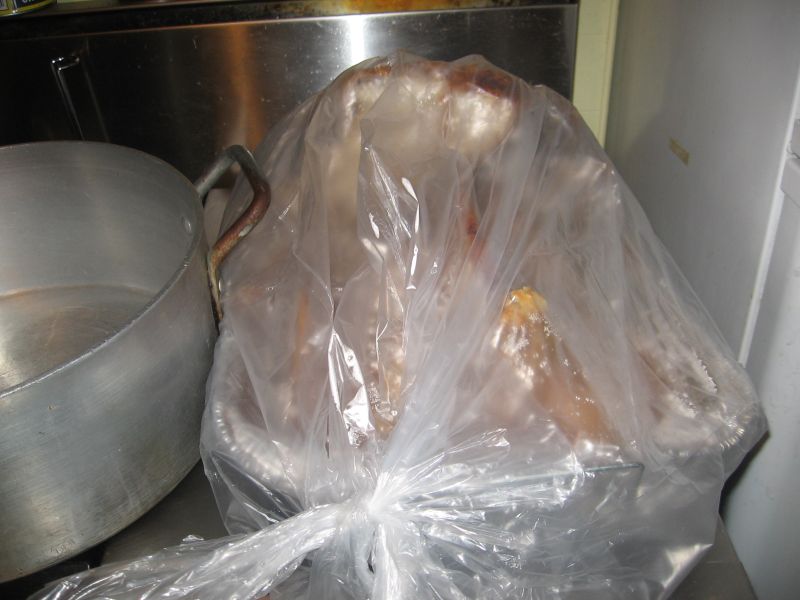
Each year after thanksgiving I always offer to take the turkey carcass(es) of my sisters hands. Sometimes they won’t give them up because they have plans for them themselves, and other times–like this year–they are glad that I am interested in taking it/them. Anyhow, we had two turkeys this year and my apartment-sized refrigerator is not nearly big enough to hold them, so I left them wrapped in plastic in the back of my pickup parked on the street all night. The temperature was hovering around freezing, but I have to admit that I was surprised to see them in the morning.


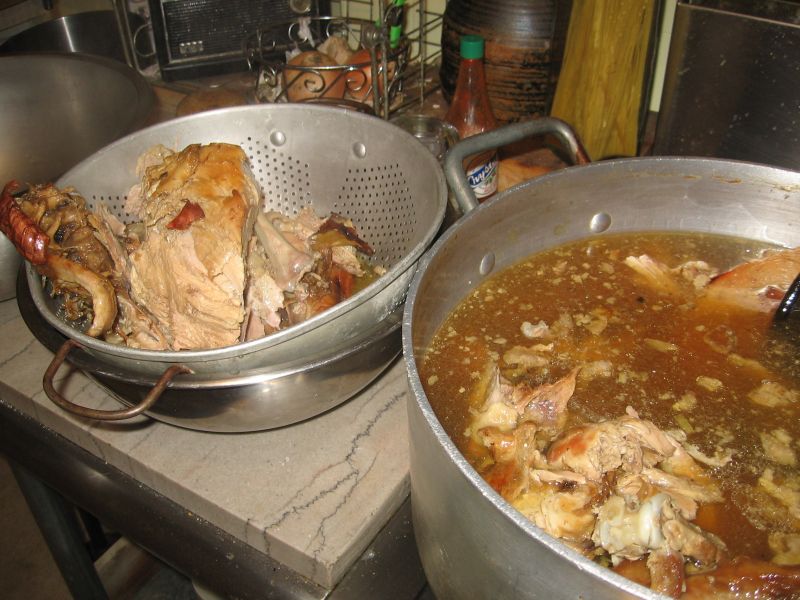
Here they are unwrapped…sort of gruesome looking, sort of like returning to the scene of a crime…almost enough to make a person go vegetarian. But with the resulting broth all these nasty thoughts were forgotten.

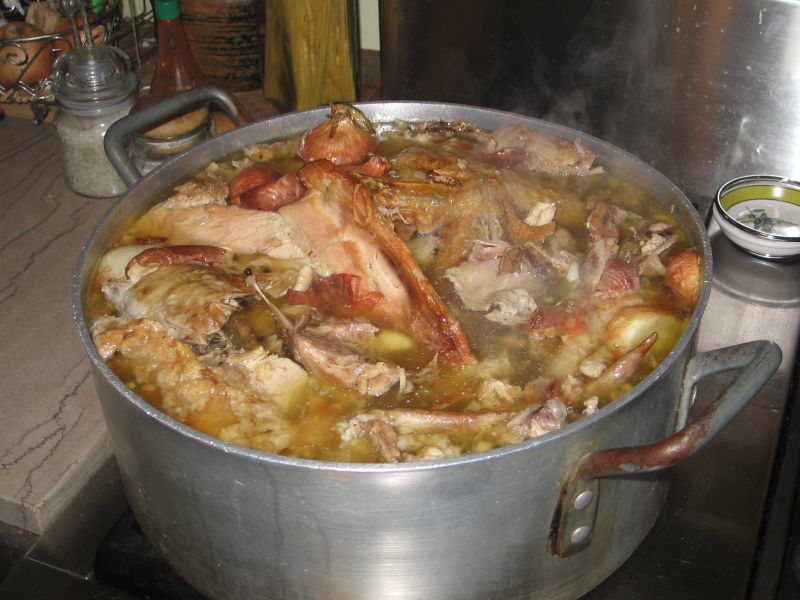
Anyhow, homemade broth is as simple as this: put the carcass(es) in a pot with any meat trimmings, scraps, juices, a few vegetables, and just enough cold water to cover it. Bring it to a boil, then lower it to a simmer. Simmer the broth for 2-6 hours, skimming any scum as necessary.


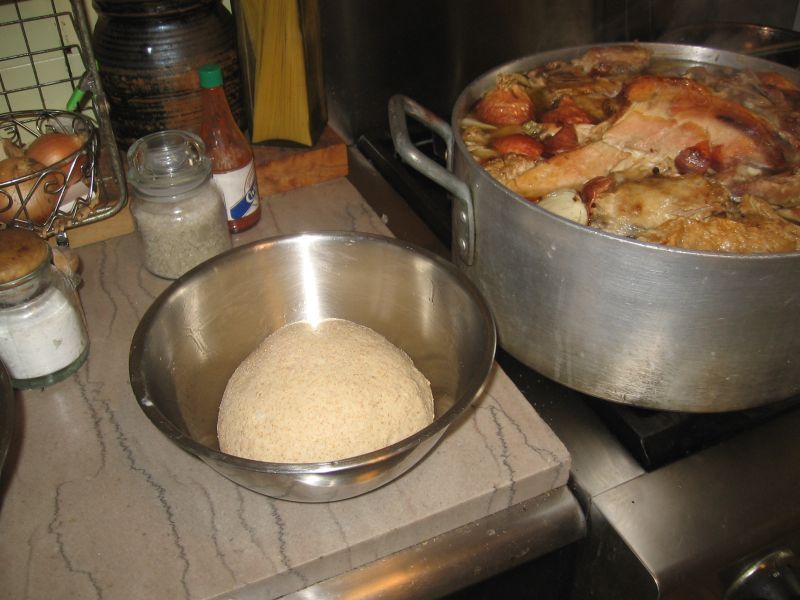
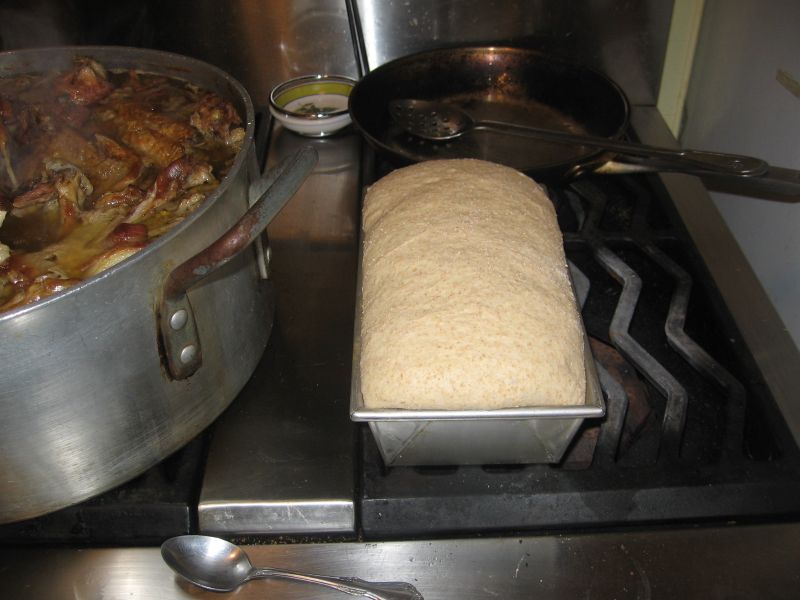
While it simmered I whipped up a batch of potato bread using leftover mashed potatoes. I used a straight dough method with the exception that I added an egg to the dough for a little richness and lightness in its rise. The rear of my house is cold so I rose the bread next to the simmering stock pot.


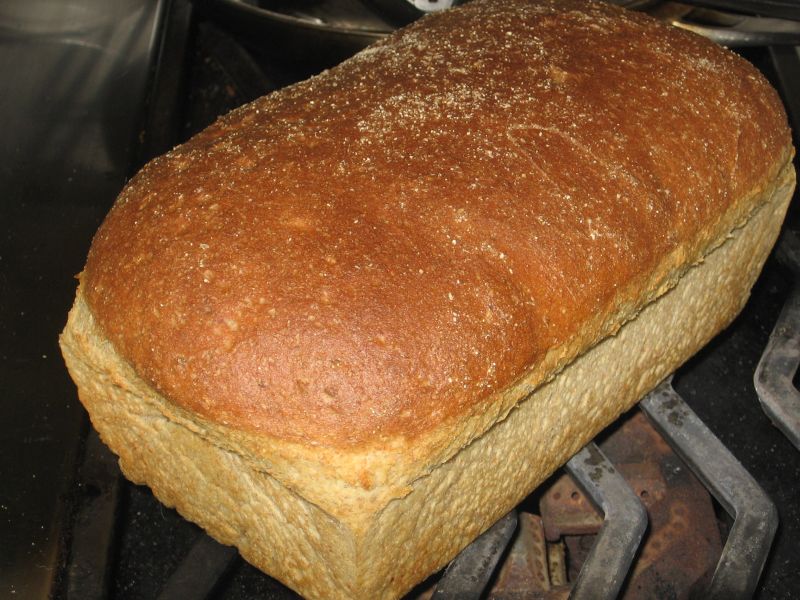
After it rose once, I shaped it into a loaf, put it in a loaf pan and let it rise again. Then baked it in a 400F oven.

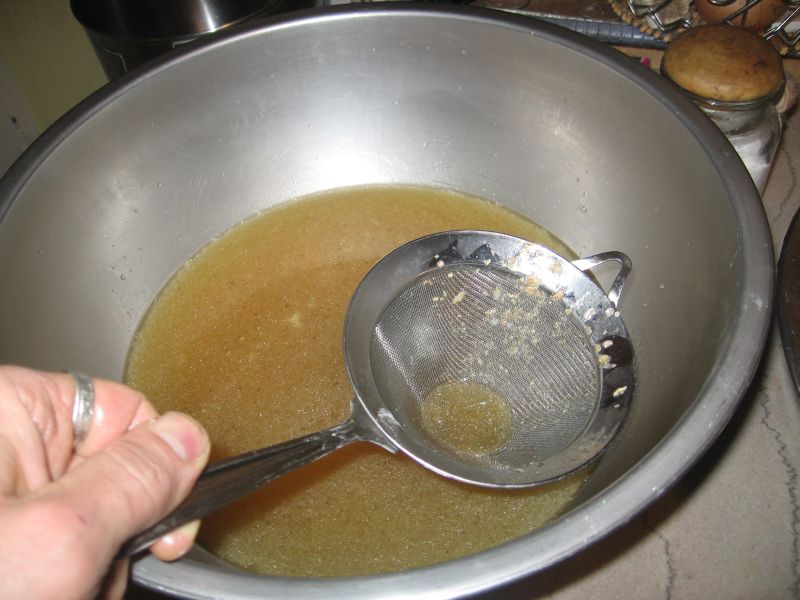
After the stock had simmered for about 6 hours I strained it twice, first through a colander, then through a small fine mesh strainer; a china cap, or as the French refer to it, a chinoise

Freezer ready:

Pear Butter with Red Wine

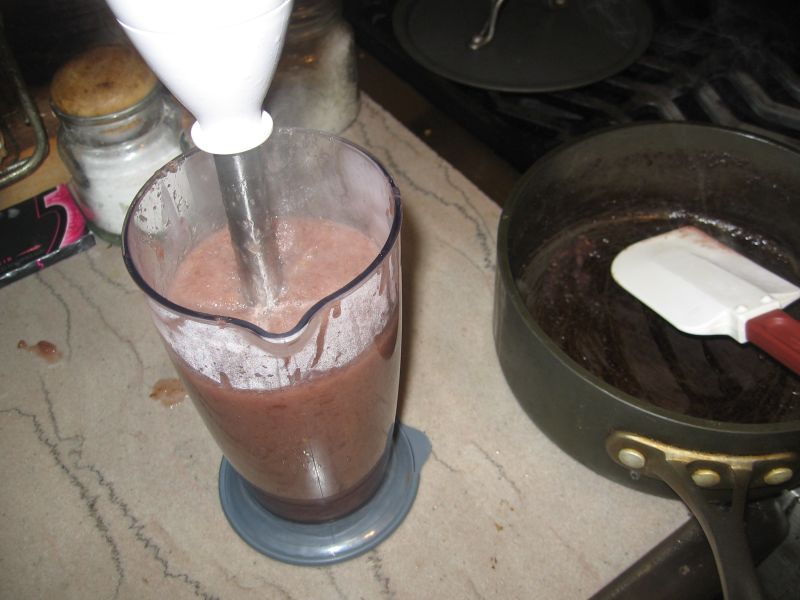
Last week I was able to take home a couple dozen locally grown pears. They were already past their prime when I received them, that’s how I was able to take them home, but I still thought I would eat them before they were too far gone. Well, of course I didn’t. Instead of throwing them out I decided to make pear butter, which of course is a variation of apple butter. It is so easy to make. Basically you just cut up the fruit (with or without skins), add a little liquid (I added red wine instead of water), and if you want it a little sweeter, you can add a little sugar (which I did). You cook the fruit and puree it (at this point it will resemble apple sauce). Then return it to the heat to evaporate most of its moisture. The flavors will intensify and its color will darken considerably. The consistency will become spreadable (especially when it is chilled); it will have the consistency of butter, hence its name.


First Snow/Ice Ride on the Mundo Yuba

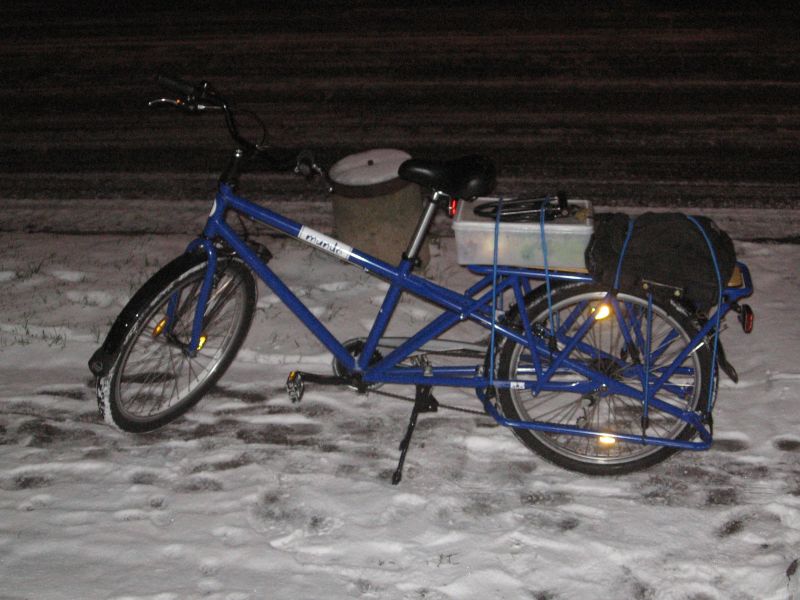
We got a couple inches of snow today, which by Buffalo standards is next to nothing. But because it was above freezing during the day when it snowed (slushed) and went below freezing this evening, what was on the street turned to ice. The Mundo is built like a tank, and probably weighs as much as one also. %The thing just plowed through. I used to make the comparison of the Mundo to a Hummer or other big SUV, but now I’m wondering if it shouldn’t be more compared to a bike version of one of the old Volvo wagons…it plows through anything, weighs a ton, makes you feel safe, and has a big cushy feel to it’s ride. At one point I wanted to test the brake on ice, to see how it would handle. I hit the rear brake and the bike fishtailed to one side a little, but the thing is so big and heavy I still felt safe…it were as if I was happening in slow motion. Anyhow, it looks like it will be a good “Buffalo bike,” meaning it should be stable enough for all weather conditions. It may not be fast, but it gets you where you want to go and you can carry a lot of stuff with you.

A New Low in American Consumerism

Well…I hope it was worth it…I hope they all got really good deals, because a Long Island Wal-Mart worker lost his life in the name of consumerism. Throngs of people apparently busted through the front doors 5 minutes before the store was slated to open…apparently they just couldn’t wait any longer. A number of people were injured and one unlucky soul was killed. Here’s a couple links to the story at the NY Times and the Toronto Star. We, as Americans, should be collectively embarrassed and remorseful, and hang our heads low. I pose the question again which I first posted earlier today: Do we really need any more stuff? The shoppers got a bargain…I don’t think so. Black Friday…what a fitting name.

>A New Low in American Consumerism

>Well…I hope it was worth it…I hope they all got really good deals, because a Long Island Wal-Mart worker lost his life in the name of consumerism. Throngs of people apparently busted through the front doors 5 minutes before the store was slated to open…apparently they just couldn’t wait any longer. A number of people were injured and one unlucky soul was killed. Here’s a couple links to the story at the NY Times and the Toronto Star. We, as Americans, should be collectively embarrassed and remorseful, and hang our heads low. I pose the question again which I first posted earlier today: Do we really need any more stuff? The shoppers got a bargain…I don’t think so. Black Friday…what a fitting name.

Buy Nothing Day (AKA Black Friday)

Give it a rest already…do we really need more stuff? While most Americans (and now Canadians) know this day, the day after Thanksgiving, as “Black Friday” (how ironic is that title?) there’s a counter culture that is referring to it as Buy Nothing Day. You can read more about it here, and here. My hope is that if people truly feel compelled to spend like crazy on this day that they at least shop at local and independently owned stores. Click here for one simple suggestion.

>Buy Nothing Day (AKA Black Friday)

>Give it a rest already…do we really need more stuff? While most Americans (and now Canadians) know this day, the day after Thanksgiving, as “Black Friday” (how ironic is that title?) there’s a counter culture that is referring to it as Buy Nothing Day. You can read more about it here, and here. My hope is that if people truly feel compelled to spend like crazy on this day that they at least shop at local and independently owned stores. Click here for one simple suggestion.

A Few Recipes, Thoughts, and a Couple Cartoons

100% Whole Wheat Bread:

I’ve been playing around with a variation (simplification) of Peter Reinhart’s whole grain bread recipe. I find the idea of home made bread being made without too much fuss and it not occupying your time and thoughts very interesting. I much rather incorporate it into the rhythm of my day. Many of my breads, for example, I’ll start the sponge before bed or before I go to work, and then mix the dough hours later, either retarding it in the refrigerator or baking it straight away. With this cold snap we’re experiencing in the northeast a refrigerator isn’t necessary…the rear of my house (where my kitchen is located) 9is like a refrigerator. I had to bring the bread to my living room and warm it next to the wood stove to speed the fermentation process. Anyhow, here’s my method, and it came out pretty good.

If I recall correctly Peter Reinhart uses milk or butter or yogurt in his dough (I may be wrong…I haven’t looked at the book for a while), at any rate, I used a straight-dough recipe, or one without fat (ok, I used a little olive oil). The thing that is key I think, and this is something that I picked up from Peter’s book, is that when making bread with 100% whole wheat flour it is essential to soak the flour before mixing the dough.

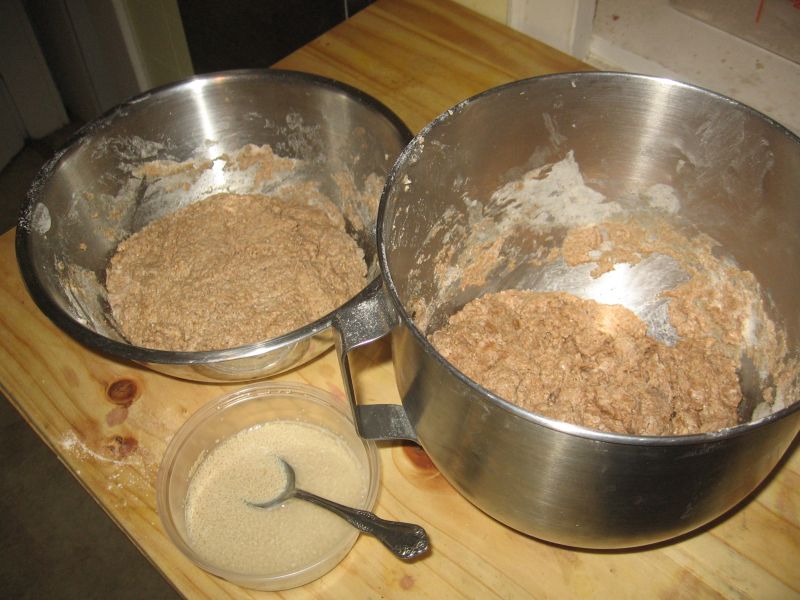
In the bowl on the left is a sponge with 2 cups of w.w. flour, a little yeast, and 2/3 cups of water; the mixing bowl on the right contains 4 cups of w.w. flour, 1 1/3 cups water, a little salt, and a tablespoon of olive oil (no yeast). I let these sit overnight. In the morning I dissolved a little more yeast in about a quarter cup water (the small container with the spoon in it).

Then I mixed them together, first in the electric mixer then by hand, and mad the dough.

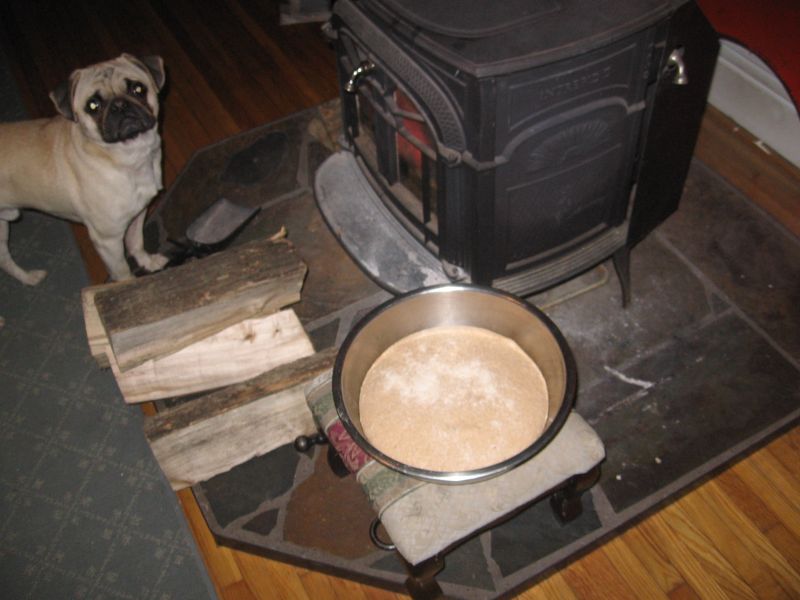
Realizing the coldness in my kitchen (something like 45F), and not having the time to allow for a 12-hour rise, I sped up the process by warming the dough on a stool next to my wood burning stove. I had it covered (of course), but the real challenge was keeping my two dogs away from it.


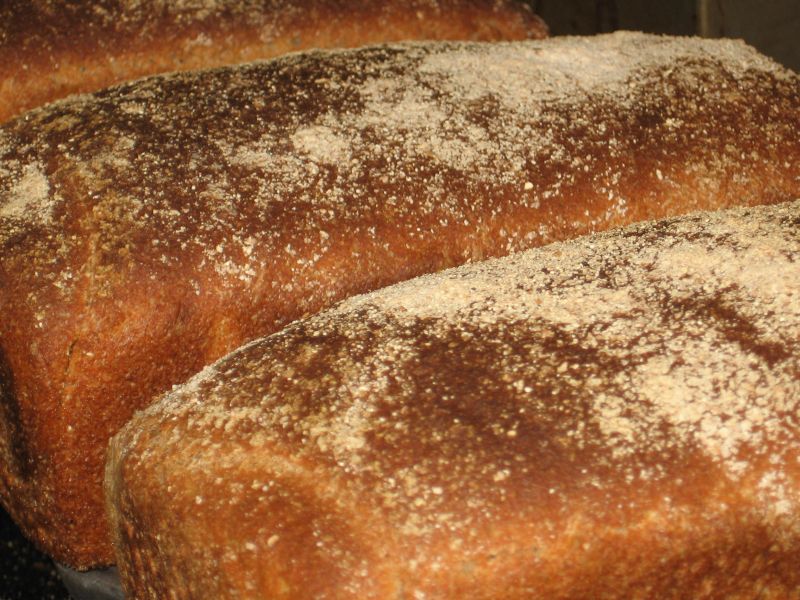
I divided the bread into three loaves, let it rise again (this time in the kitchen…which was a bit warmer because I was preheating the oven). The outcome was awesome.

Remnants of Summer:

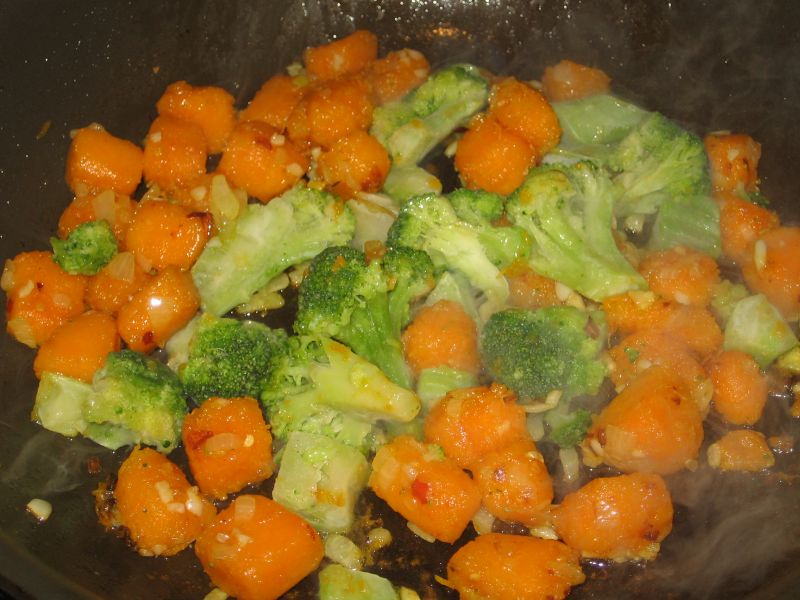
Then I found myself in a quandary…here I had these 3 beautiful loaves of bread, and I knew that I’d never eat them before they went stale. I gave one away, sliced into one, but still didn’t have enough room in my teeny freezer for the remaining loaf. In order to fit the loaf in the freezer I had to take some stuff out. And if I were to take some stuff out I knew that I had to cook it…so I made dinner. Actually, I only had to remove a container of broccoli and butternut squash, both of which I grew on my tiny city plot this past summer.

I basically cooked the vegetables aglio e olio style (with garlic and olive oil) and tossed it with pasta. It’s a method for which I can cook almost any food, and a flavor I never get tired of. Besides the pasta and chicken broth, here’s the basic ingredients I used: squash, broccoli, garlic, and hot peppers.

I sauteed everything in a little olive oil.

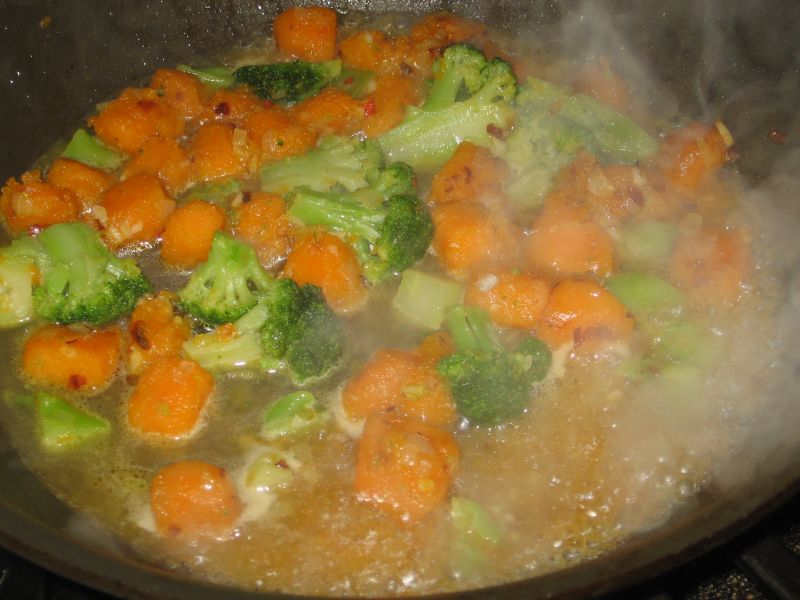
Added enough cup or two of chicken broth, and allowed it to cook the vegetables and reduce to concentrate it’s flavor.

Then tossed it with whole wheat pasta and Romano cheese

What’s up with The Gas Prices?

Really? What is up? Two years ago we were at the very same price for gas per gallon as we are today (in Buffalo). Then we went on a roller coaster ride and we’re back where we started. Check out this chart I found at buffalogasprices.com:

Anyhow, I don’t care what the price of gas is I still far prefer my bicycle to my gas-powered vehicle. Here’s a few cartoons I came across that reflect this sentiment:


Super-Ripe Kim Chi:

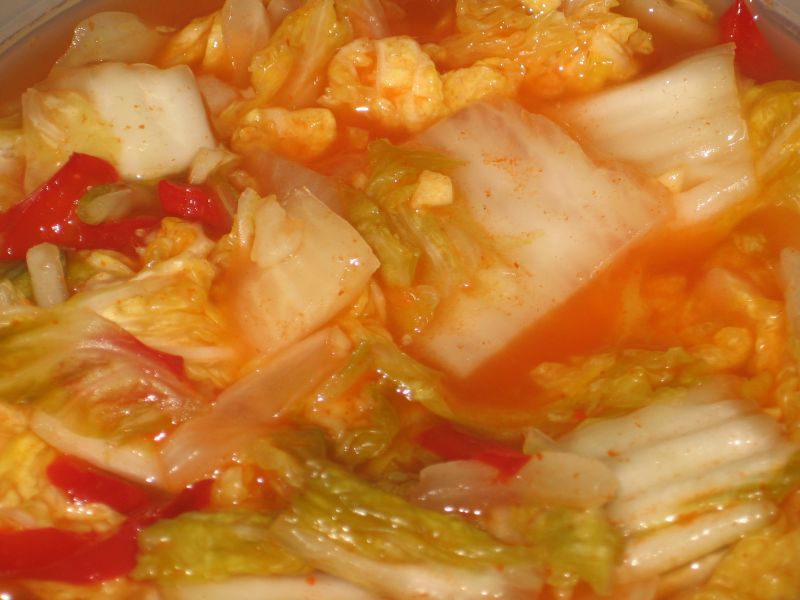
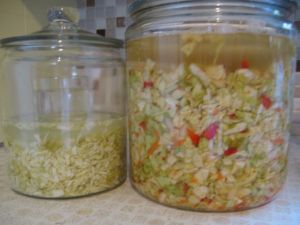
Lastly, I had to include a few pictures of my latest batch of kim chi (cabbage and peppers grown in the back yard this past summer). It is by far the best batch I have ever made, and it is literally alive with flavor and probiotics. It has an effervescence the almost sizzles on your tongue. Check out the book and/or website, Wild Fermentation, if you want to learn to make it.

>A Few Recipes, Thoughts, and a Couple Cartoons

>

100% Whole Wheat Bread:

I’ve been playing around with a variation (simplification) of Peter Reinhart’s whole grain bread recipe. I find the idea of home made bread being made without too much fuss and it not occupying your time and thoughts very interesting. I much rather incorporate it into the rhythm of my day. Many of my breads, for example, I’ll start the sponge before bed or before I go to work, and then mix the dough hours later, either retarding it in the refrigerator or baking it straight away. With this cold snap we’re experiencing in the northeast a refrigerator isn’t necessary…the rear of my house (where my kitchen is located) 9is like a refrigerator. I had to bring the bread to my living room and warm it next to the wood stove to speed the fermentation process. Anyhow, here’s my method, and it came out pretty good.

If I recall correctly Peter Reinhart uses milk or butter or yogurt in his dough (I may be wrong…I haven’t looked at the book for a while), at any rate, I used a straight-dough recipe, or one without fat (ok, I used a little olive oil). The thing that is key I think, and this is something that I picked up from Peter’s book, is that when making bread with 100% whole wheat flour it is essential to soak the flour before mixing the dough.

In the bowl on the left is a sponge with 2 cups of w.w. flour, a little yeast, and 2/3 cups of water; the mixing bowl on the right contains 4 cups of w.w. flour, 1 1/3 cups water, a little salt, and a tablespoon of olive oil (no yeast). I let these sit overnight. In the morning I dissolved a little more yeast in about a quarter cup water (the small container with the spoon in it).

Then I mixed them together, first in the electric mixer then by hand, and mad the dough.

Realizing the coldness in my kitchen (something like 45F), and not having the time to allow for a 12-hour rise, I sped up the process by warming the dough on a stool next to my wood burning stove. I had it covered (of course), but the real challenge was keeping my two dogs away from it.


I divided the bread into three loaves, let it rise again (this time in the kitchen…which was a bit warmer because I was preheating the oven). The outcome was awesome.

Remnants of Summer:

Then I found myself in a quandary…here I had these 3 beautiful loaves of bread, and I knew that I’d never eat them before they went stale. I gave one away, sliced into one, but still didn’t have enough room in my teeny freezer for the remaining loaf. In order to fit the loaf in the freezer I had to take some stuff out. And if I were to take some stuff out I knew that I had to cook it…so I made dinner. Actually, I only had to remove a container of broccoli and butternut squash, both of which I grew on my tiny city plot this past summer.

I basically cooked the vegetables aglio e olio style (with garlic and olive oil) and tossed it with pasta. It’s a method for which I can cook almost any food, and a flavor I never get tired of. Besides the pasta and chicken broth, here’s the basic ingredients I used: squash, broccoli, garlic, and hot peppers.

I sauteed everything in a little olive oil.

Added enough cup or two of chicken broth, and allowed it to cook the vegetables and reduce to concentrate it’s flavor.

Then tossed it with whole wheat pasta and Romano cheese

What’s up with The Gas Prices?

Really? What is up? Two years ago we were at the very same price for gas per gallon as we are today (in Buffalo). Then we went on a roller coaster ride and we’re back where we started. Check out this chart I found at buffalogasprices.com:

Anyhow, I don’t care what the price of gas is I still far prefer my bicycle to my gas-powered vehicle. Here’s a few cartoons I came across that reflect this sentiment:


Super-Ripe Kim Chi:

Lastly, I had to include a few pictures of my latest batch of kim chi (cabbage and peppers grown in the back yard this past summer). It is by far the best batch I have ever made, and it is literally alive with flavor and probiotics. It has an effervescence the almost sizzles on your tongue. Check out the book and/or website, Wild Fermentation, if you want to learn to make it.

More on my Mundo

Two more items I’ve recently carried (with ease) on my Mundo Yuba. One was a 15 gallon stock pot. I had a catering event to work and the pots were not big enough so I decided to bring my own…on my bicycle. The other was a twenty pound pumpkin. The only problem was that I thought the bungee cords would slip and the pumpkin would fall…but they didn’t. Of course I could have used my vehicle to carry both these items, but this is way more fun. After I build and install sideboards the loading capacity will be increased. The looks I get from people are pretty interesting, and I can only imagine what they are thinking…seeing this middle-aged guy on a weird-looking bike carrying these odd items. This alone makes it worth the trip.

>More on my Mundo

>Two more items I’ve recently carried (with ease) on my Mundo Yuba. One was a 15 gallon stock pot. I had a catering event to work and the pots were not big enough so I decided to bring my own…on my bicycle. The other was a twenty pound pumpkin. The only problem was that I thought the bungee cords would slip and the pumpkin would fall…but they didn’t. Of course I could have used my vehicle to carry both these items, but this is way more fun. After I build and install sideboards the loading capacity will be increased. The looks I get from people are pretty interesting, and I can only imagine what they are thinking…seeing this middle-aged guy on a weird-looking bike carrying these odd items. This alone makes it worth the trip.

Pictures of Autumn

It’s easy to live simply in the city during the summer…there are no heating concerns, and vegetable gardens grow like weeds. But as the seasons march forward, things change.

Autumn has always been, and still is, my favorite season. I had a few days off this past weekend and used the time to ready myself (both physically and mentally) for the cold months…stacked some firewood, uprooted my remaining vegetables, and baked some sourdough. Here’s a few photos:

One of the first signs of Autumn (if you have a wood burning stove or fireplace) is the delivery of wood. Here’s a picture of some of it. My son is now a teenager and this is the first year I asked (made) him help me haul and stack the wood. He did a great job.


I’m a bad gardener. By this statement I don’t mean that I can’t grow things, because I do every year, but more that I let my gardens become sort of feral by mid-summer. Every year I say that I won’t, but I do. Thus, every autumn when I tear them out I am always surprised at what I find. Look at all of these tomatoes…and this is the second week in October in Buffalo!
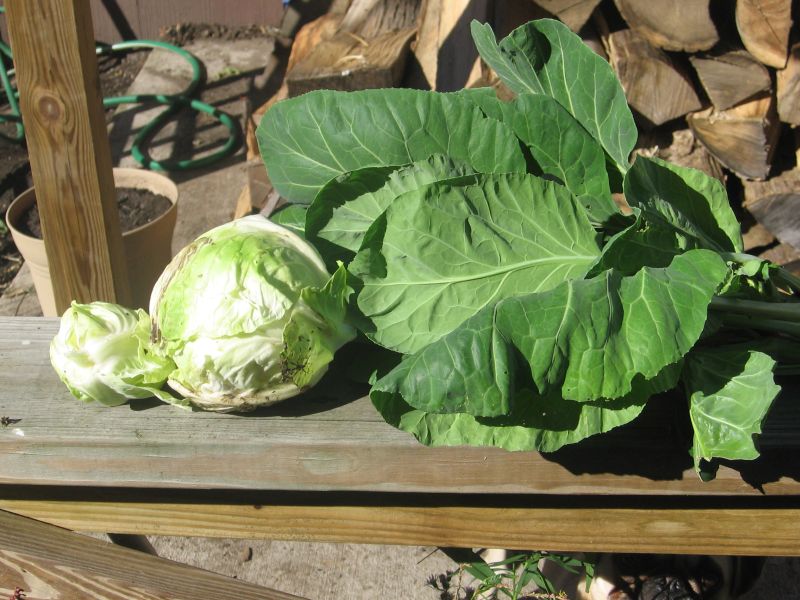
There were also some swiss chard and cabbage (and peppers, cauliflower, and broccoli which are not pictured).

This teeny head of cabbage I found in a pot I forgot about…it was just the right amount I needed for a vegetable soup.

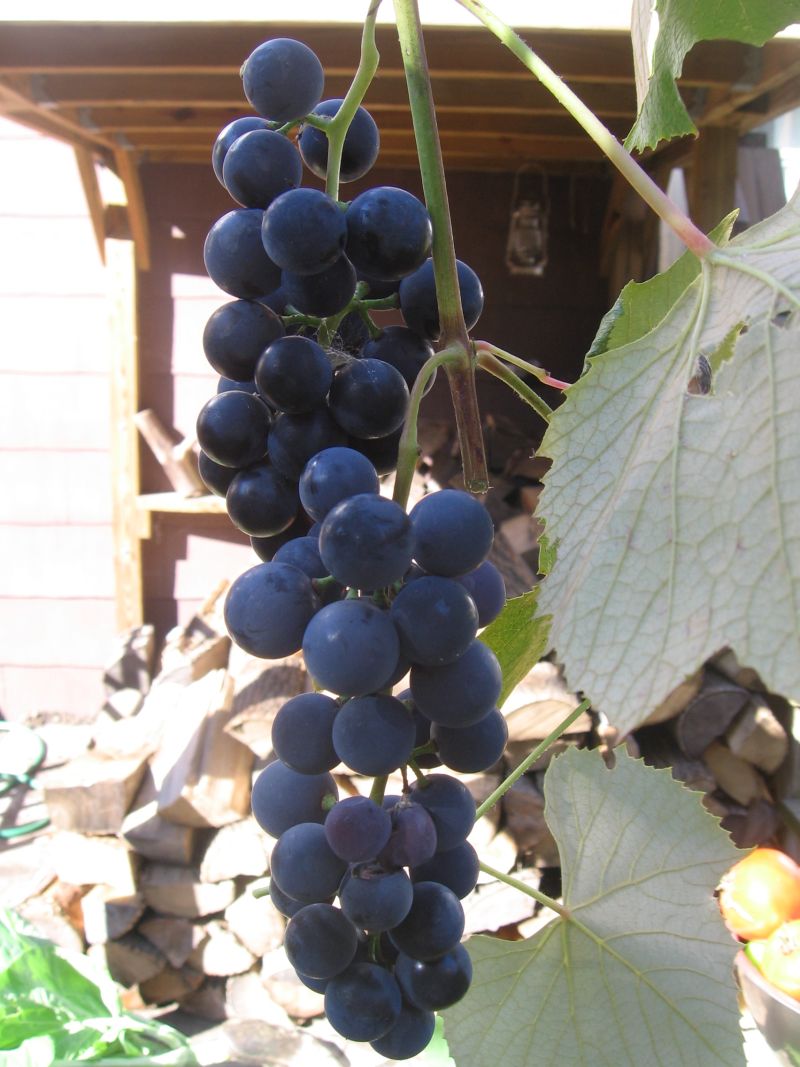
Three years ago I planted a grapevine that has literally exploded through the backyard (which only measures 25′ by 25′). This coming year I’ll have to trim it back. The grapes are delicious…they taste as good as they look in this photo.


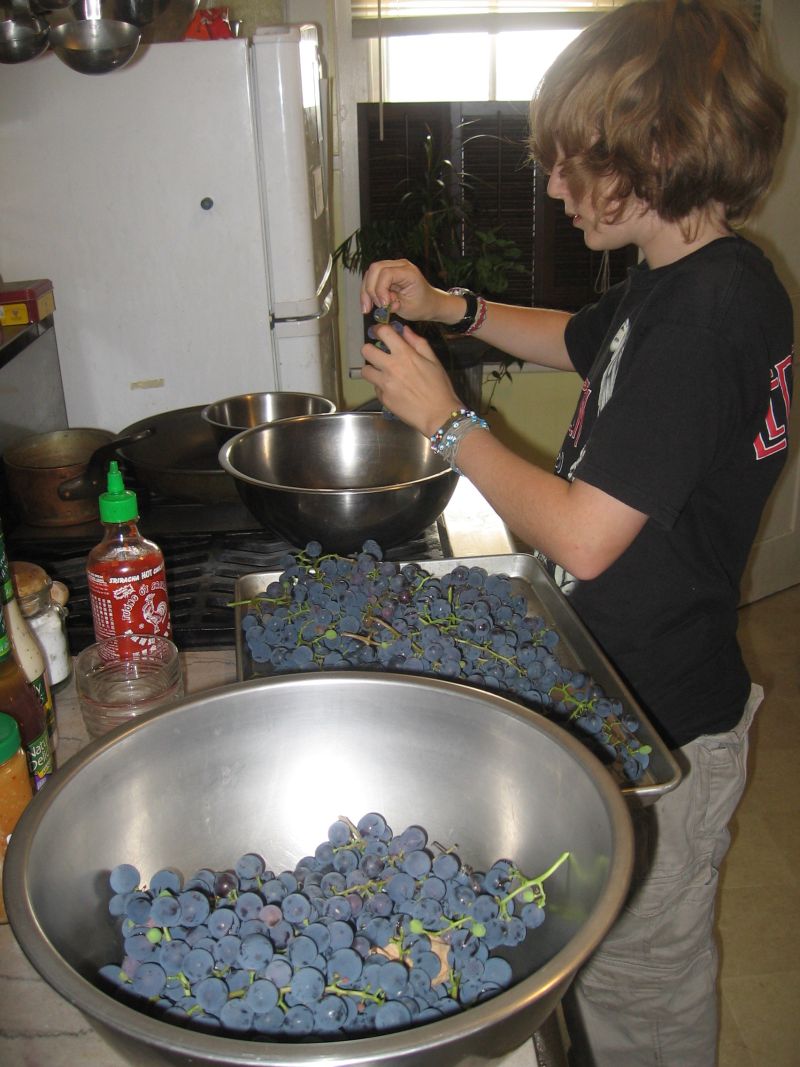
There are, in fact, more grapes than I can consume. So rather than let them rot on the vines (I did give some away) I thought I’d experiment with them (I’m always game for food experiments…especially when it deals with natural fermentation). I’ve never made wine before and know absolutely nothing about it (other than a little Internet research), but I thought I’d try to make some the old fashioned way…crush some grapes and put ’em in a pot to ferment (along with a little sugar water, and yeast). Here’s my son picking some of the grapes from their stems.

I initially let them rest for a few days simply crushed with their skins, then I strained them and added yeast and sugar.

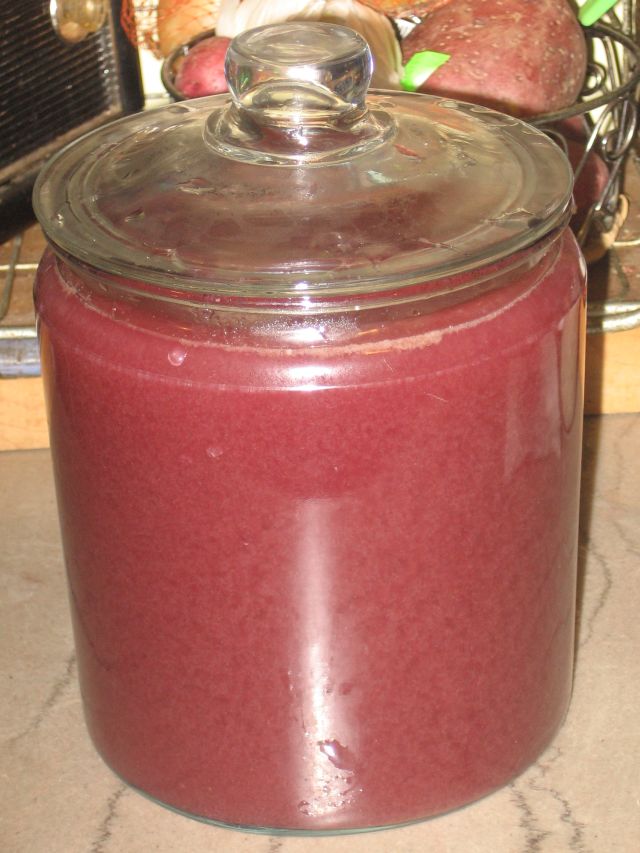
It only made a couple gallons of juice, which I wrapped in a towel (to protect it from sunlight) and put it on a shelf in my backroom where it is cool. This is the initial photo of it. After a day it was alive with action, it was circulating in a sort of vertical swirling motion, and eventually (after a few days) it stopped. It’s now crystal clear and smells like either wine or vinegar. I haven’t tasted it yet, but it will no doubt be vinegar (which is also great!). In another week I’ll decant it and taste it. If it tastes like something that is edible I’ll bottle it.

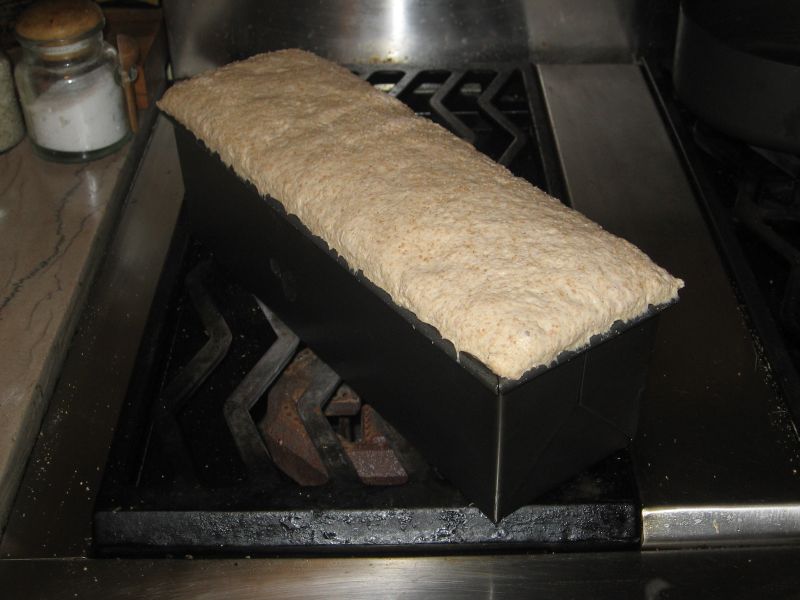
Another thing about the temperature change is that bread baking, especially naturally leavened bread (sourdough), altered. When the kitchen cools off naturally leaved bread goes from rising in just a few hours in the sultry dog days of summer, to anywhere from 8, 12, 18, even 24 hours when its cooler (depending on the temperature). Here’s a beautiful Pullman loaf I made and let rise overnight. The initial dough: 11:00pm.

Here it is about 8:00am, 9 hours later. It actually over-proofed a little…you can see where I had to trim it away from the edges where it was hanging over.

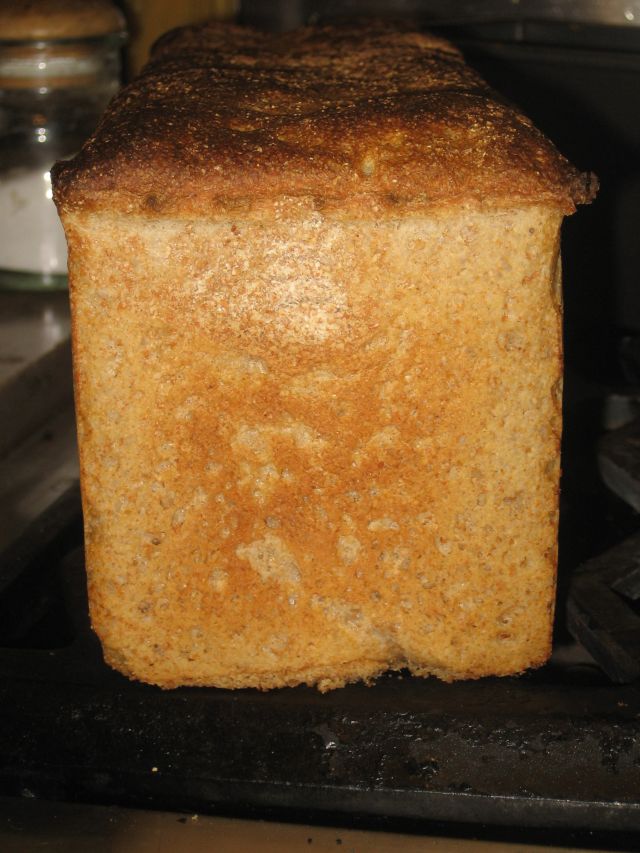
Here’s the loaf fresh from the oven…it’s beautiful and tasted as good as it looks. The thing about having it rise for so long is that the character of the bread becomes so intense…there are layers of flavors than cannot be achieved any other way than a slow rise. This loaf is called a “Pullman” loaf because of its shape, that it resembles an old Pullman railroad car. It makes an awesome sandwich bread.

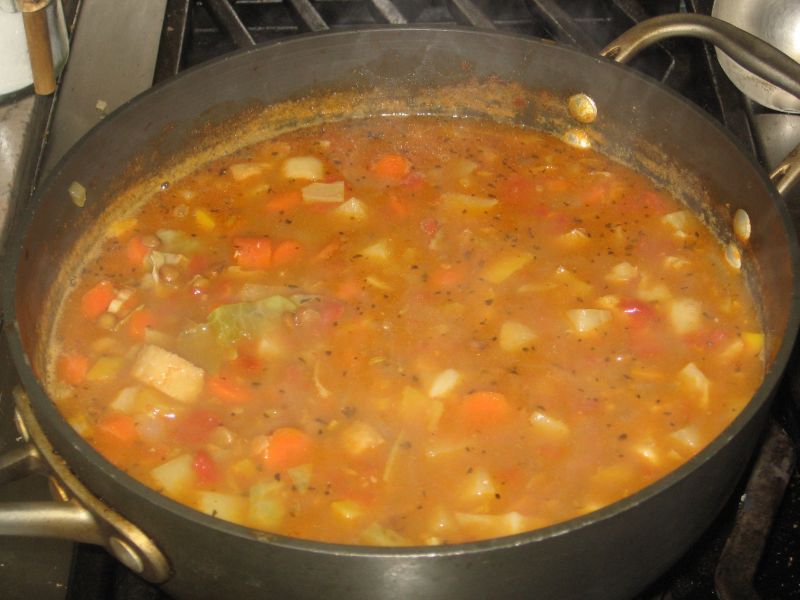
Soup made with the last garden vegetables (and a few others that I purchased). This along with the bread made and excellent meal.

>Pictures of Autumn

>It’s easy to live simply in the city during the summer…there are no heating concerns, and vegetable gardens grow like weeds. But as the seasons march forward, things change.

Autumn has always been, and still is, my favorite season. I had a few days off this past weekend and used the time to ready myself (both physically and mentally) for the cold months…stacked some firewood, uprooted my remaining vegetables, and baked some sourdough. Here’s a few photos:

One of the first signs of Autumn (if you have a wood burning stove or fireplace) is the delivery of wood. Here’s a picture of some of it. My son is now a teenager and this is the first year I asked (made) him help me haul and stack the wood. He did a great job.


I’m a bad gardener. By this statement I don’t mean that I can’t grow things, because I do every year, but more that I let my gardens become sort of feral by mid-summer. Every year I say that I won’t, but I do. Thus, every autumn when I tear them out I am always surprised at what I find. Look at all of these tomatoes…and this is the second week in October in Buffalo!
There were also some swiss chard and cabbage (and peppers, cauliflower, and broccoli which are not pictured).

This teeny head of cabbage I found in a pot I forgot about…it was just the right amount I needed for a vegetable soup.

Three years ago I planted a grapevine that has literally exploded through the backyard (which only measures 25′ by 25′). This coming year I’ll have to trim it back. The grapes are delicious…they taste as good as they look in this photo.


There are, in fact, more grapes than I can consume. So rather than let them rot on the vines (I did give some away) I thought I’d experiment with them (I’m always game for food experiments…especially when it deals with natural fermentation). I’ve never made wine before and know absolutely nothing about it (other than a little Internet research), but I thought I’d try to make some the old fashioned way…crush some grapes and put ’em in a pot to ferment (along with a little sugar water, and yeast). Here’s my son picking some of the grapes from their stems.

I initially let them rest for a few days simply crushed with their skins, then I strained them and added yeast and sugar.

It only made a couple gallons of juice, which I wrapped in a towel (to protect it from sunlight) and put it on a shelf in my backroom where it is cool. This is the initial photo of it. After a day it was alive with action, it was circulating in a sort of vertical swirling motion, and eventually (after a few days) it stopped. It’s now crystal clear and smells like either wine or vinegar. I haven’t tasted it yet, but it will no doubt be vinegar (which is also great!). In another week I’ll decant it and taste it. If it tastes like something that is edible I’ll bottle it.

Another thing about the temperature change is that bread baking, especially naturally leavened bread (sourdough), altered. When the kitchen cools off naturally leaved bread goes from rising in just a few hours in the sultry dog days of summer, to anywhere from 8, 12, 18, even 24 hours when its cooler (depending on the temperature). Here’s a beautiful Pullman loaf I made and let rise overnight. The initial dough: 11:00pm.

Here it is about 8:00am, 9 hours later. It actually over-proofed a little…you can see where I had to trim it away from the edges where it was hanging over.

Here’s the loaf fresh from the oven…it’s beautiful and tasted as good as it looks. The thing about having it rise for so long is that the character of the bread becomes so intense…there are layers of flavors than cannot be achieved any other way than a slow rise. This loaf is called a “Pullman” loaf because of its shape, that it resembles an old Pullman railroad car. It makes an awesome sandwich bread.

Soup made with the last garden vegetables (and a few others that I purchased). This along with the bread made and excellent meal.

Tso What?

A while back I read an interview of a Chinese chef, though I can’t remember who it was. Actually, it may have been a radio interview. Who am I kidding, I’m not sure who it was or where I heard it, but I’m pretty sure I remember hearing that you should not eat chop suey in a Chinese restaurant if you want real Chinese food, because chop suey is an American invention. This of course is commonly acknowledged as truth, that chop suey was invented in the mid-nineteenth century by Chinese laborers working to build the western railroad. And this is what I thought about as I waited, the other night, for my order of General Tso’s chicken.

I watched as the cook deep fried the chicken and then quickly stir-fried it with a sweet sauce. How American, I also thought: fried meat tossed in sticky sweet sauce. While I’ve never been to China, it’s a pretty easy assumption that the food at most Chinese takeout restaurants is a far cry from being authentic. I wondered when it made the departure, when this fine and noble cuisine became deep fried and so overpoweringly sweet. How did this particular dish become a “house specialty” at so many Chinese restaurants? And who the hell was General Tso?

The menu at my neighborhood Chinese takeout states that General Tso was famous in the Szechwan army, and that the dish was devised by his private chef. It also says that the recipe consists of “chunks of chicken lightly fried with hot spicy sauce.” There was no mention of it being sweet, which is what it mainly was.

When I was handed my order of chicken I asked the cook if he knew who General Tso was. He looked surprised, and even a little confused; probably no one had ever asked him this. “A famous Chinese General,” he finally said with a grin. “Thanks,” I said, and as I walked out the door I tried to picture myself working at an American restaurant in China and someone asking me who General Custer was. I would without doubt have a similar and somewhat bewildered reply: “a famous American General.”

That evening after my son, Isaac, and I consumed our fried and super sweet chicken I scoured my cookbook collection in search of recipes. None, nada, zip. I had a feeling that it was invented in New York and was surprised that even Craig Claiborne’s tome, The Chinese Cookbook, offered nary a recipe for General Tso’s chicken. I’ve made the habit, lately, to search books prior to the internet mostly because of the sometimes questionable accuracy of the information. But that’s where I did find the information I sought, reinforced by an interesting article archived on the New York Times site. At any rate, my gut feelings (pun intended) were correct twofold: General Tso’s chicken was first cooked in New York, and originally was considerably less sweet.

General Tso (Zuo Zontang 1812 – 1885) was a real general, but it’s doubtful he or his personal chef had anything to do with the creation of this dish. The recipe was reputedly first concocted by Chef Peng Chang-kuei, who apprenticed under Cao Jingchen, one of the most celebrated Chinese chefs of the earlier part of the twentieth century. Born in 1919, Chef Peng immigrated to the US in 1973, and opened a restaurant on 44th street where General Tso’s chicken is said to have been born. It was a popular dish but became even more popular when he Americanized it by adding more sugar and less chilies. The rest, as they say, is history. Having made his fortune, Chef Peng returned to Taipei in the late 1980’s, where there is still a Peng’s restaurant operated by his family.

After we ate our dinner that night Isaac opened his fortune cookie (another American invention), and while he chomped away he read it, and then said, “That’s weird.” “What’s weird,” I asked? “The only thing the fortune says is it tastes sweet.” I looked at it myself, and sure enough, bordered by two smiley faces, that’s really all it said: it tastes sweet.

Learning the origin and history of this dish made me want to make it myself. After some trial and error I’ve adapted a recipe from a few different recipes that I’ve come across. It’s far less sweet, and a little spicier. I don’t know how authentic it is to Chef Peng’s original, but I can only hope that the General would approve.

General Tso’s Chicken
Yield: 3-4 servings

For the chicken:
1 pound boneless chicken thighs, cut into pieces
2 tablespoons soy sauce
1 egg
2 tablespoons cornstarch
1 tablespoon flour

For the sauce:
1/4 cup soy sauce
1/4 cup sherry
1/2 cup chicken broth
2 tablespoons white wine vinegar
2 tablespoons sugar
1-2 tablespoons cornstarch

Additional Ingredients
6 small dried red chilies
1 tablespoon minced ginger
2 teaspoons minced garlic
3 green onions, sliced
peanut oil for deep frying

Combine all of the chicken ingredients together in a bowl, mix to evenly coat, and set aside. Mix all of the sauce ingredients together in a separate bowl and set aside. Heat a couple inches of peanut oil in a wok or skillet until 350F. Stir the chicken again, then carefully deep fry it piece-by-piece and remove to a plate lined with paper towel. Cut a piece of the chicken to make sure it’s thoroughly cooked. Carefully transfer the oil to a tin can or other pot to cool, reserving a few tablespoons in the wok or skillet. Over medium-high heat stir-fry the chilies for a minute, then add the ginger and garlic. Stir the sauce ingredients again, then carefully add it to the hot pan. Bring to a boil and simmer for 1 minute. Add the cooked chicken and green onion. Toss to coat. Serve with steamed rice.

>Tso What?

>A while back I read an interview of a Chinese chef, though I can’t remember who it was. Actually, it may have been a radio interview. Who am I kidding, I’m not sure who it was or where I heard it, but I’m pretty sure I remember hearing that you should not eat chop suey in a Chinese restaurant if you want real Chinese food, because chop suey is an American invention. This of course is commonly acknowledged as truth, that chop suey was invented in the mid-nineteenth century by Chinese laborers working to build the western railroad. And this is what I thought about as I waited, the other night, for my order of General Tso’s chicken.

I watched as the cook deep fried the chicken and then quickly stir-fried it with a sweet sauce. How American, I also thought: fried meat tossed in sticky sweet sauce. While I’ve never been to China, it’s a pretty easy assumption that the food at most Chinese takeout restaurants is a far cry from being authentic. I wondered when it made the departure, when this fine and noble cuisine became deep fried and so overpoweringly sweet. How did this particular dish become a “house specialty” at so many Chinese restaurants? And who the hell was General Tso?

The menu at my neighborhood Chinese takeout states that General Tso was famous in the Szechwan army, and that the dish was devised by his private chef. It also says that the recipe consists of “chunks of chicken lightly fried with hot spicy sauce.” There was no mention of it being sweet, which is what it mainly was.

When I was handed my order of chicken I asked the cook if he knew who General Tso was. He looked surprised, and even a little confused; probably no one had ever asked him this. “A famous Chinese General,” he finally said with a grin. “Thanks,” I said, and as I walked out the door I tried to picture myself working at an American restaurant in China and someone asking me who General Custer was. I would without doubt have a similar and somewhat bewildered reply: “a famous American General.”

That evening after my son, Isaac, and I consumed our fried and super sweet chicken I scoured my cookbook collection in search of recipes. None, nada, zip. I had a feeling that it was invented in New York and was surprised that even Craig Claiborne’s tome, The Chinese Cookbook, offered nary a recipe for General Tso’s chicken. I’ve made the habit, lately, to search books prior to the internet mostly because of the sometimes questionable accuracy of the information. But that’s where I did find the information I sought, reinforced by an interesting article archived on the New York Times site. At any rate, my gut feelings (pun intended) were correct twofold: General Tso’s chicken was first cooked in New York, and originally was considerably less sweet.

General Tso (Zuo Zontang 1812 – 1885) was a real general, but it’s doubtful he or his personal chef had anything to do with the creation of this dish. The recipe was reputedly first concocted by Chef Peng Chang-kuei, who apprenticed under Cao Jingchen, one of the most celebrated Chinese chefs of the earlier part of the twentieth century. Born in 1919, Chef Peng immigrated to the US in 1973, and opened a restaurant on 44th street where General Tso’s chicken is said to have been born. It was a popular dish but became even more popular when he Americanized it by adding more sugar and less chilies. The rest, as they say, is history. Having made his fortune, Chef Peng returned to Taipei in the late 1980’s, where there is still a Peng’s restaurant operated by his family.

After we ate our dinner that night Isaac opened his fortune cookie (another American invention), and while he chomped away he read it, and then said, “That’s weird.” “What’s weird,” I asked? “The only thing the fortune says is it tastes sweet.” I looked at it myself, and sure enough, bordered by two smiley faces, that’s really all it said: it tastes sweet.

Learning the origin and history of this dish made me want to make it myself. After some trial and error I’ve adapted a recipe from a few different recipes that I’ve come across. It’s far less sweet, and a little spicier. I don’t know how authentic it is to Chef Peng’s original, but I can only hope that the General would approve.

General Tso’s Chicken
Yield: 3-4 servings

For the chicken:
1 pound boneless chicken thighs, cut into pieces
2 tablespoons soy sauce
1 egg
2 tablespoons cornstarch
1 tablespoon flour

For the sauce:
1/4 cup soy sauce
1/4 cup sherry
1/2 cup chicken broth
2 tablespoons white wine vinegar
2 tablespoons sugar
1-2 tablespoons cornstarch

Additional Ingredients
6 small dried red chilies
1 tablespoon minced ginger
2 teaspoons minced garlic
3 green onions, sliced
peanut oil for deep frying

Combine all of the chicken ingredients together in a bowl, mix to evenly coat, and set aside. Mix all of the sauce ingredients together in a separate bowl and set aside. Heat a couple inches of peanut oil in a wok or skillet until 350F. Stir the chicken again, then carefully deep fry it piece-by-piece and remove to a plate lined with paper towel. Cut a piece of the chicken to make sure it’s thoroughly cooked. Carefully transfer the oil to a tin can or other pot to cool, reserving a few tablespoons in the wok or skillet. Over medium-high heat stir-fry the chilies for a minute, then add the ginger and garlic. Stir the sauce ingredients again, then carefully add it to the hot pan. Bring to a boil and simmer for 1 minute. Add the cooked chicken and green onion. Toss to coat. Serve with steamed rice.

Morning Commute


So there I was…tooling down Elmwood Avenue on a beautiful late summer’s morn. I was on my new and fully loaded Mundo Yuba, and feeling pretty cool. I was proud of myself for being early for work for a change, and was just going slowly…minding my own business and enjoying the ride. Then a City of Buffalo sanitation truck pulls up next to me (not a garbage truck, more like a flatbed that was hauling new garbage cans). The guy in the passenger seat, who had a cigarette in one hand, a coffee in the other, and both feet on the dashboard, leans out the window and says, “get the fuck off the road.” Initially it pissed me off, but then I actually felt sorry for the guy for being so miserable with himself that he had to make such an angry and random comment. But it still sort of ruined my ride.

>Morning Commute

>
So there I was…tooling down Elmwood Avenue on a beautiful late summer’s morn. I was on my new and fully loaded Mundo Yuba, and feeling pretty cool. I was proud of myself for being early for work for a change, and was just going slowly…minding my own business and enjoying the ride. Then a City of Buffalo sanitation truck pulls up next to me (not a garbage truck, more like a flatbed that was hauling new garbage cans). The guy in the passenger seat, who had a cigarette in one hand, a coffee in the other, and both feet on the dashboard, leans out the window and says, “get the fuck off the road.” Initially it pissed me off, but then I actually felt sorry for the guy for being so miserable with himself that he had to make such an angry and random comment. But it still sort of ruined my ride.

Really Slow Food

Noah carried the slabs of meat into the kitchen and cut it into small salting blocks, and Ma patted the course salt in, laid it piece by piece in the kegs, careful that no two pieces touched each other. She laid the slabs like bricks, and pounded salt in the spaces.

–John Steinbeck, The Grapes of Wrath


The other day I was rummaging around in the crisper drawer of my refrigerator and what I found was anything but crisp. About a month ago I had purchased two heads of cabbage and I used most of it to make kim chi (Korean-style sauerkraut), which sits quietly bubbling on my counter as I type these words. The remainder (about 1/3 head) I put in the crisper drawer for future use, possibly a stir-fry or soup. At any rate, by the time that I found the forgotten cabbage a thin layer of grey mold was covering much of the surface of one side. My first reaction was to be slightly grossed out, but then it dawned on me: this wedge of cabbage left in refrigeration began to mold, but the other cabbage, mixed with a bit of salt and other seasonings, was left at room temperature, and the salt and its own juices preserved it. Both were fermenting in their own way, but one had turned into something truly delectable while the other was headed to the garbage can. It was an unintentional science experiment.

Salting is just one way of preserving foods. Today, of course, the most obvious method is to freeze things. This works well, and it’s simple to do, but it’s the old ways of preservation that I find most interesting. When food is frozen then thawed it’s just that, but when aged, via fermentation, the flavors are alive and intense. When food is preserved the old fashioned way it’s not just cooking, it’s more like alchemy…the simplest ingredients when left to dry, ferment, or brine become something entirely different. The most obvious example is sauerkraut or pickles; the difference from the raw to the preserved is remarkable, and there’s little effort on the cook. Put the ingredients together and they do most the work, you just have to provide the right conditions.


In his book, Wild Fermentation, Sandor Katz (aka Sandor Kraut) states that any food may be fermented. While this may seem a bit of a stretch, when’s the last time you had a sandwich or salad at a fancy restaurant and ate prosciutto or gravlox. In both cases, neither the ham nor the salmon was “cooked,” it was preserved by being packed in salt. Remember this, too, the next time you have a salami sandwich or bagel with lox (neither are cooked; both are dried).


While it may be daunting to cure your own ham in the basement or smoke fish in the backyard (but it is possible), it is not only feasible but quite simple to preserve your own fruits and vegetables. Canning is the most obvious example, but that’s not the intention of this article. The recipes included here are those that can be made simply on your kitchen counter and left to age in the refrigerator.


As mentioned previously, the main things you as the cook have to provide are the correct conditions. Foods are affected by these conditions in different ways. In the case of salted vegetables, such as sauerkraut or kim chi, the combination of the high saline solution and being submerged in it’s own juice inhibits the grown of harmful bacteria but provides the right conditions for “good bacteria,” mainly, Lactobacilli, which is the same bacteria found in yogurt and kefir. The growth of Lactobacilli, a probiotic, is the reason fermented foods taste distinctively sour, thus cabbage is no longer simply cabbage (kraut) it has, almost by itself, become sour cabbage (sauerkraut). Homemade (or high quality store-bought) sauerkraut and yogurt taste alive on your tongue, and they are. Fermented vegetables have the ability to last long periods without “going bad,” which was their original intention. It was common practice in days gone by for seaman anticipating a long voyage to carry barrels of fermented cabbage with their provisions to alleviate scurvy. Well-known practitioners of this were supposedly Columbus and James Cook. And closer to home, given our city’s original demographics I’ll wager a bet that more than a few of our old homes have seen their share of bubbling crocks of kraut brought to fruition by our ancestors.


Interestingly, the people of Bulgaria consume per capita more fermented milk products in the world (mainly kefir) than anywhere else and they also have some of the longest life spans. Because of this the lacto acid bacteria that is produced specifically in fermented milk (yogurt and kefir) has, since the beginning of the 2oth century, been named Lactobacillus bulgaricus. Apparently fermented foods really are good for you.


High concentrations of sugar or vinegar (or both) also inhibit the growth of many harmful bacteria; such is the case of fruit preserves and vegetable pickles. Lowering a food’s moisture content will reduce the chance of mold. Foods such as sundried tomatoes are a popular option of this, but simmering foods down to “butters” is an old fashioned method as well. Not only does the lower moisture and higher sugar content reduce the risk of contamination, but it makes the fruit spreadable (hence the use of the word butter) and heightens it’s flavor as well.


Preserved or fermented foods, like good homemade bread (which is essentially fermented flour, albeit cooked) is making a resurgence of sorts. It’s the original comfort food; our parents and our parent’s parents really did know a thing or two. In this age of everything being hyper-fast, it’s really refreshing to prepare foods slowly, sometimes really slowly. This column will be whisked to the editor’s office via the internet. I can’t see it go, it just does. On my counter is a batch of sauerkraut and ten-year-old sourdough starter, and with them I can engage all of my senses. I can see them, smell them, feel them, taste them, and if I listen closely enough, I can even hear them bubbling. But taste is the best part.

Old Fashioned Apple Butter

Yield: 2 cups

6-7 large apples

1-1/4 cups brown sugar

1/2 cup water

Peel, core, and quarter the apples; discard the peels and cores. Combine the apple in a heavy-bottomed pot. Cover the pot and bring the to a simmer and cook for about 10 minutes. Transfer to a blender and process until smooth. Transfer back to the same pot. Cook the apple purée over a low flame for 1 hour, or until it has reduced and become dark and the consistency of peanut butter. Stir often to avoid scorching. Transfer to a clean jar and refrigerate.


Kim Chi

(Korean-Style Sauerkraut)

1 head Napa cabbage, cut into two-inch pieces

1 small daikon, grated

2 tablespoons kosher salt

2 cloves garlic, minced

1 small piece ginger, minced

1 small onion, minced

2 tablespoons chili paste

1 tablespoon sugar

Mix all of the ingredients together in a large bowl. Transfer to a container that is wide enough to fit a few small plates inside it. Press the cabbage down and weight it with plates. Cover the container and leave at room temperature. After a day it should release enough liquid that it is submerged, if not, add a little salted water. After about 2 days small bubbles will appear, after about a week or so it will smell and taste distinctively sour. Taste it as often as you like and when the flavor is to your liking transfer the container to the refrigerator to slow its fermentation.


German-Style Sauerkraut

1 small head of cabbage

2 tablespoons kosher salt

Remove the outer leaves of the cabbage and cut the head in half and then quarters. Cut out the core and discard it. Slice the cabbage as thin as you are able and put it in a large bowl. Sprinkle with two or three tablespoons salt and mix. Taste the cabbage; it should taste salty but not overly so. Transfer the cabbage to a container that is wide enough to fit a few small plates. Press the cabbage down with your hands and weight it with plates. Cover the container and leave at room temperature. After a day the cabbage should have released enough of its own liquid that it is submerged, if not, add enough salted water to cover the cabbage. After 2 or 3 days small bubbles will appear, after about a week or so it will begin to smell and taste distinctively sour. Depending on the temperature of your kitchen the cabbage will take between one and three weeks to sour completely. Taste it as often as you like and when the flavor is to your liking transfer the container to the refrigerator to slow its fermentation.


Gravlox

(Preserved Salmon)

Yield: 12 servings

3 pounds boneless salmon

1/4 cup vodka

1/4 cup kosher salt

1/4 cup sugar

2 tablespoons cracked black pepper

2 bunches fresh dill, chopped

1/2 small onion, peeled and sliced thin

1/2 lemon, sliced thin

Cut the salmon crosswise into two pieces; lay the salmon skin side down in a shallow pan parallel with each other. Pour the vodka across the salmon, and then sprinkle the salt, sugar, and pepper. Spread the dill across one piece of the salmon and the onions across the other piece. Layer the sliced lemon on top of the dill, then carefully roll one piece of salmon onto the other piece, enclosing the seasonings within the two pieces. (The skin should be facing out on both pieces.) Carefully lift the salmon onto a piece of cheesecloth and wrap it securely. Place the gravlox back into the shallow pan with another shallow pan of equal size on top of the salmon. Weight the gravlox by placing canned or bottled foods in the empty pan on top of the fish. Refrigerate the gravlox for 72 hours, turning it every twelve hours. To serve the gravlox, remove the fish from the cheesecloth and gently scrape away the spices, dill, onions and lemon. Slice the salmon paper-thin, on the bias, and serve with cucumber and small slices of toasted bread.


Homemade Yogurt

Yield: 1 quart

1 quart whole milk

3 tablespoons starter (plain yogurt with active cultures)

Bring the milk to a boil, then remove from the heat and allow to cool to 115F. Dilute the starter with 1/2 cup of the warm milk in a glass or ceramic bowl,. Stir in the remaining milk and cover securely with cellophane. Wrap the bowl twice with a heavy cloth and set in a warm draft-free area. Let stand for 4-5 hours. Refrigerate the yogurt before serving.

Labna

(Middle Eastern Yogurt Cheese)


Line a large colander with cheesecloth. Pour in yogurt pull the ends of the cheesecloth together to form a pouch. Tie the pouch securely and hang over your sink or a large bowl. Allow to drain for 4-24 hours. The yogurt will drain and become the consistency of soft cream cheese.

Pickled Carrot Sticks

4 carrots, peeled and cut into sticks

1 1/4 cups water

1 cup cider vinegar

1/2 cup sugar

2 garlic cloves, crushed

1 bunch dill

1 tablespoon salt

Place the carrots in a heatproof bowl. Bring the remaining ingredients to a boil in saucepan, then reduce the heat and simmer 2 minutes. Pour the pickling liquid over the carrots. Refrigerate for future use.


Zucchini Pickles

1 pound zucchini, sliced thinly

1 small onion, peeled and sliced thinly

2 tablespoons kosher salt

2 cups cider vinegar

1 cup sugar

1 1/2 teaspoons dry mustard

1 1/2 teaspoons mustard seeds

1 teaspoon turmeric

Place the zucchini and onions in a large bowl, add the salt and toss to distribute. Combine the vinegar, sugar, dry mustard, mustard seeds, and turmeric in a small saucepan and simmer for 3 minutes. Set aside until just warm to the touch, then pour the brine over the zucchini. Refrigerate until further use.

>Really Slow Food

>

Noah carried the slabs of meat into the kitchen and cut it into small salting blocks, and Ma patted the course salt in, laid it piece by piece in the kegs, careful that no two pieces touched each other. She laid the slabs like bricks, and pounded salt in the spaces.

–John Steinbeck, The Grapes of Wrath


The other day I was rummaging around in the crisper drawer of my refrigerator and what I found was anything but crisp. About a month ago I had purchased two heads of cabbage and I used most of it to make kim chi (Korean-style sauerkraut), which sits quietly bubbling on my counter as I type these words. The remainder (about 1/3 head) I put in the crisper drawer for future use, possibly a stir-fry or soup. At any rate, by the time that I found the forgotten cabbage a thin layer of grey mold was covering much of the surface of one side. My first reaction was to be slightly grossed out, but then it dawned on me: this wedge of cabbage left in refrigeration began to mold, but the other cabbage, mixed with a bit of salt and other seasonings, was left at room temperature, and the salt and its own juices preserved it. Both were fermenting in their own way, but one had turned into something truly delectable while the other was headed to the garbage can. It was an unintentional science experiment.


Salting is just one way of preserving foods. Today, of course, the most obvious method is to freeze things. This works well, and it’s simple to do, but it’s the old ways of preservation that I find most interesting. When food is frozen then thawed it’s just that, but when aged, via fermentation, the flavors are alive and intense. When food is preserved the old fashioned way it’s not just cooking, it’s more like alchemy…the simplest ingredients when left to dry, ferment, or brine become something entirely different. The most obvious example is sauerkraut or pickles; the difference from the raw to the preserved is remarkable, and there’s little effort on the cook. Put the ingredients together and they do most the work, you just have to provide the right conditions.


In his book, Wild Fermentation, Sandor Katz (aka Sandor Kraut) states that any food may be fermented. While this may seem a bit of a stretch, when’s the last time you had a sandwich or salad at a fancy restaurant and ate prosciutto or gravlox. In both cases, neither the ham nor the salmon was “cooked,” it was preserved by being packed in salt. Remember this, too, the next time you have a salami sandwich or bagel with lox (neither are cooked; both are dried).


While it may be daunting to cure your own ham in the basement or smoke fish in the backyard (but it is possible), it is not only feasible but quite simple to preserve your own fruits and vegetables. Canning is the most obvious example, but that’s not the intention of this article. The recipes included here are those that can be made simply on your kitchen counter and left to age in the refrigerator.


As mentioned previously, the main things you as the cook have to provide are the correct conditions. Foods are affected by these conditions in different ways. In the case of salted vegetables, such as sauerkraut or kim chi, the combination of the high saline solution and being submerged in it’s own juice inhibits the grown of harmful bacteria but provides the right conditions for “good bacteria,” mainly, Lactobacilli, which is the same bacteria found in yogurt and kefir. The growth of Lactobacilli, a probiotic, is the reason fermented foods taste distinctively sour, thus cabbage is no longer simply cabbage (kraut) it has, almost by itself, become sour cabbage (sauerkraut). Homemade (or high quality store-bought) sauerkraut and yogurt taste alive on your tongue, and they are. Fermented vegetables have the ability to last long periods without “going bad,” which was their original intention. It was common practice in days gone by for seaman anticipating a long voyage to carry barrels of fermented cabbage with their provisions to alleviate scurvy. Well-known practitioners of this were supposedly Columbus and James Cook. And closer to home, given our city’s original demographics I’ll wager a bet that more than a few of our old homes have seen their share of bubbling crocks of kraut brought to fruition by our ancestors.


Interestingly, the people of Bulgaria consume per capita more fermented milk products in the world (mainly kefir) than anywhere else and they also have some of the longest life spans. Because of this the lacto acid bacteria that is produced specifically in fermented milk (yogurt and kefir) has, since the beginning of the 2oth century, been named Lactobacillus bulgaricus. Apparently fermented foods really are good for you.


High concentrations of sugar or vinegar (or both) also inhibit the growth of many harmful bacteria; such is the case of fruit preserves and vegetable pickles. Lowering a food’s moisture content will reduce the chance of mold. Foods such as sundried tomatoes are a popular option of this, but simmering foods down to “butters” is an old fashioned method as well. Not only does the lower moisture and higher sugar content reduce the risk of contamination, but it makes the fruit spreadable (hence the use of the word butter) and heightens it’s flavor as well.


Preserved or fermented foods, like good homemade bread (which is essentially fermented flour, albeit cooked) is making a resurgence of sorts. It’s the original comfort food; our parents and our parent’s parents really did know a thing or two. In this age of everything being hyper-fast, it’s really refreshing to prepare foods slowly, sometimes really slowly. This column will be whisked to the editor’s office via the internet. I can’t see it go, it just does. On my counter is a batch of sauerkraut and ten-year-old sourdough starter, and with them I can engage all of my senses. I can see them, smell them, feel them, taste them, and if I listen closely enough, I can even hear them bubbling. But taste is the best part.

Old Fashioned Apple Butter

Yield: 2 cups

6-7 large apples

1-1/4 cups brown sugar

1/2 cup water

Peel, core, and quarter the apples; discard the peels and cores. Combine the apple in a heavy-bottomed pot. Cover the pot and bring the to a simmer and cook for about 10 minutes. Transfer to a blender and process until smooth. Transfer back to the same pot. Cook the apple purée over a low flame for 1 hour, or until it has reduced and become dark and the consistency of peanut butter. Stir often to avoid scorching. Transfer to a clean jar and refrigerate.


Kim Chi

(Korean-Style Sauerkraut)

1 head Napa cabbage, cut into two-inch pieces

1 small daikon, grated

2 tablespoons kosher salt

2 cloves garlic, minced

1 small piece ginger, minced

1 small onion, minced

2 tablespoons chili paste

1 tablespoon sugar

Mix all of the ingredients together in a large bowl. Transfer to a container that is wide enough to fit a few small plates inside it. Press the cabbage down and weight it with plates. Cover the container and leave at room temperature. After a day it should release enough liquid that it is submerged, if not, add a little salted water. After about 2 days small bubbles will appear, after about a week or so it will smell and taste distinctively sour. Taste it as often as you like and when the flavor is to your liking transfer the container to the refrigerator to slow its fermentation.


German-Style Sauerkraut

1 small head of cabbage

2 tablespoons kosher salt

Remove the outer leaves of the cabbage and cut the head in half and then quarters. Cut out the core and discard it. Slice the cabbage as thin as you are able and put it in a large bowl. Sprinkle with two or three tablespoons salt and mix. Taste the cabbage; it should taste salty but not overly so. Transfer the cabbage to a container that is wide enough to fit a few small plates. Press the cabbage down with your hands and weight it with plates. Cover the container and leave at room temperature. After a day the cabbage should have released enough of its own liquid that it is submerged, if not, add enough salted water to cover the cabbage. After 2 or 3 days small bubbles will appear, after about a week or so it will begin to smell and taste distinctively sour. Depending on the temperature of your kitchen the cabbage will take between one and three weeks to sour completely. Taste it as often as you like and when the flavor is to your liking transfer the container to the refrigerator to slow its fermentation.


Gravlox

(Preserved Salmon)

Yield: 12 servings

3 pounds boneless salmon

1/4 cup vodka

1/4 cup kosher salt

1/4 cup sugar

2 tablespoons cracked black pepper

2 bunches fresh dill, chopped

1/2 small onion, peeled and sliced thin

1/2 lemon, sliced thin

Cut the salmon crosswise into two pieces; lay the salmon skin side down in a shallow pan parallel with each other. Pour the vodka across the salmon, and then sprinkle the salt, sugar, and pepper. Spread the dill across one piece of the salmon and the onions across the other piece. Layer the sliced lemon on top of the dill, then carefully roll one piece of salmon onto the other piece, enclosing the seasonings within the two pieces. (The skin should be facing out on both pieces.) Carefully lift the salmon onto a piece of cheesecloth and wrap it securely. Place the gravlox back into the shallow pan with another shallow pan of equal size on top of the salmon. Weight the gravlox by placing canned or bottled foods in the empty pan on top of the fish. Refrigerate the gravlox for 72 hours, turning it every twelve hours. To serve the gravlox, remove the fish from the cheesecloth and gently scrape away the spices, dill, onions and lemon. Slice the salmon paper-thin, on the bias, and serve with cucumber and small slices of toasted bread.


Homemade Yogurt

Yield: 1 quart

1 quart whole milk

3 tablespoons starter (plain yogurt with active cultures)

Bring the milk to a boil, then remove from the heat and allow to cool to 115F. Dilute the starter with 1/2 cup of the warm milk in a glass or ceramic bowl,. Stir in the remaining milk and cover securely with cellophane. Wrap the bowl twice with a heavy cloth and set in a warm draft-free area. Let stand for 4-5 hours. Refrigerate the yogurt before serving.

Labna

(Middle Eastern Yogurt Cheese)


Line a large colander with cheesecloth. Pour in yogurt pull the ends of the cheesecloth together to form a pouch. Tie the pouch securely and hang over your sink or a large bowl. Allow to drain for 4-24 hours. The yogurt will drain and become the consistency of soft cream cheese.

Pickled Carrot Sticks

4 carrots, peeled and cut into sticks

1 1/4 cups water

1 cup cider vinegar

1/2 cup sugar

2 garlic cloves, crushed

1 bunch dill

1 tablespoon salt

Place the carrots in a heatproof bowl. Bring the remaining ingredients to a boil in saucepan, then reduce the heat and simmer 2 minutes. Pour the pickling liquid over the carrots. Refrigerate for future use.


Zucchini Pickles

1 pound zucchini, sliced thinly

1 small onion, peeled and sliced thinly

2 tablespoons kosher salt

2 cups cider vinegar

1 cup sugar

1 1/2 teaspoons dry mustard

1 1/2 teaspoons mustard seeds

1 teaspoon turmeric

Place the zucchini and onions in a large bowl, add the salt and toss to distribute. Combine the vinegar, sugar, dry mustard, mustard seeds, and turmeric in a small saucepan and simmer for 3 minutes. Set aside until just warm to the touch, then pour the brine over the zucchini. Refrigerate until further use.