Everything is Amazing (the world according to Louie)

I posted this short clip a few years ago but just recently came across it again and still found myself laughing out loud (literally, not in the lol sense). It’s Louis CK on the Conan O’Brien Show telling a funny story. But there is also something very true about this and the message behind his jokes. Anyhow, if you have a couple minutes I hope you watch this (or re-watch this), you’ll be glad you did.

Urban Simplicity.

Everything is Amazing (the world according to Louie)

I posted this short clip a few years ago but just recently came across it again and still found myself laughing out loud (literally, not in the lol sense). It’s Louis CK on the Conan O’Brien Show telling a funny story. But there is also something very true about this and the message behind his jokes. Anyhow, if you have a couple minutes I hope you watch this (or re-watch this), you’ll be glad you did.

Urban Simplicity.

The view from my handlebars, a few thoughts on Ash Wednesday/Lent, and things to be thankful for…

So there I was anxious and rushing to get home from the community center on yet another single digit evening so I could make it to the opening time of an online class that began tonight, but then I had to stop for yet another traffic light (pictured above). Why, I thought, did I hit another light? Doesn’t the Universe know I am late? The traffic light, of course, seemed especially long. But I couldn’t help notice the sunset. Incredible. Here it was something like 9F and I was straddling my bike shivering a little but looking at that incredible sunset–the same sunset that if you live in the same hemisphere as me could view along with me–it made everything ok. At least for a few minutes. And I started thinking about how today was the beginning of Lent; Ash Wednesday. Symbolically representing Jesus going into the desert and fasting for forty days. Well, I am far from fasting, though I have given a few things up. But I don’t just give things up for the sake of doing so (but if you do I am not trying to pass judgment); I like to add something, such as additional prayer, meditation, yoga, etc. And also random acts of kindness. But as I stood there straddling my bike, and my fingers grew increasingly colder and I looked at that incredible sunset, I thought that–as a spiritual practice–I really should appreciate gratitude more. Just the little things. Because I have so much to be grateful for. And at that very moment I realized how grateful I was for that sunset on this very chilly night. So I took out my iPhone and snapped a picture with shivering fingers.The traffic light seemed to take ten minutes to change (though it was probably only two), and I did make it home just in time for the online class. While I watched it I ate dinner while my two pugs sat at my side and wood stove heated the room. I was, and am, thankful for that as well. But as I rode home this evening I also realized that it was nearly 7pm and there was still light in the sky, and that each day brings a little more light as we progress towards spring. The cold darkness of winter will end soon enough. And after riding through this very cold and snowy winter, this is something to truly be thankful for. I’d love to hear what you are thankful for at this point in your lives (because there is so much).


Urban Simplicity.

The view from my handlebars, a few thoughts on Ash Wednesday/Lent, and things to be thankful for…

So there I was anxious and rushing to get home from the community center on yet another single digit evening so I could make it to the opening time of an online class that began tonight, but then I had to stop for yet another traffic light (pictured above). Why, I thought, did I hit another light? Doesn’t the Universe know I am late? The traffic light, of course, seemed especially long. But I couldn’t help notice the sunset. Incredible. Here it was something like 9F and I was straddling my bike shivering a little but looking at that incredible sunset–the same sunset that if you live in the same hemisphere as me could view along with me–it made everything ok. At least for a few minutes. And I started thinking about how today was the beginning of Lent; Ash Wednesday. Symbolically representing Jesus going into the desert and fasting for forty days. Well, I am far from fasting, though I have given a few things up. But I don’t just give things up for the sake of doing so (but if you do I am not trying to pass judgment); I like to add something, such as additional prayer, meditation, yoga, etc. And also random acts of kindness. But as I stood there straddling my bike, and my fingers grew increasingly colder and I looked at that incredible sunset, I thought that–as a spiritual practice–I really should appreciate gratitude more. Just the little things. Because I have so much to be grateful for. And at that very moment I realized how grateful I was for that sunset on this very chilly night. So I took out my iPhone and snapped a picture with shivering fingers.The traffic light seemed to take ten minutes to change (though it was probably only two), and I did make it home just in time for the online class. While I watched it I ate dinner while my two pugs sat at my side and wood stove heated the room. I was, and am, thankful for that as well. But as I rode home this evening I also realized that it was nearly 7pm and there was still light in the sky, and that each day brings a little more light as we progress towards spring. The cold darkness of winter will end soon enough. And after riding through this very cold and snowy winter, this is something to truly be thankful for. I’d love to hear what you are thankful for at this point in your lives (because there is so much).

Urban Simplicity.

A well educated beet…

This is a really simple recipe that is really bursting with flavor…it’s basically a sweet-and-sour vegetable recipe. The beets, after being peeled and sliced or diced, are cooked in a water-vinegar-sugar solution, and then the liquid is thickened with cornstarch. There’s a couple interesting theories on the name of this recipe. One is that it was a common New England recipe and that the deep crimson color of the dish resembled the color of the jerseys of the Harvard football teem.Another is that it is a dish that was served by a Russian immigrant in his tavern outside Boston during the mid-1800’s. The name of his tavern was Harwood’s, and this recipe was so popular that they became known as Harwood’s beets, but with his thick accent they may have come across as sounding like Harvard Beets. Whatever the story, they are easy to prepare, nutritious, and delicious. The basic recipe is below.

Harvard Beets

Peel as many beets as you’d like to prepare, then slice or dice them. Place the beets in a pot with just enough cold water to cover them. Bring the liquid to a boil then lower it to a simmer. Add a small amount of sugar and vinegar to the pot along with a pinch of salt. Taste the liquid and adjust the sweet/sour flavor to your liking. Simmer the beets for 15 minutes or so, or until they are soft. In a small bowl, dilute a small amount of cornstarch in cold water, then stir it into the simmering beets. The liquid should thicken shortly after the starch has been added. If too thin, ad additional starch; if too thick, dilute with more water/vinegar. Simmer the beets another couple of minutes and taste/adjust seasoning as necessary.

A well educated beet…

This is a really simple recipe that is really bursting with flavor…it’s basically a sweet-and-sour vegetable recipe. The beets, after being peeled and sliced or diced, are cooked in a water-vinegar-sugar solution, and then the liquid is thickened with cornstarch. There’s a couple interesting theories on the name of this recipe. One is that it was a common New England recipe and that the deep crimson color of the dish resembled the color of the jerseys of the Harvard football teem.Another is that it is a dish that was served by a Russian immigrant in his tavern outside Boston during the mid-1800’s. The name of his tavern was Harwood’s, and this recipe was so popular that they became known as Harwood’s beets, but with his thick accent they may have come across as sounding like Harvard Beets. Whatever the story, they are easy to prepare, nutritious, and delicious. The basic recipe is below.

Harvard Beets 

Peel as many beets as you’d like to prepare, then slice or dice them. Place the beets in a pot with just enough cold water to cover them. Bring the liquid to a boil then lower it to a simmer. Add a small amount of sugar and vinegar to the pot along with a pinch of salt. Taste the liquid and adjust the sweet/sour flavor to your liking. Simmer the beets for 15 minutes or so, or until they are soft. In a small bowl, dilute a small amount of cornstarch in cold water, then stir it into the simmering beets. The liquid should thicken shortly after the starch has been added. If too thin, ad additional starch; if too thick, dilute with more water/vinegar. Simmer the beets another couple of minutes and taste/adjust seasoning as necessary.

Things that can be carried on a bike (#470), and on another really cold and snowy evening…

A gym bag containing wet clothes, and $46 worth of groceries.

Urban Simplicity.

Things that can be carried on a bike (#570), and on another really cold and snowy evening…

A gym bag containing wet clothes, and $46 worth of groceries.

Urban Simplicity.

Nearly Night (Fastnacht Kuecheles…recipe and lore)

For the first time since starting this blog some six or seven years ago (or is it eight?) I am re-posting a post in its entirety (which was originally posted two years ago). I post this recipe (my late mother’s recipe) every year but often too late…as these delectable doughnuts are traditionally made the day before Lent. I’ll make them on Shrove Tuesday but by the time I post the recipe it is too late if you want to stay within tradition. Nonetheless, they are delicious any time of the year, and I feel this post is still relevant, so here it is…

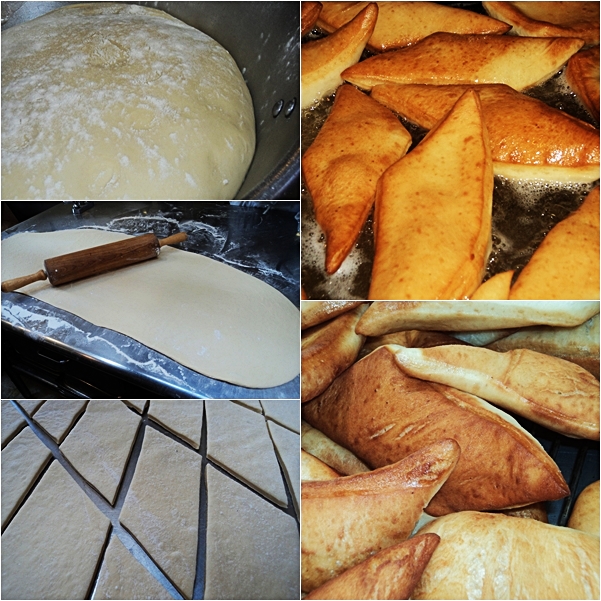
This is a recipe that I post every year just before Lent. I usually post it on Shrove Tuesday–the traditional day these doughnuts are eaten–but thought I’d post it a day earlier in the event anyone would like to make them (and I hope you do). I was lucky enough to be brought up with food traditions on both sides of my family. I had mentioned in an earlier post that I was Lebanese-American on my father’s side, well my mother’s side of the family is of German-French ancestry. The recipe below I received from one of my sisters, who learned it from our mother, who learned it from our grandmother, and so on.. The name of these doughnuts in German is fastnacht kuecheles and they are very similar to the French or New Orleans biegnet. They are traditionally eaten the day before Lent as a (now mostly symbolic) act of using up all the rich, luxurious, and fatty foods before spending the next 40 days in introspection (living lean). The names of the day may change from one tradition to another but they all basically mean the same thing. The English name is Shrove Tuesday…shrove is the past tense of shrive, loosely meaning to offer confession or penance. In French, Mardi Gras translates literally as Fat Tuesday…the last of the “fatty stuff” for 40 days. And Carnival, translates loosely as “farewell to meat,” or “farewell to flesh,” meaning goodbye to meat and/or carnal pleasures for a while. What I find interesting is something new I learned about the German version of these doughnuts, not so much the recipe itself but its etymology. I have been fascinated with languages my entire life but know almost nothing (fast nichts) about German. Anyhow, I always thought that the word for these doughnuts–fastnachts–meant fast night, or the night before the fast…Lent. And this still may be true. But when I did some electronic translating and broke the phrase into two words–fast nacht--I’ve come to see that it translates literally as almost night, likely making reference to the somber darkness that shrouds the next 40 days of the Christian Calendar. Unrelated but still related to this recipe, the word kuecheles, is likely a variation of küchle, meaning fritter. Anyhow, these are very simple to make and super-delicious. The one thing that’s not shown in the photos but is included in the recipes (and is the best part) is that they are tossed in powdered sugar while still warm. And I can still hear my mother’s voice from when I was a boy and tossing the kuecheles with eager anticipation (just as I do today)…”Joey,” she would yell while standing in front of her frying pan, “You’re getting sugar everywhere.” And I likely was.

Fastnacht Kuecheles

Makes about 3 dozen

1 cup water (room temperature)

1 cup milk (room temperature)

1/2 cup granulated sugar

4 tablespoons yeast

6-7 cups all-purpose flour, divided

3 large eggs

1/2 cup unsalted butter, melted

1 teaspoon salt

powdered sugar

Combine the water, milk, sugar, yeast, and two cups of flour in a large bowl. Allow to rest for 1 hour, or until the yeast is fully active. Transfer to an upright mixing bowl with a dough hook. Add the eggs, melted butter, salt, and 4 cups of flour. Run the mixer on low for 1 minute (if the dough seems too sticky add the remaining cup flour) then turn to medium and knead for 5 minutes. Transfer to a lightly oiled bowl, cover and let rest at room temperature for about an hour, or until double in size. Transfer the dough to a floured work surface and cut into three pieces. Shape into balls, cover, and let rest 20 minutes. Roll into large circles about 1/4 inch thick, then cut the dough into diamonds 2-4 inches wide. Cover the diamonds with a cloth and let rest 10 minutes. Preheat a couple inches of vegetable oil to 350F in a heavy skillet. Carefully fry the fastnachts in batches, cooking them for a couple minutes on each side until they are puffed and golden-brown; drain on absorbent paper. Allow them to cool for a few minutes, then toss a few at a time in a paper bag with confectionery sugar.

Urban Simplicity

Nearly Night (Fastnacht Kuecheles…recipe and lore)

For the first time since starting this blog some six or seven years ago (or is it eight?) I am re-posting a post in its entirety (which was originally posted two years ago). I post this recipe (my late mother’s recipe) every year but often too late…as these delectable doughnuts are traditionally made the day before Lent. I’ll make them on Shrove Tuesday but by the time I post the recipe it is too late if you want to stay within tradition. Nonetheless, they are delicious any time of the year, and I feel this post is still relevant, so here it is…

This is a recipe that I post every year just before Lent. I usually post it on Shrove Tuesday–the traditional day these doughnuts are eaten–but thought I’d post it a day earlier in the event anyone would like to make them (and I hope you do). I was lucky enough to be brought up with food traditions on both sides of my family. I had mentioned in an earlier post that I was Lebanese-American on my father’s side, well my mother’s side of the family is of German-French ancestry. The recipe below I received from one of my sisters, who learned it from our mother, who learned it from our grandmother, and so on.. The name of these doughnuts in German is fastnacht kuecheles and they are very similar to the French or New Orleans biegnet. They are traditionally eaten the day before Lent as a (now mostly symbolic) act of using up all the rich, luxurious, and fatty foods before spending the next 40 days in introspection (living lean). The names of the day may change from one tradition to another but they all basically mean the same thing. The English name is Shrove Tuesday…shrove is the past tense of shrive, loosely meaning to offer confession or penance. In French, Mardi Gras translates literally as Fat Tuesday…the last of the “fatty stuff” for 40 days. And Carnival, translates loosely as “farewell to meat,” or “farewell to flesh,” meaning goodbye to meat and/or carnal pleasures for a while. What I find interesting is something new I learned about the German version of these doughnuts, not so much the recipe itself but its etymology. I have been fascinated with languages my entire life but know almost nothing (fast nichts) about German. Anyhow, I always thought that the word for these doughnuts–fastnachts–meant fast night, or the night before the fast…Lent. And this still may be true. But when I did some electronic translating and broke the phrase into two words–fast nacht--I’ve come to see that it translates literally as almost night, likely making reference to the somber darkness that shrouds the next 40 days of the Christian Calendar. Unrelated but still related to this recipe, the word kuecheles, is likely a variation of küchle, meaning fritter. Anyhow, these are very simple to make and super-delicious. The one thing that’s not shown in the photos but is included in the recipes (and is the best part) is that they are tossed in powdered sugar while still warm. And I can still hear my mother’s voice from when I was a boy and tossing the kuecheles with eager anticipation (just as I do today)…”Joey,” she would yell while standing in front of her frying pan, “You’re getting sugar everywhere.” And I likely was.

Fastnacht Kuecheles
Makes about 3 dozen

1 cup water (room temperature)
1 cup milk (room temperature)
1/2 cup granulated sugar
4 tablespoons yeast
6-7 cups all-purpose flour, divided
3 large eggs
1/2 cup unsalted butter, melted
1 teaspoon salt
powdered sugar

Combine the water, milk, sugar, yeast, and two cups of flour in a large bowl. Allow to rest for 1 hour, or until the yeast is fully active. Transfer to an upright mixing bowl with a dough hook. Add the eggs, melted butter, salt, and 4 cups of flour. Run the mixer on low for 1 minute (if the dough seems too sticky add the remaining cup flour) then turn to medium and knead for 5 minutes. Transfer to a lightly oiled bowl, cover and let rest at room temperature for about an hour, or until double in size. Transfer the dough to a floured work surface and cut into three pieces. Shape into balls, cover, and let rest 20 minutes. Roll into large circles about 1/4 inch thick, then cut the dough into diamonds 2-4 inches wide. Cover the diamonds with a cloth and let rest 10 minutes. Preheat a couple inches of vegetable oil to 350F in a heavy skillet. Carefully fry the fastnachts in batches, cooking them for a couple minutes on each side until they are puffed and golden-brown; drain on absorbent paper. Allow them to cool for a few minutes, then toss a few at a time in a paper bag with confectionery sugar.

Urban Simplicity

Another red bird on another single digit day…

You may have gathered by now that I enjoy taking photos of nature in the city of all kinds, including birds. Anyhow, this is one I’ve posted before (but these photos are from today). Its one of a few cardinals that live in the garden of my place of employment. It was–again–another frigid day, and I’m not sure if this is the reason or not but he let me get pretty close. Anyhow, I shot a bunch of photos and thought I’d share a few.

Urban Simplicity.

Another red bird on another single digit day…

You may have gathered by now that I enjoy taking photos of nature in the city of all kinds, including birds. Anyhow, this is one I’ve posted before (but these photos are from today). Its one of a few cardinals that live in the garden of my place of employment. It was–again–another frigid day, and I’m not sure if this is the reason or not but he let me get pretty close. Anyhow, I shot a bunch of photos and thought I’d share a few.

Urban Simplicity.

Rice-and-Beans…but bread

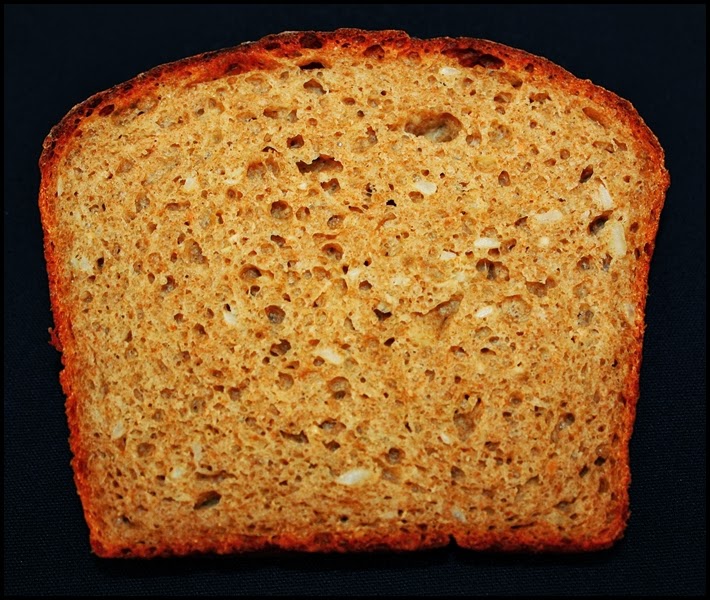
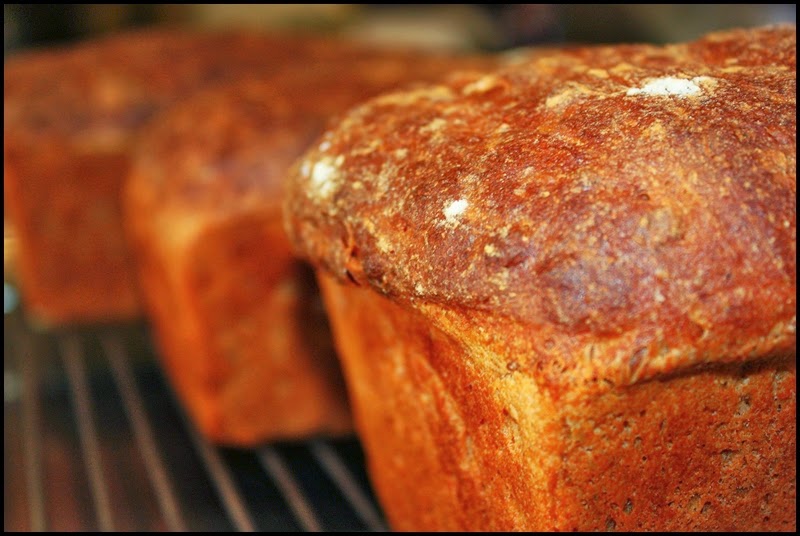
Yup, it’s true…rice-and-beans, but made into bread. I, as you likely know, eat a lot of bread. So I often try different combinations to make a healthier bread. Some say that rice-and-beans are a perfect food. Well, I’m not so sure about that, but they are really good. Anyhow, this recipe is not unlike my Ezekiel Bread recipe in that the beans and rice are first boiled and they–along with the cooking liquid–are used to make the bread. And of course this recipe is made using 100% whole wheat flour. Anyhow, this is really delicious and not entirely difficult. I hope you give it–or some of my other bread recipes–a try, you won’t be sorry.

Whole Wheat Brown Rice and White Bean Bread

Makes 3 loaves

12 cups water

½ cup white beans

½ cup brown rice

___________________

cooked beans and rice

¾ cup cooking water

2 cups whole wheat flour

1 tablespoon instant yeast

___________________

4 cups whole wheat flour

2 tablespoons vital wheat gluten

2 cups cooking liquid

___________________

1/4 cup honey

1/4 cup olive oil

2 teaspoons sea salt

1 tablespoon instant yeast

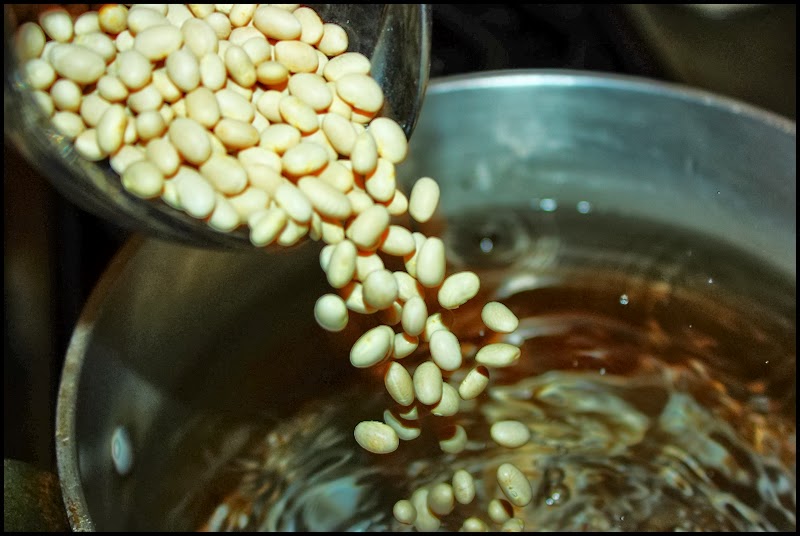
Boil the beans for about 1 hour or until nearly soft, then add the rice and simmer for another 45 minutes, or until the rice and beans are fully cooked and soft. And as the rice and beans cook add more water to the pot as necessary because the cooking liquid, which is full of nutrients, will become part of the recipe (keeping a lid on the pot will slow it’s evaporation). After the rice and beans are cooked allow them to cool in the liquid to room temperature, refrigerating if necessary. Once cooled, drain them, squeezing them with your hands or the back of a spoon, reserving the cooking liquid.

Place two bowls side-by-side; one will hold the pre-ferment, the other autolyse. In one bowl combine the cooked and drained rice and beans with ¾ cup of the cooking liquid, 2 cups whole wheat flour, and 1 tablespoon instant yeast. Stir it just until combined then cover it with plastic wrap. In the other bowl combine 4 cups whole wheat flour, 2 tablespoons vital wheat gluten, and 2 cups cooking liquid; stir it just until combined then cover it with plastic wrap (take care not to get yeast into this bowl). Allow the bowls to rest at room temperature for about an hour, during which time the preferment will begin it’s job multiplying yeast and fermenting flour, and the autolyse will soak liquid, swelling the gluten.

After an hour or so, combine the ingredients from both bowls into the bowl of an upright mixer fitted with a dough hook. Add the honey, olive oil, salt, and remaining tablespoon of yeast (add the yeast and salt on opposite sides of the bowl. Knead the dough on medium speed for about 8 minutes (if the dough is too soft, add an additional cup or two of flour as it kneads). Place the dough in a lightly oiled container, cover it loosely, and allow to ferment for 1-2 hours, or until doubled in bulk. Deflate the dough and allow it to ferment an additional 30 minutes.

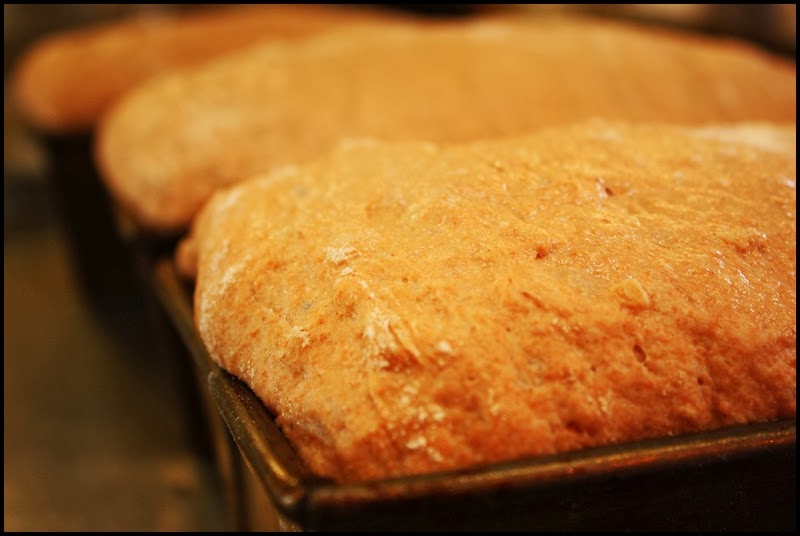
Preheat an oven to 425F. Turn the dough out onto a floured work surface and cut it into 3 pieces. Shape into loaves and place into lightly oiled pans. Loosely cover the loaves with plastic wrap and allow to ferment for 30-60 minutes, or until double in size and when gently touched with a fingertip an indentation remains.

Bake the breads for about 30-40 minutes, adding steam to the oven a few times (either with ice cubes or a spray bottle) and rotating the breads every ten minutes. The breads are done when they are dark brown and sound hollow when tapped upon. Remove the breads from their pans and allow them to cook on a wire rack for at least 10 minutes before slicing.

Rice-and-Beans…but bread

Yup, it’s true…rice-and-beans, but made into bread. I, as you likely know, eat a lot of bread. So I often try different combinations to make a healthier bread. Some say that rice-and-beans are a perfect food. Well, I’m not so sure about that, but they are really good. Anyhow, this recipe is not unlike my Ezekiel Bread recipe in that the beans and rice are first boiled and they–along with the cooking liquid–are used to make the bread. And of course this recipe is made using 100% whole wheat flour. Anyhow, this is really delicious and not entirely difficult. I hope you give it–or some of my other bread recipes–a try, you won’t be sorry.

Whole Wheat Brown Rice and White Bean Bread
Makes 3 loaves
12 cups water
½ cup white beans
½ cup brown rice
___________________
cooked beans and rice
¾ cup cooking water
2 cups whole wheat flour
1 tablespoon instant yeast
___________________

4 cups whole wheat flour

2 tablespoons vital wheat gluten
2 cups cooking liquid
___________________
1/4 cup honey
1/4 cup olive oil
2 teaspoons sea salt
1 tablespoon instant yeast
Boil the beans for about 1 hour or until nearly soft, then add the rice and simmer for another 45 minutes, or until the rice and beans are fully cooked and soft. And as the rice and beans cook add more water to the pot as necessary because the cooking liquid, which is full of nutrients, will become part of the recipe (keeping a lid on the pot will slow it’s evaporation). After the rice and beans are cooked allow them to cool in the liquid to room temperature, refrigerating if necessary. Once cooled, drain them, squeezing them with your hands or the back of a spoon, reserving the cooking liquid.
Place two bowls side-by-side; one will hold the pre-ferment, the other autolyse. In one bowl combine the cooked and drained rice and beans with ¾ cup of the cooking liquid, 2 cups whole wheat flour, and 1 tablespoon instant yeast. Stir it just until combined then cover it with plastic wrap. In the other bowl combine 4 cups whole wheat flour, 2 tablespoons vital wheat gluten, and 2 cups cooking liquid; stir it just until combined then cover it with plastic wrap (take care not to get yeast into this bowl). Allow the bowls to rest at room temperature for about an hour, during which time the preferment will begin it’s job multiplying yeast and fermenting flour, and the autolyse will soak liquid, swelling the gluten.
After an hour or so, combine the ingredients from both bowls into the bowl of an upright mixer fitted with a dough hook. Add the honey, olive oil, salt, and remaining tablespoon of yeast (add the yeast and salt on opposite sides of the bowl. Knead the dough on medium speed for about 8 minutes (if the dough is too soft, add an additional cup or two of flour as it kneads). Place the dough in a lightly oiled container, cover it loosely, and allow to ferment for 1-2 hours, or until doubled in bulk. Deflate the dough and allow it to ferment an additional 30 minutes.

Preheat an oven to 425F. Turn the dough out onto a floured work surface and cut it into 3 pieces. Shape into loaves and place into lightly oiled pans. Loosely cover the loaves with plastic wrap and allow to ferment for 30-60 minutes, or until double in size and when gently touched with a fingertip an indentation remains.

Bake the breads for about 30-40 minutes, adding steam to the oven a few times (either with ice cubes or a spray bottle) and rotating the breads every ten minutes. The breads are done when they are dark brown and sound hollow when tapped upon. Remove the breads from their pans and allow them to cook on a wire rack for at least 10 minutes before slicing.