>Friday Night Fish Fry

>Some readers of this blog may already know that I cook professionally; I’m the chef of a private women’s club. Normally, I don’t present photos or recipes from my work life on this blog because this is about my (sometimes inept) attempts of simplicity in my personal life; but like many people, my work and personal life often mesh.

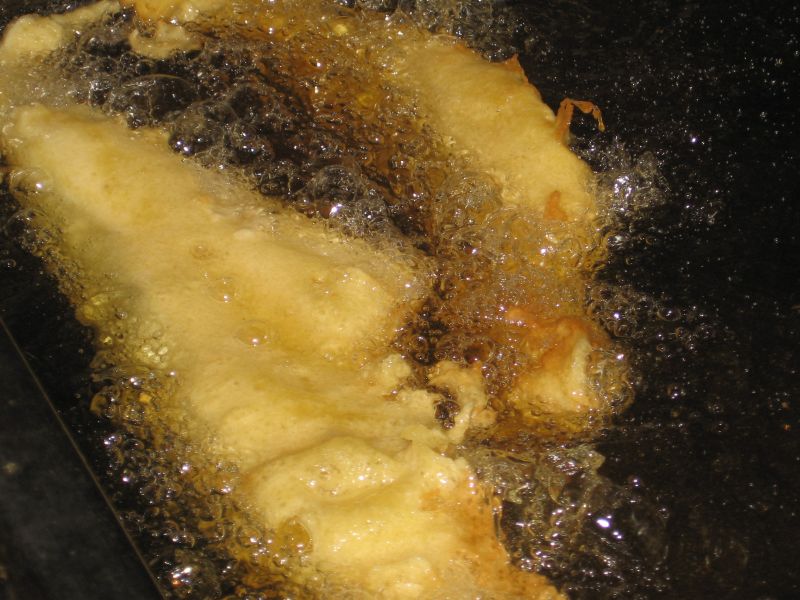
Anyhow, it is Lent and Friday night fish fry is a common tradition in the area in which I live. Last night we had a traditional Lenten fish fry where I fried about 90 pieces of fish, which is really not that many compared to some restaurants. Nonetheless, it’s such a simple meal, yet a truly delicious one. And when done correctly (and eaten in moderation, of course), deep-fried fish, I think, can be a healthy meal as well.

Hot, clean fat, and superbly fresh fish are really key. Take a look at these photos (click them on for a larger view); even now my mouth waters when I see them.

Click here for a basic recipe for beer battered haddock, and click here if you need instruction on deep-frying.

Evening Ride on the Mundo Yuba

I was surprised this evening at how warm it was…something like 40F (this is very warm for Buffalo in February). I had a few small shopping errands to run, all of which were well within biking range (I’m still trying to determine what “biking range” is…I suppose it depends on weather conditions in this region, among other things…you can also use this Two Mile Challenge as a guide).

Anyhow, one of the errands was to purchase a case of wine. There is a wine store almost at the end of my street, but tonight I chose this one, which I believe is about three miles from my house. It’s not that they have a better selection, or their prices are more reasonable…It simply was such nice evening that I wanted to extend the ride. I find it so interesting the looks I get when people see me loading things like a case of wine onto a bike, which the Yuba carried effortlessly…It rode no differently than if the rear rack were empty.

While I was at the register purchasing the wine a clerk asked if I’d like him to carry it out to my car. Not thanks, I told him, I’m on a bike. The workers, of course didn’t believe me…one actually watched as I strapped int down and rode away.

Being Ash Wednesday I am abstaining from meat today, which is not really that much of a sacrifice for me…I am by no means a vegetarian, but there are plenty of meals, and entire days for that matter, when I go meatless. Anyhow, I didn’t feel like cooking (yes, every once in a while that happens to me), so I stopped at the Falafel Bar for a quick and healthy meal. If you find yourself in the Buffalo area I highly recommend them.

Lastly, I leave you with this video. I’m not sure who posted it, but it’s pretty interesting. It’s a slide-show of cargo bikes of all sorts (including a few good shots of a Mundo or two). It’s only a couple minutes long and worth watching…though I’m not so sure about the background techno music.

>Evening Ride on the Mundo Yuba

>I was surprised this evening at how warm it was…something like 40F (this is very warm for Buffalo in February). I had a few small shopping errands to run, all of which were well within biking range (I’m still trying to determine what “biking range” is…I suppose it depends on weather conditions in this region, among other things…you can also use this Two Mile Challenge as a guide).

Anyhow, one of the errands was to purchase a case of wine. There is a wine store almost at the end of my street, but tonight I chose this one, which I believe is about three miles from my house. It’s not that they have a better selection, or their prices are more reasonable…It simply was such nice evening that I wanted to extend the ride. I find it so interesting the looks I get when people see me loading things like a case of wine onto a bike, which the Yuba carried effortlessly…It rode no differently than if the rear rack were empty.

While I was at the register purchasing the wine a clerk asked if I’d like him to carry it out to my car. Not thanks, I told him, I’m on a bike. The workers, of course didn’t believe me…one actually watched as I strapped int down and rode away.

Being Ash Wednesday I am abstaining from meat today, which is not really that much of a sacrifice for me…I am by no means a vegetarian, but there are plenty of meals, and entire days for that matter, when I go meatless. Anyhow, I didn’t feel like cooking (yes, every once in a while that happens to me), so I stopped at the Falafel Bar for a quick and healthy meal. If you find yourself in the Buffalo area I highly recommend them.

Lastly, I leave you with this video. I’m not sure who posted it, but it’s pretty interesting. It’s a slide-show of cargo bikes of all sorts (including a few good shots of a Mundo or two). It’s only a couple minutes long and worth watching…though I’m not so sure about the background techno music.

Lent


I came across this quote recently and thought I’d share it. It’s by Bernard Dupaigne, Professor at the Museum of Natural History in Paris (Muséum national d’Histoire naturelle), and author of The History of Bread; the quote is from his book.

“Bread is an object of unparalleled worship and decorum. It embodies the full cycle of life and seasons, from the death of the wheat kernel in the oven to the resurrection as a stalk, from its ordeal in the mill to its journey through the oven and its offering at the table. Bread is part of all major events in many lives, from birth, to betrothal and marriage, to death and resurrection.”

>Lent

>


I came across this quote recently and thought I’d share it. It’s by Bernard Dupaigne, Professor at the Museum of Natural History in Paris (Muséum national d’Histoire naturelle), and author of The History of Bread; the quote is from his book.

“Bread is an object of unparalleled worship and decorum. It embodies the full cycle of life and seasons, from the death of the wheat kernel in the oven to the resurrection as a stalk, from its ordeal in the mill to its journey through the oven and its offering at the table. Bread is part of all major events in many lives, from birth, to betrothal and marriage, to death and resurrection.”

Errands on the Mundo Yuba (and what I saw on the ride)

I had the day off today and had a bunch of errands to run. The temperature was hovering around 32F, and the sun was out (at least for the first portion of the day). I probably covered about 20 miles (I’m guessing, as I do not have an odometer), taking into consideration the convoluted and meandering route I took home. I have to say that I’d be lying if I didn’t admit that it was a bit of a huff riding that distance on the Yuba (at least on the way home, when the temperature dropped and the winds were blowing against me).

I’ve often used the word “tank” to describe this bike, because it is so solidly built and feels as if it can go through anything. But while I was riding it today it dawned on me that it has more of a “boat feel,” a big cushy boat just gliding along…it is truly a fun and comfortable bike to ride, even with head winds. And no matter what load your carrying (big or small) there is absolutely no sway to the frame or how it steers, granting everything is tied down snug.

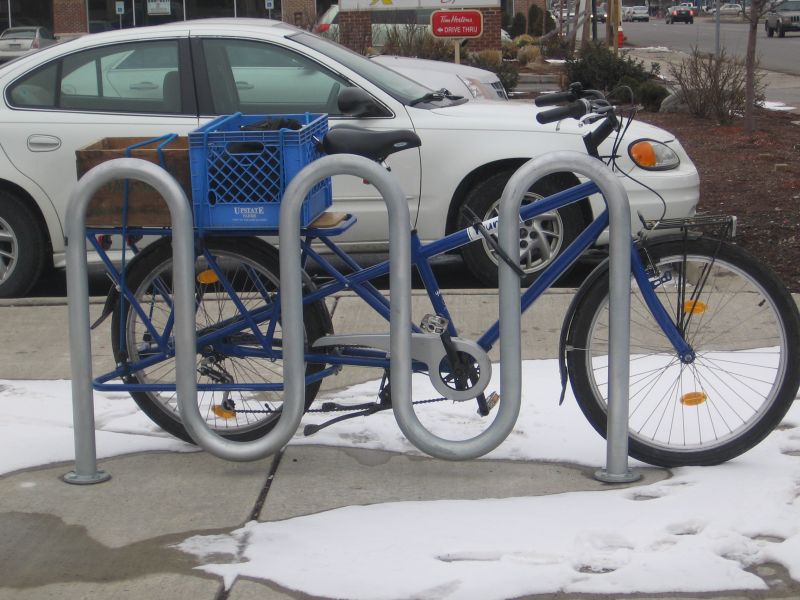
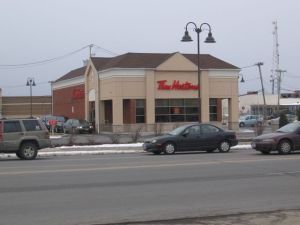
Anyhow, about halfway through my jaunt I was feeling depleted and saw this brand new and empty bike rack in front of a Tim Horton’s, so I went in for a caffeine and sugar fix. Coffee is one of my vices.

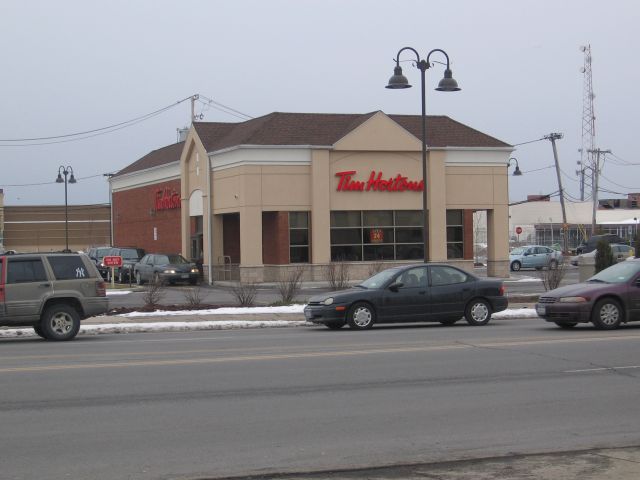
I was in North Buffalo at the time, and even though this is still within the city limits it really has a suburban feel to it in places, this being one of them. I noticed straight away how not only were there no bikes locked up, but there was a trail of cars leading around the building cued to the drive through window. After parking my bike I went inside and I was literally the only customer inside the shop, the place was bustling but from the outside-in. I’m sure it would have been much faster for many of the people to park their cars and walk into the store; but that’s just it, I guess…they’d have to leave their cars. Here’s a photo with cars leading around the building: car is king. (But for how long, that’s the real question?)
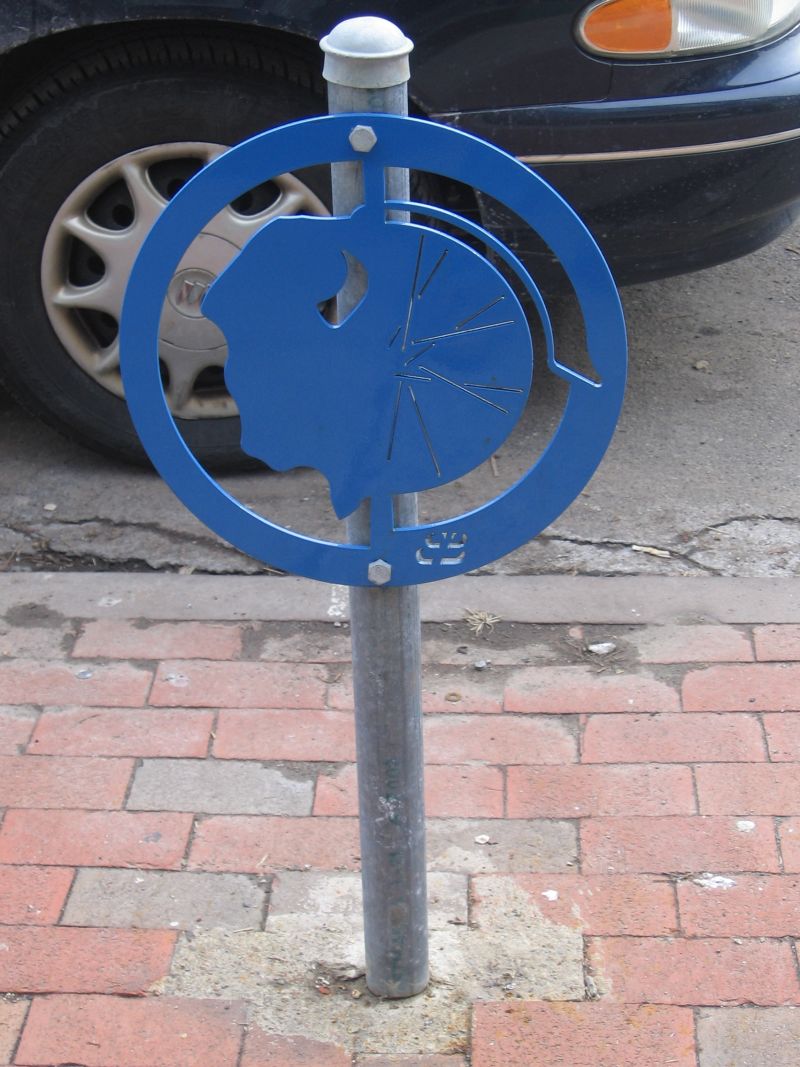
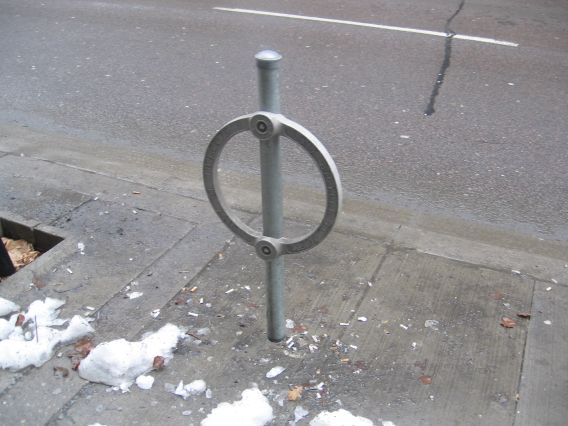
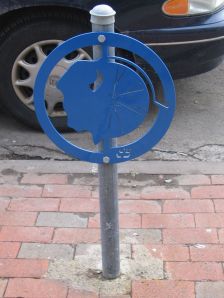
Here’s a photo of one of the bike racks that are replacing parking meters around the city. I had mentioned them in an earlier post comparing them to the bike racks in Toronto. If you’d like to read that post, click here. I am really impressed by them; I think it’s one of the better (and simpler) things our city is doing.

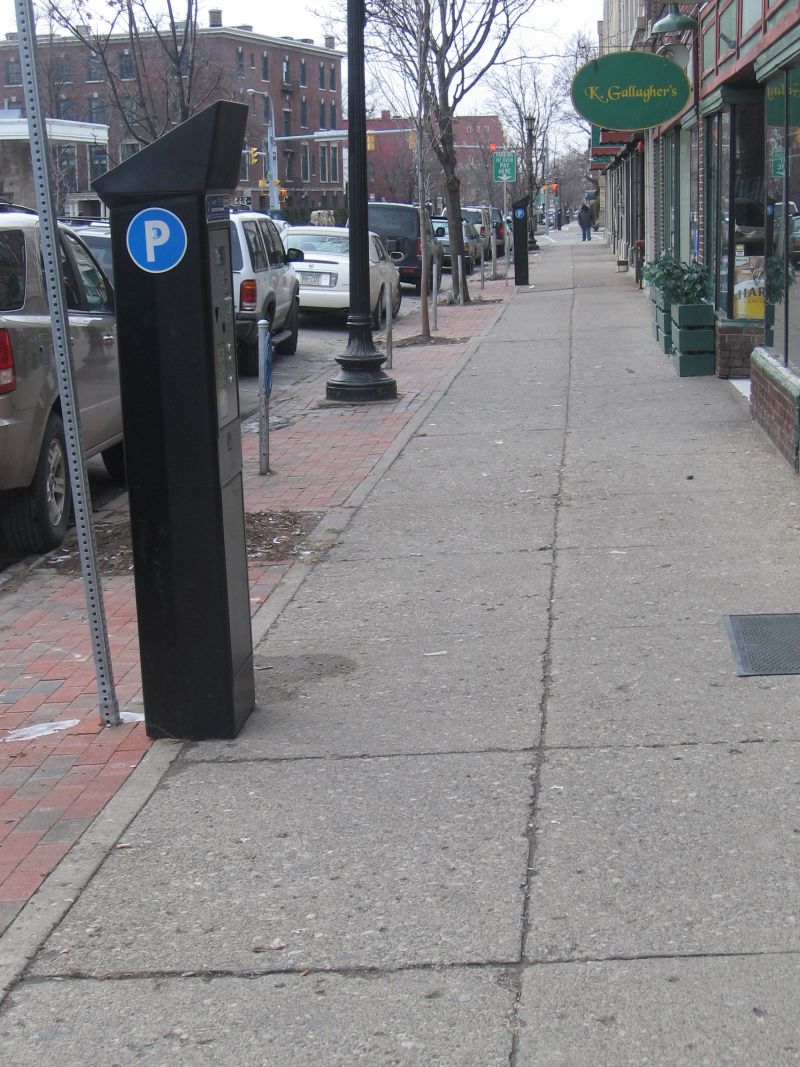
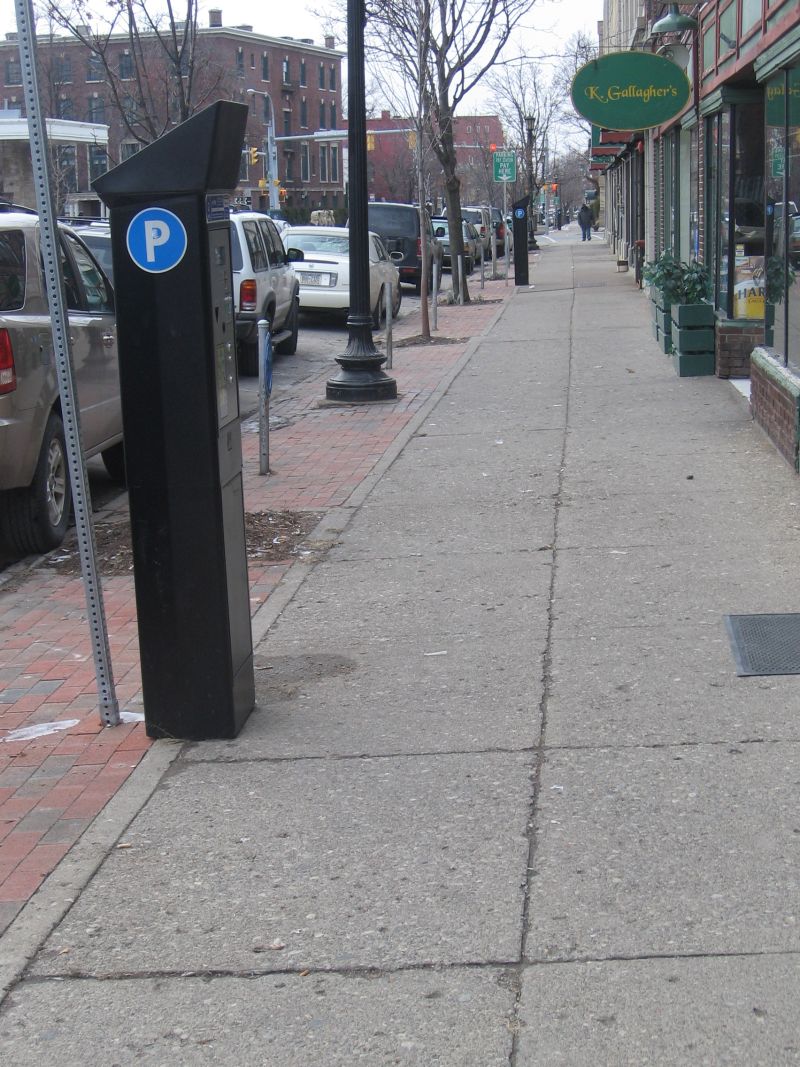
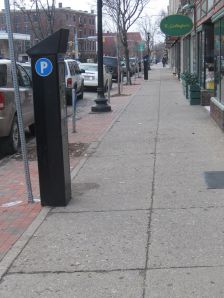
Now here’s what worries me a little. This is a photo of Allen Street. One of the new ticket stations which are replacing the metres is in the foreground, but that’s not what worries me. What worries me is the lack of completed bike racks on all the other headless meters. There’s a completed one next to the ticket station, and than a row of stumps; it’s like that throughout the city…just a smattering of completed bike racks and a whole lot of stumps.
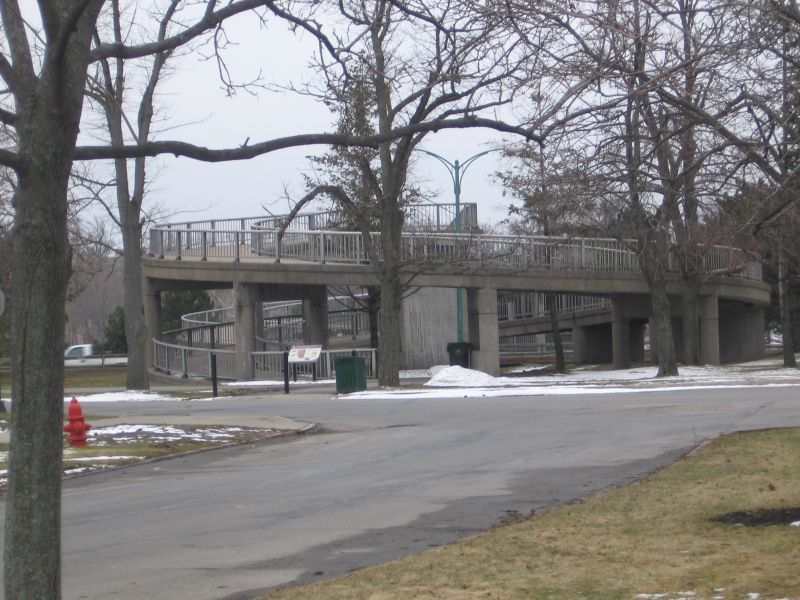
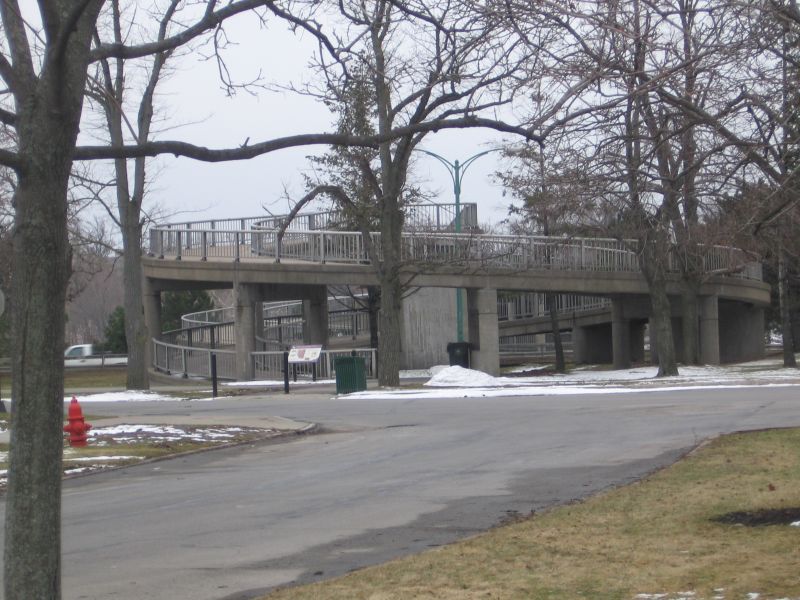
One of the (many) things that I have always enjoyed about riding a bike is that you get to see so much. Take today, for example. I could have completed all my errands in about an hour or so, but instead I took a meandering bike ride (that also included a stop at the health club, lunch, coffee, and and shopping for some staple items). Riding the bike took a better portion of the afternoon, but it was so enjoyable…and I burned calories not gasoline. And I probably would not have gone out of my way to stop and see the demolition of a local landmark (more on that in a minute). What is truly for sure, is that if I were in a car I most certainly not have took a short-cut (a long-cut, actually, because it was out of my way) through Delaware Park. This park is an oasis in the city no matter what season. It was designed by Frederick Law Olmsted, who also designed, among others, Central Park, in NYC. Part of the fun to ride a bike through Delaware Park is to go across the curly pedestrian bridge that goes over the highway next to it; the bridge has a corkscrew ramp on both ends.

Here’s a photo of Hoyt Lake from the bridge. By looking at this photo you’d never know that you were in the middle of a city…beautiful.

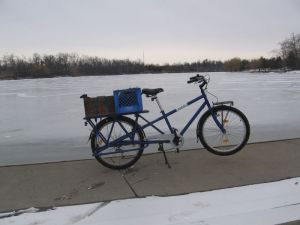
Here’s a photo of the Yuba at water’s edge.
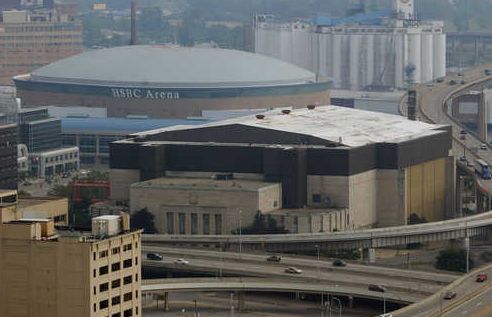
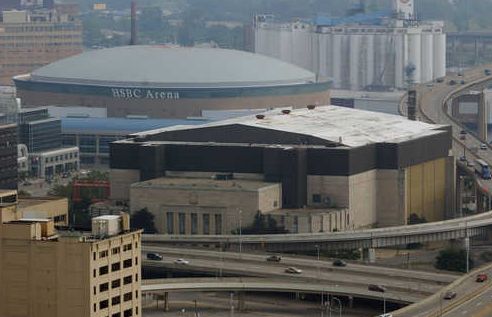
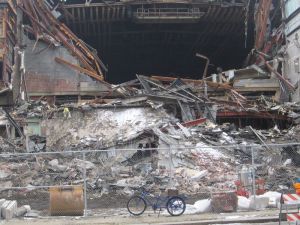
Now back to the local landmark that I mentioned earlier. I’m of course referring to Buffalo Memorial Auditorium. It was built in 1939 and has seen it’s day. It has been replaced by the HSBC Arena. Almost like an omen, the newer, more modern arena hulks just behind the older one (and almost eerily hulking behind the arena is a grain elevator, reminding us of Buffalo’s history on the Erie Canal.
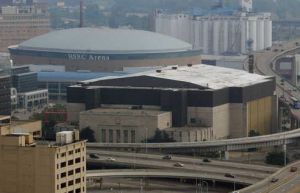
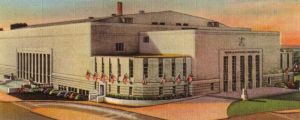
It’s good that it is being demolished to make way for progress (hopefully to bring some new life into that section of the city), but it’s also bitter sweet for me (and for many, from what I’ve heard). There are, of course, a lot of memories associated with the building. At some point, my late mother, father, and grandmother all worked at the auditorium. Not only did the Buffalo Sabers play there for many years, but there have been numerous concerts. It was, in fact, where I saw my first concert (the Kiss Alive tour of 1975…hey, I was 14!). Anyhow, here’s a facsimile of a postcard of the original Aud (If you are a Buffalonian, that’s what it will forever be called: The Aud.)

Here’s a picture of the front doors from the not-so-distant-past (this is obvious because it’s already boarded up). I, along with countless other drunken or high youths passed that threshold on numerous occasions.
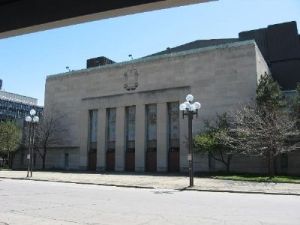
Here is what the front looks like now (note the Mundo Yuba in the bottom of the photo). It looks like a war zone. Alas, bittersweet…bittersweet indeed.
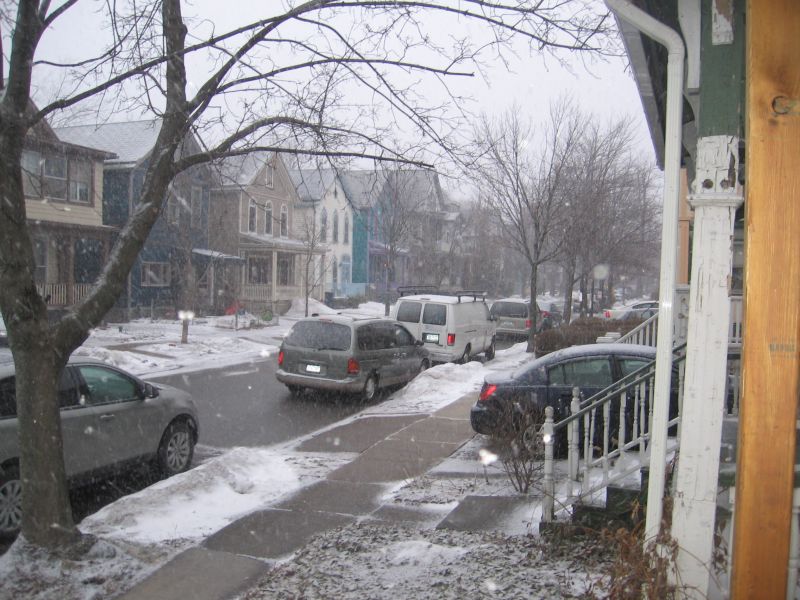
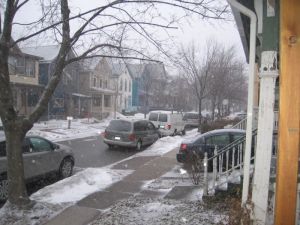
My final note in this post is on the weather, specifically Buffalo weather. When I left the house this afternoon around 12:30pm it was bright and sunny, albeit a little chilly. Shortly thereafter it became somewhat overcast, and it stayed like that for most of the rest of the afternoon. Then, rather suddenly, I noticed it becoming darker. Then a few flakes appeared. And then it was as if angels cut open a cloud full of snowflakes…almost instantly it was snowing to where the flakes blurred my vision (I really do need to get a set of ski goggles). We only got an inch or two of snow before it stopped (which is not even worth mentioning in Buffalo), but it happened so quickly that it took me by surprise…lake effect snow, I suppose. In a car I may have found this annoying, but on a bike, being out in the elements–being part of the elements–I found it truly beautiful.

In Buffalo there’s a saying about the weather: If you don’t like the weather, wait a minute. And today this could not have been more accurate.
>Errands on the Mundo Yuba (and what I saw on the ride)

>I had the day off today and had a bunch of errands to run. The temperature was hovering around 32F, and the sun was out (at least for the first portion of the day). I probably covered about 20 miles (I’m guessing, as I do not have an odometer), taking into consideration the convoluted and meandering route I took home. I have to say that I’d be lying if I didn’t admit that it was a bit of a huff riding that distance on the Yuba (at least on the way home, when the temperature dropped and the winds were blowing against me).

I’ve often used the word “tank” to describe this bike, because it is so solidly built and feels as if it can go through anything. But while I was riding it today it dawned on me that it has more of a “boat feel,” a big cushy boat just gliding along…it is truly a fun and comfortable bike to ride, even with head winds. And no matter what load your carrying (big or small) there is absolutely no sway to the frame or how it steers, granting everything is tied down snug.

Anyhow, about halfway through my jaunt I was feeling depleted and saw this brand new and empty bike rack in front of a Tim Horton’s, so I went in for a caffeine and sugar fix. Coffee is one of my vices.

I was in North Buffalo at the time, and even though this is still within the city limits it really has a suburban feel to it in places, this being one of them. I noticed straight away how not only were there no bikes locked up, but there was a trail of cars leading around the building cued to the drive through window. After parking my bike I went inside and I was literally the only customer inside the shop, the place was bustling but from the outside-in. I’m sure it would have been much faster for many of the people to park their cars and walk into the store; but that’s just it, I guess…they’d have to leave their cars. Here’s a photo with cars leading around the building: car is king. (But for how long, that’s the real question?)

Here’s a photo of one of the bike racks that are replacing parking meters around the city. I had mentioned them in an earlier post comparing them to the bike racks in Toronto. If you’d like to read that post, click here. I am really impressed by them; I think it’s one of the better (and simpler) things our city is doing.


Now here’s what worries me a little. This is a photo of Allen Street. One of the new ticket stations which are replacing the metres is in the foreground, but that’s not what worries me. What worries me is the lack of completed bike racks on all the other headless meters. There’s a completed one next to the ticket station, and than a row of stumps; it’s like that throughout the city…just a smattering of completed bike racks and a whole lot of stumps.

One of the (many) things that I have always enjoyed about riding a bike is that you get to see so much. Take today, for example. I could have completed all my errands in about an hour or so, but instead I took a meandering bike ride (that also included a stop at the health club, lunch, coffee, and and shopping for some staple items). Riding the bike took a better portion of the afternoon, but it was so enjoyable…and I burned calories not gasoline. And I probably would not have gone out of my way to stop and see the demolition of a local landmark (more on that in a minute). What is truly for sure, is that if I were in a car I most certainly not have took a short-cut (a long-cut, actually, because it was out of my way) through Delaware Park. This park is an oasis in the city no matter what season. It was designed by Frederick Law Olmsted, who also designed, among others, Central Park, in NYC. Part of the fun to ride a bike through Delaware Park is to go across the curly pedestrian bridge that goes over the highway next to it; the bridge has a corkscrew ramp on both ends.

Here’s a photo of Hoyt Lake from the bridge. By looking at this photo you’d never know that you were in the middle of a city…beautiful.

Here’s a photo of the Yuba at water’s edge.

Now back to the local landmark that I mentioned earlier. I’m of course referring to Buffalo Memorial Auditorium. It was built in 1939 and has seen it’s day. It has been replaced by the HSBC Arena. Almost like an omen, the newer, more modern arena hulks just behind the older one (and almost eerily hulking behind the arena is a grain elevator, reminding us of Buffalo’s history on the Erie Canal.

It’s good that it is being demolished to make way for progress (hopefully to bring some new life into that section of the city), but it’s also bitter sweet for me (and for many, from what I’ve heard). There are, of course, a lot of memories associated with the building. At some point, my late mother, father, and grandmother all worked at the auditorium. Not only did the Buffalo Sabers play there for many years, but there have been numerous concerts. It was, in fact, where I saw my first concert (the Kiss Alive tour of 1975…hey, I was 14!). Anyhow, here’s a facsimile of a postcard of the original Aud (If you are a Buffalonian, that’s what it will forever be called: The Aud.)


Here’s a picture of the front doors from the not-so-distant-past (this is obvious because it’s already boarded up). I, along with countless other drunken or high youths passed that threshold on numerous occasions.

Here is what the front looks like now (note the Mundo Yuba in the bottom of the photo). It looks like a war zone. Alas, bittersweet…bittersweet indeed.

My final note in this post is on the weather, specifically Buffalo weather. When I left the house this afternoon around 12:30pm it was bright and sunny, albeit a little chilly. Shortly thereafter it became somewhat overcast, and it stayed like that for most of the rest of the afternoon. Then, rather suddenly, I noticed it becoming darker. Then a few flakes appeared. And then it was as if angels cut open a cloud full of snowflakes…almost instantly it was snowing to where the flakes blurred my vision (I really do need to get a set of ski goggles). We only got an inch or two of snow before it stopped (which is not even worth mentioning in Buffalo), but it happened so quickly that it took me by surprise…lake effect snow, I suppose. In a car I may have found this annoying, but on a bike, being out in the elements–being part of the elements–I found it truly beautiful.

In Buffalo there’s a saying about the weather: If you don’t like the weather, wait a minute. And today this could not have been more accurate.

Tuesday’s Food


Mardi Gras, Shrove Tuesday, Fat Tuesday, Pancake Day, Carnival…whatever you call it, it’s this coming Tuesday. It of course refers to the day before Lent. During this time Christians are expected to use up whatever rich or fattening foods are in the house (the words “food” and “house,” I think, can be used literally or metaphorically…or both) in order to live lean and introspective lives for the next forty days…to look and search within. I hope I’m up to it.

Click here to see an article I wrote about some of the traditional baked goods for Shrove/Fat Tuesday in Artvoice.

Fastnacht Kuecheles (Beignets)

Yield: about 3 dozen

1 cup water (room temperature)
1 cup milk (room temperature)
1/2 cup granulated sugar
4 tablespoons yeast
6-7 cups all-purpose flour, divided
3 large eggs
1/2 cup unsalted butter, melted
1 teaspoon salt
powdered sugar

Combine the water, milk, sugar, yeast, and two cups of flour in a large bowl. Allow to rest for 1 hour, or until the yeast is fully active. Transfer to an upright mixing bowl with a dough hook. Add the eggs, melted butter, salt, and 4 cups of flour. Run the mixer on low for 1 minute (if the dough seems too sticky add the remaining cup flour) then turn to medium and knead for 5 minutes. Transfer to a lightly oiled bowl, cover and let rest at room temperature for about an hour, or until double in size. Transfer the dough to a floured work surface and cut into three pieces. Shape into balls, cover, and let rest 20 minutes. Roll into large circles about 1/4 inch thick, then cut the dough into diamonds 2-4 inches wide. Cover the diamonds with a cloth and let rest 10 minutes. Preheat a couple inches of vegetable oil to 350F in a heavy skillet. Carefully fry the fastnachts in batches, cooking them for a couple minutes on each side until they are puffed and golden-brown; drain on absorbent paper. Allow them to cool for a few minutes, then toss a few at a time in a paper bag with confectionery sugar.

King Cake

(Adapted from Cajun Chef Ryan Boudreaux’s website)

1/2 warm water
2 packages yeast
1/2 cup warm milk
5 egg yolks
1 stick butter, melted
1/2 cup sugar
4 cups all purpose flour
1 teaspoon nutmeg
2 teaspoons salt
1 teaspoon lemon zest
1 tablespoon cinnamon
1 egg and 1 tablespoon milk beaten

Combine the water and yeast in a small bowl, set aside for 10 minutes to allow the yeast to become active. Transfer the yeast mixture to the bowl of an upright mixer that is fitted with a dough hook. Add the milk, egg yolks, melted butter, and sugar; stir to combine the liquids and dissolve the sugar. Add the flour, nutmeg, salt, and lemon zest. Run the mixer on low for 1 minute (if the dough seems too sticky add the remaining cup flour) then turn to medium and knead for 5 minutes. Transfer to a lightly oiled bowl, cover and let rest at room temperature for about an hour, or until double in size. Remove the dough from the bowl, flattening it on a floured work surface. Sprinkle the dough with the cinnamon, then roll it into a tube shape (if you are going to bake a little plastic baby in the dough this is when to add it). Twist the dough for a curled spiral, then curl it into a circle, pinching the ends together. Place the dough on a lightly buttered baking sheet. Cover the dough with a towel and allow it to rise for about 45 minutes. Preheat an oven to 350F. Brush the dough with the beaten milk-egg mixture, and bake it for 20-30 minutes. Remove the dough from the oven and transfer it to a cooling rack; all it to cool for 30 minutes. Decorate the cake with colored icings and sugars, using traditional Mardi Gras colors: purple, green, and gold.

Blueberry Sour Cream Pancakes

Yield: about 15 pancakes

1 cup all-purpose flour
1 cup milk
1/2 cup sour cream
1 large egg
2 tablespoons granulated sugar
2 tablespoons butter, melted
1 teaspoon baking powder
1 teaspoon baking soda
1/4 teaspoon salt
1 cup blueberries
butter for cooking

Combine all ingredients except blueberries in large bowl. Mix with a whisk until well mixed. Gently stir in blueberries with a spoon. Heat a skillet with a small amount of butter. When the butter begins to bubble add the pancake batter in portions (about 1/4 cup for each pancake). Cook the pancakes until bubbles appear, then turn them over and cook until light brown. Serve warm with butter and real maple syrup.

>Tuesday’s Food

>
Mardi Gras, Shrove Tuesday, Fat Tuesday, Pancake Day, Carnival…whatever you call it, it’s this coming Tuesday. It of course refers to the day before Lent. During this time Christians are expected to use up whatever rich or fattening foods are in the house (the words “food” and “house,” I think, can be used literally or metaphorically…or both) in order to live lean and introspective lives for the next forty days…to look and search within. I hope I’m up to it.

Click here to see an article I wrote about some of the traditional baked goods for Shrove/Fat Tuesday in Artvoice.

Fastnacht Kuecheles (Beignets)

Yield: about 3 dozen

1 cup water (room temperature)
1 cup milk (room temperature)
1/2 cup granulated sugar
4 tablespoons yeast
6-7 cups all-purpose flour, divided
3 large eggs
1/2 cup unsalted butter, melted
1 teaspoon salt
powdered sugar

Combine the water, milk, sugar, yeast, and two cups of flour in a large bowl. Allow to rest for 1 hour, or until the yeast is fully active. Transfer to an upright mixing bowl with a dough hook. Add the eggs, melted butter, salt, and 4 cups of flour. Run the mixer on low for 1 minute (if the dough seems too sticky add the remaining cup flour) then turn to medium and knead for 5 minutes. Transfer to a lightly oiled bowl, cover and let rest at room temperature for about an hour, or until double in size. Transfer the dough to a floured work surface and cut into three pieces. Shape into balls, cover, and let rest 20 minutes. Roll into large circles about 1/4 inch thick, then cut the dough into diamonds 2-4 inches wide. Cover the diamonds with a cloth and let rest 10 minutes. Preheat a couple inches of vegetable oil to 350F in a heavy skillet. Carefully fry the fastnachts in batches, cooking them for a couple minutes on each side until they are puffed and golden-brown; drain on absorbent paper. Allow them to cool for a few minutes, then toss a few at a time in a paper bag with confectionery sugar.

King Cake

(Adapted from Cajun Chef Ryan Boudreaux’s website)

1/2 warm water
2 packages yeast
1/2 cup warm milk
5 egg yolks
1 stick butter, melted
1/2 cup sugar
4 cups all purpose flour
1 teaspoon nutmeg
2 teaspoons salt
1 teaspoon lemon zest
1 tablespoon cinnamon
1 egg and 1 tablespoon milk beaten

Combine the water and yeast in a small bowl, set aside for 10 minutes to allow the yeast to become active. Transfer the yeast mixture to the bowl of an upright mixer that is fitted with a dough hook. Add the milk, egg yolks, melted butter, and sugar; stir to combine the liquids and dissolve the sugar. Add the flour, nutmeg, salt, and lemon zest. Run the mixer on low for 1 minute (if the dough seems too sticky add the remaining cup flour) then turn to medium and knead for 5 minutes. Transfer to a lightly oiled bowl, cover and let rest at room temperature for about an hour, or until double in size. Remove the dough from the bowl, flattening it on a floured work surface. Sprinkle the dough with the cinnamon, then roll it into a tube shape (if you are going to bake a little plastic baby in the dough this is when to add it). Twist the dough for a curled spiral, then curl it into a circle, pinching the ends together. Place the dough on a lightly buttered baking sheet. Cover the dough with a towel and allow it to rise for about 45 minutes. Preheat an oven to 350F. Brush the dough with the beaten milk-egg mixture, and bake it for 20-30 minutes. Remove the dough from the oven and transfer it to a cooling rack; all it to cool for 30 minutes. Decorate the cake with colored icings and sugars, using traditional Mardi Gras colors: purple, green, and gold.

Blueberry Sour Cream Pancakes

Yield: about 15 pancakes

1 cup all-purpose flour
1 cup milk
1/2 cup sour cream
1 large egg
2 tablespoons granulated sugar
2 tablespoons butter, melted
1 teaspoon baking powder
1 teaspoon baking soda
1/4 teaspoon salt
1 cup blueberries
butter for cooking

Combine all ingredients except blueberries in large bowl. Mix with a whisk until well mixed. Gently stir in blueberries with a spoon. Heat a skillet with a small amount of butter. When the butter begins to bubble add the pancake batter in portions (about 1/4 cup for each pancake). Cook the pancakes until bubbles appear, then turn them over and cook until light brown. Serve warm with butter and real maple syrup.

Chicken and Rice (Arroz con Pollo)

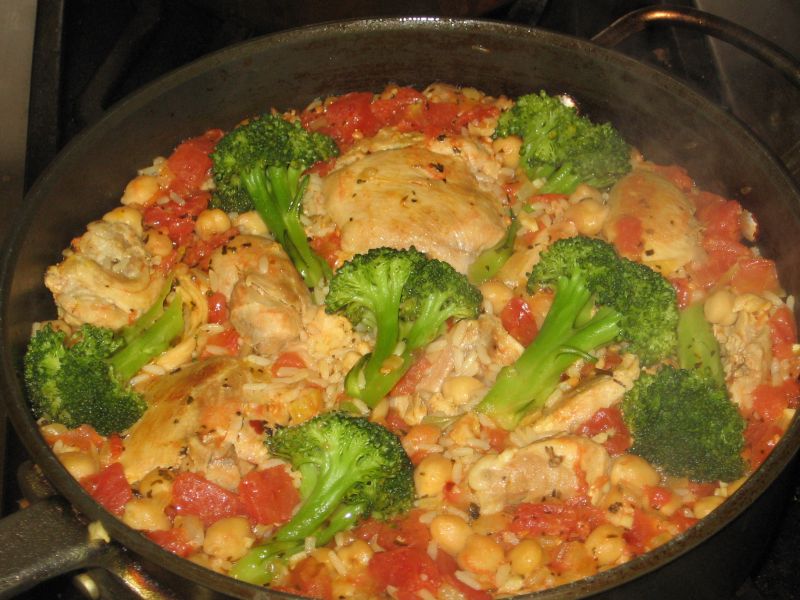
As is often the case, I don’t plan ahead for dinner. What’s odd is that I cook for a living…I plan meals ahead of time all day long…plan, co-ordinate, and time. Maybe that’s why at home part of my brain shuts off…done planning, I just want to cook and sip wine while I listen to NPR. Anyhow, usually the way I cook at home is to scan the fridge and freezer and make something out of it. Tonight it was chicken and rice. Almost every country has some version or another of this dish, tonight I gave it a Spanish accent.

Most chicken-and-rice dishes are simple one-pot meals…it’s (almost) as easy as making rice pilaf only with more stuff in it.

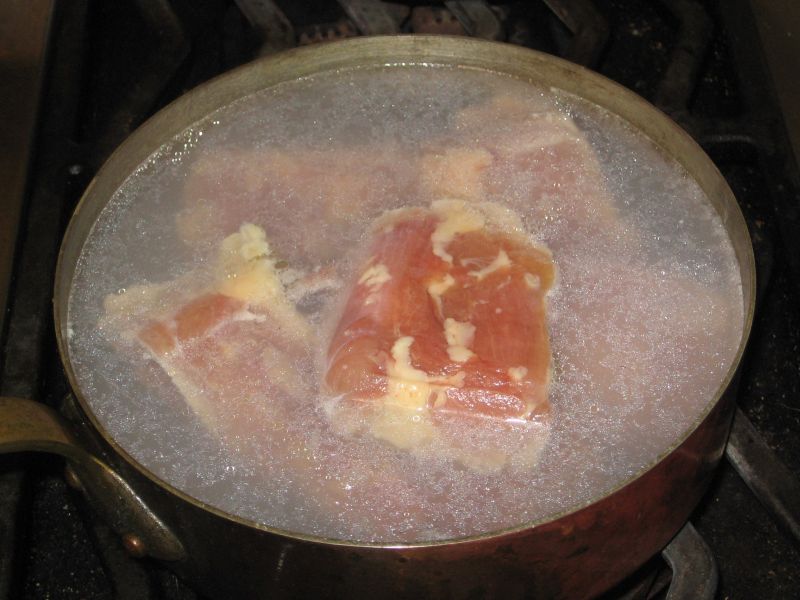
The chicken that I used was (of course) frozen boneless thighs. I don’t really care to thaw meat in the microwave (yes, I actually own one…but rarely use it), so I boiled it to thaw it. Boiling the chicken (poaching, really) accomplishes two things. First, it of course thaws and cooks the chicken relatively quickly. And second, the byproduct is a light broth, which can be used to cook the rice.

Anyhow this is how I did it (click on any photo for a larger view). Simmer the chicken in lightly salted water for about 1/2 hour, skimming any foam that rise to the surface.


Remove the chicken and set it aside, then strain the broth into a clean pot and keep it at a low simmer on a back burner.

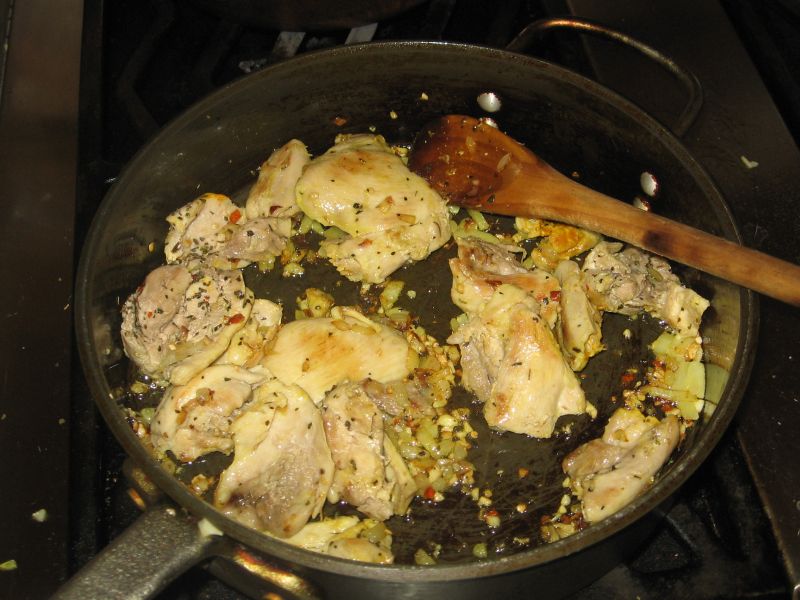
When the chicken is cool enough to handle, break it into smaller pieces. Heat olive oil in a skillet or medium pot. Add the chicken, a small diced onion, and a couple cloves of minced garlic ( a diced green pepper would have been great in this dish…but alas, not a pepper in the house). Cook the chicken over medium heat until it starts to brown (taking care not to burn the onion and especially the garlic). Add whatever seasoning you are using. I used pinch of crushed pepper, saffron, basil, and oregano; saute them for another minute or so (this will bring out their flavors).

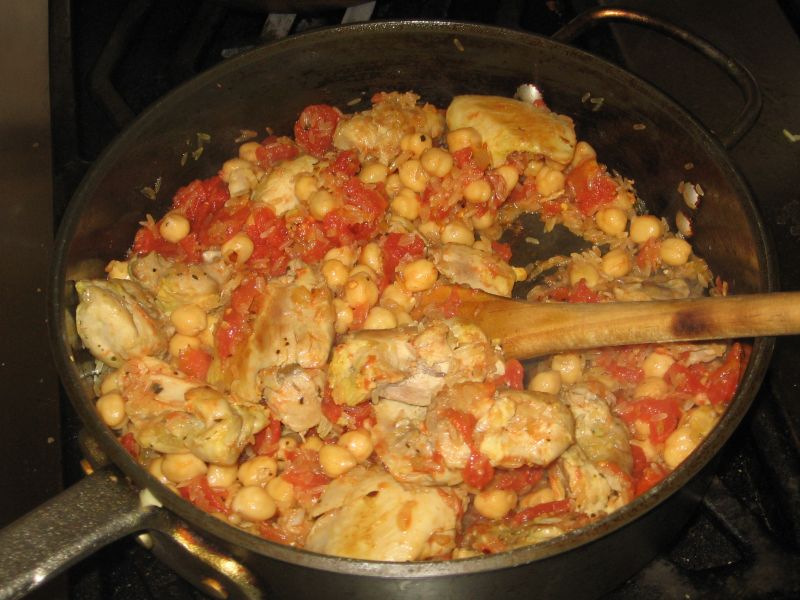
At this point you can add any number of other ingredients, or just rice and broth to finish the dish. I added diced tomato, canned chickpeas that were drained and rinsed, and also (of course) some rice. There is great leeway in the amounts of most of the ingredients, except the rice and broth. For these two ingredients it has to be a ratio of 1-part rice to 2-parts broth (assuming you are using white, long grain rice…because the amount of liquid various rice absorbs varies greatly). Tonight I used 1 cup of rice. Stir all these ingredients together in “marry” their flavors and coat the rice with oil.

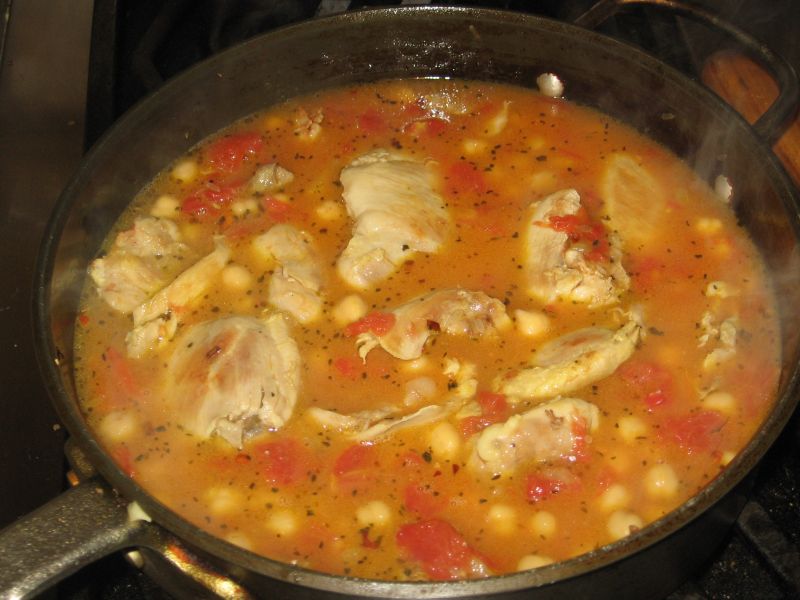
Next, add two cups of simmering broth, give it a quick stir (the last time you’ll stir it until it’s done, lest you end up with sticky rice), make sure the chicken is submerged. Lower the flame to achieve a very low simmer. Cover the pot and let it cook for 15 minutes.

Long-grain white rice generally takes about 18-20 minutes to cook. I wanted to have a little broccoli with my meal, and love these one-pot(ers), I added it to the pot when the rice was almost done. If you do not want to cook a vegetable in the dish, allow it to simmer for 18 minutes, not 15, before lifting the lid.

Anyhow, after 15 minutes I added a few broccoli florets, allowing them to just sort of float on top of the rice and steam. Cover the pan and let it simmer for another 4 minutes, then shut off the flame and allow the covered pan to sit for about 5 minutes before serving.

>Chicken and Rice (Arroz con Pollo)

>As is often the case, I don’t plan ahead for dinner. What’s odd is that I cook for a living…I plan meals ahead of time all day long…plan, co-ordinate, and time. Maybe that’s why at home part of my brain shuts off…done planning, I just want to cook and sip wine while I listen to NPR. Anyhow, usually the way I cook at home is to scan the fridge and freezer and make something out of it. Tonight it was chicken and rice. Almost every country has some version or another of this dish, tonight I gave it a Spanish accent.

Most chicken-and-rice dishes are simple one-pot meals…it’s (almost) as easy as making rice pilaf only with more stuff in it.

The chicken that I used was (of course) frozen boneless thighs. I don’t really care to thaw meat in the microwave (yes, I actually own one…but rarely use it), so I boiled it to thaw it. Boiling the chicken (poaching, really) accomplishes two things. First, it of course thaws and cooks the chicken relatively quickly. And second, the byproduct is a light broth, which can be used to cook the rice.

Anyhow this is how I did it (click on any photo for a larger view). Simmer the chicken in lightly salted water for about 1/2 hour, skimming any foam that rise to the surface.


Remove the chicken and set it aside, then strain the broth into a clean pot and keep it at a low simmer on a back burner.

When the chicken is cool enough to handle, break it into smaller pieces. Heat olive oil in a skillet or medium pot. Add the chicken, a small diced onion, and a couple cloves of minced garlic ( a diced green pepper would have been great in this dish…but alas, not a pepper in the house). Cook the chicken over medium heat until it starts to brown (taking care not to burn the onion and especially the garlic). Add whatever seasoning you are using. I used pinch of crushed pepper, saffron, basil, and oregano; saute them for another minute or so (this will bring out their flavors).

At this point you can add any number of other ingredients, or just rice and broth to finish the dish. I added diced tomato, canned chickpeas that were drained and rinsed, and also (of course) some rice. There is great leeway in the amounts of most of the ingredients, except the rice and broth. For these two ingredients it has to be a ratio of 1-part rice to 2-parts broth (assuming you are using white, long grain rice…because the amount of liquid various rice absorbs varies greatly). Tonight I used 1 cup of rice. Stir all these ingredients together in “marry” their flavors and coat the rice with oil.

Next, add two cups of simmering broth, give it a quick stir (the last time you’ll stir it until it’s done, lest you end up with sticky rice), make sure the chicken is submerged. Lower the flame to achieve a very low simmer. Cover the pot and let it cook for 15 minutes.

Long-grain white rice generally takes about 18-20 minutes to cook. I wanted to have a little broccoli with my meal, and love these one-pot(ers), I added it to the pot when the rice was almost done. If you do not want to cook a vegetable in the dish, allow it to simmer for 18 minutes, not 15, before lifting the lid.

Anyhow, after 15 minutes I added a few broccoli florets, allowing them to just sort of float on top of the rice and steam. Cover the pan and let it simmer for another 4 minutes, then shut off the flame and allow the covered pan to sit for about 5 minutes before serving.

Chinese Trikes

I’ve been fascinated with hauling stuff by bike my entire life, and I’m always amazed (and inspired) to see what can be–and is–hauled by bike (or trike).

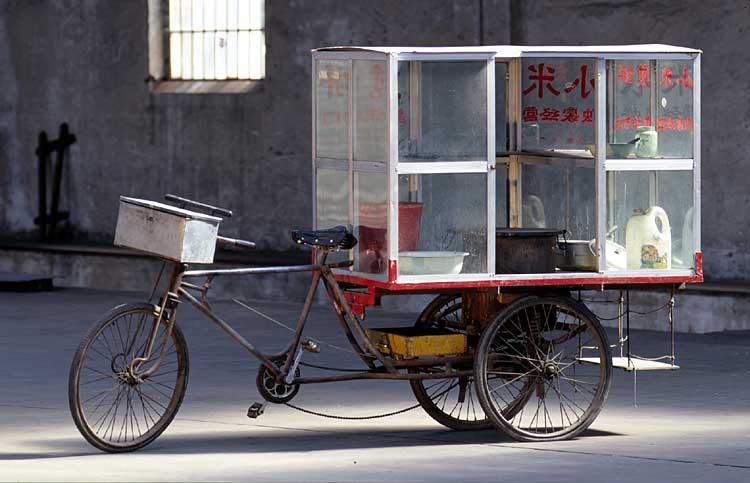
My cousin, Joe, sent me a link to the Tinguely Museum, in Basil, Switzerland. They currently have an exhibit on the (vanishing) Chinese trike. Here’s a couple photos from their website.

(Click on any of the following photos for a much larger image).

Tricycle, Beijing 2008 © Foto: Nils Fisch, Basel

Tricycle mit Tischen, Tricycle avec tables / Tricycle with tables, Beijing 2008

© Foto: Nils Fisch, Basel

They truly are works of art; it’s a shame they’re a vanishing mode of transport and work…seems to me that our world would be a much better place if more people used their own human power to propel themselves…but here I go again, hopping up on my little soapbox again.

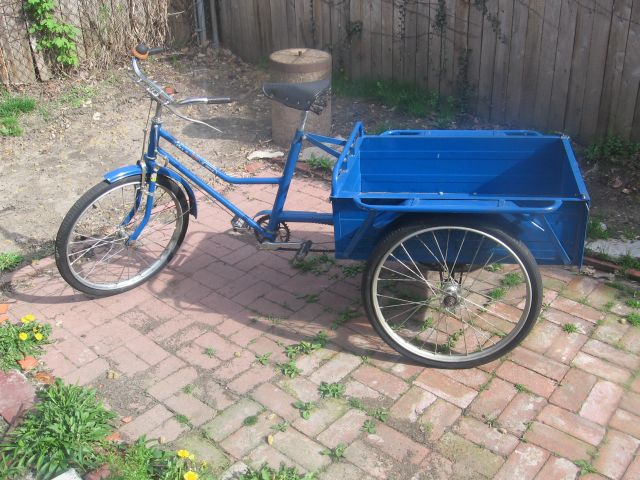
At any rate, last spring I saw this trike on craigslist. It was about 20 miles away, I called the guy, he still had it, so I drove out and purchased it straight away. It’s a much smaller version than the one’s pictured, too small for me, in fact. But it’s still fun to ride, it can carry a great deal of weight…and the comments I get from people are worth it alone. If you’d like to read my original post, and see more photos of it click here.

I often scan the Internet for all types of human-powered vehicles, trikes being one of them, of course. Anyhow, here’s some photos of them in use.

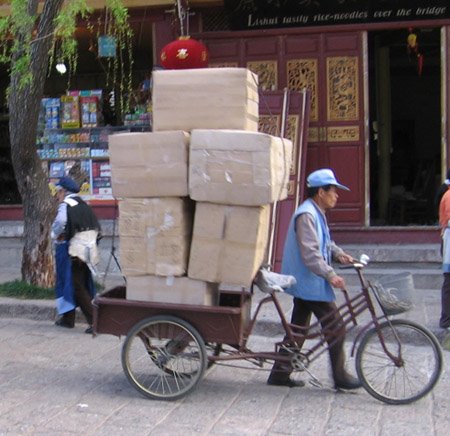
How’s this one for a heavy load:

Being a professional cook, this is one of my favorites. Is that actually a deep fryer? If I had this trike I could pedal around selling Buffalo Chicken Wings at closing time.

I’m not sure the loads on these next two photos would fit in my late-model pickup truck.

This one may not fit under some viaducts; it most definitely would not fit in a parking garage.


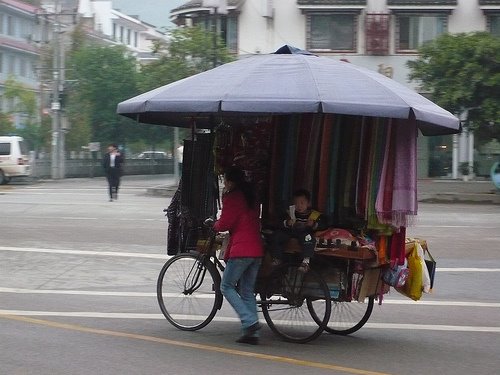
This one reminds me of the short period of time I spent in New Orleans during the mid 1980’s. At that time there was still a knife sharpener who carried all his gear on his bike, and would stop by the restaurants in the French Quarter to sharpen the cook’s knives (for a fee, of course). But what I found interesting was that his grinder was human-powered, too. I wish I had a photo of it. Anyhow, here’s what looks like a mobile work station.

A mobile store:

Here’s another of my favorites, and this looks like it may be in India rather than China. Is this a traveling mini-temple? Have Krishna, will travel.

And lastly, another everything-and-the-kitchen-sink.

>Chinese Trikes

>I’ve been fascinated with hauling stuff by bike my entire life, and I’m always amazed (and inspired) to see what can be–and is–hauled by bike (or trike).

My cousin, Joe, sent me a link to the Tinguely Museum, in Basil, Switzerland. They currently have an exhibit on the (vanishing) Chinese trike. Here’s a couple photos from their website.

(Click on any of the following photos for a much larger image).

Tricycle, Beijing 2008 © Foto: Nils Fisch, Basel

Tricycle mit Tischen, Tricycle avec tables / Tricycle with tables, Beijing 2008

© Foto: Nils Fisch, Basel

They truly are works of art; it’s a shame they’re a vanishing mode of transport and work…seems to me that our world would be a much better place if more people used their own human power to propel themselves…but here I go again, hopping up on my little soapbox again.

At any rate, last spring I saw this trike on craigslist. It was about 20 miles away, I called the guy, he still had it, so I drove out and purchased it straight away. It’s a much smaller version than the one’s pictured, too small for me, in fact. But it’s still fun to ride, it can carry a great deal of weight…and the comments I get from people are worth it alone. If you’d like to read my original post, and see more photos of it click here.

I often scan the Internet for all types of human-powered vehicles, trikes being one of them, of course. Anyhow, here’s some photos of them in use.

How’s this one for a heavy load:

Being a professional cook, this is one of my favorites. Is that actually a deep fryer? If I had this trike I could pedal around selling Buffalo Chicken Wings at closing time.

I’m not sure the loads on these next two photos would fit in my late-model pickup truck.

This one may not fit under some viaducts; it most definitely would not fit in a parking garage.


This one reminds me of the short period of time I spent in New Orleans during the mid 1980’s. At that time there was still a knife sharpener who carried all his gear on his bike, and would stop by the restaurants in the French Quarter to sharpen the cook’s knives (for a fee, of course). But what I found interesting was that his grinder was human-powered, too. I wish I had a photo of it. Anyhow, here’s what looks like a mobile work station.

A mobile store:

Here’s another of my favorites, and this looks like it may be in India rather than China. Is this a traveling mini-temple? Have Krishna, will travel.

And lastly, another everything-and-the-kitchen-sink.

Alan Scott 1936 – 2009

(Photo credit : Art Rogers, the New York Times)

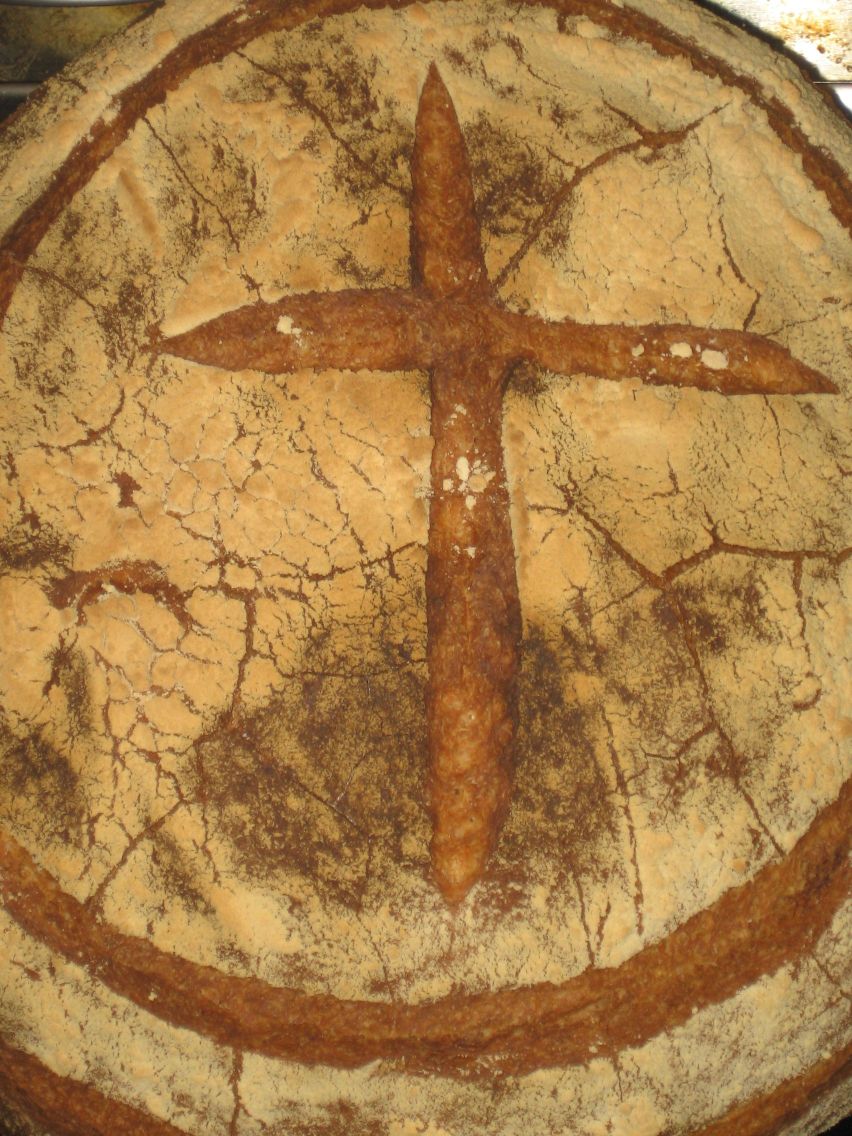
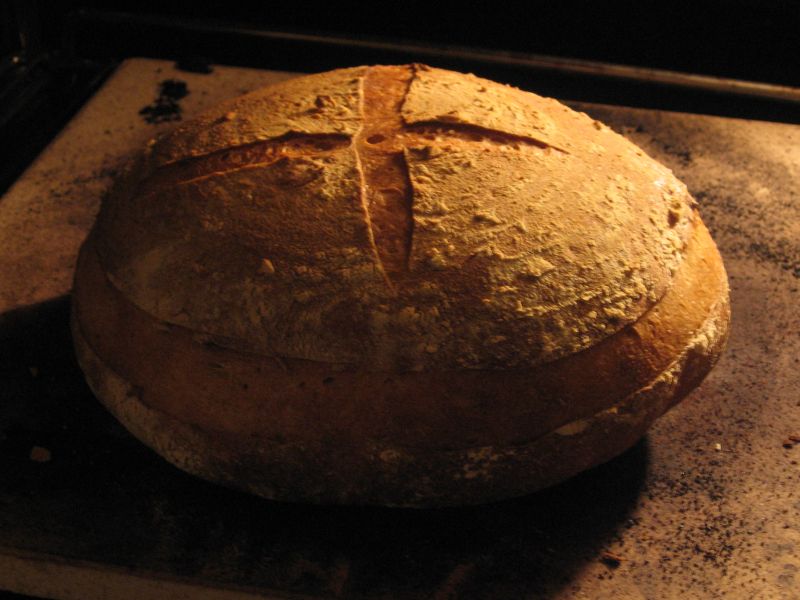
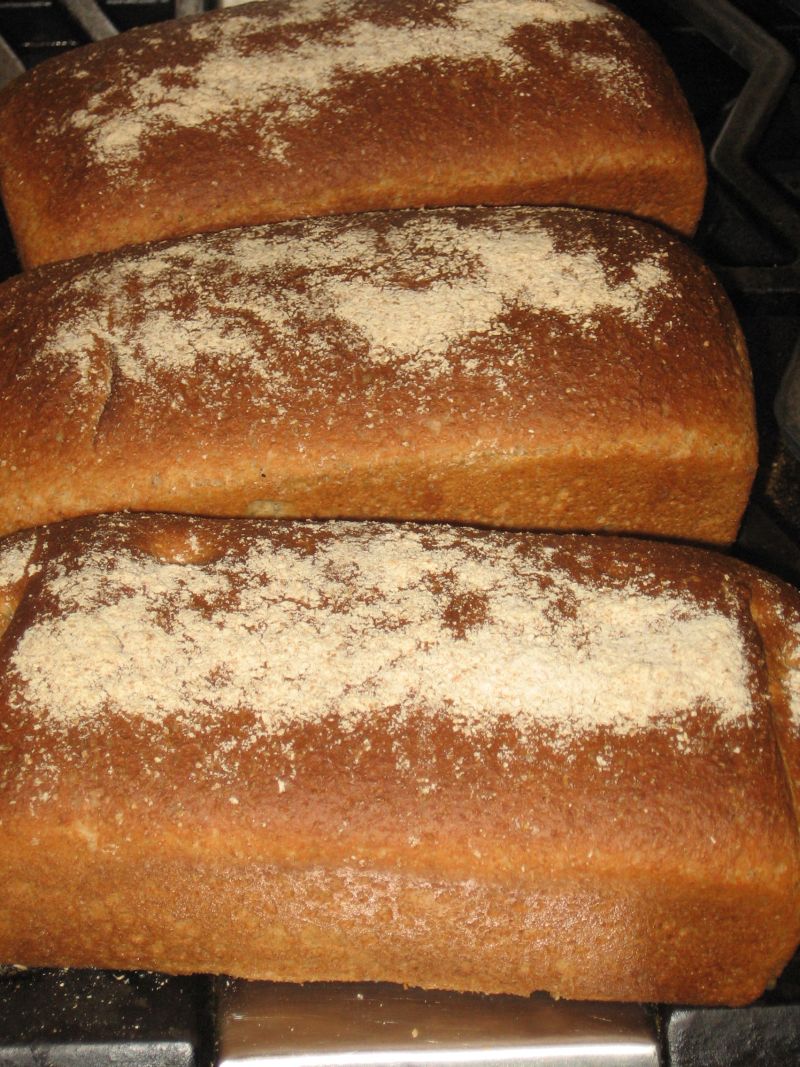
I learned today of the death of Alan Scott, co-author of the seminal book, The Bread Builders. He was also owner of the company, Ovencrafters, which specialized in hand-built brick ovens. His book undoubtedly touched millions of professional and novice bakers, including the one typing these words. When I came across his book I devoured it; the pages are so full of information but at the same time written in an easy to understand way. It’s mostly because of his book that I have learned to truly understand sourdough bread making. It is also because of his book the I built an outdoor wood-fired oven at my previous residence. And his book is without doubt the reason I am able to bake naturally-leavened loaves of bread like this one:

On a separate but inadvertently related note: The church of which I am a member is Pilgrim-St. Luke’s UCC on the corner of Richmond and Utica in Buffalo, NY. I am also a member of the Board of Deacons. When serving communion we break bread with a loaf of bread, opposed to communion wafers. The reason I am mentioning this is that when I am scheduled to assist the Pastor in serving communion I more-often-than-not bake the bread the night before. I was scheduled today and baked a beautiful loaf last night, this was before I learned of Mr. Scott’s death; I read of the news this morning. Later, as I stood at the side of the altar with another Deacon while our Pastor said a prayer and held the loaf of bread and broke it, I was struck by how beautiful it was. I also realized how effortless it is for me to bake such a beautiful loaf, and this, I thought, was partly to do with Alan Scott’s book. And for that I am very thankful…I am sure his work will influence bakers for generations to come. Thank you Alan Scott, thank you very much.

If you would like to read his obituary on the New York Times, click here.

>Alan Scott 1936 – 2009

>

(Photo credit : Art Rogers, the New York Times)

I learned today of the death of Alan Scott, co-author of the seminal book, The Bread Builders. He was also owner of the company, Ovencrafters, which specialized in hand-built brick ovens. His book undoubtedly touched millions of professional and novice bakers, including the one typing these words. When I came across his book I devoured it; the pages are so full of information but at the same time written in an easy to understand way. It’s mostly because of his book that I have learned to truly understand sourdough bread making. It is also because of his book the I built an outdoor wood-fired oven at my previous residence. And his book is without doubt the reason I am able to bake naturally-leavened loaves of bread like this one:

On a separate but inadvertently related note: The church of which I am a member is Pilgrim-St. Luke’s UCC on the corner of Richmond and Utica in Buffalo, NY. I am also a member of the Board of Deacons. When serving communion we break bread with a loaf of bread, opposed to communion wafers. The reason I am mentioning this is that when I am scheduled to assist the Pastor in serving communion I more-often-than-not bake the bread the night before. I was scheduled today and baked a beautiful loaf last night, this was before I learned of Mr. Scott’s death; I read of the news this morning. Later, as I stood at the side of the altar with another Deacon while our Pastor said a prayer and held the loaf of bread and broke it, I was struck by how beautiful it was. I also realized how effortless it is for me to bake such a beautiful loaf, and this, I thought, was partly to do with Alan Scott’s book. And for that I am very thankful…I am sure his work will influence bakers for generations to come. Thank you Alan Scott, thank you very much.

If you would like to read his obituary on the New York Times, click here.

Bike Racks

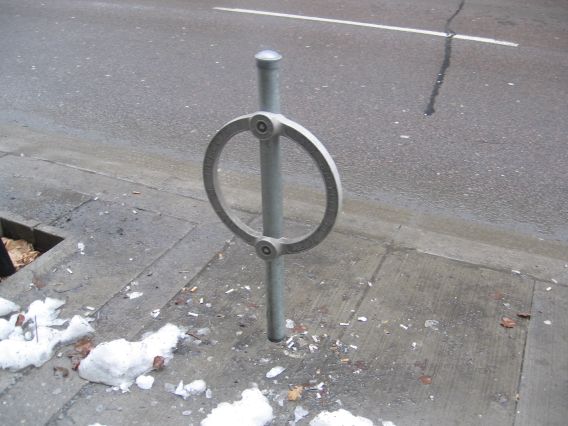
I was in Toronto this past weekend, and as usual was impressed with the city for many reasons: its multiculturalism, it’s friendliness, it’s vibrancy and cleanliness, but mostly it’s robust bike culture. Toronto is a mere 100 miles from Buffalo and the climate is pretty much the same…snowy and bitterly cold much of the winter. And it is also a city where many of the cyclist bike year round…and the city seems to encourage it. The most obvious example of this are the prevalence of bike racks…there seems to be a bike rack every 50 feet. Most of them look like this, simple yet functional.

I’ve started to notice these, too. They’re attached to lamp posts.

But the best ones I saw were outside the ROM…bike racks as artwork. Here’s a few examples (click the pictures for larger views).


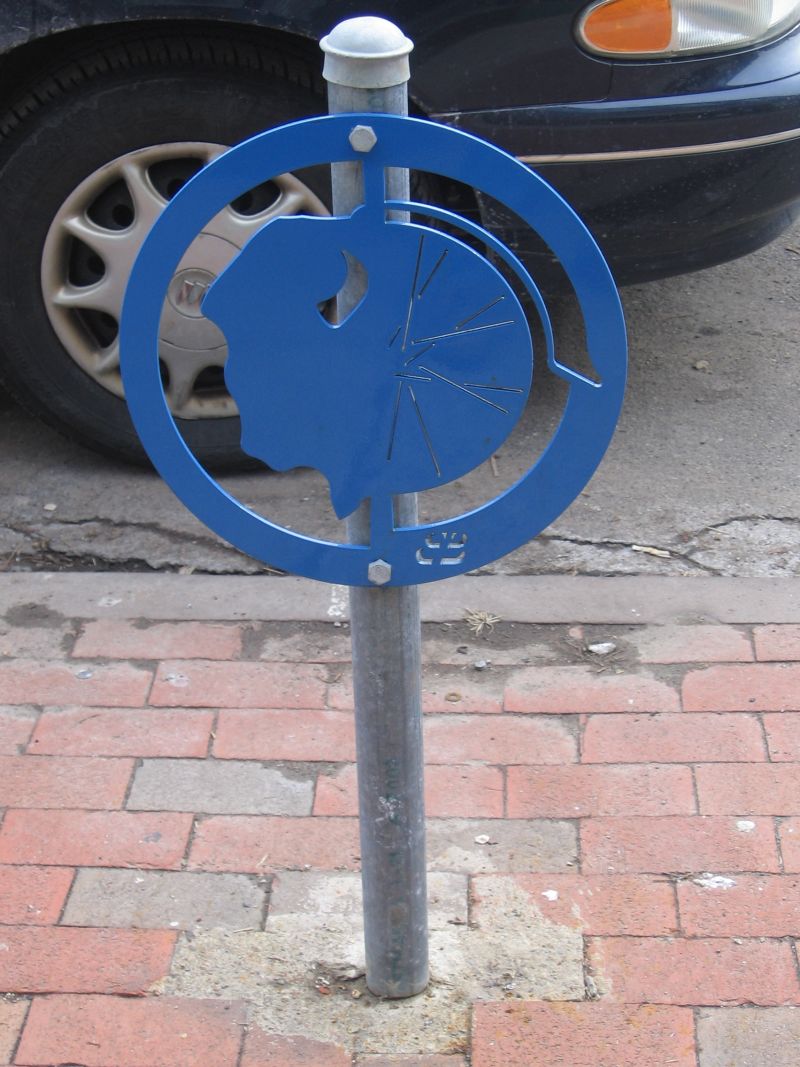
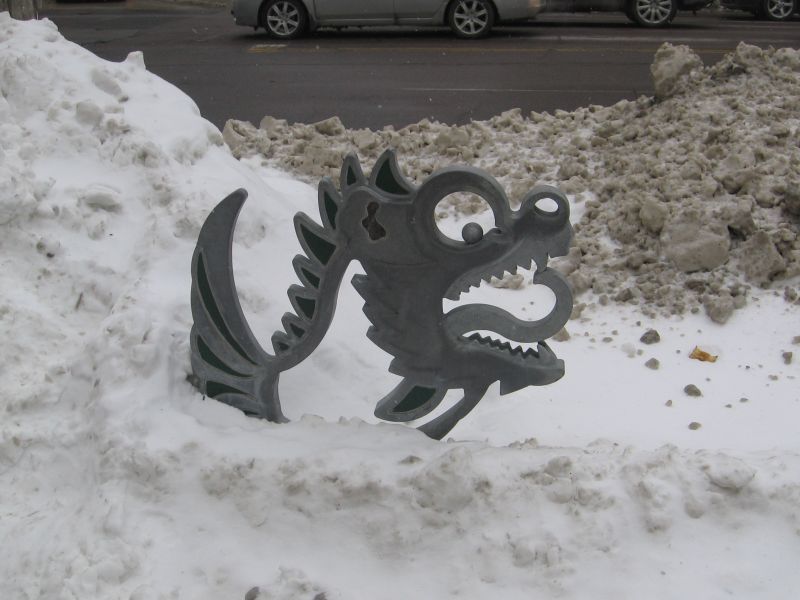
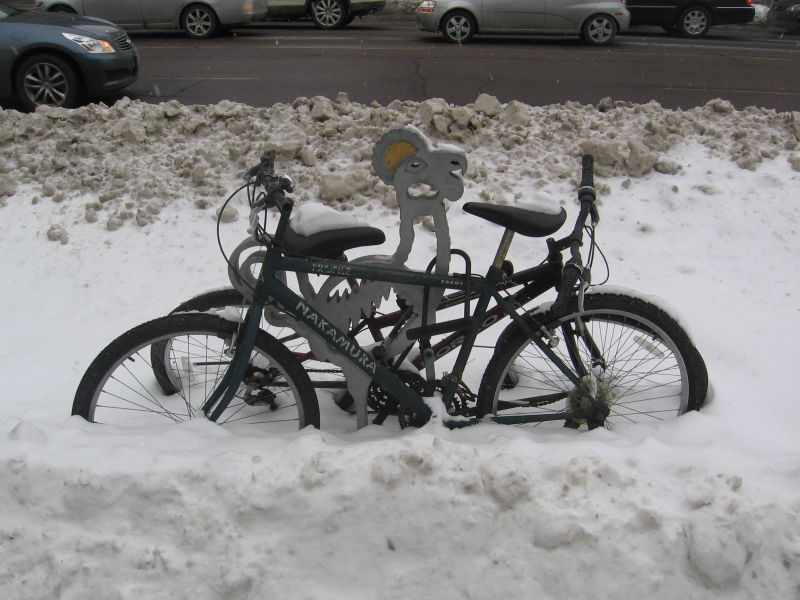
A lot of cities are (thankfully) installing bike racks these days. Buffalo is one of them…well, at least they’ve started to. This past year many of the parking meters were removed to replace an automated parking ticket hub. In the process the city is peppered with 3-foot metal poles sticking out of the ground. In this cities defense, they have, as promised, begun to convert some into bike racks. But as is more-often-than-not with the Queen City, things take time…a lot of time…a really long time. Sometimes the project never gets completed. I do, though, feel optimistic about this one. I feel confident that by this time next year we’ll have plenty of new bike racks in and around our city (how’s that for optimism). Anyhow, I did a quick search for pictures of Buffalo Bike Racks because I didn’t have any. It’s somewhat odd, I think, that I have pictures of all-things-bikes from many other cities, some that I visited and some that I haven’t, but I don’t have a picture of a bike rack in my own city and there is one less than a half-mile from my house. Anyhow, most of the bike racks are circles attached to the poles (similar to those in Toronto), but a few I’ve seen are shaped like Buffalo heads. Here’s a picture and story about them on Buffalo Rising.

Interestingly, another story I found about Buffalo bike racks was on the website of Environment News Service. The article is good. but the photo on the site frustrated me. Here it is:


Huh? Who are these people. Of all the cyclists in this city in the summertime the photographer had to take a photo of a group of spandex-clad-aerodynamic-helmet-wearing-super speed-weekend cyclists (sorry, no offense to you if you’re in the photo and come across this post). But I mean, come on…these people won’t be using those bike racks. Everyday commuters and cargo bikers use bike racks. Couldn’t they have used someone like this:

Just kidding, this photo is not of a Buffalonian (though he did spend time in Buffalo in the 1970’s), it’s a picture of Heinze Stucke, the inspiring German cyclist who hopped on his bike decades ago, started riding and has yet to stop. You can read more about him by clicking the link in the bike sections of this blog or simply click here.

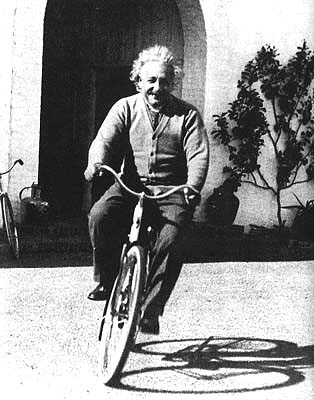
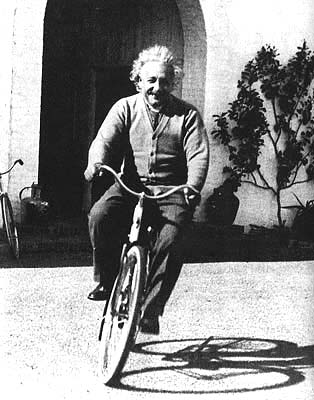
Or they could at least have used a photo of this guy:


Again I’m joking, of course. Einstein was said to be an avid (recreational) cyclist, and was also born in Ulm, Germany, which incidentally I hope to visit eventually to see the Museum Der Brotkultur (Museum of Bread Culture).

Anyhow, at the very least the photographer, if they wanted to represent an everyday biker, one who rides as a mode of transport and as a lifestyle, could have taken a photo of these two guys. OK, I’m (somewhat) joking again, and patting myself on the back a little. This is a photo that was originally published in Buffalo Spree Magazine about a year ago. It’s a photo of my son and I on our tandem; the photo accompanies an article I wrote about biking. An archived link to the article can be found here.


He could have also used a cargo cyclist, and I use this term loosely because you see people hauling everything from laundry to television sets on bicycles in the city. You can see a few examples of me hauling stuff by bike (and trike) by clicking here, here, and here.

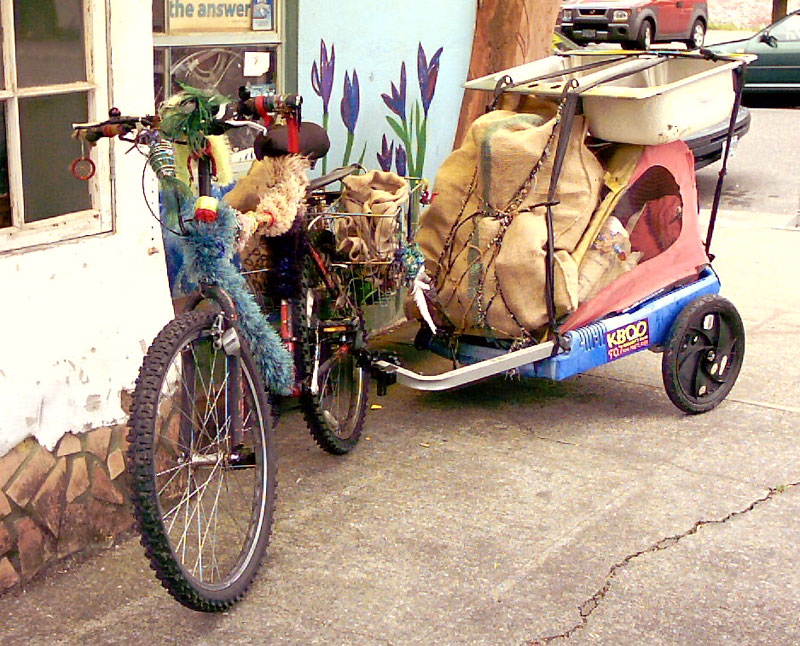
But I would have been really happy if they used a photo of a bike like this one. I don’t remember where this photo is from or where I got it, but they are literally carrying everything and the kitchen sink…and I doubt if the rider wore spandex.

>Bike Racks

>I was in Toronto this past weekend, and as usual was impressed with the city for many reasons: its multiculturalism, it’s friendliness, it’s vibrancy and cleanliness, but mostly it’s robust bike culture. Toronto is a mere 100 miles from Buffalo and the climate is pretty much the same…snowy and bitterly cold much of the winter. And it is also a city where many of the cyclist bike year round…and the city seems to encourage it. The most obvious example of this are the prevalence of bike racks…there seems to be a bike rack every 50 feet. Most of them look like this, simple yet functional.

I’ve started to notice these, too. They’re attached to lamp posts.

But the best ones I saw were outside the ROM…bike racks as artwork. Here’s a few examples (click the pictures for larger views).


A lot of cities are (thankfully) installing bike racks these days. Buffalo is one of them…well, at least they’ve started to. This past year many of the parking meters were removed to replace an automated parking ticket hub. In the process the city is peppered with 3-foot metal poles sticking out of the ground. In this cities defense, they have, as promised, begun to convert some into bike racks. But as is more-often-than-not with the Queen City, things take time…a lot of time…a really long time. Sometimes the project never gets completed. I do, though, feel optimistic about this one. I feel confident that by this time next year we’ll have plenty of new bike racks in and around our city (how’s that for optimism). Anyhow, I did a quick search for pictures of Buffalo Bike Racks because I didn’t have any. It’s somewhat odd, I think, that I have pictures of all-things-bikes from many other cities, some that I visited and some that I haven’t, but I don’t have a picture of a bike rack in my own city and there is one less than a half-mile from my house. Anyhow, most of the bike racks are circles attached to the poles (similar to those in Toronto), but a few I’ve seen are shaped like Buffalo heads. Here’s a picture and story about them on Buffalo Rising.

Interestingly, another story I found about Buffalo bike racks was on the website of Environment News Service. The article is good. but the photo on the site frustrated me. Here it is:


Huh? Who are these people. Of all the cyclists in this city in the summertime the photographer had to take a photo of a group of spandex-clad-aerodynamic-helmet-wearing-super speed-weekend cyclists (sorry, no offense to you if you’re in the photo and come across this post). But I mean, come on…these people won’t be using those bike racks. Everyday commuters and cargo bikers use bike racks. Couldn’t they have used someone like this:

Just kidding, this photo is not of a Buffalonian (though he did spend time in Buffalo in the 1970’s), it’s a picture of Heinze Stucke, the inspiring German cyclist who hopped on his bike decades ago, started riding and has yet to stop. You can read more about him by clicking the link in the bike sections of this blog or simply click here.

Or they could at least have used a photo of this guy:


Again I’m joking, of course. Einstein was said to be an avid (recreational) cyclist, and was also born in Ulm, Germany, which incidentally I hope to visit eventually to see the Museum Der Brotkultur (Museum of Bread Culture).

Anyhow, at the very least the photographer, if they wanted to represent an everyday biker, one who rides as a mode of transport and as a lifestyle, could have taken a photo of these two guys. OK, I’m (somewhat) joking again, and patting myself on the back a little. This is a photo that was originally published in Buffalo Spree Magazine about a year ago. It’s a photo of my son and I on our tandem; the photo accompanies an article I wrote about biking. An archived link to the article can be found here.


He could have also used a cargo cyclist, and I use this term loosely because you see people hauling everything from laundry to television sets on bicycles in the city. You can see a few examples of me hauling stuff by bike (and trike) by clicking here, here, and here.

But I would have been really happy if they used a photo of a bike like this one. I don’t remember where this photo is from or where I got it, but they are literally carrying everything and the kitchen sink…and I doubt if the rider wore spandex.

Easy (and Delicious) Homemade Carnitas

Carnitas are a type of slow cooked meat, which is usually made with pork but can also be made with beef. It can be cooked either by roasting it slowly and pulling the meat (like you would with a BBQ), or by simmering it and shredding the meat as the liquid evaporates. I chose the latter method; I find it less trouble. Which ever way it’s cooked, carnita meat is delicious, tender and succulent. Here’s how I made it in pictures:

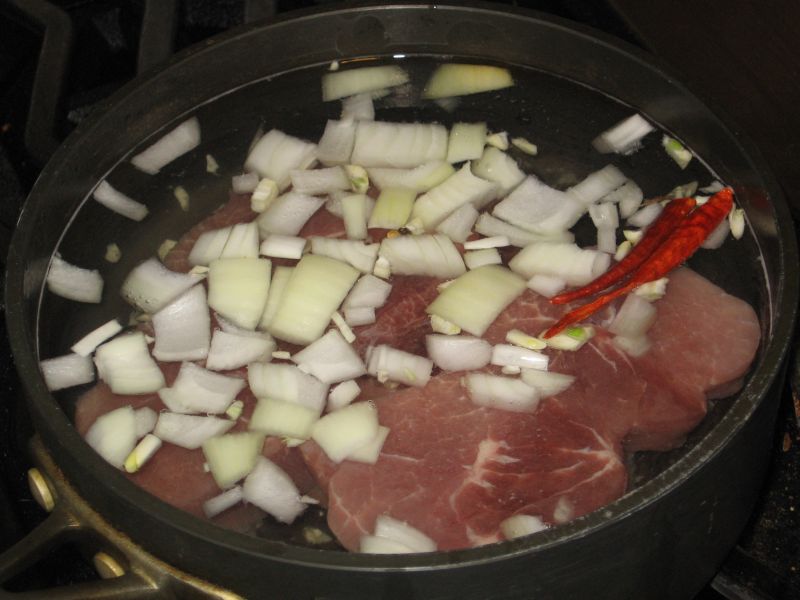
Put a couple boneless pork chops in a small pot along with onion, garlic, chilies, a little salt, peppercorns, and spices (chili powder, cumin, oregano, and a pinch of cinnamon). Then cover everything with cold water.

When it comes to a simmer there will be a lot of foam, this is natural. Simply skim it off with either a ladle or spoon.

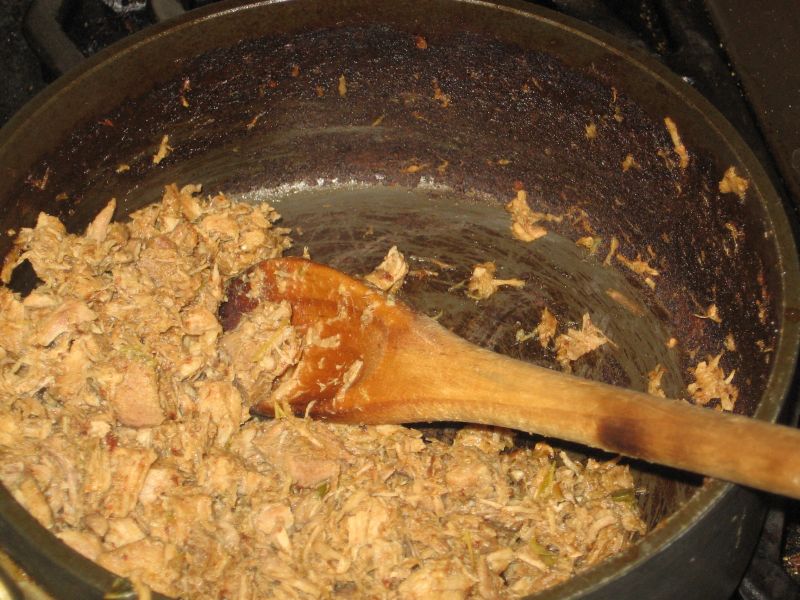
Slowly simmer the meat for about an hour. After a while the meat will begin to fall apart. Further assist this by mashing it with a wooden spoon.

When all of the liquid evaporates it will begin to sizzle and fry in it’s own fat (if the meat was too lean you may need to add a little olive oil). Stir and cook the meat until it browns a little; this will offer layers of both flavor and texture.

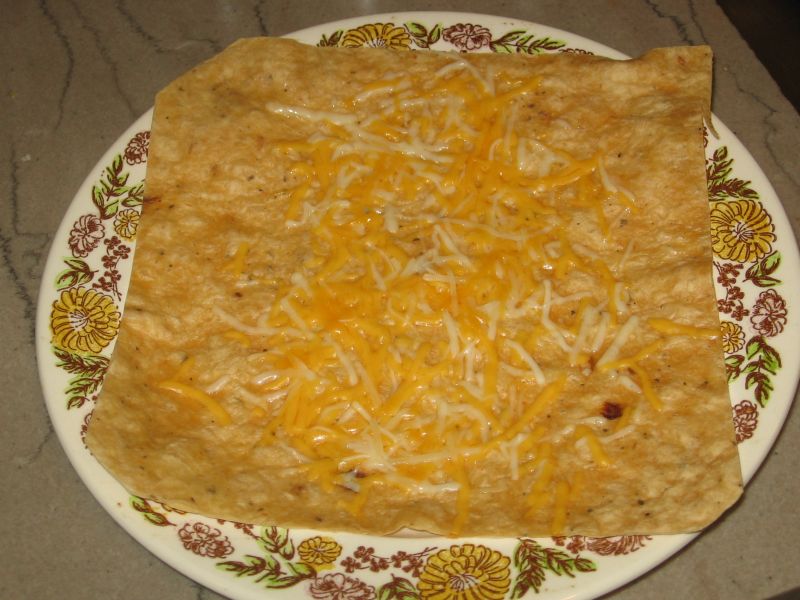
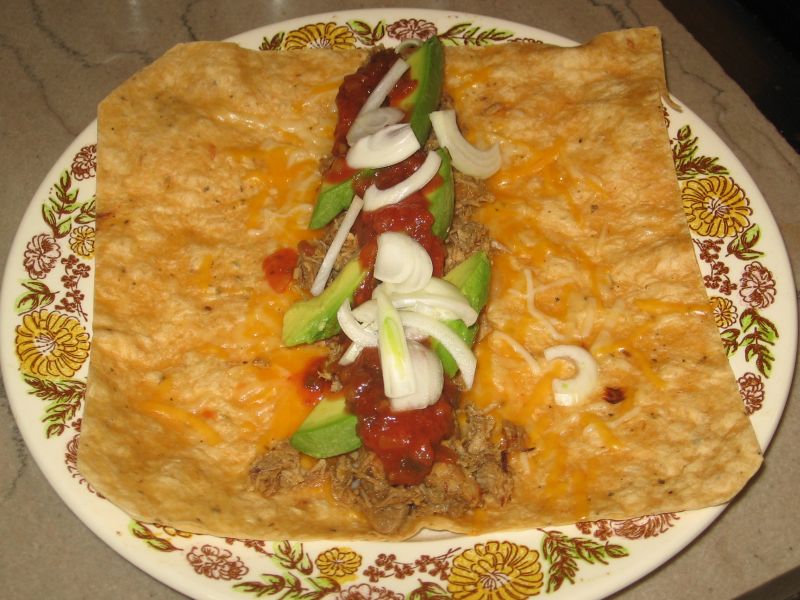
Now here’s the best part (well, not really, because the best part was eating it). Heat a whole grain tortilla and melt cheese on it, and the rest is up to you. I stuffed it with the meat (of course), but also avocado, salsa, onion, and mesclun lettuce. Then, after rolling it, it was topped with sour cream, a little more salsa, and a drizzle of hot sauce…the final photo is enough to make my mouth water.

>Easy (and Delicious) Homemade Carnitas

>Carnitas are a type of slow cooked meat, which is usually made with pork but can also be made with beef. It can be cooked either by roasting it slowly and pulling the meat (like you would with a BBQ), or by simmering it and shredding the meat as the liquid evaporates. I chose the latter method; I find it less trouble. Which ever way it’s cooked, carnita meat is delicious, tender and succulent. Here’s how I made it in pictures:

Put a couple boneless pork chops in a small pot along with onion, garlic, chilies, a little salt, peppercorns, and spices (chili powder, cumin, oregano, and a pinch of cinnamon). Then cover everything with cold water.

When it comes to a simmer there will be a lot of foam, this is natural. Simply skim it off with either a ladle or spoon.

Slowly simmer the meat for about an hour. After a while the meat will begin to fall apart. Further assist this by mashing it with a wooden spoon.

When all of the liquid evaporates it will begin to sizzle and fry in it’s own fat (if the meat was too lean you may need to add a little olive oil). Stir and cook the meat until it browns a little; this will offer layers of both flavor and texture.

Now here’s the best part (well, not really, because the best part was eating it). Heat a whole grain tortilla and melt cheese on it, and the rest is up to you. I stuffed it with the meat (of course), but also avocado, salsa, onion, and mesclun lettuce. Then, after rolling it, it was topped with sour cream, a little more salsa, and a drizzle of hot sauce…the final photo is enough to make my mouth water.

More Winter Notes

I know I keep harping on it, but this has been one cold and snowy winter. Sometimes it gets me down (maybe it’s the lack of direct sunlight), but other times I find it truly beautiful…today was one of those times. The snow looked so white and pristine, even in an urban setting. Here’s a shot of the sidewalk just after I shoveled it. It was about 5:00pm, dusk; the light blue hue almost seemed to glow, like a photo touch up, but it’s not (click the photo for a much larger view).

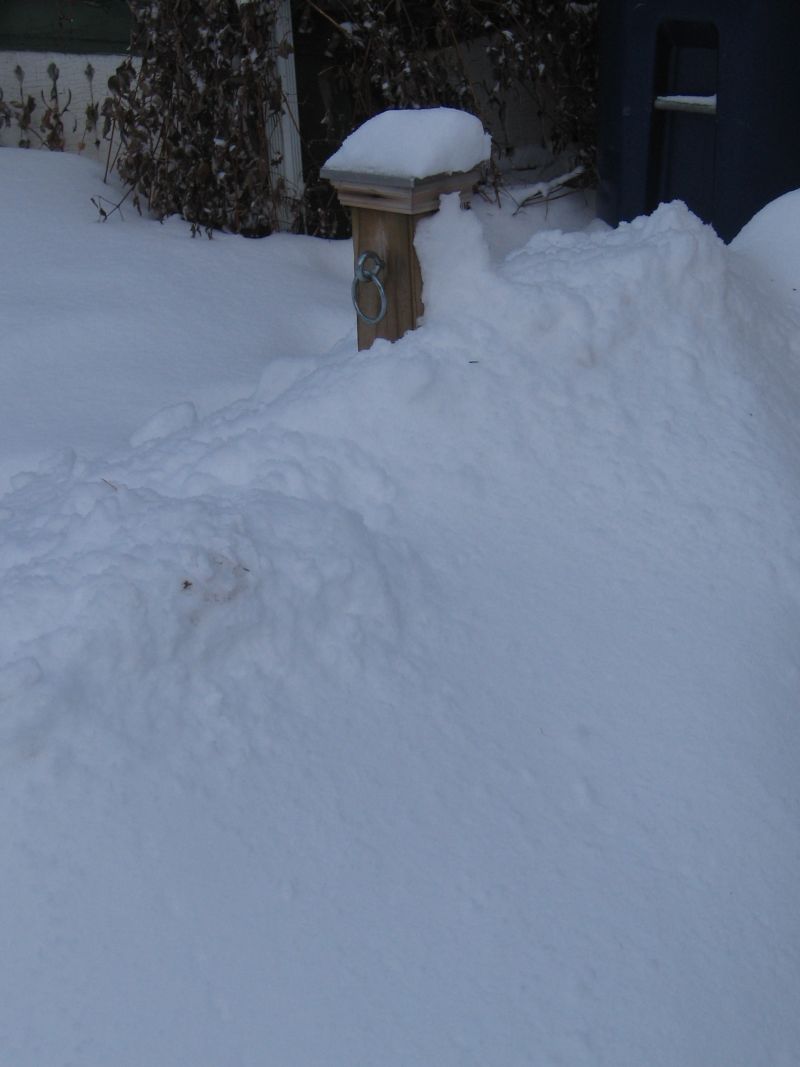
A couple summers ago I installed (cemented) a 4×4 beam with hooks on it as a sort of hitching post for my bikes in front of my house. I use it to park bikes for short periods before going out again, so I don’t have to carry them up the porch stairs. I use the hitching post as a sort guide on snow depth this time of year; it is, if I remember correctly, it’s 36 inches tall. Anyhow, here’s a picture of one of my bikes hitched to it earlier in the season; the second photo was taken today…it’s getting close to the top.


I rarely post photos of myself on this blog, but here is one (a modest self-portrait, I suppose) just about to run a few errands…it’s difficult to be fashionable when the snow is more than two feet deep, the temperature is hovering in the low teens (Fahrenheit), and the wind gusts are reaching 40 mph.


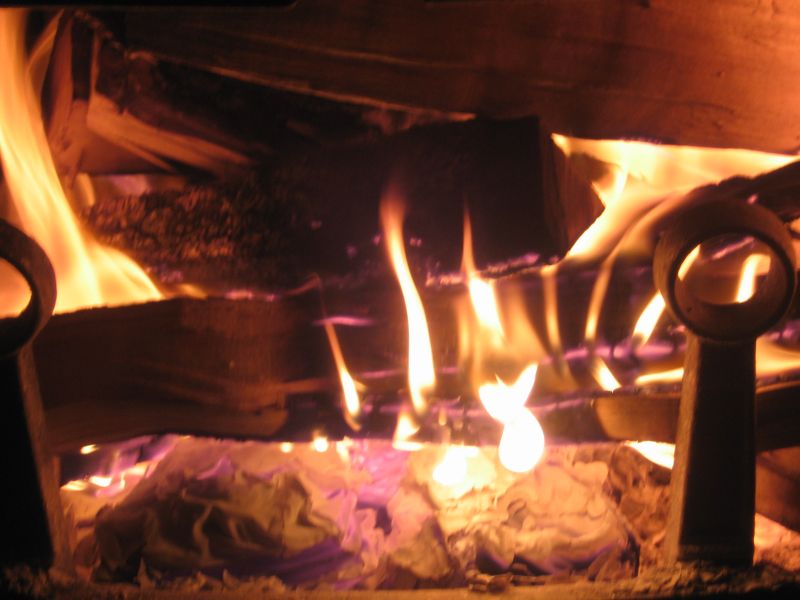
On a different note: I really wonder, sometimes (more this time of year) how the previous owners of this house stayed warm. It’s a wood-framed structure dating back to Civil War era, and it’s basically like a sieve when it comes to heating. I’m assuming they wore a lot of clothes this time of year 100 years ago. Anyhow, thankfully I had the foresight to order more firewood than I did last year.


So I can have more of this, this year.

And lastly…there really is nothing like the aroma of fresh bread that permeates the house during winter…the windows get all steamy and the house smells of yeast. It’s said that the sense of smell is the strongest memory sense…that the smell of baking bread (or the aroma of a girlfriend’s perfume, as another example) is permanently planted in your memory…and personally I believe this is true.