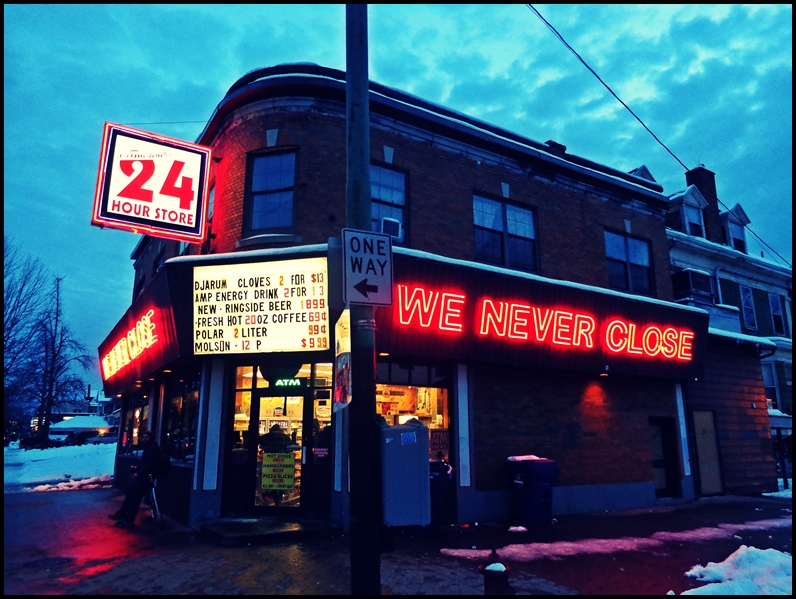
This was one of those days when it was such a joy to be on a bike and out in the open air. It was crisp and nice; no precipitation and not much wind. It felt so good to be using my own energy to propel not only me but my bike (and a few other things) as well. Anyhow, here’s a morning shot (above) that I took on my way to work, and an evening shot (below) which I took just after leaving the health club this evening.
Winter in Flux…
A Pro-Bike Post (haven’t had one in a while)
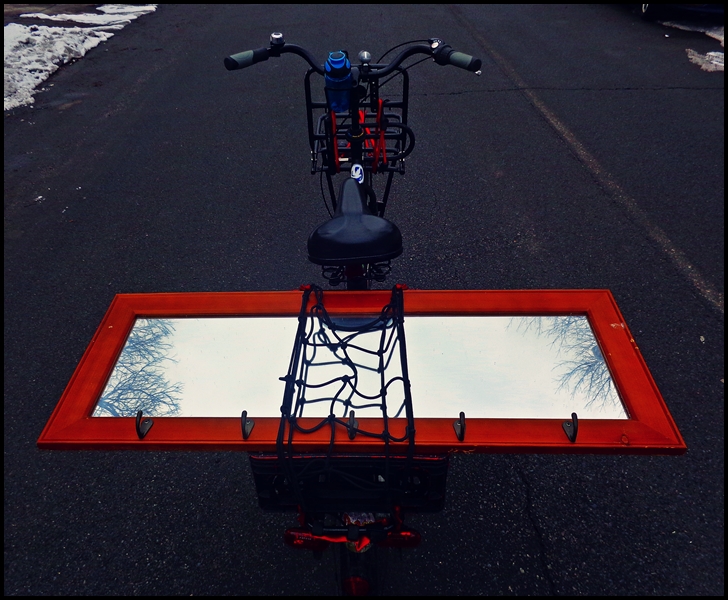
Things That Can be Carried on a Bike (#451 & #452)
#451(above)…$45.61 in groceries.
#452 (below)…A gym bag full of wet clothes, and a case of red wine.
Things That Can be Carried on a Bike (#450)
A Walk at Dusk…
Two Recipes Made for Each Other…
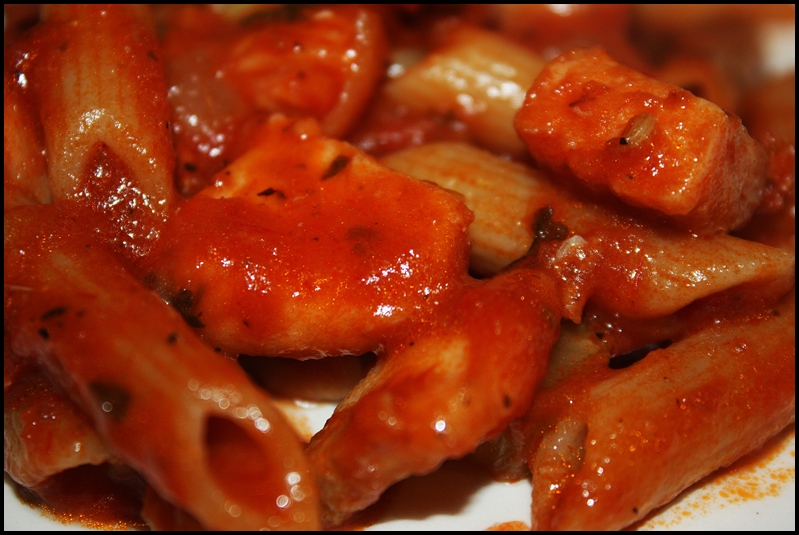
I made these tonight for my son and myself…Penne and Halibut Fra Diavolo and Spaghetti Squash Aglio e Olio. How was it, you may be wondering? Let’s just say there is not much left 🙂 Delicious. Both recipes are really easy to make and bursting with flavor. If you want more pic and the history behind fra diavolo (brother devil), click here. The see how to prepare a spaghetti squash and make it taste really delicious (as pictured), click here.
The View from My Handlebars…
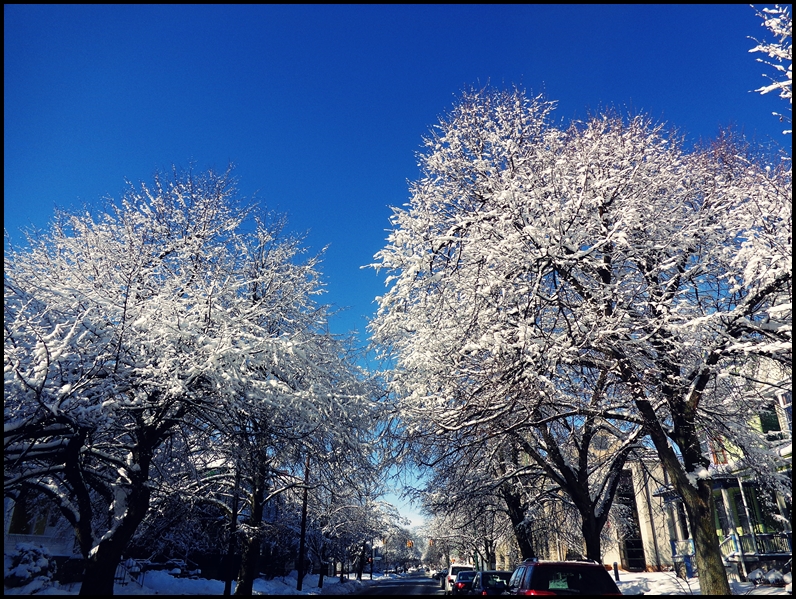
This morning’s ride was incredible. It’s only a couple miles to church (where I was heading) and the sky was cloudless. With warm(ish) temperatures and not a breeze in the air, the snow still clung to the trees from the storm. And with the warmer temps today the snow is all but gone on the trees now. But this morning it was like riding under a canape, and there was no where else I would have wanted to be than on a bike pedaling and coasting beneath it.
Fortune Cookie Philosophy
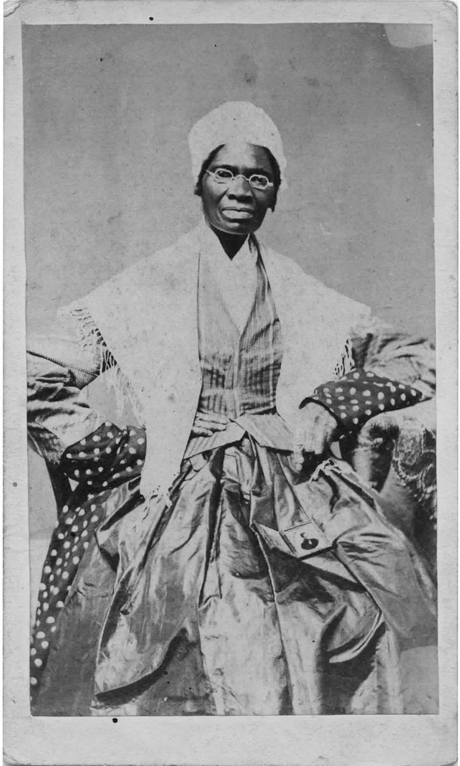
Five Quotes from Sojourner Truth
“I feel safe in the midst of my enemies, for the truth is all powerful and will prevail.”
“Then that little man in black there, he says women can’t have as much rights as men, ’cause Christ wasn’t a woman! Where did your Christ come from? Where did Christ come from? From God and a woman! Man had nothing to do with Him.”
“It is the mind that makes the body.”
“Truth burns up error.”
“That man over there says that women need to be helped into carriages, and lifted over ditches, and to have the best place everywhere. Nobody ever helps me into carriages, or over mud-puddles, or gives me any best place! And ain’t I a woman? Look at me! Look at my arm! I have ploughed and planted, and gathered into barns, and no man could head me! And ain’t I a woman? I could work as much and eat as much as a man – when I could get it – and bear the lash as well! And ain’t I a woman? I have borne five children, and seen most all sold off to slavery, and when I cried out with my mother’s grief, none but Jesus heard me! And ain’t I a woman?”
More Five Quotes.
Urban Simplicity.
Egg Strata: Layers of Textures and Flavors
Strata < Latin strātum literally, a cover, noun use of neuter of strātus, past participle of sternere to spread, strew, equivalent to strā- variant stem + -tus past participle suffix
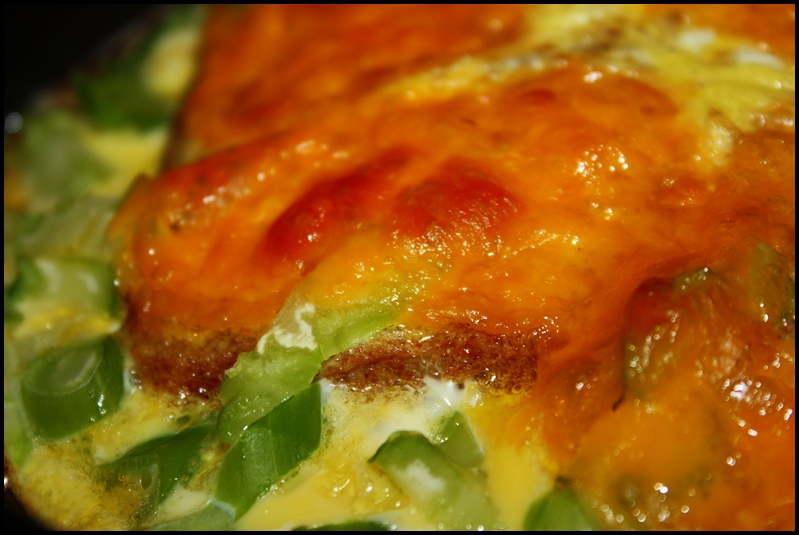
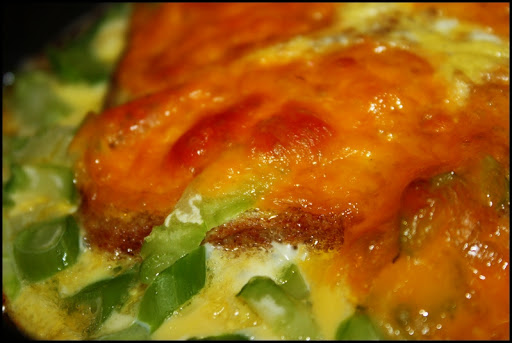
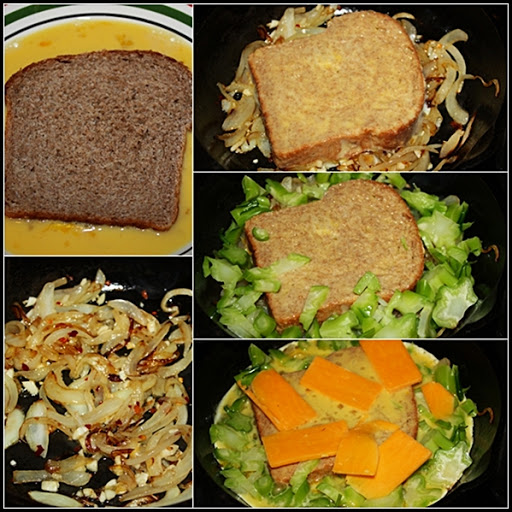
Okay. Firstly, let me explain what this is. And by this I don’t mean classically (in the culinary world) but what it was to me; what it was for my dinner tonight. It was…well…a sort of look-in-the-fridge-and-make-make-something-out-of-it meal. Like much of the east coast we got hit with heavy snow today and I didn’t feel like going shopping after work. My son was out so I only had to cook for myself. So I checked my kitchen and I found some eggs, bread, onions, garlic, cheese, and a few broccoli stems (I ate the florets from them a few night ago). So this is what I made. A strata (culinarily speaking) is a cross between a frittata (or a quiche with the crust on the inside) and a sort of savory French toast. Interestingly, the French word for French toast is “pain perdu,” or lost bread, indicating the bread is stale and cooking it in that manner is a way of reclaiming it (or at least not wasting). And that’s exactly what this was tonight. This was really good and satisfying, and as far as the ingredients the sky really is the limit (but the contents of your fridge are the real limit). Anyhow, this couldn’t have been easier to make, and it hit the spot…thought I’d share the recipe.
Things That Can be Carried on a Bike (#449) and a couple pictures of snow.
On the bike…a canvas bag containing two books, a camera, and some papers. A paper bag containing various food leftovers.
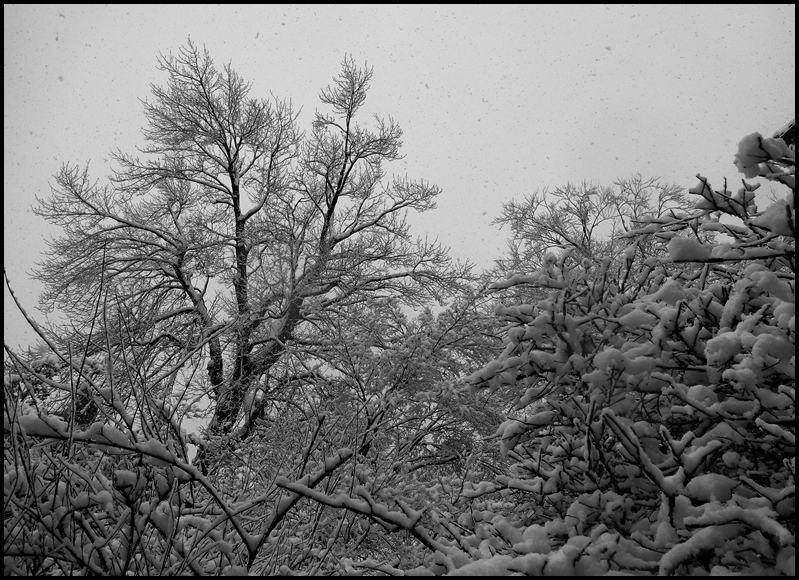
Western New York got hit with heavy snow today, but not nearly as much as our friends on the eastern seaboard. It wasn’t that cold so the snow was heavy–big heavy flakes–and it stuck to everything, including the trees. This type of snow (the heavy, wet stuff) I find is easier to ride a bike in…the tires have more traction than when it is light and really freezing. This is when it’s fun…
Egg Strata: Layers of Textures and Flavors
Strata < Latin strātum literally, a cover, noun use of neuter of strātus, past participle of sternere to spread, strew, equivalent to strā- variant stem + -tus past participle suffix
Okay. Firstly, let me explain what this is. And by this I don’t mean classically (in the culinary world) but what it was to me; what it was for my dinner tonight. It was…well…a sort of look-in-the-fridge-and-make-make-something-out-of-it meal. Like much of the east coast we got hit with heavy snow today and I didn’t feel like going shopping after work. My son was out so I only had to cook for myself. So I checked my kitchen and I found some eggs, bread, onions, garlic, cheese, and a few broccoli stems (I ate the florets from them a few night ago). So this is what I made. A strata (culinarily speaking) is a cross between a frittata (or a quiche with the crust on the inside) and a sort of savory French toast. Interestingly, the French word for French toast is “pain perdu,” or lost bread, indicating the bread is stale and cooking it in that manner is a way of reclaiming it (or at least not wasting). And that’s exactly what this was tonight. This was really good and satisfying, and as far as the ingredients the sky really is the limit (but the contents of your fridge are the real limit). Anyhow, this couldn’t have been easier to make, and it hit the spot…thought I’d share the recipe.
2 tablespoons olive oil
1 small onion, sliced
1 clove garlic, minced
¼ teaspoon crushed hot pepper
¼ teaspoon sea salt
½ cup cooked broccoli
1 ounce cheddar cheese
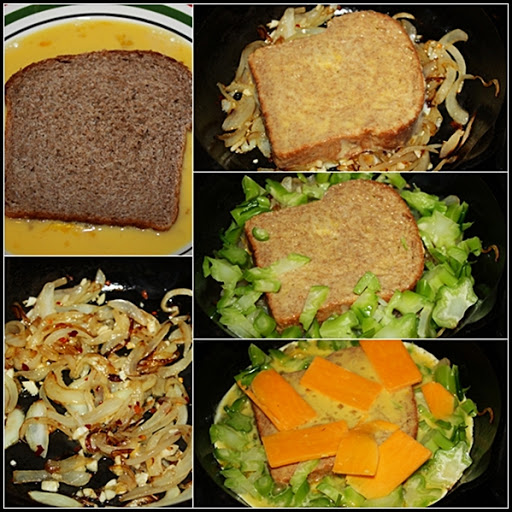
Preheat an oven to 400F. Place the bread in a shallow bowl and pour the egg-milk mixture over it; turn the bread to coat both sides—allowing it to soak up the egg—and set aside. Heat the olive oil in a small skillet over medium-high heat. Add the onion and cook it until it just begins to caramelize. Add the garlic, hot pepper, and salt; cook another minute or two. Lift the soaked bread from the egg and lay it on the onions, then layer the broccoli on and around the bread. Pour the remaining egg mixture into the pan. Lay the cheese on top of the bread and place the skillet in the oven. Cook the strata for about 10 minutes, or until cooked throughout, slightly puffed, and golden brown.
Fortune Cookie Philosophy
Things That Can be Carried on a Bike (#448)
Two Breads and Two Recipes
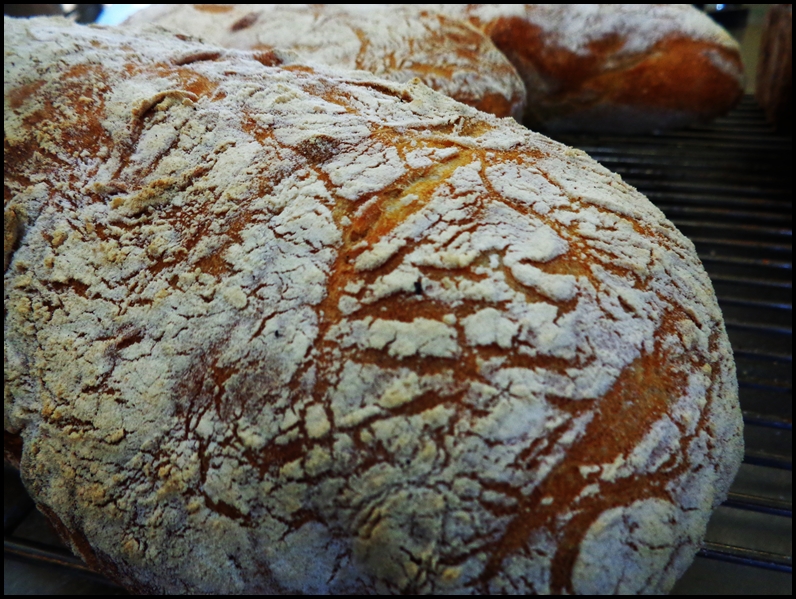
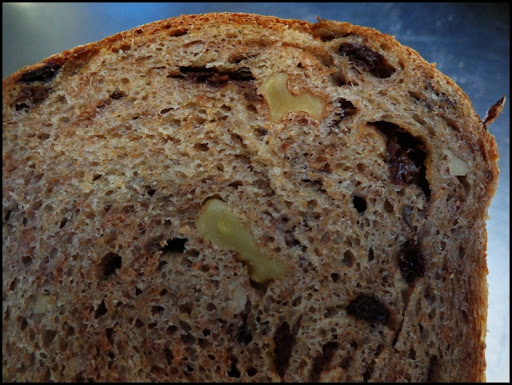
This is a continuation of this post where I listed a recipe for grissini. As I had mentioned, I am currently reviewing this book (which I highly recommend thus far) and have been testing a few of the recipes…so here’s a couple more. The recipes listed below–though originally derived from the book in mention–were borrowed from BreadBasketCase (click here and here) for the simple reason that I came across them and wouldn’t have to retype them (I am getting so lazy). Anyhow, both recipes are good, but the ciabatta is outstanding. That recipe I followed exactly, but the raisin-pecan bread I deviated a bit by using currants and walnuts (it’s what I had on hand). I like to post recipes that are simple to make (so that people actually make them), and these may seem complicated at first glance but they actually are not. If you read through the (somewhat lengthy) directions you’ll see they are pretty easy to follow.
Ciabatta with Stiff Biga
–From Bread, by Jeffrey Hamelman
BIGA
6.4 oz. (1 1/2 cups) bread flour
3.8 oz. (1/2 cup) water
1/8 tsp. instant dry yeast
DOUGH
1 lb. 9.6 oz. (5 3/4 cups) bread flour
1 lb, 3.6 oz. (2 1/2 cups) water
.6 oz. (1 T.) salt
.13 oz. (1 1/4 tsp)instant dry yeast
1. BIGA. Mix the yeast, flour and water until just smooth. The biga will be stiff and dense, and may need a few more drops of water to mix entirely. Cover the bowl and plastic and leave for 12 to 16 hours at room temperature.
2. MIXING. Add all the ingredients to the mixing bowl except the biga. In a stand mixer using a dough hook, mix on low speed for 3 minutes. As the dough comes together, add the biga in chunks. The dough will be quite sticky and slack. Finish mixing on medium for 3 1/2 to4 minutes. The dough will still be sticky.
3. FERMENTATION AND FOLDING. Put the dough in a mixing bowl sprayed with baker’s spray. Fold the dough twice, after one hour and again after two hours. This is where you fold quickly and assertively, adding no extra flour.
4. DIVIDING AND SHAPING. Flour the work surface copiously. Invert the dough onto the work surface and pat out the larger air bubbles. Lightly flour the top surface of the dough. Cut the dough into 3 rectangles, weighing about 18 ounces each. Gently shape into rectangles. Place the dough piece onto floured bread boards (I used floured parchment paper). Cover the shaped dough with baker’s linen and then plastic.
5. FINAL FERMENTATION. About 1 1/2 hours.
6. BAKING: Preheat oven to 460 degrees.
To transfer the proofed dough to a baker’s peel, spread the fingers of both your hands. With a quick, deft stroke, invert the dough piece so that the side that was touching the bread board is now on top. Place one hyand at each end of the dough piece, bring your fingers underneath, and pick it up. Here you will slightly punch the dough for easier transport; there should be wrinkles in the center of the loaf as the transfer it to the peel. [I just picked up the parchment paper and put it on top of a pre-heated baking stone–I’m using his instructions here just to show why I think they’re hard to understand.) Fill the oven with steam, load the ciabattas, steam again, and bake for 34-38 minutes. (I used the steam machine; otherwise you can use either an ice cube or boiling water method to get steam. Hamelmans thinks you should use all three: ice cubes on a heated skillet before the bread goes in, boiling water on a heated pan when the bread goes in, and spritzing with water too). Lower the oven temperature by 10 or 20 degrees if bread is taking on too much color, but be sure not to underbake. Remove the bread from the oven and let cool on a baking rack.
WHOLE WHEAT BREAD WITH PECANS AND GOLDEN RAISINS
–from Bread, by Jeffrey Hamelman
Makes two loaves
1 pound (3 5/8 cups) whole wheat flour
1 pound (3 5/8 cups) bread flour
1 pound, 5.8 ounces (2 3/4 cups) water
.6 ounces (1 T) salt
.16 oz. (1 1/2 tsp) instant dry yeast
4.8 oz. (1 cup) golden rains, soaked and drained
4.8 oz. (1 3/8 cups) pecans
1. About 30 minutes before starting, pour warm water over the golden raisins and let them sit for up to 30 minutes to soften. Drain the rains well.
2. MIXING: Add all the ingredients except the rains and pecans to mixing bowl. Mix on low speed for 3 minutes (using dough hook if you have a KitchenAid) to incorporate the ingredients thoroughly. The dough consistency should be moderately loose. Turn the mixer to the second speed and mix for about 3 minutes more. Add the drained raisins and pecans (the recipe doesn’t say whether they should be chopped, so do whatever you want). Mix on low speed, just until the rains and nuts are thoroughly incorporated.
3. BULK FERMENTATION: Put in large bowl and cover with plastic wrap. Let rise for about two hours. If it’s more convenient, you can put the dough in the refrigerator and let it rise overnight.
4. FOLDING: After the dough has been rising for about an hour, take it out of the bowl and put it on a lightly floured work surface, pat it out it into a rectangle, and fold it, as if you’re folding a business letter, in thirds, and put back into the bowl.
5. DIVIDING AND SHAPING: The dough can be put into loaf pans or you can make it free-form into a round or oblong shape. Divide the dough into half, and place the dough pieces on a lightly floured work surface. Cover the rounds with plastic and let rest 10 to 20 minutes, until relaxed. Shape into a blunt cylinder just slightly smaller than the loaf pans if you’re using the pans. Otherwise, shape into round or oblong shape.
6. SECOND RISING: Cover loaves with oiled plastic wrap or with cotton or linen towel and let rise for another 1 to 1 1/2 hour.
7. BAKING: Preheat oven to 450. If you have a baking stone, put that in the oven and preheat it too. Put the loaf pans on the preheated stone, or on the oven rack if you’re not using the stone. Lower the temperature to 425 after 20 minutes. Bread baked in the loaf pans will take 30 to 35 minutes to bake. Loaves baked freeform will take about 40 minutes.
Urban Simplicity
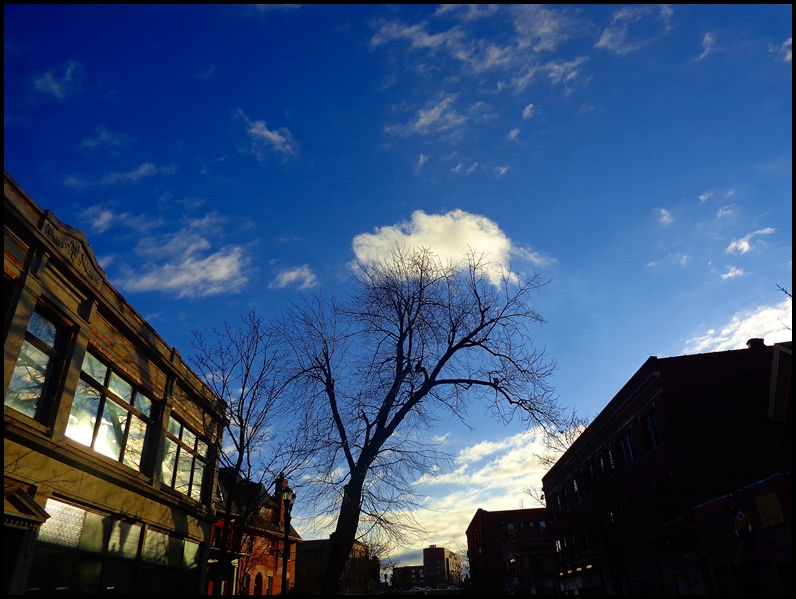
Evening Ride…
For many reasons–mainly a bad cold, then work, snow and frigid temperatures, and most recently being out of town for a few days–I feel like I haven’t ridden much in the past week or so. But tonight it was…at the sake of sounding hokey…such a lovely winter evening for a ride. Nary a breeze in the air, a near cloudless sky above and full of stars, and high(ish) temperatures (as compared to past couple weeks)…it was in the upper twenties (Fahrenheit). It felt really good to be out on a bike and pedaling and coasting in the crisp winter air. I’m just sayin…
Bananas Foster!
Okay. So a few things first. This dish is so easy to make you won’t even have to think about it. It is really, really delicious. But it’s also really rich (every so often is ok, right?). The image above is the recipe in large quantity; I made it today for 120 people (in that recipe there is 4lbs butter, 4 lbs brown sugar, an entire bottle of rum, and 65 bananas). Also in the recipe above the bananas are sliced crosswise, rather than the traditional lengthwise (which I recommend, but a crosswise is easier to handle with a large batch). This dish was invented at Brennan’s Restaurant in New Orleans in 1951 to honor Richard Foster, who at the time lead the New Orleans Crime Commission and was a good friend of Owen Brennan and a regular at the restaurant. Anyhow, here’s a recipe for four servings.
Serves 4
4 tablespoons butter
1/2 cup brown sugar
4 medium bananas, peeled and sliced
1/2 cup dark rum
4 scoops French vanilla ice cream
Heat the butter and sugar in a large skillet; stir to dissolve the sugar. Add the bananas and cook them for a minute or so, until they begin to brown. Carefully stir in the rum and allow it to flambe. Spoon the bananas and sauce over the ice cream.
L’Hiver…
As I rode to a meeting this evening it struck me that it was 6pm and there was still some light left in the sky; during the darkest days of winter the light shrinks away nearly two hours earlier…the days are getting longer! And as I pedaled and coasted into the winter’s cold wind I stopped for a minute to snap the above photo. Yes, during the dog days of summer when I’m sweating on my a bike and sweating even more facing a stove at work I’ll likely pine for the cold refreshing feel of a winter’s eve, but for now my thoughts are set on spring (it’s not too far away). Because it’s not really the cold and the snow that gets to me during the winter months; it is the darkness, the short grey days and the long dark nights.
“Although it was only six o’clock, the night was already dark. The fog, made thicker by its proximity to the Seine, blurred every detail with its ragged veils, punctured at various distances by the reddish glow of lanterns and bars of light escaping from illuminated windows. The road was soaked with rain and glittered under the street-lamps, like a lake reflecting strings of lights. A bitter wind, heavy with icy particles, whipped at my face, its howling forming the high notes of a symphony whose bass was played by swollen waves crashing into the piers of the bridges below. The evening lacked none of winter’s rough poetry.”
Six Photos of NYC
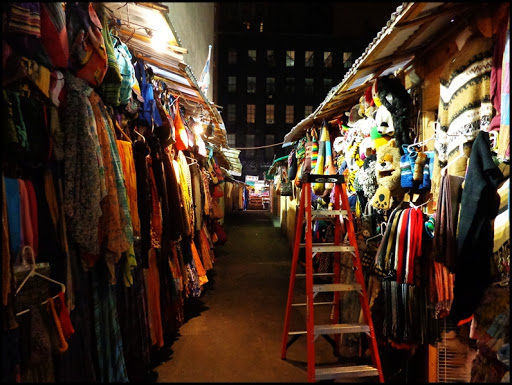
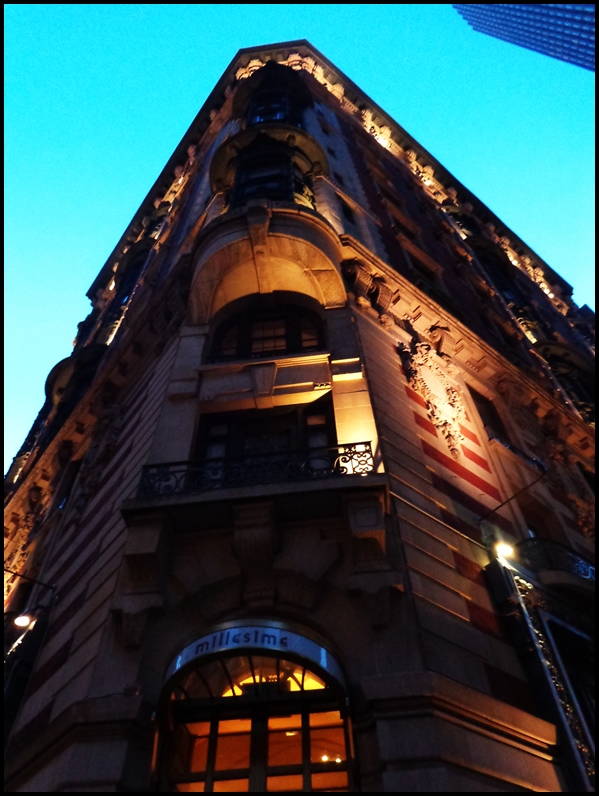
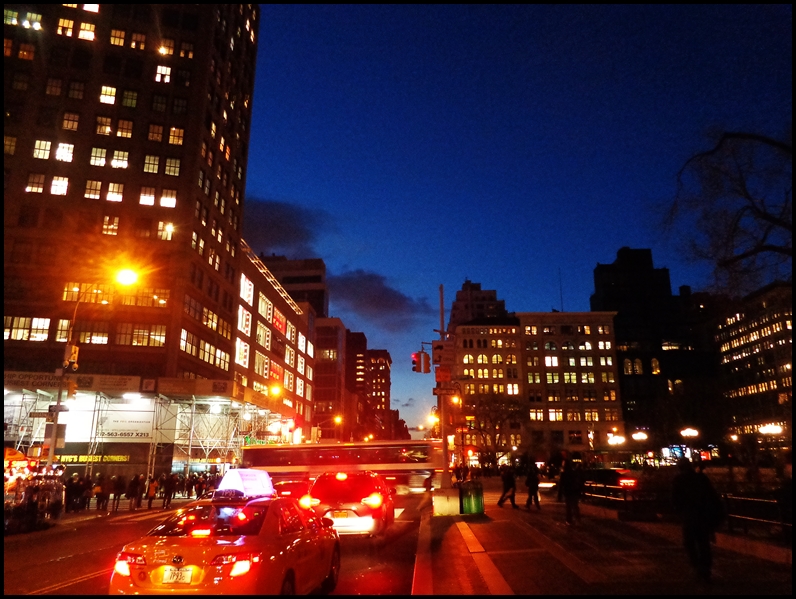
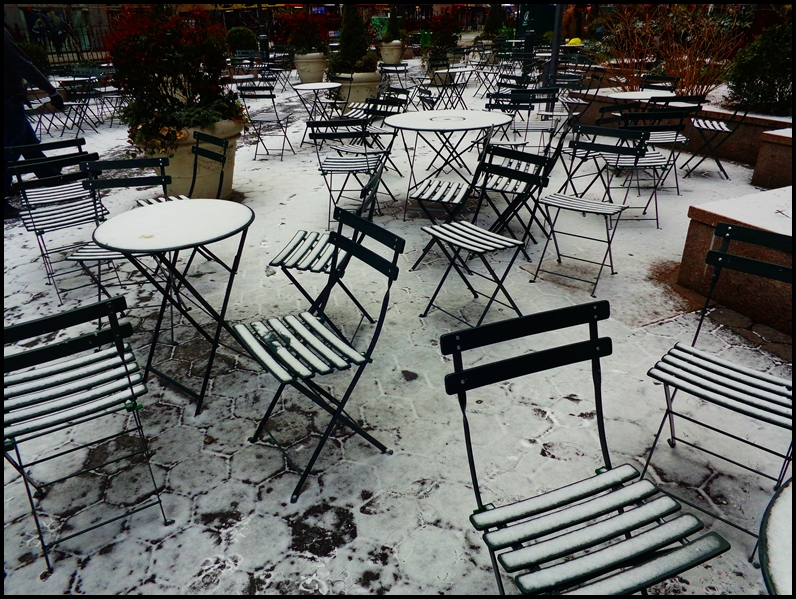
I was in NYC over the weekend and snapped a few photos along the way. I was busy for most of the weekend but took photos as I walked to-and-fro. What’s interesting (I think) is that in my continued efforts to travel light (or at least travel lighter) I brought only one camera with me and it was this small pocket sized point-and-shoot. So yes, it was difficult to hold my hand steady for some of the dusk or evening shots on such cold nights. But still it is possible to capture the feel of a place while looking through an inexpensive lens…