I came across this short clip a few days ago. It makes me feel small (which isn’t a bad thing, I believe, in the ego-centric world in which we live). It also makes me remember that we–human beings on planet earth–are all in this together. For better-or-worse we are all on this big marble hurtling around a large star. It’s what we do with our short time here that makes a difference, I suppose. I’ll get off my hokey little soapbox now…
Turkey and Sun-Dried Tomato Meatballs with Basil and Asiago

Okay, so I’ll say this as I say about many of the recipes on this page (but I really mean it)…these are as easy to make as they are delicious (and they are really, really delicious). You simply put everything in a bowl and mix it together then shape it into balls; the most difficult part (and it’s not difficult) is dicing some of the ingredients. And while these are made with turkey, they would taste just as good if made with another poultry, meat, or even fish. They can be sauteed, baked, fried, or poached. I first sauteed them (to brown them) and then poached them in a tomato sauce to serve with pasta. But they could just as easily be eaten as is…as an appetizer with a spicy or sweet-and-sour dipping sauce. Shaped into patty-form it could be cooked and eaten on a sandwich. You get the picture…they’re easy and delicious (and sort of pretty to look at, too). Did I mention how easy these are to make and how delicious they are…?

Turkey Meatballs with Sun-Dried Tomatoes, Basil, and Asiago
Makes about 3 dozen small meatballs
1 ¼ pounds ground turkey
½ cup diced sun dried tomatoes
2 large eggs
2 slices whole wheat bread, crusts removed and diced
½ cup coarsely chopped fresh basil
½ cup shredded asiago cheese
1 small onion, diced small
4 cloves garlic, minced
1 teaspoon kosher salt
½ teaspoon crushed red pepper
Combine all of the ingredients in a bowl and mix thoroughly. Allow to rest for 5 minutes, then mix thoroughly again. Shape into meatballs. Cook the meatballs in a skillet, in an oven, or poach them in sauce.

Things That Can be Carried on a Bike (#443) and the View from My Handlebars
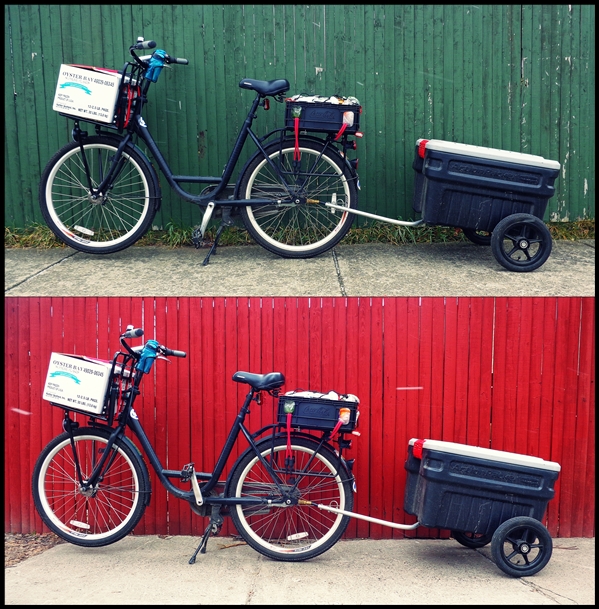
On the bike…nearly $170 in groceries.
The view in front of me…a big, big sky on a cold, cold winter’s day.

A Really Simple (but Superbly Delicious) Homemade Chicken Soup Recipe with Homemade Whole Wheat Noodles
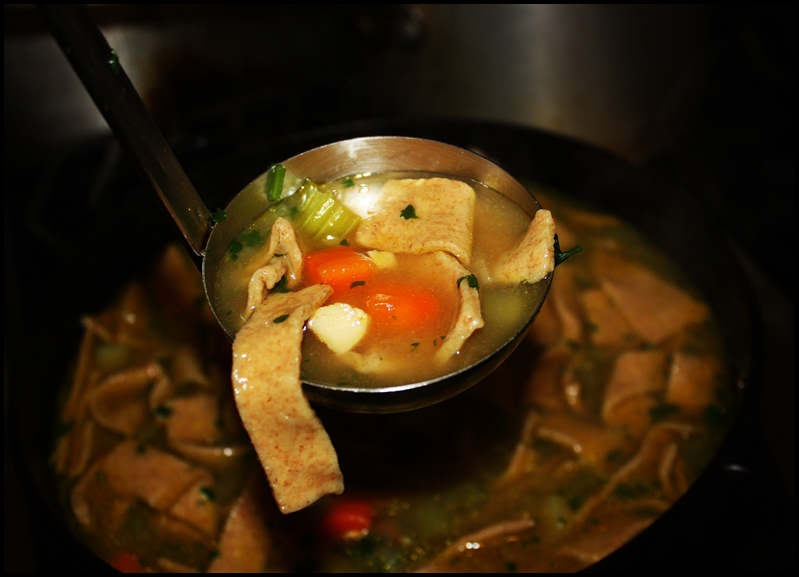
What is it about chicken soup? Even when I go through one of my “very-little-meat” phases I still welcome and crave this simple food. It’s a sort of cultural phenomenon…every culture and nationality has their own version of this humble dish. One of my favorite names for this recipe is “Jewish Penicillin,” making reference to its supposed properties to cure the common cold. And historically speaking it is likely one of the oldest recipes…next to cooking over a live fire, putting things in a vessel and boiling them is one of the oldest known cooking methods. There are plenty of ways to make this dish, and a seemingly endless variety of ingredients one can use, but this is a version I made the other day. It is easy and delicious. The homemade noodles were an added bonus, but if you want to make the recipe and use store-bought (or none at all) it will be equally delicious. This is also a good Base recipe,” meaning one in which you can add or subtract flavorings or ingredients to make it your own. The addition of chilies would make this interesting, as would a bit of fresh ginger and soy for an Oriental flare. More garlic, a splash of lemon, and a few sprigs of cilantro (and a sprinkling of curry) would give it a distinctive Near East flavor. You get the picture. Now if you’ll excuse me, I think I’ll go have a second bowl of soup…
Chicken Soup with Homemade Whole Wheat Egg Noodles
Makes about 5 quarts
For the soup:
2 pounds boneless, skinless chicken thighs (trimmed of fat)
3 quarts chicken broth (homemade or store-bought)
3 tablespoons vegetable oil
1 medium onion, peeled and diced
4 stalks celery, diced
3 medium carrots, peeled and diced
1 medium turnip, peeled and diced
4 cloves garlic, peeled and minced
½ teaspoon turmeric
1 teaspoon kosher salt
1 bunch parsley, chopped

For the noodles:
1½ cups whole wheat flour
1 teaspoon vital wheat gluten (optional)
2 large eggs
2 tablespoons cold water

To Make the Soup:
Combine the chicken and chicken broth in a soup pot and bring to a boil then lower to a simmer. Cook the chicken for about 20 minutes. While the chicken is cooking, make the noodle dough.
Combine the whole wheat flour, gluten, eggs, and water in a bowl and mix until it begins to form a mass. Knead the dough—either by hand or with an electric mixer fitted with a dough hook—until it is a smooth dough (about eight minutes with an electric mixer or 12 by hand). If the dough is too dry add another tablespoon or two of water. Cover the dough with plastic and refrigerate for 30 minutes.
Remove the chicken from the broth to a plate and allow it to cool a bit. Strain the broth and set aside; clean the pot to start the soup.
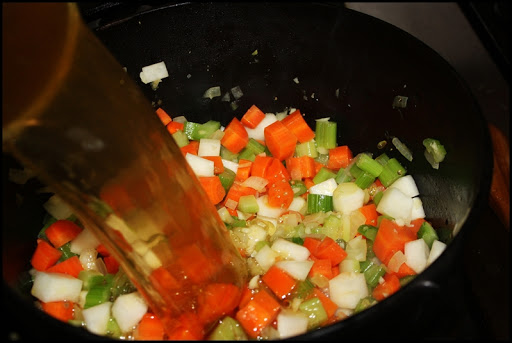
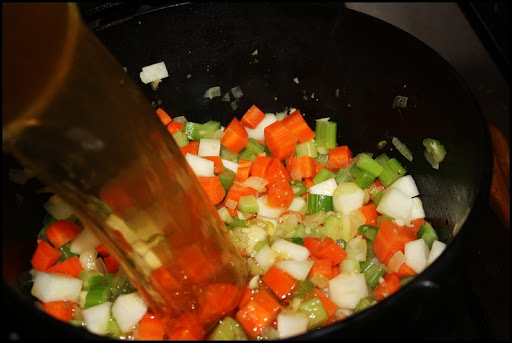
Heat the vegetable oil in the soup pot over medium heat, then add the onion, celery, carrot, and turnip. Cook the vegetables for about five minutes while stirring. Add the garlic, turmeric, and salt; cook another five minutes. Stir in the broth; bring to a boil, then lower to a slow simmer. Dice the cooked chicken and add it to the soup.
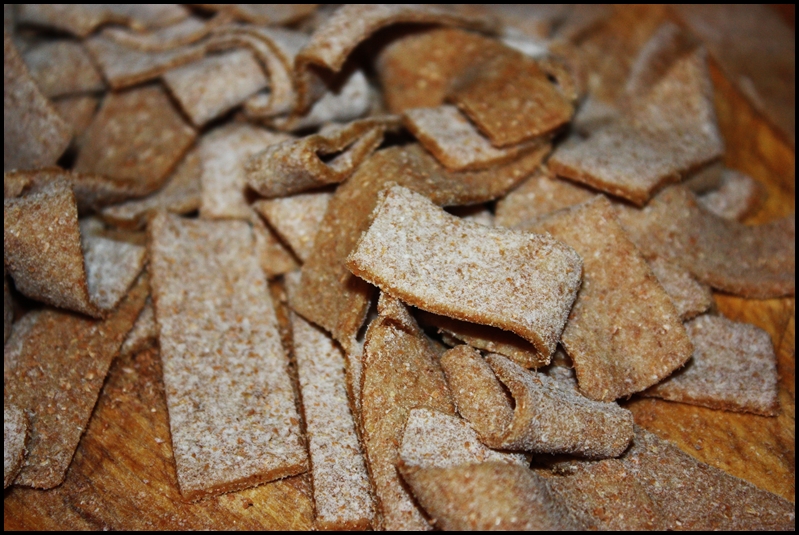
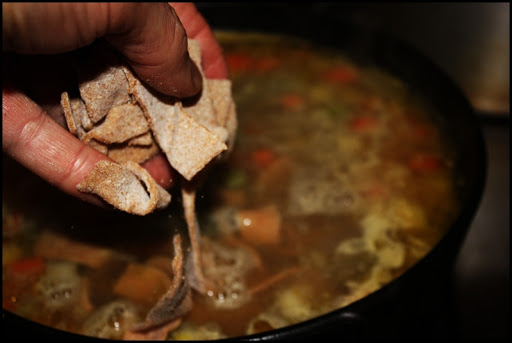
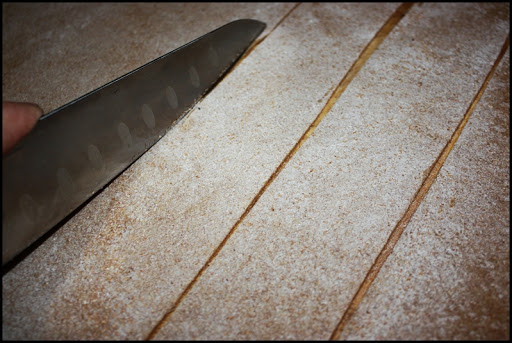
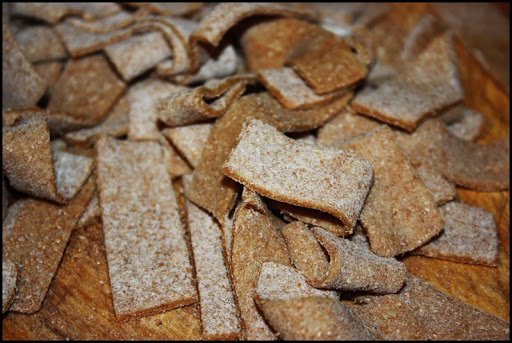
While the soup is simmering roll out the noodle dough on a lightly floured surface. Roll the dough very thin as they tend to plump a little when they cook. Cut the noodles as thin or thick as you like, or in whatever shape that you like. Drop them into the simmering soup, shaking off any excess flour as you pick them up.
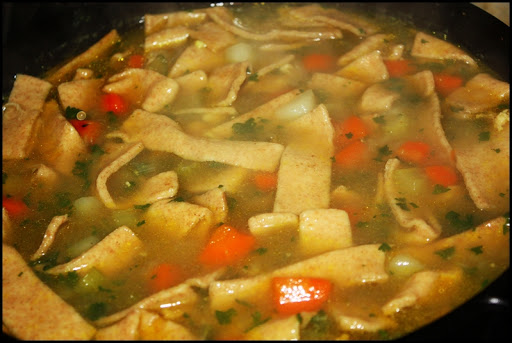
Simmer the noodles in the soup for 5-10 minutes, or until the noodles feel tender but are not falling apart. Just before removing the soup from the heat stir in the chopped parsley.
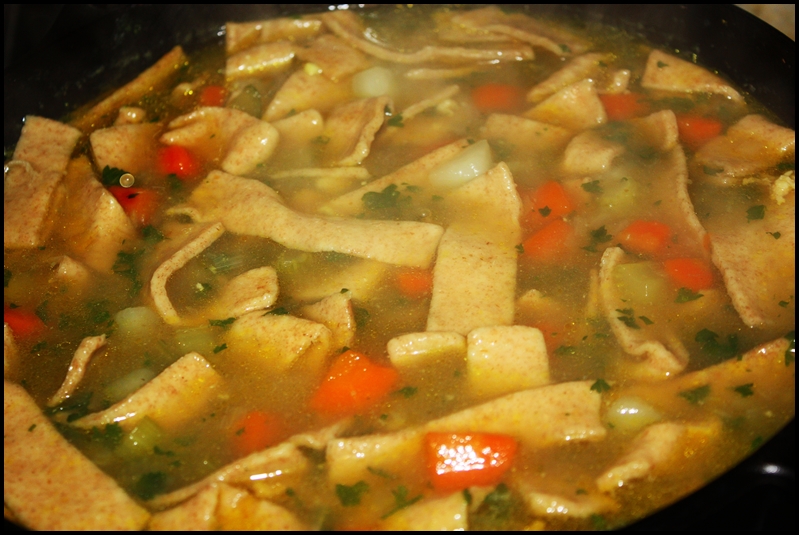
A Really Simple (but Superbly Delicious) Homemade Chicken Soup Recipe with Homemade Whole Wheat Noodles
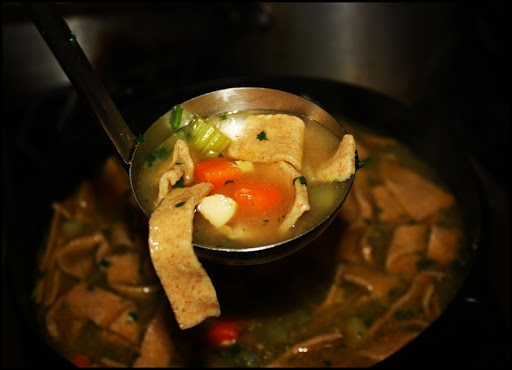
What is it about chicken soup? Even when I go through one of my “very-little-meat” phases I still welcome and crave this simple food. It’s a sort of cultural phenomenon…every culture and nationality has their own version of this humble dish. One of my favorite names for this recipe is “Jewish Penicillin,” making reference to its supposed properties to cure the common cold. And historically speaking it is likely one of the oldest recipes…next to cooking over a live fire, putting things in a vessel and boiling them is one of the oldest known cooking methods. There are plenty of ways to make this dish, and a seemingly endless variety of ingredients one can use, but this is a version I made the other day. It is easy and delicious. The homemade noodles were an added bonus, but if you want to make the recipe and use store-bought (or none at all) it will be equally delicious. This is also a good Base recipe,” meaning one in which you can add or subtract flavorings or ingredients to make it your own. The addition of chilies would make this interesting, as would a bit of fresh ginger and soy for an Oriental flare. More garlic, a splash of lemon, and a few sprigs of cilantro (and a sprinkling of curry) would give it a distinctive Near East flavor. You get the picture. Now if you’ll excuse me, I think I’ll go have a second bowl of soup…
Chicken Soup with Homemade Whole Wheat Egg Noodles
Makes about 5 quarts
For the soup:
2 pounds boneless, skinless chicken thighs (trimmed of fat)
3 quarts chicken broth (homemade or store-bought)
3 tablespoons vegetable oil
1 medium onion, peeled and diced
4 stalks celery, diced
3 medium carrots, peeled and diced
1 medium turnip, peeled and diced
4 cloves garlic, peeled and minced
½ teaspoon turmeric
1 teaspoon kosher salt
1 bunch parsley, chopped
For the noodles:
1½ cups whole wheat flour
1 teaspoon vital wheat gluten (optional)
2 large eggs
2 tablespoons cold water
To Make the Soup:
Combine the chicken and chicken broth in a soup pot and bring to a boil then lower to a simmer. Cook the chicken for about 20 minutes. While the chicken is cooking, make the noodle dough.
Combine the whole wheat flour, gluten, eggs, and water in a bowl and mix until it begins to form a mass. Knead the dough—either by hand or with an electric mixer fitted with a dough hook—until it is a smooth dough (about eight minutes with an electric mixer or 12 by hand). If the dough is too dry add another tablespoon or two of water. Cover the dough with plastic and refrigerate for 30 minutes.
Remove the chicken from the broth to a plate and allow it to cool a bit. Strain the broth and set aside; clean the pot to start the soup.
Heat the vegetable oil in the soup pot over medium heat, then add the onion, celery, carrot, and turnip. Cook the vegetables for about five minutes while stirring. Add the garlic, turmeric, and salt; cook another five minutes. Stir in the broth; bring to a boil, then lower to a slow simmer. Dice the cooked chicken and add it to the soup.
While the soup is simmering roll out the noodle dough on a lightly floured surface. Roll the dough very thin as they tend to plump a little when they cook. Cut the noodles as thin or thick as you like, or in whatever shape that you like. Drop them into the simmering soup, shaking off any excess flour as you pick them up.
Simmer the noodles in the soup for 5-10 minutes, or until the noodles feel tender but are not falling apart. Just before removing the soup from the heat stir in the chopped parsley.
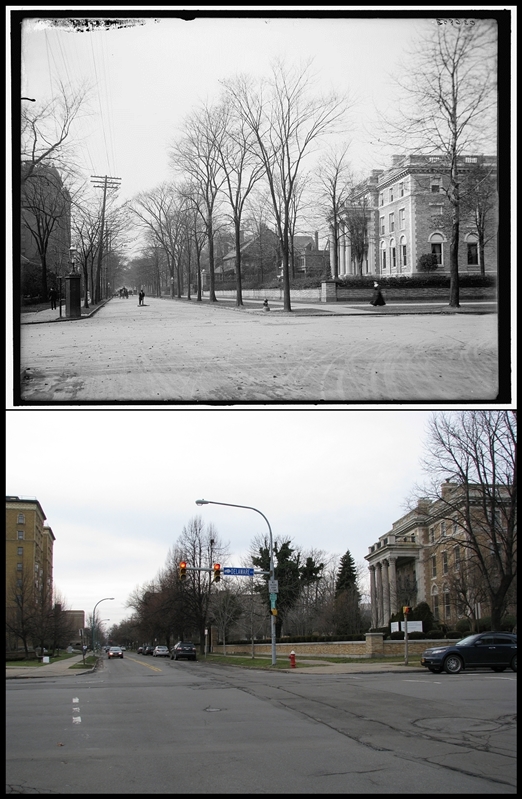
Past and Present…The View from My Handlebars (#2)

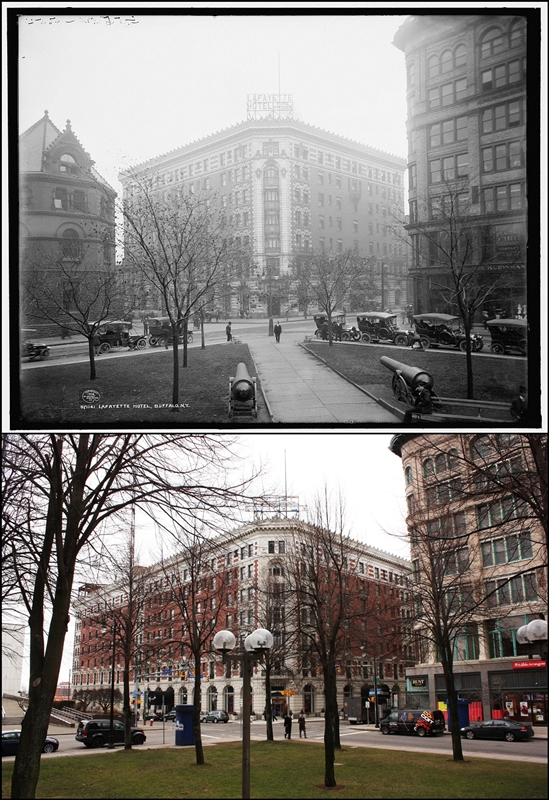
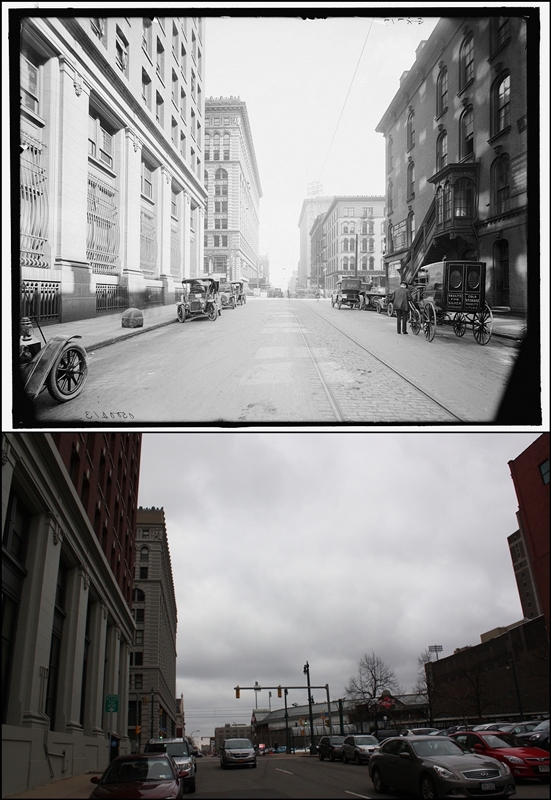
This is really a continuation of a previous post that is similar. I had the day off today and went for a bike ride downtown (on a cold, cold day I may add) armed with a couple cameras and prints of old photos. All of the original photos were taken–I believe–somewhere between 1895 and 1910. And one of the most interesting things, I think, is how it feels to be standing and taking photos in the same spot–or close to it–as the original was taken. Anyhow, the photos are as follows: St. Paul’s Cathedral in what was then known as Shelton Square (I’ve not heard it referred to as this in my lifetime). The next photo is of the original Buffalo Savings Bank (the Electric Tower, which was built in 1912, is of course not in the original). Next is Lafayette Hotel as viewed from Lafayette Square. The two remaining images are a bit sad, I think…at least the current versions are. The second to last is a view of Swan Street in Buffalo facing east and looking past Main Street. The building on the left and in the distance is the Ellicott Square Building, but in the current day image of today an entire block of buildings on the right side are gone. And lastly, the bottom image is of Buffalo’s original YMCA. The building still stands but is all but obscured by our extremely ugly convention center; the building is now called Olympic Towers and houses restaurants, offices, and a health club. Click any image for a larger view.



Five Quotes from Rev. Dr. Martin Luther King, Jr.

January 15, 1929 – April 4, 1968
“A nation that continues year after year to spend more money on military defense than on programs of social uplift is approaching spiritual doom.”
“An individual has not started living until he can rise above the narrow confines of his individualistic concerns to the broader concerns of all humanity.”
“Every man must decide whether he will walk in the light of creative altruism or in the darkness of destructive selfishness.”
“History will have to record that the greatest tragedy of this period of social transition was not the strident clamor of the bad people, but the appalling silence of the good people.”
“Nonviolence means avoiding not only external physical violence but also internal violence of spirit. You not only refuse to shoot a man, but you refuse to hate him.”
Four More…
“We must rapidly begin the shift from a “thing-oriented” society to a “person-oriented” society. When machines and computers, profit motives and property rights are considered more important than people, the giant triplets of racism, materialism, and militarism are incapable of being conquered.”
“People fail to get along because they fear each other; they fear each other because they don’t know each other; they don’t know each other because they have not communicated with each other.”
“We are now faced with the fact that tomorrow is today. We are confronted with the fierce urgency of now. In this unfolding conundrum of life and history, there “is” such a thing as being too late. This is no time for apathy or complacency. This is a time for vigorous and postive action.”
“Let us not seek to satisfy our thirst for freedom by drinking from the cup of bitterness and hatred.”
More in the Five Quotes Series.
Kibbeh (Lebanese Meatballs)

Kibbeh is a Lebanese recipe that comes in many shapes and forms, but if you’ve ever discussed food with a Lebanese person you know that the discussion always comes back to kibbeh. I’ve mentioned before that I myself am Lebanese-American (half, actually, on my dad’s side) and grew up eating this dish. It is basically a Middle Eastern meatloaf mix that is usually made with lamb and instead of breadcrumbs the meat is “stretched” by adding bulgur wheat. There are also vegetarian versions, such as pumpkin kibbeh or potato kibbeh, which are commonly eaten during lent. Today I made meatballs for staff lunch but served them as mini kofta kebobs at a small appetizer party this evening. When I was growing up, though, we didn’t eat any of the fore-said versions, our family ate it two ways (that I recall)…baked and stuffed, sort of like a flat meatloaf, or raw, which is called kibbeh nayyeh. Yup raw. Sounds gross to some but my mouth salivates now as I recall it (think of a lamb version of steak tartar). But sadly, in the age in which we live, I haven’t had raw kibbeh in years and I’m not sure I would eat some if it were offered to me. Below is a basic recipe, as is a recipe on how to cook it into rice to make a complete meal. But of course I deviated form the recipe when I made this today (don’t I always). Today, in addition to the ingredients listed in the recipe (for kibbeh) I also added a bit of cumin, cinnamon, cooked and chopped spinach, and a handful of crumbled feta, simply because I had it on hand. Once the basic recipe is made you can use it for meatballs, skewers, burgers, or add it to sauces, soups, or rice…you get the picture. Anyhow, if you like simple-to-make but super-delicious foods, then try this recipe. ….you won’t be sorry, and likely hooked on first bite.
To read more about Lebanese cuisine click here (it’s an article I wrote for Sally’s Place some years ago…you can tell it’s dated by the picture; my son was a toddler and I had a full head of hair).

Kibbeh Meatballs
1/2 cup medium bulgur wheat
3/4 pound boneless lamb, diced
1/2 small onion, diced
1 clove garlic, minced
1 jalapeno, minced
1 teaspoon salt
1/2 teaspoon black pepper
1/4 teaspoon ground allspice
1/2 small bunch mint, minced
1/2 small bunch mint, minced
Place the bulgur in a bowl, cover with warm water and leave to soak for 10 minutes. Drain and squeeze out as much liquid as possible. Place the bulgur along with the rest of the ingredients in a food processor and process for 20 seconds. Scrape down the sides of the bowl, then process for another 20 or 30 seconds, or until a smooth paste. (You can also use ground lamb and mix the ingredients together for a courser texture.) Stir in the mint, remove the meat from the bowl, shape into small balls and refrigerate for 1/2 hour. Bake, fry, saute, or poach the kibbeh and serve with yogurt sauce.
Yogurt-Cucumber Sauce
1-1/2 cups
1 cup yogurt
1 small cucumber, grated
2 cloves garlic, minced
1 small bunch mint, minced
1/4 small onion, minced
1/4 teaspoon salt
Combine all of the ingredients in a small glass or ceramic bowl, cover securely and refrigerate for 1 hour.
Lebanese-Style Rice with Vermicelli and Kibbeh Meatballs
Yield: 4 servings
3 tablespoons olive oil
1/2 small onion, diced
2 ounces vermicelli, broken into 1-inch pieces
1 clove garlic, minced
1 teaspoon cinnamon
1/2 teaspoon allspice
1/2 teaspoon cumin
3/4 teaspoon salt
1-1/2 cups long grain rice
3 cups hot chicken broth
1 recipe kibbeh (recipe follows)
1/4 cup minced parsley
Yogurt sauce for garnish
In a heavy skillet combine the olive oil, onion, and vermicelli. Place the pan over medium heat and cook, while stirring, until the onion and vermicelli begin to brown. Add the garlic, cinnamon, allspice, cumin, and salt; cook another minute, taking care not to burn the pasta or garlic. Stir in the rice, coating it with the oil and spices, then the chicken broth. Add the kibbeh, submerging them in the liquid. Bring to a boil, then lower to a simmer. Cover the pan and simmer for 20 minutes, then remove from the heat and allow to rest for 10 minutes. Stir in the parsley just before serving, and garnish with yogurt.

How To Make a Really Good Loaf of 100% Whole Wheat Bread (step-by-step directions, photos, and recipe)
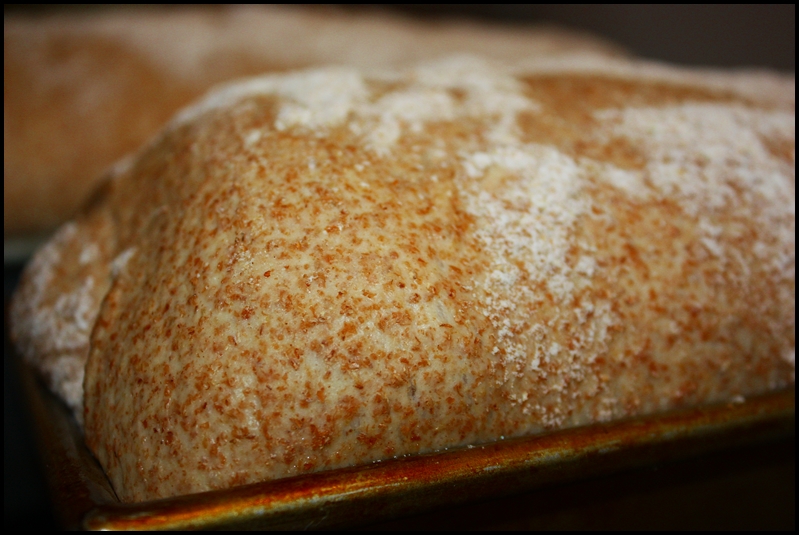
This bread is by far the most common bread that I make…it’s my everyday bread. It is exceedingly easy to make, and good for you. It takes just a few basic ingredients and a few hours of your time (with minimal effort). Below are pictures and the very basic directions on how to make it. To learn more about this recipe (and a couple others) and on the ingredients symbiotic relationship, read this article which I wrote for Artvoice a while ago. So here we go…
Begin by combining some of the flour and water, and a tablespoon or two of vital wheat gluten in one bowl (the autolyse) and some of the flour, water, and yeast in another (the preferment). Allow these to rest for a minimum of one hour but as long as 24 hours.

After the alotted time, combine the contents of both bowls into the bowl of an upright electric mixer that is fitted with a dough hook. Then add another tablespoon of yeast…

A couple teaspoons of kosher salt…
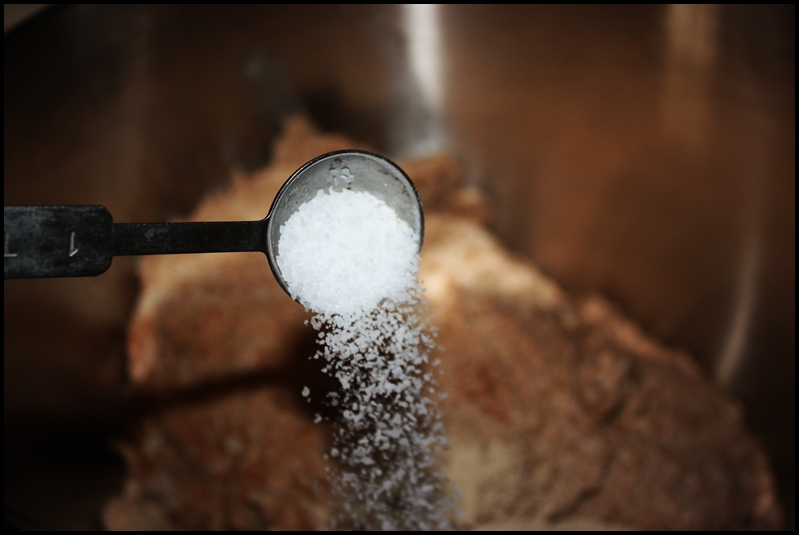
A bit of honey…

And some olive oil…

Turn on the mixer and run it on low just until it begins to form a dough.
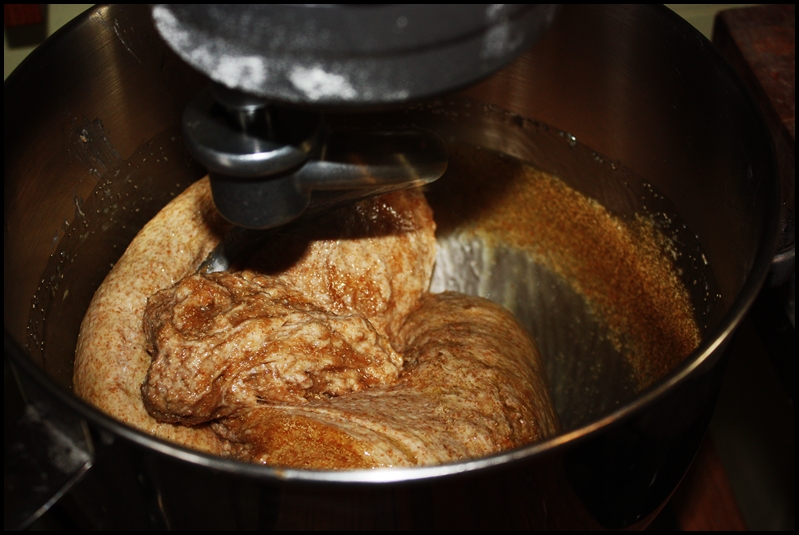
Then turn it up to medium and knead the dough for about 10 minutes.

You’ll know the dough has been kneaded enough when it passes the “windowpane test.”
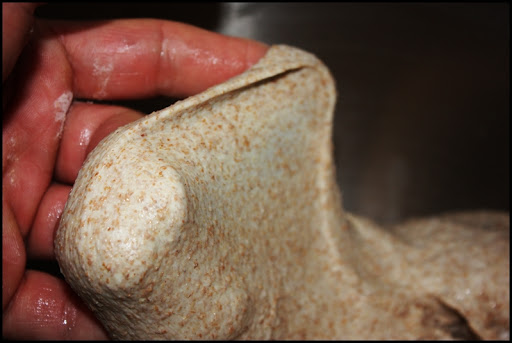
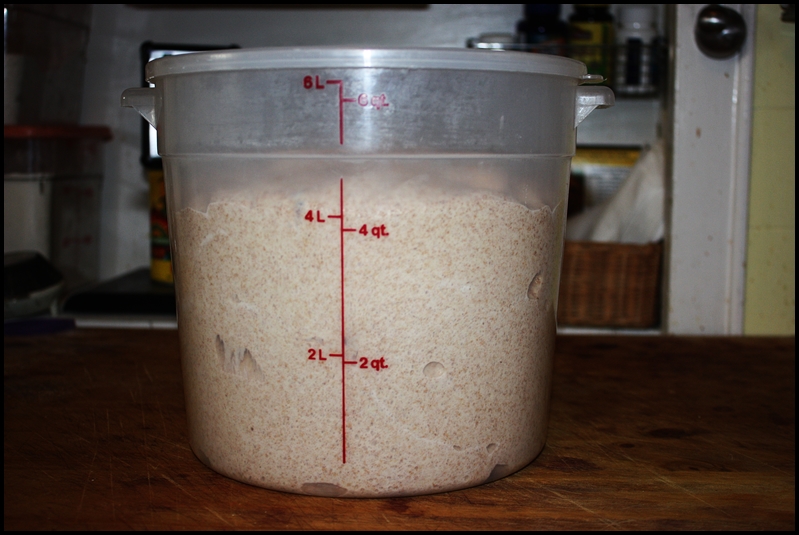
Place the dough in a bowl or dough rising bucket and allow it to ferment and rise at room temperature for about an hour or so; it is ready when it has doubled in size.
After the dough has risen, turn it out onto a stable and lightly floured work surface.

Cut the dough into two or three pieces…
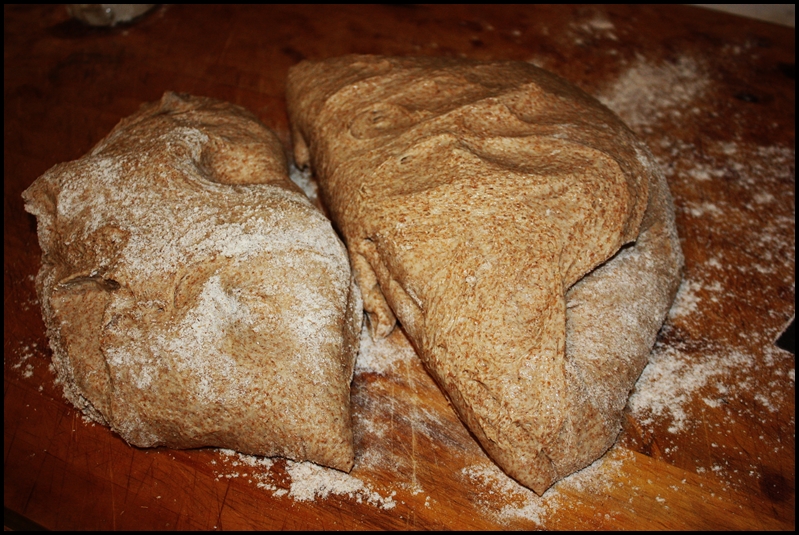
Shape the pieces into loaves…
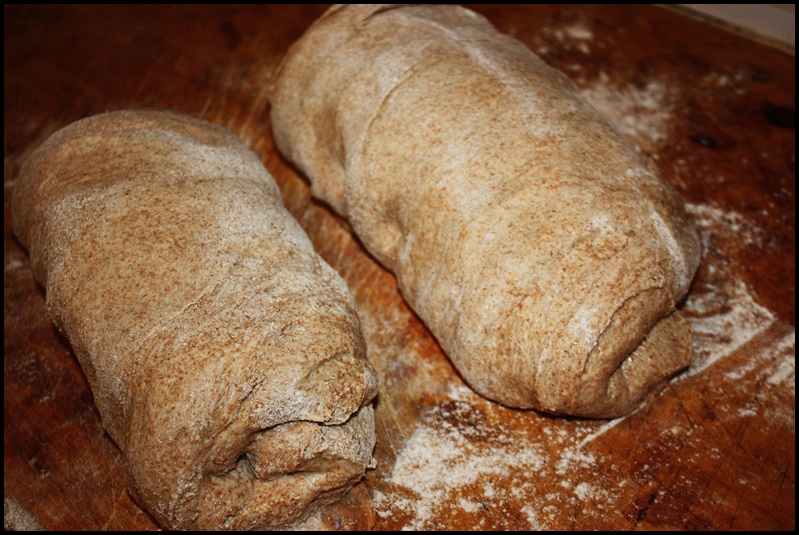
Place the loaves into lightly oiled pans…
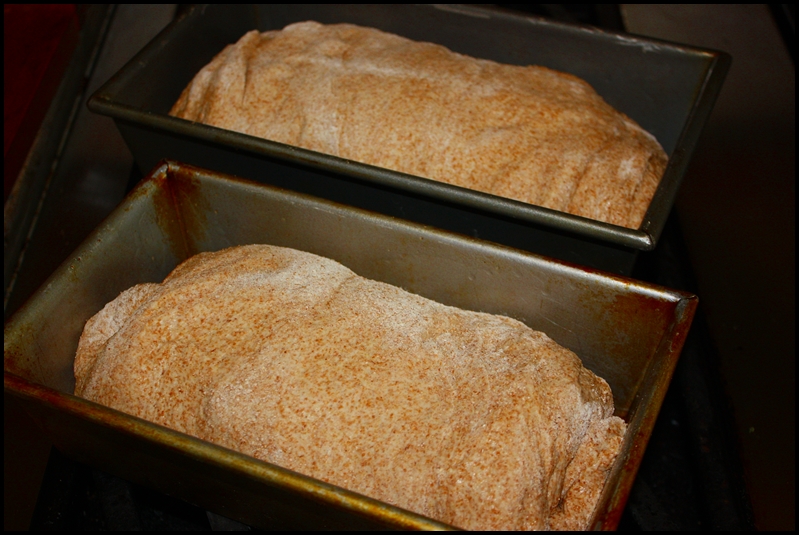
And allow them to rise at room temperature for about 45-60 minutes.

Bake the bread in a preheated oven for about 30 minutes…
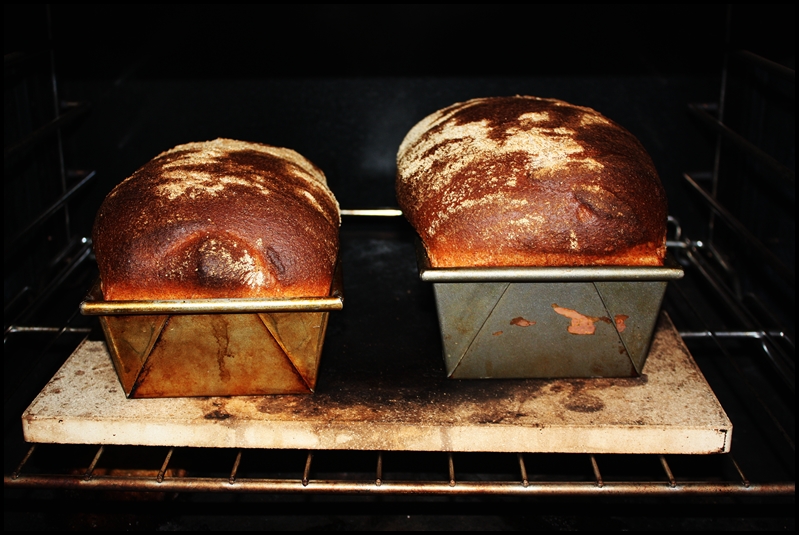
Then remove the bread from the oven and from their pans (if they are sticking to their pans allow them to sit for about 5 minutes at room temp and they will loosen), and rest them on a wire rack or clean towel and allow them to cool for a few minutes before slicing.
Now here’s the actual recipe…
100% Whole Wheat Bread
Makes 2 loaves
2 cups whole wheat flour
1 cup water
2 teaspoons instant yeast
————————
4 cups whole wheat flour
2 tablespoons vital wheat gluten
1 3/4 cups water
————————
1/4 cup honey
1/4 cup olive oil
3 teaspoons instant yeast
3 teaspoons kosher salt
In one bowl make a preferment by combining 2 cups of whole wheat flour with 2/3 cups water and 2 teaspoons of instant yeast. Begin the autolyse in another bowl by combining 4 cups of whole wheat flour, two tablespoons of vital wheat gluten, and 1 3/4 cups water. Stir each bowl just enough to combine the ingredients, taking care not to get yeast into the bowl with the autolyse. If the contents in either of the bowls need more water, add a small amount. Cover both bowls and allow to rest and ferment for 30-90 minutes, during which time the preferment will begin it’s job multiplying yeast and fermenting flour, and the autolyse will soak the grain, swelling the gluten.
After an hour or so, combine the ingredients from both bowls into the bowl of an upright mixer fitted with a dough hook. Add the honey, olive oil, salt, and 3 teaspoons of yeast (add the yeast and salt on opposite sides of the bowl). Knead the dough on medium speed for about 8 minutes. Place the dough in a lightly oiled container, cover it loosely, and allow to ferment for 1-2 hours, or until doubled in bulk. Deflate the dough and allow it to ferment an additional 30 minutes.
Turn the dough out onto a floured work surface and cut it into 2 or 3 pieces. Shape into loaves and place into lightly oiled pans. Loosely cover the loaves with plastic wrap and allow to ferment for 30-60 minutes, or until double in size and when gently touched with a fingertip an indentation remains.
Bake the breads for about 30-40 minutes, adding steam to the oven a few times (either with ice cubes or a spray bottle) and rotating the breads every ten minutes. The breads are done when they are dark brown and sound hollow when tapped upon. Remove the breads from their pans and allow them to cook on a wire rack for at least 10 minutes before slicing.

How To Make a Really Good Loaf of 100% Whole Wheat Bread (step-by-step directions, photos, and recipe)
This bread is by far the most common bread that I make…it’s my everyday bread. It is exceedingly easy to make, and good for you. It takes just a few basic ingredients and a few hours of your time (with minimal effort). Below are pictures and the very basic directions on how to make it. To learn more about this recipe (and a couple others) and on the ingredients symbiotic relationship, read this article which I wrote for Artvoice a while ago. So here we go…
Begin by combining some of the flour and water, and a tablespoon or two of vital wheat gluten in one bowl (the autolyse) and some of the flour, water, and yeast in another (the preferment). Allow these to rest for a minimum of one hour but as long as 24 hours.
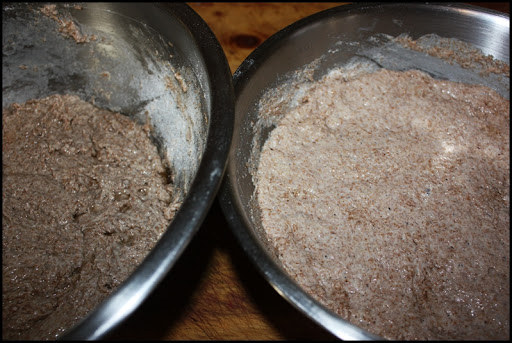
After the alotted time, combine the contents of both bowls into the bowl of an upright electric mixer that is fitted with a dough hook. Then add another tablespoon of yeast…
A couple teaspoons of kosher salt…
A bit of honey…
And some olive oil…
Turn on the mixer and run it on low just until it begins to form a dough.
Then turn it up to medium and knead the dough for about 10 minutes.
You’ll know the dough has been kneaded enough when it passes the “windowpane test.”
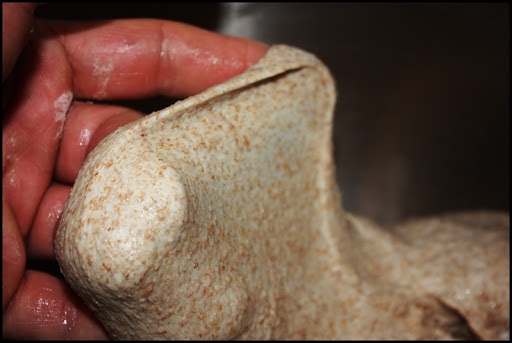
Place the dough in a bowl or dough rising bucket and allow it to ferment and rise at room temperature for about an hour or so; it is ready when it has doubled in size.
After the dough has risen, turn it out onto a stable and lightly floured work surface.
Cut the dough into two or three pieces…
Shape the pieces into loaves…
Place the loaves into lightly oiled pans…
And allow them to rise at room temperature for about 45-60 minutes.
Bake the bread in a preheated oven for about 30 minutes…
Then remove the bread from the oven and from their pans (if they are sticking to their pans allow them to sit for about 5 minutes at room temp and they will loosen), and rest them on a wire rack or clean towel and allow them to cool for a few minutes before slicing.
Now here’s the actual recipe…
100% Whole Wheat Bread
Makes 2 loaves
2 cups whole wheat flour
1 cup water
2 teaspoons instant yeast
————————
4 cups whole wheat flour
2 tablespoons vital wheat gluten
1 3/4 cups water
————————
1/4 cup honey
1/4 cup olive oil
3 teaspoons instant yeast
3 teaspoons kosher salt
In one bowl make a preferment by combining 2 cups of whole wheat flour with 2/3 cups water and 2 teaspoons of instant yeast. Begin the autolyse in another bowl by combining 4 cups of whole wheat flour, two tablespoons of vital wheat gluten, and 1 3/4 cups water. Stir each bowl just enough to combine the ingredients, taking care not to get yeast into the bowl with the autolyse. If the contents in either of the bowls need more water, add a small amount. Cover both bowls and allow to rest and ferment for 30-90 minutes, during which time the preferment will begin it’s job multiplying yeast and fermenting flour, and the autolyse will soak the grain, swelling the gluten.
After an hour or so, combine the ingredients from both bowls into the bowl of an upright mixer fitted with a dough hook. Add the honey, olive oil, salt, and 3 teaspoons of yeast (add the yeast and salt on opposite sides of the bowl). Knead the dough on medium speed for about 8 minutes. Place the dough in a lightly oiled container, cover it loosely, and allow to ferment for 1-2 hours, or until doubled in bulk. Deflate the dough and allow it to ferment an additional 30 minutes.
Turn the dough out onto a floured work surface and cut it into 2 or 3 pieces. Shape into loaves and place into lightly oiled pans. Loosely cover the loaves with plastic wrap and allow to ferment for 30-60 minutes, or until double in size and when gently touched with a fingertip an indentation remains.
Bake the breads for about 30-40 minutes, adding steam to the oven a few times (either with ice cubes or a spray bottle) and rotating the breads every ten minutes. The breads are done when they are dark brown and sound hollow when tapped upon. Remove the breads from their pans and allow them to cook on a wire rack for at least 10 minutes before slicing.
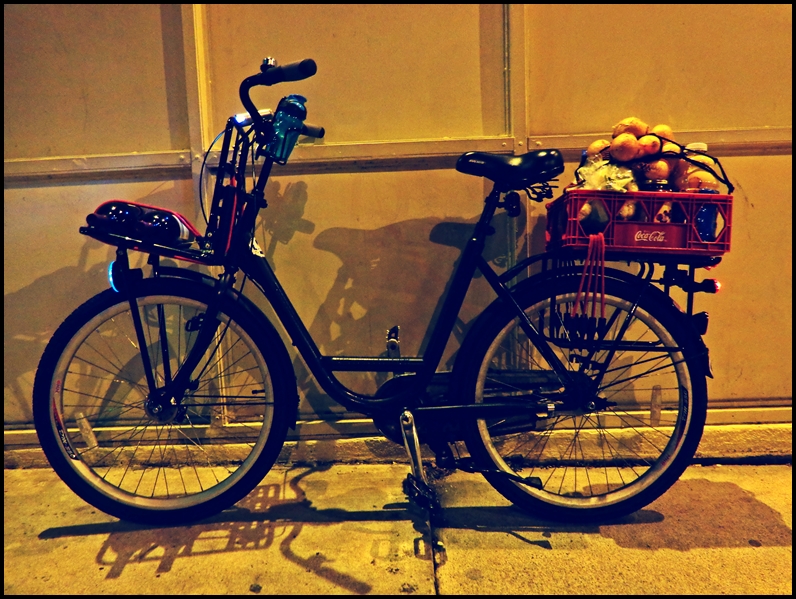
Things That Can be Carried on a Bike (#442)
Past and Present…a View from My Handlebars separated by 116 Years
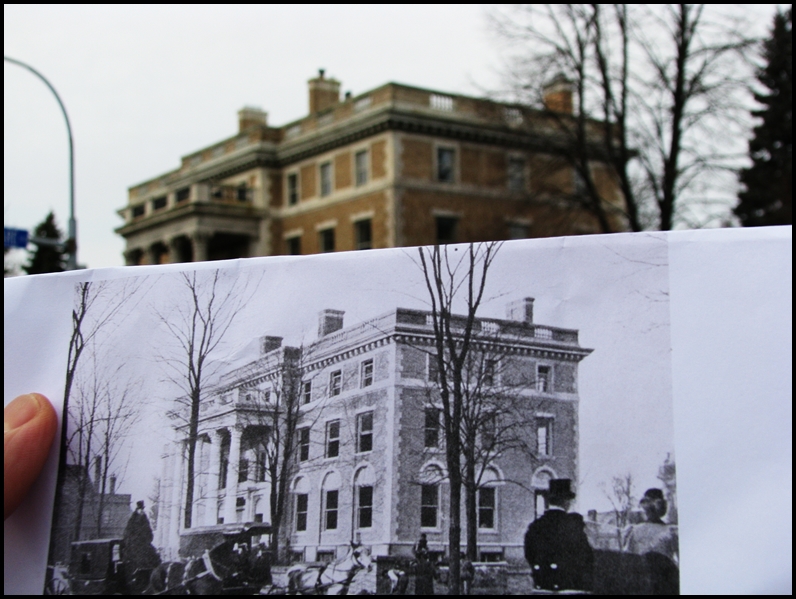
So this is interesting, I think. Earlier today I came across some old photos on this site (I love old photography). Anyhow, a few of the photos were streets that I travel on virtually every day. So I printed a couple of them out and stood in the spot of what I think is likely where the photographer originally stood 116 years ago. The building above is the Butler Mansion, which at the time was a private residence but is now a business. Both of these photographs were taken while standing on the southeast corner of this intersection. I also found it interesting that in many of the photos (not pictured) that besides people walking and in horse-drawn carriages (being pre-automobile era), there were also plenty of people on bicycles…I’m just saying. But that, I think, is the topic of a future post…

Five Quotes from Swami Vivekananda

Swami Vivekananda
(né, Narendra Nath Datta)
12 January 1863 – 4 July 1902
To learn more about Swami Vivekananda, visit one of the foundations that bear his name (here or here), or also this wiki.
“We are what our thoughts have made us; so take care about what you think. Words are secondary. Thoughts live; they travel far. ”
“The greatest sin is to think yourself weak”
“The greatest religion is to be true to your own nature. Have faith in yourselves.”
“You cannot believe in God until you believe in yourself.”
“Comfort is no test of truth. Truth is often far from being comfortable.”
Okay…three more.
“We reap what we sow. We are the makers of our own fate. The wind is blowing; those vessels whose sails are unfurled catch it, and go forward on their way, but those which have their sails furled do not catch the wind. Is that the fault of the wind?……. We make our own destiny.”
“We are responsible for what we are, and whatever we wish ourselves to be, we have the power to make ourselves. If what we are now has been the result of our own past actions, it certainly follows that whatever we wish to be in the future can be produced by our present actions; so we have to know how to act.”
“Things do not grow better; they remain as they are. It is we who grow better, by the changes we make in ourselves.”
More in the Five Quotes series.
Things That Can be Carried on a Bike (#441), the View from My Handlesbars, and a Brief Comment
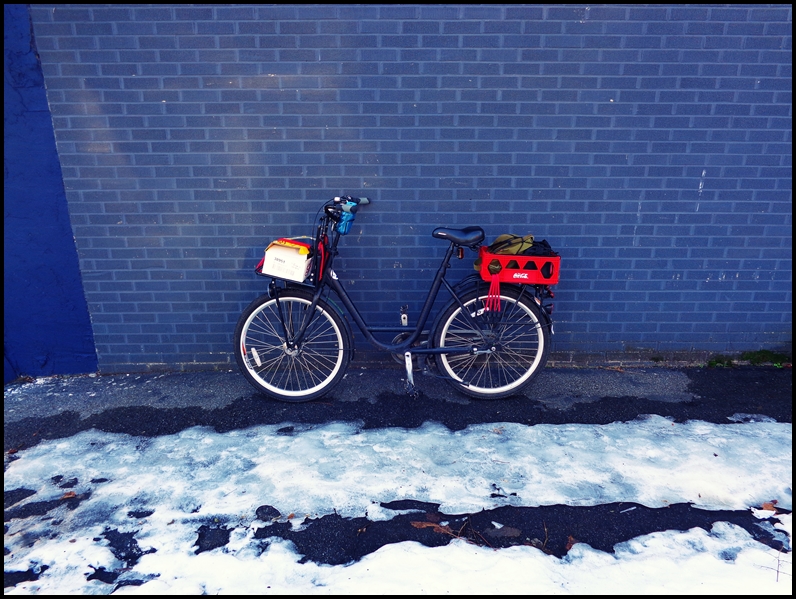
On the bike…a cardboard box containing seven pints of homemade dog food (minced, leftover meat scraps), and a plastic milk crate containing a canvas book bag with–among other things–three books, and a nylon camera bag containing an extra camera and battery pack and charger.
As I type these words it is January 10th and I am in Buffalo, NY…where we are known for our heavy snowfalls and often harsh winters. And January is often the harshest month of all. Today it felt like pre-spring. Winters here have sometimes lasted for five solid months. But this year we had our two weeks of winter and now it seems to be over (last year it barely snowed at all). By this weekend it will be like spring. Trust me, I am not complaining. When I was a kid I loved the winter, but as I’ve gotten older I’ve come to love the non-winter seasons. But while I am enjoying the mild weather I have to admit that it also seems odd; almost upsetting. It just doesn’t seem right…

Broth, Bouillon, Brodo (y Caldo)
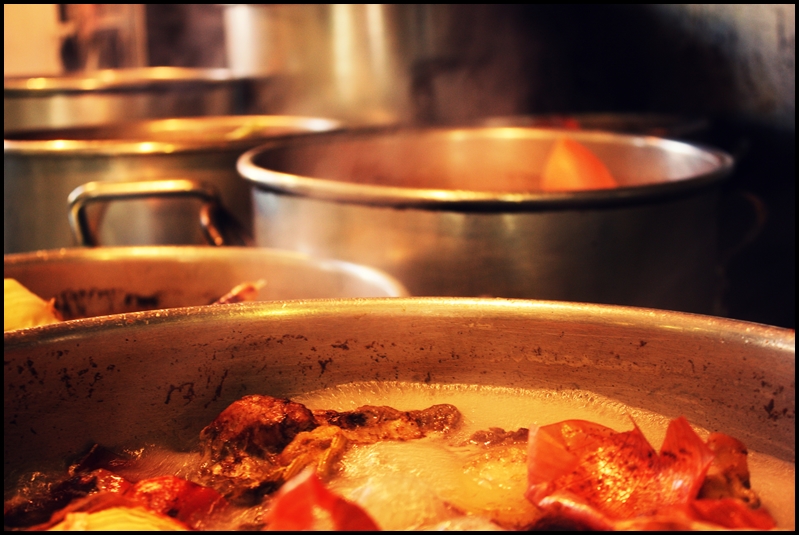
“Good soup is one of the prime ingredients of good living. For soup can do more to lift the spirits and stimulate the appetite than any other one dish.”
–LouisP. De Gouy
–LouisP. De Gouy
A couple things…
Firstly, I have relatively little trouble eating (and ultimatley sustaining on) meatless or near-meatless meals. Actually, I prefer it. But I have to admit the one thing that would keep me from being a full-blown vegetarian is meat-based stock or broth…or what a vegan friend of mine refers to as “meat juice.” Rice cooked in water is bland, but cook it in a rich broth and it is a meal unto itself. If you have a rich broth and want a soup the flavor is already accomplished…whatever else you add is simply a bonus. I add chicken stock to most things I cook aglio e olio. The famed chef, Auguste Escoffier–whom which chef De Gouy worked under–has said that (and I’m paraphrasing) with a good stock anything can be accomplished. Stock/broth, to me, is a form of alchemy. And I love how the kitchen smells with a broth slowly simmering away (home kitchen or work kitchen). Today at work was slow and I made seven pots of the golden stuff (about 40 gallons) and the kitchen smelled amazing. Anyhow, for recipes and lore about soup and stock read this article I wrote for Artvoice a couple years ago. In the meantime…simmer.

Five Quotes from Henri Nouwen
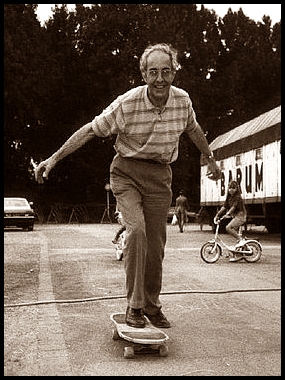
(January 24, 1932 – September 21, 1996)
I came across the the above photo recently at Indy Bikehiker (thanks John!) and it reminded me of some of the books I’ve read by this inspirational and prolific author (this one is my favorite). But it also reminded me that even though he, Fr. Nouwen, touched so many peoples lives (including mine, even though I never met him), he himself struggled with doubt (of himself and his faith) and had bouts of depression and self-worth…in short he was as human and confused as the rest of us. And yes, I realize that this is the Five Quotes series and I have eight…but I could have gone on for quite some time, so I just chose these eight short ones. If you want to learn a bit more about him, visit the Henri Nouwen Society, and this is also an excellent biography.
“You don’t think your way into a new kind of living. You live your way into a new kind of thinking.”
“Joy does not simply happen to us. We have to choose joy and keep choosing it every day.”
“The spiritual life does not remove us from the world but leads us deeper into it”
“The soul of the artist cannot remain hidden.”
“Emit gratitude as though it was done”
“One of the tragedies of our life is that we keep forgetting who we are”
“Much violence is based on the illusion that life is a property to be defended and not to be shared.”
“The world is evil only when you become its slave.”
More in the Five Quotes Series.
Maccheroni al Forno con Quattro Formaggi
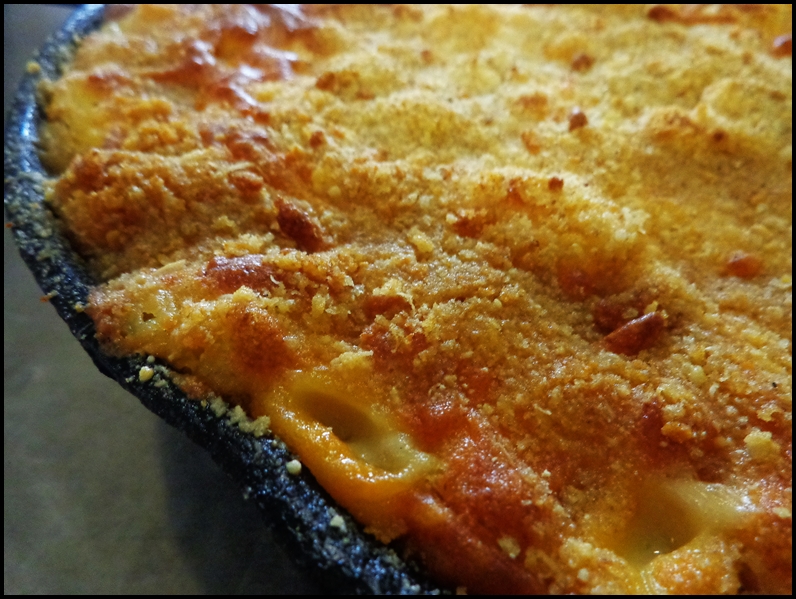
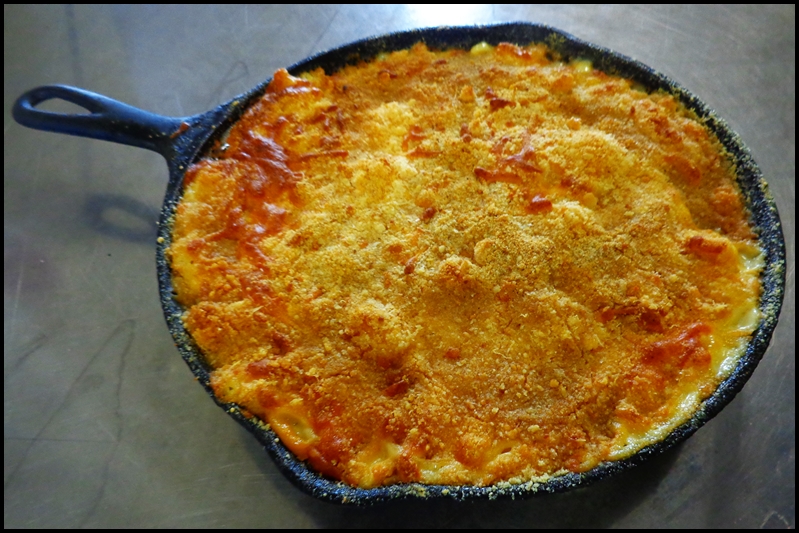
That’s a pretty fancy name (referring to the title of this post) for something that translates to American English as Macaroni-and-Cheese (okay, macaroni-and-four-cheeses). The recipe is really, really easy, and really, really delicious. It may not be the healthiest thing to eat, but geeze o’ man is it delicious (did I mention how delicious this is?). The recipe pictured is the same one that is written below, but the beauty is that you can add your own twist to this. You can, for example, add or subtract whichever cheese(s) you like/dislike. Or better yet, add various other foods to the dish, such as broccoli florets, roast peppers (sweet or spicy), sausage (chorizo is awesome), diced ham, or even shrimp. Anyhow–and just to reiterate–this is super easy and super delicious. Enjoy.

Macaroni-and-Cheese
(with four cheeses)
Makes about four servings
8 ounces elbow macaroni
4 tablespoons unsalted butter
4 tablespoons flour
1 cup milk
1 cup cream
½ teaspoon kosher salt
¼ teaspoon black pepper
½ cup shredded cheddar
¼ cup crumbled Gorgonzola
¼ cup grated Parmesan
¼ cup grated Fontinella
¾ cup breadcrumbs
Preheat and oven to 350F. Boil the macaroni in salted water, drain, and set aside. Melt the butter in a heavy saucepan then add the flour, stirring to form a roux. Cook the roux over medium heat—while stirring—for a few minutes, then add the milk, cream, salt, and pepper. Using a wire whisk, stir the sauce over medium-high heat until smooth. Continue stirring until it is heated and thick. Cook the sauce for a minute or two then remove from the heat. Add the cheeses and stir until smooth. Add the cooked macaroni to the pot and gently fold into the cheese sauce. Transfer to a lightly oiled skillet or other oven-proof baking dish and sprinkle with the breadcrumbs. Bake the macaroni-and-cheese for about 20 minutes, or until it is hot throughout, bubbling, and golden.
More Fortune Cookie Philosophy

Sometimes–when I let so many little things get in the way of what is really important–I need a reminder of how true this simple statement is. Just to be alive is truly grand…
To read more fortune cookie philosophizes, click here.







 Urban Simplicty