Chaudrée (deux recettes)

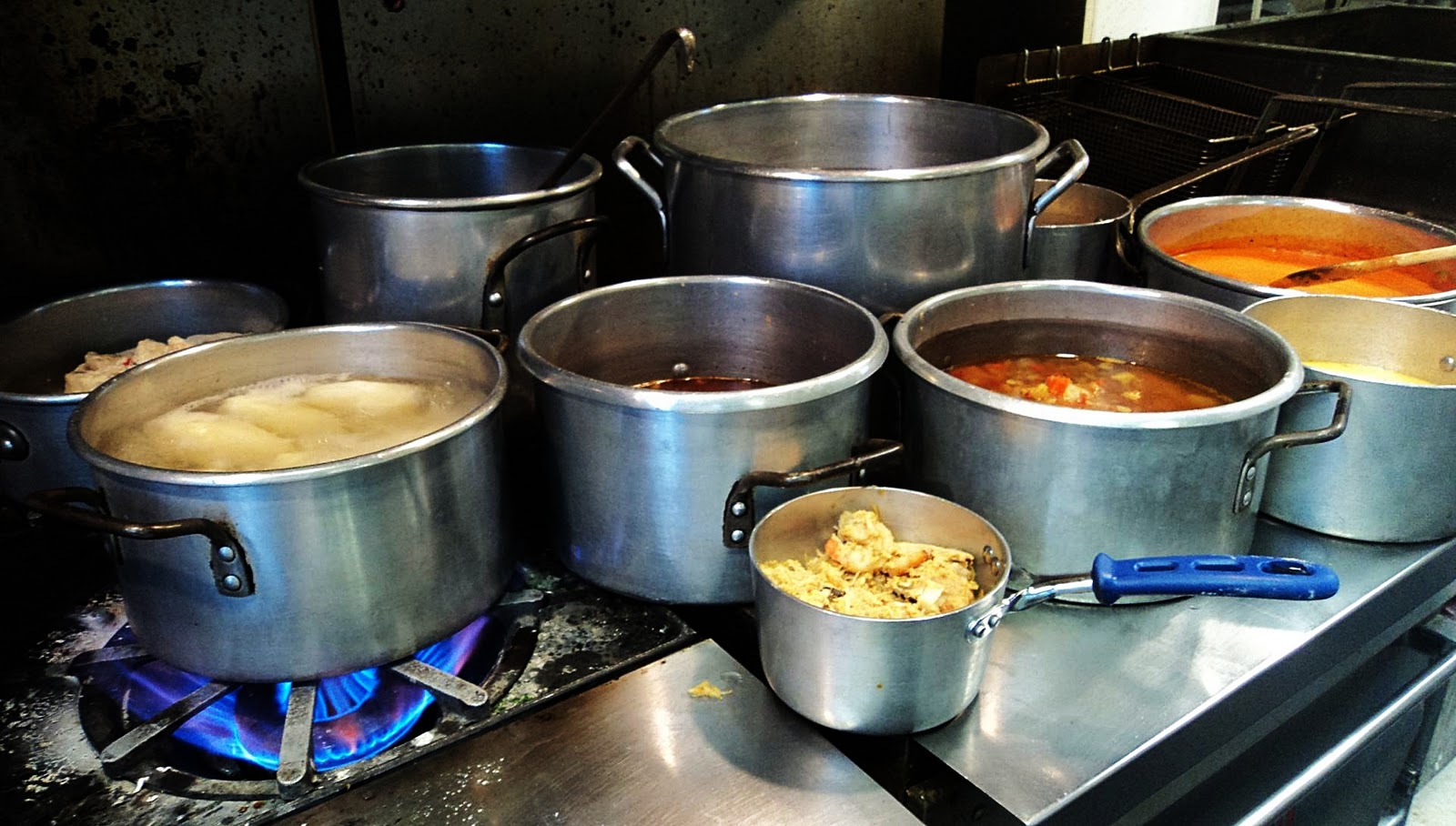
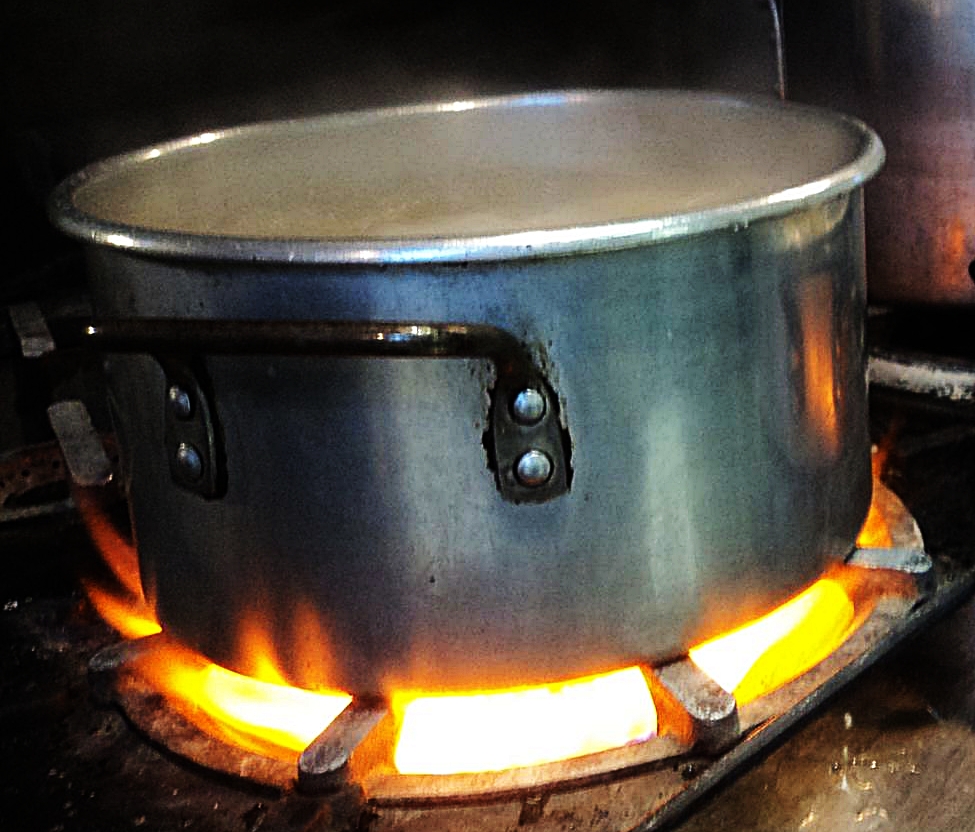
Many American foods have their rootsfirmly planted in Europe and have developed in this country in a sortof convoluted fashion. The recipes were often brought to our countrywith immigrants when they migrated here, and usually adapted toutilize ingredients that were readily available. Chowder, forexample, had its beginnings in France, then was brought to FrenchCanada before finally evolving into the chowders that are famous tothe New England region of our country. The English word chowder, infact, is said to be derived from the French word chaudière—thepot in which chaudrée, or chowder, is cooked. The root wordfrom which these are based is chaud, French for hot; chaudièretranslates literally to cooker or heater. And if there were such athing as a family tree relating to foods, chowder’s first cousin onceremoved would be, in my opinion, Louisiana gumbo. That hearty dishtakes its name from the West African word gombo, meaning okra,and seems to be a sort of abstract of a chowder recipe that hasevolved with the conglomeration of peoples in Southern Louisiana,including some of the French that fled Eastern Canada to that region.
The chaudrée of NorthwestFrance is a sort of fisherman’s stew, which consists of seafood ofthe region simmered in broth along with vegetables and herbs. Alisting in the French cookery encyclopedia Larousse Gastronomiquetranslates chaudrée to English simply as “fish soup.”It goes on to state the various seafoods that can be included in thedish, including eel! When the French of that area migrated to Canada,not surprisingly, they brought with them their beloved recipes forchaudrée. A 1970 edition of the bi-lingual book Food-À LaCanadienne lists two recipes for chaudrée; one is basedon fish and the other potato. When some of these French migratedsouthward, into New England, the language of course was English andchaudière, or chaudrée, began to be pronounced as—andeventually known as—chowder. There, the chowders were based onclams simply because of their regional abundance. It wasn’t until theearly 1900’s that a creative restaurateur at Coney Island replacedthe milk in chowder with tomatoes to create Manhattan Clam Chowder;this was, at the time, a travesty to a New Englander.
Chowder today can be based on almostany meat, fish or vegetable, though many purists will probablydispute this. There are a few guidelines that should be followedthough. Chowder is usually a rather rustic soup with coarse-choppedingredients; though it is often thickened naturally, traditionalchowder does not contain flour as a thickening agent, but a littleflour will give the soup a certain viscosity. Most importantly, thetwo defining ingredients that denote chowder are diced potato andcured pork, such as salt pork or bacon.
Potato Chowder
(Chaudrée de Pommes deTerre)
Yield: 3 quarts
3 tablespoons unsalted butter
12 ounces diced lean ham
1 cup diced onion
1/2 cup diced carrots
1/2 cup diced celery
2 teaspoons minced garlic
2-1/2 pounds peeled and diced potatoes
6 cups chicken stock
1 teaspoon thyme
1 teaspoon salt
1/2 teaspoon black pepper
1 cup milk (optional)
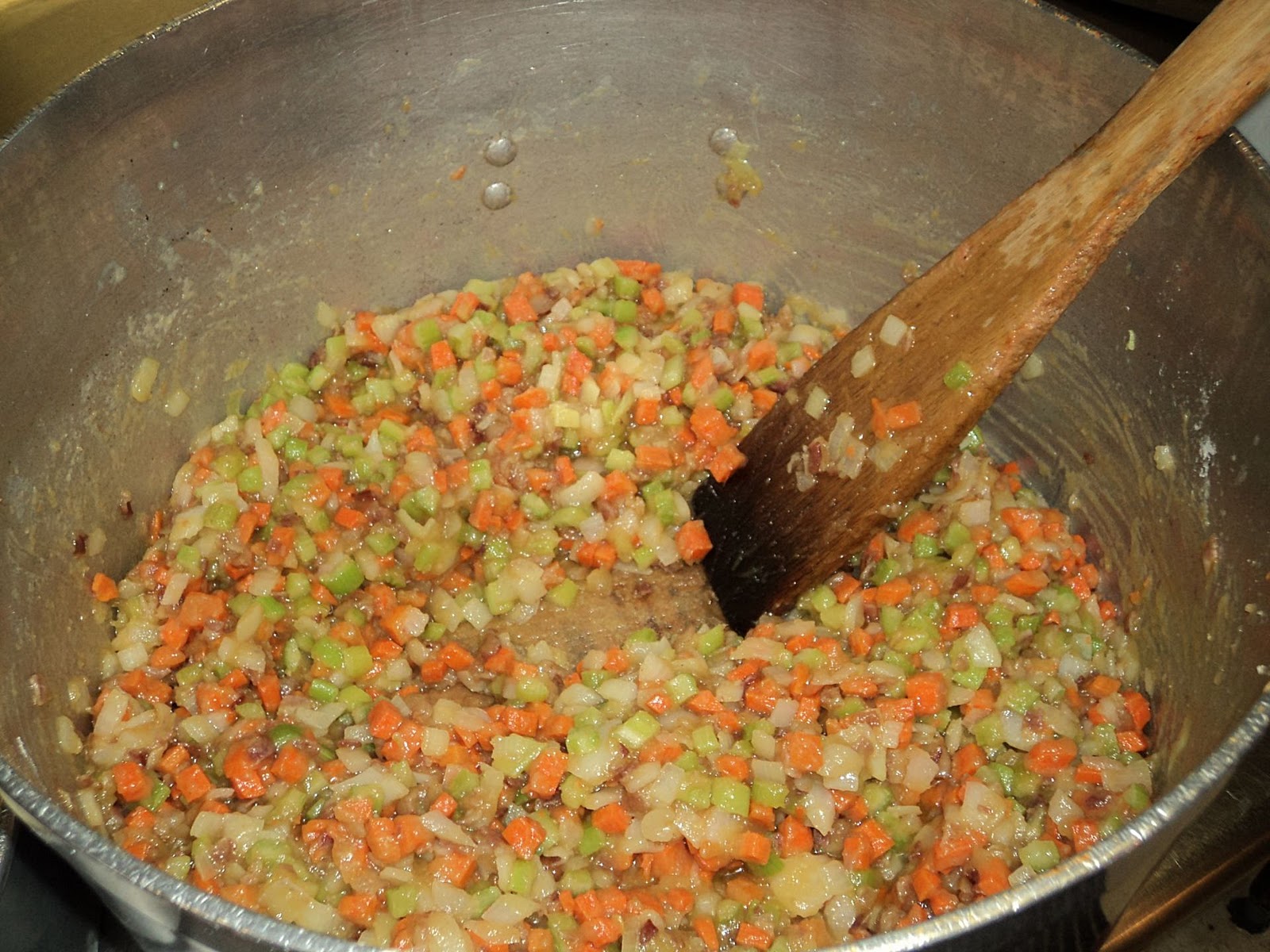
Heat the butter in a large heavy souppot over medium high heat, when it begins to bubble add the ham,onions, carrots, celery and garlic. Sauté the vegetables and ham forapproximately 5 minutes, until they are soft and translucent but notbrowned. Stir in the potatoes, chicken stock, thyme, salt and blackpepper. Bring the soup to a boil then lower the heat to a low simmer;skim any impurities that may have risen to the surface of the soup.Simmer the soup for 45-60 minutes, stirring often.
Using a wire whisk, gently break apartsome of the potatoes to give the soup some viscosity. If adding themilk, do so directly before serving the soup and do not boil it oncethe milk has been added.
New England ClamChowder
Yield: 4 quarts
2 dozen chowder clams(quahogs)
2 quarts water orchicken stock
1/4 cup diced salt pork
1 cup diced onion
1/2 cup diced celery
1/2 cup diced carrots
1/2 cup flour
1/2 cup diced potato
1 teaspoon freshthyme
1/2 teaspoon salt
1 teaspoon blackpepper
1 quart milk
Place the clams in a pot with the wateror stock. Cover and steam them for about 10 minutes, or until theyare fully cooked and completely open. Strain the broth and reserveit; remove the clams from their shells and discard the shells. Chopthe clams and reserve them.
In a heavy soup pot over medium heat,sauté the salt pork until it is golden brown, crispy, and all thefat has rendered from it. Add the onion, celery, and carrot; sautéanother 2 minutes. Stir in the flour, lower the heat slightly andcook the vegetables and flour for 5 minutes, stirring continuously.Add the potato, thyme, salt and pepper, stir the potatoes to coatthem with the fat and flour. Add the clam broth to the pot a littleat a time, while stirring, to avoid any lumps. Bring the soup to aboil to a boil and add the chopped clams. Lower the heat, skim anyscum that has risen to the surface and simmer the chowder for 15minutes.
Stir in the milk, but do not boil it.If desired, garnish the chowder with a sprinkling of chopped parsley,paprika, and a pat of butter.


A Few Photos and a Few Words

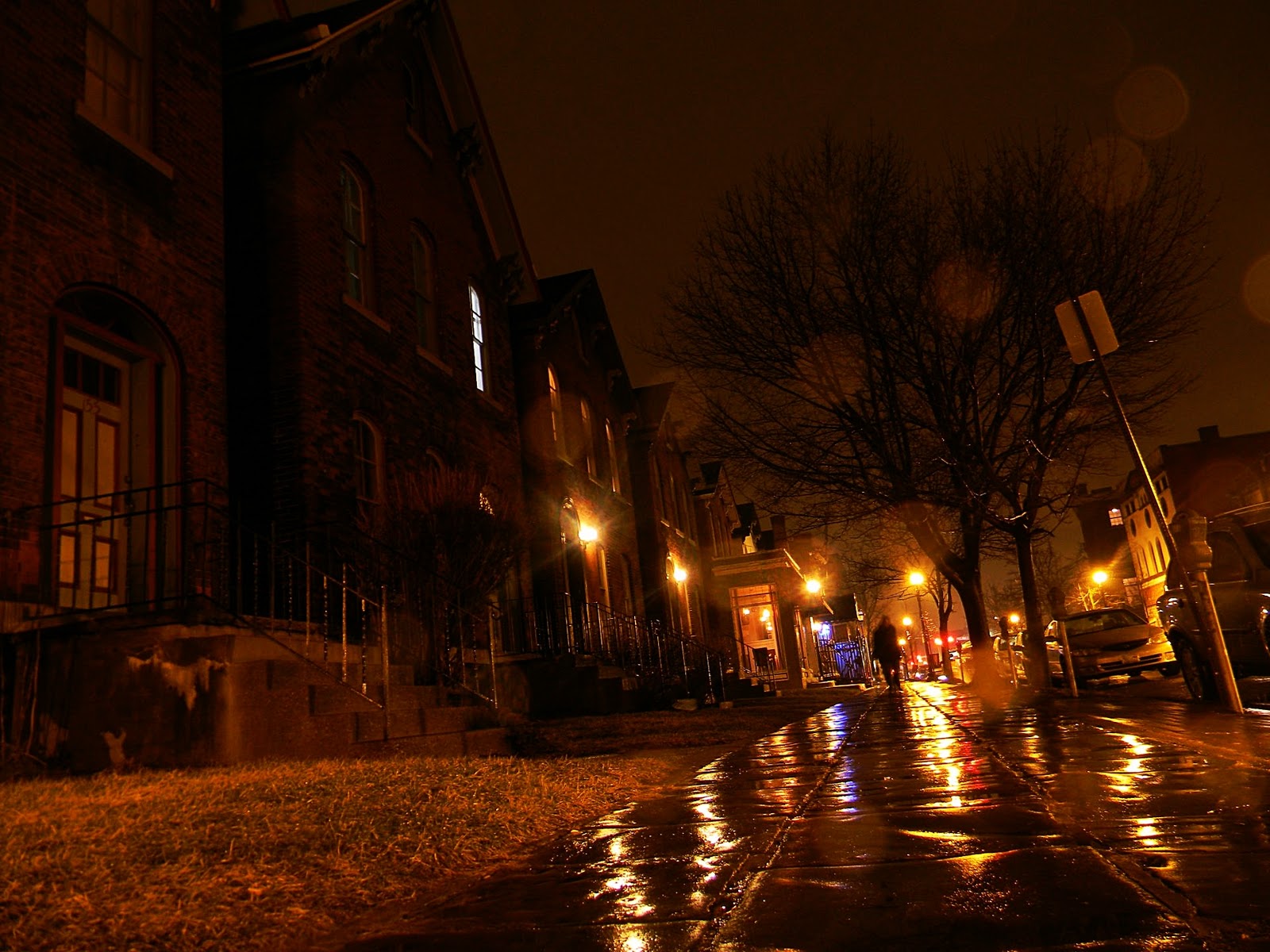
Dusk and dawn are my two favorite parts of the day; the first signs of the beginning of a new day or the end of the current one…and the light is incredible. The above photo (Big Sky) I took last evening. As I rounded the corner on my bike the scene before me–or more accurately, above me–quite literally stopped me in my tracks. The series of four photos below (Birds in a Tree at Night) I took this evening as I left the health club. I was riding my Mundo so I could use the rear of it as a platform to stand my mini tripod on to steady the camera and experiment with different exposures. And the bottom photo (Greek Church) I took on my way to the health club while there was still some light in the sky.  It’s a church which I pass and often admire but tonight as I passed the light was just right so I had to capture it the best I could. It’s slightly askew because the bike tilted a bit just before the shutter snapped. As usual, click any for a larger view.

Urban Simplicity.

Things That Can be Carried on a Bike (#395)…and a couple comments

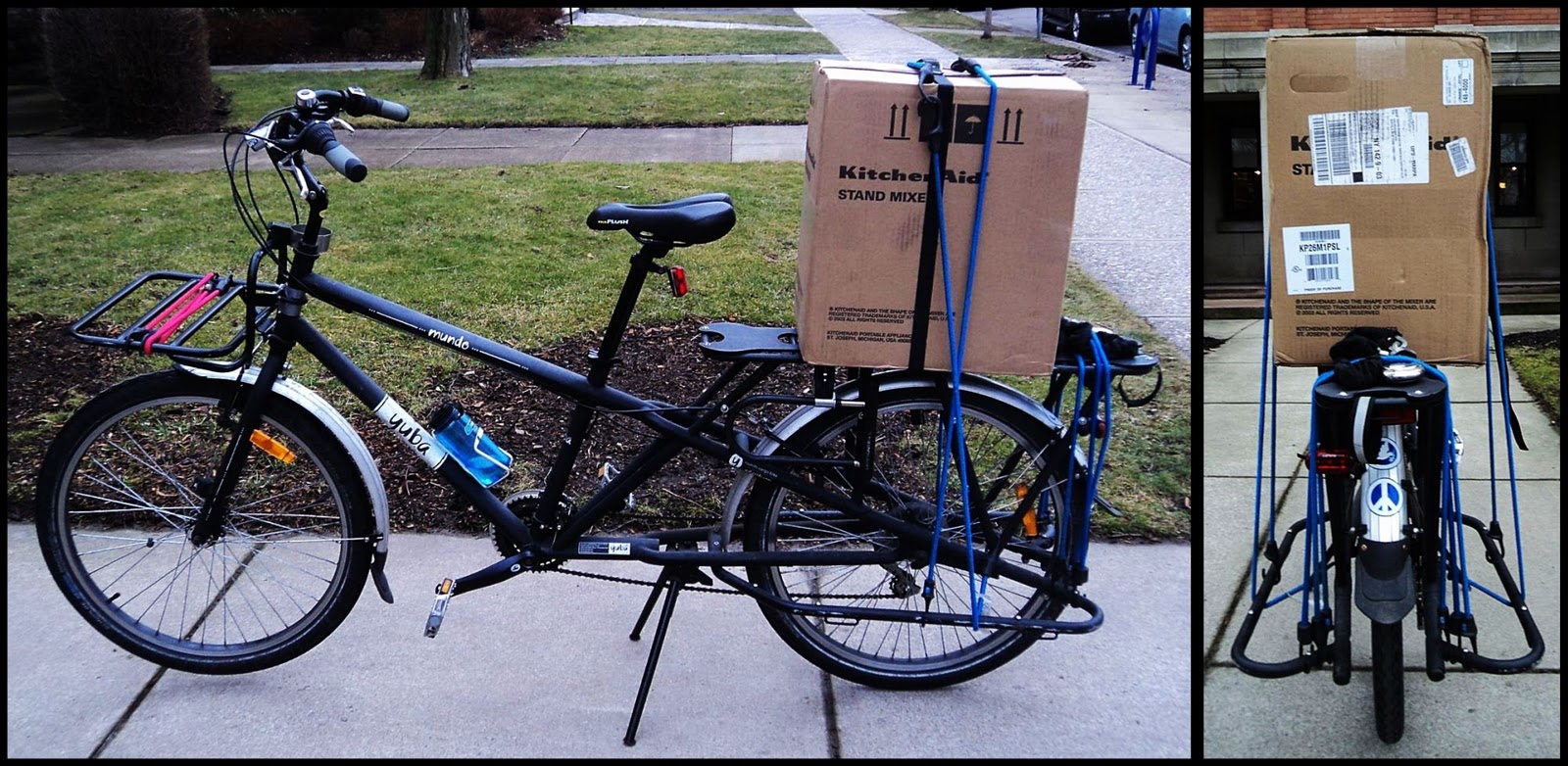
On the bike: A new 6 qt. KitchenAid stand mixer.

First Comment: As some of you may know, I had a mixer fail on me recently (click here) and have had a very dissatisfying experience attempting to have it repaired at Sears (click here). To make a long story short, I have the old mixer back, not repaired. It is, if you are interested, for sale…cheap (if you have the inclination to repair it yourself). And I am still too frustrated at this point to mention the reasons I am selling it, rather than having it repaired. I did end up purchasing a new one, mainly because I found one at nearly half-price simply because the color is being discontinued…which, interestingly, is the same color of my former mixer: silver. I must not be that trendy.

Second comment: When I ordered the mixer I had it delivered to my place of employment because I am there during business/delivery hours…I didn’t want to miss it. It arrived today, and before I left I rode my bike around the city block to the front of the building where it was delivered (the hired help–even the chef–enters the rear of the building, which is fine with me). Anyhow, upon seeing me with my bike the general manager and the office manager both offered to drive me home with the package. No thanks, I told them, this bike is built to carry stuff…and you know me by now, this is how I like to do it. Almost without listening, the manager said that she would call the maintenance man and have him drive me home…that he has a pickup truck. Really, I told them, and thank you very much, but this bike can handle it, and I reminded them that I too owned a pickup truck, but I choose to ride and carry things on my bike(s) when I can. Finally they let me go, but they still looked a little worried. As I was strapping the box down a guy walked past me on the sidewalk (pavements), smiled and said, Geez, that’s quite a bike you have there. Yes it is, I replied, and pedaled and coasted home nearly effortlessly on this beautiful and unseasonably warm spring-like evening.

Urban Simplicity.

Five Quotes from Dorothy Day


“I have long since come to believe that people never mean half of what they say, and that it is best to disregard their talk and judge only their actions.”

“The greatest challenge of the day is: how to bring about a revolution of the heart, a revolution which has to start with each one of us?”

“The legal battle against segregation is won, but the community battle goes on.”

“We have all known the long loneliness, and we have found that the answer is community.”

“Words are as strong and powerful as bombs, as napalm.”

To read more about Dorothy Day, click here. To read about her incredible life and courage I recommend her autobiography.

Urban Simplicity.
 

What is a Cargo Bike?

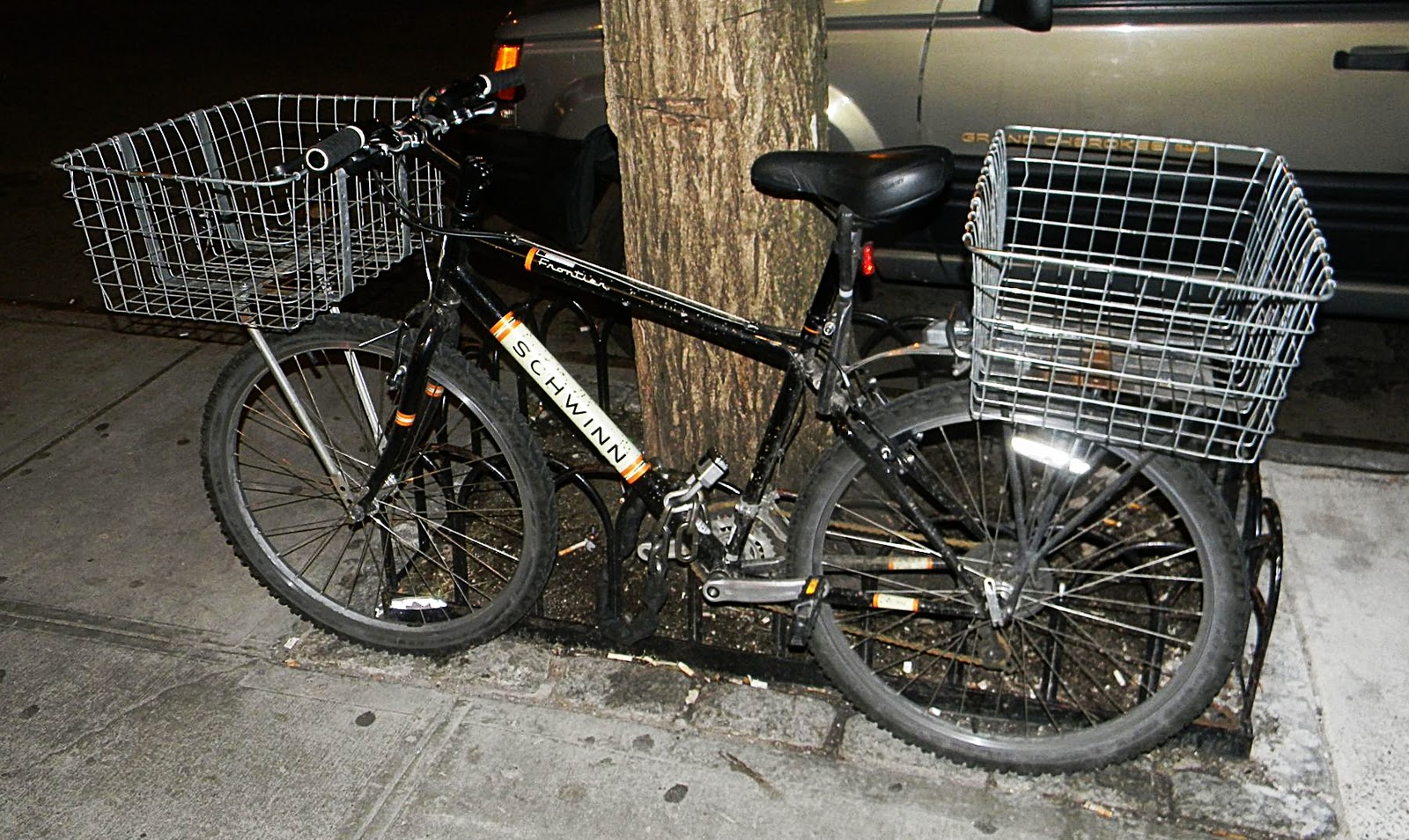
Before I comment on the question posed in this post’s title, let me just say that I love this picture, or at least the bike in it. This is a bike that can get the job done…and cheaply. Here I am (and I’m not the only one…you know who you are) bragging about their fancy cargo bikes (mine, of course, is a Yuba) and how much they can haul and all the fancy name brand components…and then I see this the other day locked to a tree in NYC . It’s an old Schwinn mountain bike that likely cost a hundred bucks or less and has two over-sized baskets bolted to it. It’s also likely that this is one of the numerous delivery bikes seen around the city…in other words, a work bike. Those baskets are awesome, in the literal sense of the word…how easy would it be to carry a week’s worth of groceries in them, and no strapping things down. So I ask again…What is a Cargo Bike? In this bloggers opinion, any bike that carries stuff…it doesn’t matter how expensive–or not–the bike happens to be. If it gets you were you are going and carries everything you need it most definitely fits the category.

Urban Simplicity.

(more) Fortune Cookie Philosophy

More accurately, for me, this should read: You should be able to undertake and complete anything you want to and put your mind and heart and soul to. And if the first 50 years of my life are any record of this…I would have to agree.

Click to read a few more.

Urban Simplicity.

Things You Notice When You’re Bored

Firstly I have to say that I am rarely bored…if I’m not doing something my mind still is, it is for this reason I’ll often watch a movie, simply to go on vacation from myself. With that said, yesterday was one of the infrequent times I can honestly say I became bored, but I believe you will understand…I was trapped at an airport terminal. It wasn’t terribly long, just a bit over four hours…but it was my own fault (stupidly, when purchasing a ticket online I purchased it for p.m. thinking it was a.m., luckily I was able to get on another, but for hours later). Anyhow, it gave me time to think, read, nap, and listen to music (and drink too much coffee), but inevitably I became bored. I even read the label on my water bottle.

I’ve long given up purchasing bottled water after learning that it is largely unregulated, but at an airport–where one is no longer allowed more than 3 ounces of liquid through checkpoint–you are quite literally at their mercy (not only with choices but also the exorbitant prices). With that said, when I reached for the water in the refrigerated case I chose the cheapest there was, and it was still nearly $3.00US.

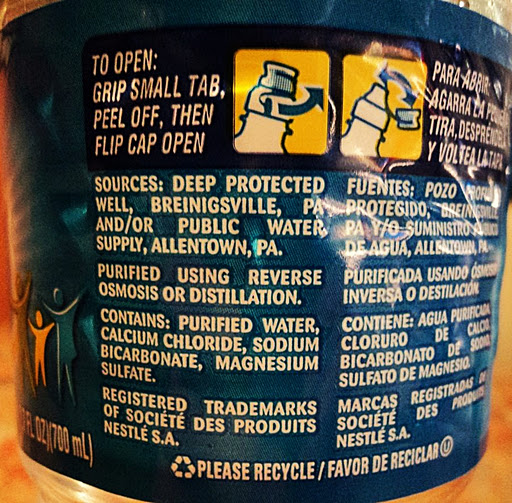
But before I go on with my observation I ask you, the reader, to observe for yourself…what do you see on either label that is either alarming or even sad (and yes, in the event you are wondering…I did get a few odd looks as I sat at a table taking picture of my bottle of water).

Let’s start with the top photo, the front label. “Purified Water Enhanced with Minerals for Taste.” Mmm…mmm, getting thirsty yet? Now lets look at the lower photo, the back label (I consciously added quotation marks and italics because I feel that’s how it should be more properly written on the label)…”Deep Protected Well” (huh?) And/Or “Public Water Supply.”

Well (and yes I see the irony of using that word) I think we know which And/Or it is, and we also know what “Public Water Supply” means…tap water. According to this site, nearly 50% of bottled water available in the US is nothing more than tap water.
Later, as I was exiting a restroom (washroom for my friends north of the border, and WC for my friends “across the pond”), I see an elderly gentleman refilling his water bottle at a drinking fountain before he got on his flight. Well isn’t that interesting, is what I must have muttered aloud. Because he turned to me and smiled before asking what I meant. I showed him the label on my half-consumed bottle. Yes, he told me, still smiling as he capped his bottle…it’s a scam. Yes it is, I said. We both wished each other a safe and comfortable flight, and then I uncapped my bottle to refill it straight from the tap…it was a much better deal.

Urban Simplicity.

Five Photos of NYC (with a few words)

You’ve probably gathered by now that I enjoy taking urban photography. The opportunity is seemingly limitless, even in my tiny hometown. But I was in NYC this weekend–just a quick overnight jaunt–and was like a kid in a candy store…I see art and photos almost everywhere I look and have to consciously put my camera away now-and-again, lest I look like a tourist (egad). Anyhow, here’s a brief background on these photos.

I sometimes enjoy graffiti, and the image above I think is awesome. It’s painted on the outside of the Back Fence, a bar in Greenwich Village (which I’ve been known to visit)…it’s one of the most interesting neighborhoods in the world and in one of the most exciting cities in the world (in this bloggers opinion), and someone just scrawls, YAWN. I had to laugh to myself…and that’s all that was on the wall so I had to take it’s picture.

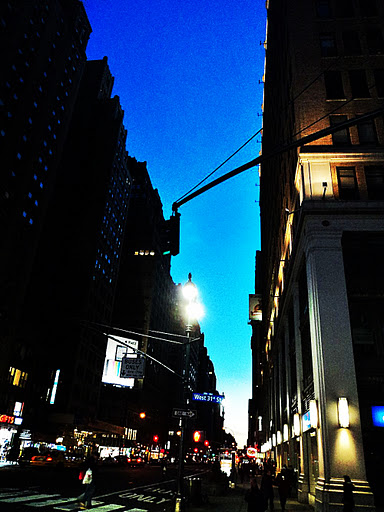
The next two photos (immediately below) were both taken on Sixth Avenue. The one just below was taken first, at dusk, and it looked to me then–just as it does to me now–to be an urban canyon…dark canyon walls with glowing light eking down from above. The next one is a former church that I have dubbed the Church of Consumerism…it has been turned into a series of stores some years ago–you can now purchase clothing in what was once the church’s sanctuary–and correct me if I’m wrong, but I also think it was a night club some years ago (I think I have been there but not sure).

The bottom two pictures are related, sort of. Earlier in the day I had read that there was going to be an Occupy Wall Street gathering in Washington Square Park so I made a point to visit. Seems like the movement has lost most of its steam but there were still a few dozen souls giving it all they had. Because it was publicized there were also a lot of police there, flanking the entire park at every entrance. Anyhow, as I was exiting the park I saw the three police officers standing there as you seem them in the photo. It looked like such a classic New York scene to me that–rather unlike myself–I asked if I could take their photo. I explained that I wasn’t a journalist, just a guy who likes to take photos. The two guys on the right were fine with it, but if you see the look on the guy’s face on the left you can see he is not…he wouldn’t even look at me, just clench his jaw tighter as I spoke to him (and I really wondered what they all had in those pouches hanging on their sides…made me a little nervous actually). Anyhow, I told him–as he still looked away–it’s OK if you say no (to having his picture taken), I won’t be offended. After an awkward few seconds silence, the guy in the middle says, no problem, take the photo. So I did. And then thanked them for allowing me to do so.  As usual, click any photo for a larger view.

Urban Simplicity.

Whole Wheat-Oatmeal Pizza (crust) with Rapini and Three Cheeses

This is really a variation on two themes I’ve touched on before…vegetables cooked aglio e olio and a pizza recipe. In this version I used rapini, which I cooked with oil, garlic, and hot pepper, and the pizza crust was made using a hand-kneaded oatmeal crust (click here for the recipe). The main difference with rapini, I think, is that it is often blanched or briefly par-boiled before sauteing. This is an option, and some cooks may disagree, but I feel it removes some of its bitterness. Nonetheless, this is a delicious preparation for any vegetable, so I should warn you to cook extra…if you’re like me you’ll eat a good portion of it before it makes it to the pizza. Anyhow, here it is in pictures; if you’d like a recipe of vegetables and pasta being cooked in this fashion–and a better explanation with photos–click here.

As aforementioned, I used this recipe for the pizza dough but if you’d like other versions and variations–with pictures, recipes, and direction–click here. If you want to learn a bit about the inner workings of pizza dough, follow this link to an article I wrote for Artvoice a few years ago.

Urban Simplicity.

On Being Kneady

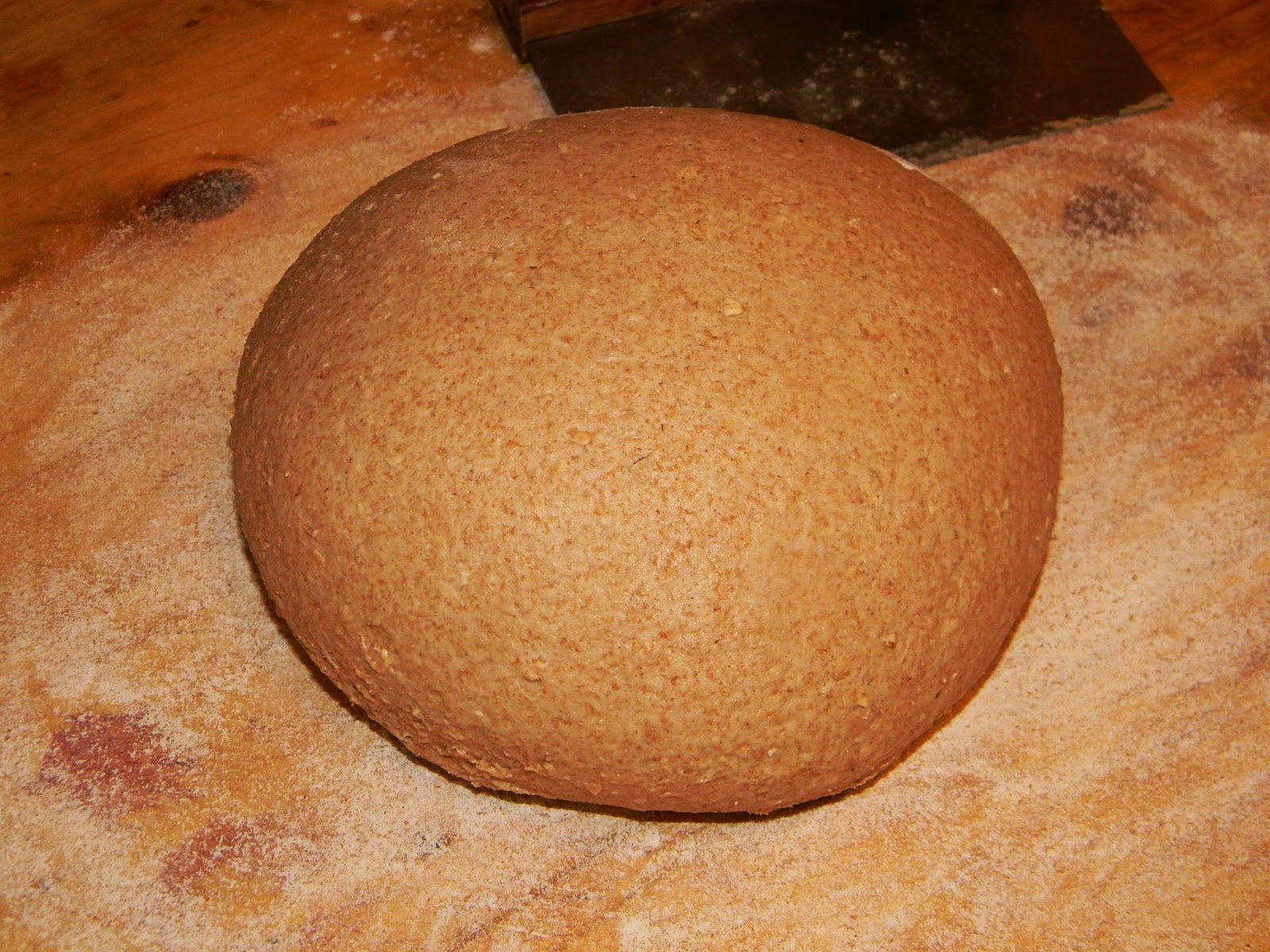
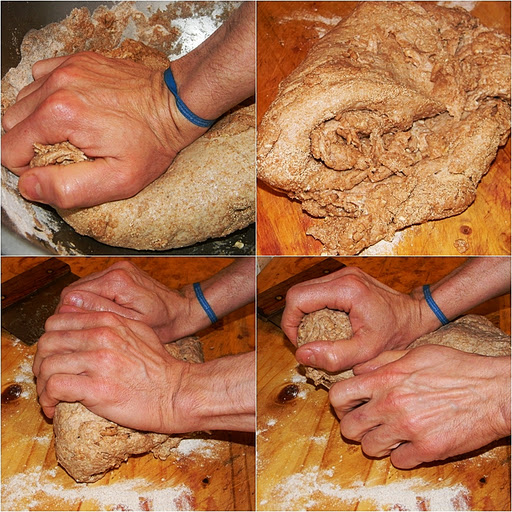
If you’ve been to this blog before you know that I like to bake bread…a lot. And like many bakers over the years I have come to rely on the mechanical means of an electric mixer to do the tough work…knead the dough. Most of my bread recipes, in fact, include a direction something like this “…combine the contents in anupright electric mixer fitted with a dough hook. Knead the dough onmedium speed for about 8 minutes…” But this wasn’t always the case; I’ve been baking bread for hobby and profession for something like 25 years…and during the early years I didn’t own a mixer.  In fact, for the few years that I was a restaurant’s owner we (my sous chef and I) baked all of the restaurant’s bread without the aid of a mixer. But over the years I’ve not only come to rely on them–at work and at home–but also enjoy them. But as some of you may also know, I have been sans mixer (at home) for the past month or so (as previously posted here and here). Anyhow, I had the day off today and felt like making bread (and a pizza for dinner out of the same batch of dough), so I kneaded it by hand…and I’m glad I did. When I knead dough by hand I remember things. I remember the basic ingredients that go into a dough because I can feel them in my hands. I remember the miracle we call bread–and the crazy chemistry that happens in bread dough–because I have time to think about it. But mostly I remember how difficult our fore-cooks (especially the homemakers) must have had it–not just with bread, but putting three square meals a day on the table using only there hands and a live fire. I’m glad for electric mixers (and, in fact have a new one on order); I’m glad how efficient they are and that they enable me to do other things while the dough is being kneaded. But I’m also glad when I knead the dough by hand…because it makes me remember what a miraculous thing it is.

WholeWheat Honey-Oatmeal Bread
Makes2 loaves
6cups whole wheat flour, divided
21/4 cups water, divided
1cup oatmeal, plus additional for coating
1cup plain yogurt
2teaspoons kosher salt
1/4cup olive oil
1/4cup honey
3teaspoons instant yeast, divided
Separatethe ingredients in two bowls using this ratio: In one bowl combine 4cups of flour, 1 1/4 cups water, along with all of the yogurt andsalt. Stir it just until combined; cover with plastic wrap and setaside. In a second bowl, combine the remaining 2 cups flour and 1 cupwater with 1 cup oatmeal, the olive oil, honey, and 2 teaspoons ofyeast. Stir it just until combined; cover with plastic wrap and setaside. Allow the bowls to rest for at least an hour, but up to 12.
Addthe remaining teaspoon yeast and the contents of both bowls to anupright electric mixer fitted with a dough hook. Knead the dough onmedium speed for about 8 minutes, then cover with plastic wrap andallow to rise for one hour.
Transferthe dough to a work surface, cut it into two pieces, gently shape itinto loaves. Dust the counter with extra oatmeal and roll the loavesin it, gently pressing oatmeal into the surface of the raw dough.Place the loaves into oiled loaf pans, cover with plastic wrap, andallow to rise for 45 minutes. Preheat an oven to 400F.
Bakethe bread for about 30 minutes, or until golden brown and soundshollow when tapped on. Remove the bread from their pans and allow tocool for 10 minutes before slicing.

Five Quotes from Thomas Merton

Monk, activist, writer, poet, and artist, Fr. Merton was a true renaissance man. He was friends with Thich Nhat Hanh, and the Dalai Lama, and a contemporary of Martin Luther King, Jr. Before his untimely death he penned a huge number of books pertaining to spirituality, poems, artwork, and an incredible and moving autobiography. His work continues to touch countless souls…including the one typing these words. To read more about Thomas Merton click here or here.

“Peace demands the most heroic labor and the most difficult sacrifice. It demands greater heroism than war. It demands greater fidelity to the truth and a much more perfect purity of conscience.”

“Pride makes us artificial and humility makes us real.”

“Just remaining quietly in the presence of God, listening to Him, being attentive to Him, requires a lot of courage and know-how.”

“Every moment and every event of every man’s life on earth plants something in his soul.”

“A life is either all spiritual or not spiritual at all. No man can serve two masters. Your life is shaped by the end you live for. You are made in the image of what you desire.” 

OK…I said five quotes, but here’s five more. 

“Art enables us to find ourselves and lose ourselves at the same time.”

“I cannot make the universe obey me. I cannot make other people conform to my own whims and fancies. I cannot make even my own body obey me.”

“We stumble and fall constantly even when we are most enlightened. But when we are in true spiritual darkness, we do not even know that we have fallen.” 

“The man of faith who has never experienced doubt is not a man of faith.” 

“Perhaps I am stronger than I think.”

Urban Simplicity.

A Few Photos of Snow, Slush, and Rain

I’ve commented a few times recently on what wacky weather we’ve had this winter, it seems to change daily…but today hourly. The above photo and the one immediately below were taken this morning as I left for work. It had snowed a little overnight and there was ice on the roads, but as the day progressed it became warmer. I worked a split shift, and the second photo below (Splash!) was taken when I left work about 2pm…the shutter snapped at just the moment a slushy raindrop splashed into a puddle of slush. And the bottom photo is on my way home this evening–after my second shift–when it had turned entirely to rain. Click any photo for a larger view.

Urban Simplicity.

Things That Can be Carried on a Bike (#393)…and how my bikes are therapeutic

Things on the bike and in the Bike Rev trailer…

$127 (US) of groceries from two separate stores.
3 liters of red wine
4.4lbs. dog food
A gym bag full of wet cloths
A canvas bag containing books and an extra camera
Two portions of Chinese take out

One (of the many) ways my bikes are therapeutic (to me)…

I had a busy day at work, slightly short handed–staff-wise–but just busy (and for some reason the wait staff seemed especially loud and annoying today). Anyhow, by the time I arrived home I was exhausted and had a crazy headache that extended across my entire brow. I rested for a bit and took some aspirin but to no avail. I had planned on going to the health club for a quick steam and swim (which I did) and then do some grocery shopping. I knew I’d be doing a larger shopping trip (for me) and there is still ice on some parts of the roads near the curb (kerb, for my EU friends), and I generally don’t ride the Mundo on ice…so I almost drove the truck. But then in a moment of clarity I realized that likely the best thing for me was fresh air…and it was. The minute I got on the bike in the refreshingly chilly air (30F/-1C) it felt good. It was a bit of a struggle–riding my ill-maintained winter bike and pulling a trailer–but it still felt good. My headache was gone by the time I arrived at the health club. When I arrived at the club there were cars circling the parking lot angrily looking for spaces (which there were none), I  in turn was able to coast up nearly to the front door. After leaving the club I rode and did my shopping at 3 separate stores, each time loading items into the trailer and on the bike. And on the short ride home (about 2mi./3.2km.) on this old winter bike with both it and the trailer loaded–and going up a slight incline–I’d be fibbing if I said it was easy and that I wasn’t huffing and puffing. Then, on the last stretch of my short journey there is a slight decline in the road and I was able to coast. And as I coasted–with the cold breeze on my face and the sound of my knobby winter tires against the road–there was nowhere I’d rather be. I felt free.

Urban Simplicity.

Three Photos and Six Recipes

Did you know that January is NationalSoup Month? Well it is, and rightly so. It’s perfect for the cold weather and seemsto nourish both body and soul. Soup is delicious and nutritious,and it’s easy to make. If you can boil water you can make soup. Andthere’s something about a simmering soup pot…it’s the originalcomfort food. Soup is, in fact, one of the simplest and oldest foodpreparations there is…cooking food in liquid to tenderize it andinfuse both nutrients and flavor to the ensuing broth. The word soup, in fact,is derived from the Middle English, sop, or sup,referring to a stale piece of bread onto which hot broth was poured,thus giving a slight meal some substance. To eat in this fashion was“to sup;” which is from where the modern word “supper” isderived. Thus, the classic French Onion Soup is one of the trulyancient soups remaining today, and its ingenuity lies in itssimplicity: broth, onions, and bread (cheese is a modern and moreluxurious addition). Anyhow, soup is about the simplest recipe one can prepare, it’s nutritious and flavorful…and you only have one pot to clean.
French Onion Soup
Yield: 5-6 cups
2 tablespoons unsalted butter
2 tablespoons vegetable oil
4 large onions, peeled and slicedthinly
2 cups beef broth
2 cups chicken broth
6 slices French bread, toasted
4 ounces grated Parmesan cheese
2 ounces grated Gruyère cheese
Salt and pepper to taste
Melt the butter and oil in a heavysaucepan. Add the onions and sauté over low heat until onions aregolden brown, about 40 minutes. Stir in the beef and chicken stock,bring to a boil, lower the heat to a simmer and cook the soup for 30minutes. Season the soup with salt and pepper. Ladle the soup intooven-proof bowls and top each soup with a slice of French bread andthe grated cheeses. Bake in a 375 degree oven for 10 to 20 minutes,or until cheese is melted and golden brown.
CurriedVegetable Soup
Makes about 12 cups
3tablespoons canola oil
1small onion, diced
2carrots, diced
2stalks celery, diced
1parsnip, diced
1turnip, diced
2cloves garlic, minced
2tablespoons curry powder
1teaspoon turmeric
1teaspoon cumin seed
2teaspoons crushed hot pepper
2teaspoons kosher salt
1cup diced cabbage
1cup chopped cauliflower
1cup diced tomatoes
1cup chopped kale
8cups chicken broth
1/4 cup lime juice
Heat the oil in amedium soup pot over medium-high heat. Add the onion, carrot, celery,parsnip, and turnip. Cook the vegetables in the oil for about fiveminutes, allowing them to realease their flavor but not brown. Addthe garlic, curry, turmeric, cumin, hot pepper, and salt; saute foranother couple minutes. Stir in the cabbage, cauliflower, tomatoesand kale; stir to coat the vegetables with oil and spices. Stir inthe broth. Bring it to a boil, then lower the heat to a simmer. Cookthe soup for 30-60 minutes, skimming as necessary; if it becomes tothick add more broth. Taste it for seasoning, and add the lemon juicejust before serving.
SplitPea Soup with Garlic and Smoked Sausage
Makes about 12 cups
3 tablespoons canolaoil
2 cups diced smokedsausage
1 small onion, diced
2 ribs celery, diced
1 carrot, diced
2 cloves garlic,minced
1 pound split peas,cleaned and rinsed
1 potato, diced
8 cups chicken broth
1 teaspoon salt
Heat the oil in amedium soup pot over medium-high heat. Add the sausage and cook itfor a few minutes, until it releases some of it’s fat and begins tobrown. Add the onion, celery, carrot, and garlic; cook the vegetableswith the sausage for a few minutes, until the vegetables begin tocook but are not browned. Add the peas, potato. Broth, and salt.Bring the pot to a boil, then lower it to a simmer. Cook the soup forabout an hour, stirring frequently. If it becomes to thick add morebroth.
ButternutSquash Bisque with Apple and Toasted Walnuts
  Makes about 6 cups
2tablespoons butter
1small onion, peeled and diced
2tablespoonsflour
2tablespoonssugar
1/2teaspoon ground cinnamon
1/4teaspoon allspice
1/4teaspoon nutmeg
1/2teaspoon salt
1teaspoon black pepper
2pounds peeled and diced butternut squash
2cups chicken stock
1cup heavy cream
1/4cup chopped, toasted walnuts
1/2cup small diced apple
Meltthe butter in a small pot over medium heat and add the onions. Sweatthe onions over medium heat for 5 minutes or until they aretranslu­cent. Add the flour and stir over medium heat for 2minutes. Stir in the sugar, cinnamon, allspice, nutmeg, salt, pepper,and diced pumpkin; sauté another minute. Add the stock and simmerfor 15-20 minutes, or until the squash is very tender. Add the creamand simmer for 1 or 2 minutes longer. Puree in a blender or foodprocessor. After ladling the soup into warm bowls, garnish it withthe toasted walnuts and diced apple.
 
Roast Red Pepper Bisque
Makes about 12 cups
4 tablespoons unsalted butter
1 cup diced onions 
1/2cup diced celery
1/2cup diced carrots
2teaspoons minced garlic
2teaspoons salt
2teaspoons black pepper
1/2cup flour
4cups chicken broth
3cups diced roast red peppers
2cups heavy cream
Sautéthe onion, celery, and carrots, over medium heat in the butter orolive oil for 5 minutes, then add the garlic and sauté for anotherminute or two. Stir in the flour and cook over medium/low heat for5-10 minutes. Add the chicken stock, stir with a whisk to remove anylumps. Stir in the diced peppers. Bring to a simmer and cook for 10minutes. Add the heavy cream simmer 2 minutes. Puree in a foodprocessor or blender. Strain if you desire a smoother consistency.
PotatoChowder
Makes about 12 cups
3tablespoons unsalted butter
12ounces diced lean ham
1cup diced onion
1/2cup diced carrots
1/2cup diced celery
2teaspoons minced garlic
2-1/2pounds peeled and diced potatoes
6cups rich soup stock
1teaspoon thyme
1teaspoon salt
1/2teaspoon black pepper
1cup milk (optional)
Heatthe butter in a large heavy soup pot over medium-high heat. When itbegins to bubble add the ham, onions, carrots, celery, and garlic.Sauté the vegetables and ham for approximately 5 minutes, or untilthey are soft and translucent but not browned. Stir in the potatoes,chicken stock, thyme, salt, and black pepper. Bring the soup to aboil then lower the heat to a simmer; skim any impurities that mayhave risen to the surface. Simmer the soup for 45-60 minutes,stirring often. Using a wire whisk, gently break apart some of thepotatoes to give the soup some viscosity. If adding the milk, do sodirectly before serving the soup, and do not boil it once the milkhas been added.

And Now For Something Really Interesting…

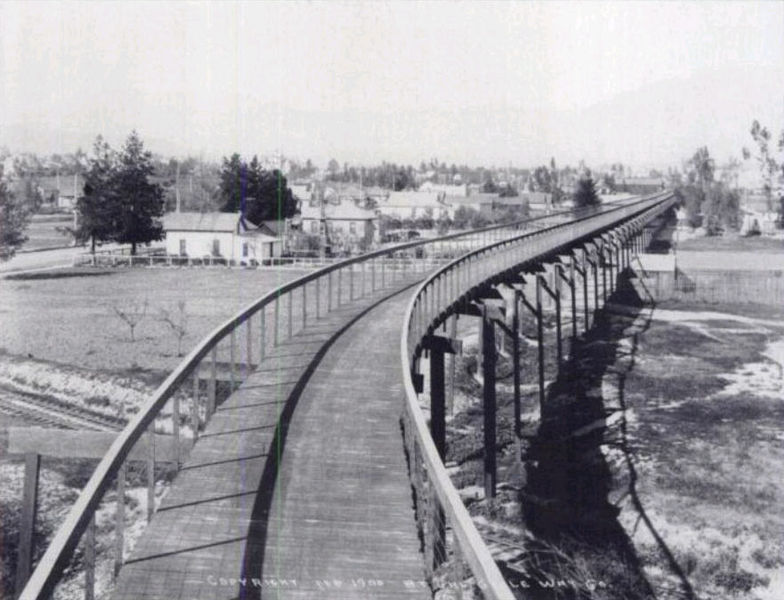
I have long been interested in the history of the bicycle. I’ve also been to California numerous times, though never to Los Angeles. And quite frankly, I would never think of bicycle history and Los Angeles in the same thought. More likely, and this is stereotyping (please, Los Angelers, don’t send me hate mail), I think of cars and wide highways. But 100 years ago this wasn’t the case…they were on the cutting edge. You can imagine my surprise and intrigue when I came upon an article about the California Cycleway. Built in 1900 and dismantled about 10 years later, it’s original intention was to link Pasadena with L.A….via an elevated bike path. To read more about it on Wikipedia, click here. For a well-written story about it–with more photos, I recommend this site. Am I the only cyclist who thinks that path looks like a ton of fun?

Urban Simplicity.

A Few Random Photos

Here’s a few random photos I’ve taken over the last few days. The one above and immediately below were taken this evening, and were in fact the reason of this post…the sunset was so incredible–even on a cold night and in an inner city–that I felt the need to share it. They were both taken looking west, down Virginia Street (aka Calle Virginia), on Buffalo’s Lower West Side. The next photo was taken last evening while grocery shopping on my bike. An entire murder of crows flew overhead–hundreds of them–and while it looked graceful and beautiful it also freaked me out a bit because of the intelligence they are said to have. Below that is nothing more than a manhole cover in the snow that I took just after our but brief recent storm. And lastly, when exiting a store this evening I noticed everything had a glow to it…it was one of those incredible moments just before the sun really begins to set but it’s no longer full daylight and it’s angle casts a hue across everything. Anyhow, I looked up and saw the perfectly straight line of a jet cutting through a blue but pink tinted winter sky. I took out my camera in the parking lot and snapped a few pictures, my favorite is the one you see. I find myself looking skyward a lot these days; not sure why, I just do. And it’s interesting, I think, if one person looks up, so do others around them. And that is exactly what happened tonight as I stood in the parking lot on a cold winter’s eve taking photos. As people passed they looked up. A few looked at me as if I were a bit crazy (which I may be, but who cares) and a few commented how beautiful it looked. And it was. As usual, click any photo for a larger view.

Urban Simplicity.

The Miracle of Controlled Spoilage (or, the art of live foods)

Fermentation. That, of course, is what the title of this post is referring to. Every culture has their versions, and things you may not think of as fermented are in fact just that…beer, bread, yogurt, sour cream, buttermilk, wine, and of course all sorts of  vegetable pickles. My favorite is kim-chi, or Korean style sauerkraut. Fermented products are very healthy and easy to make…the most difficult thing, I think, is the wait; they can’t be rushed. The recipe for the above pictured kim-chi is listed below, and if you’d like to see it being made, click here. To read more about the history and health benefits of these incredible foods–with plenty of recipes–click here. And if you are interested a book on all things fermented, I recommend this book.
Kim Chi
(Korean-Style Sauerkraut) 

1 head Napa cabbage, cut into two-inch pieces
1 small daikon, grated
2 tablespoons kosher salt
2 cloves garlic, minced
1 small piece ginger, minced
1 small onion, minced
2 tablespoons chili paste
1 tablespoon sugar

Mix all of the ingredients together in a large bowl. Transfer to a container that is wide enough to fit a few small plates inside it. Press the cabbage down and weight it with plates. Cover the container and leave at room temperature. After a day it should release enough liquid that it is submerged, if not, add a little salted water. After about 2 days small bubbles will appear, after about a week or so it will smell and taste distinctively sour. Taste it as often as you like and when the flavor is to your liking transfer the container to the refrigerator to slow its fermentation.